Retailers are pulling back from self-checkout after years of theft, errors, and questionable time savings

Daniel Sims

Posts: 2,592   +79
Staff
Connecting the dots: The retail and tech industries have long promoted self-checkout as a way to speed up transactions and lower labor costs, but its popularity might be waning. Years of data suggest that the technology increases losses and doesn't actually save much time.
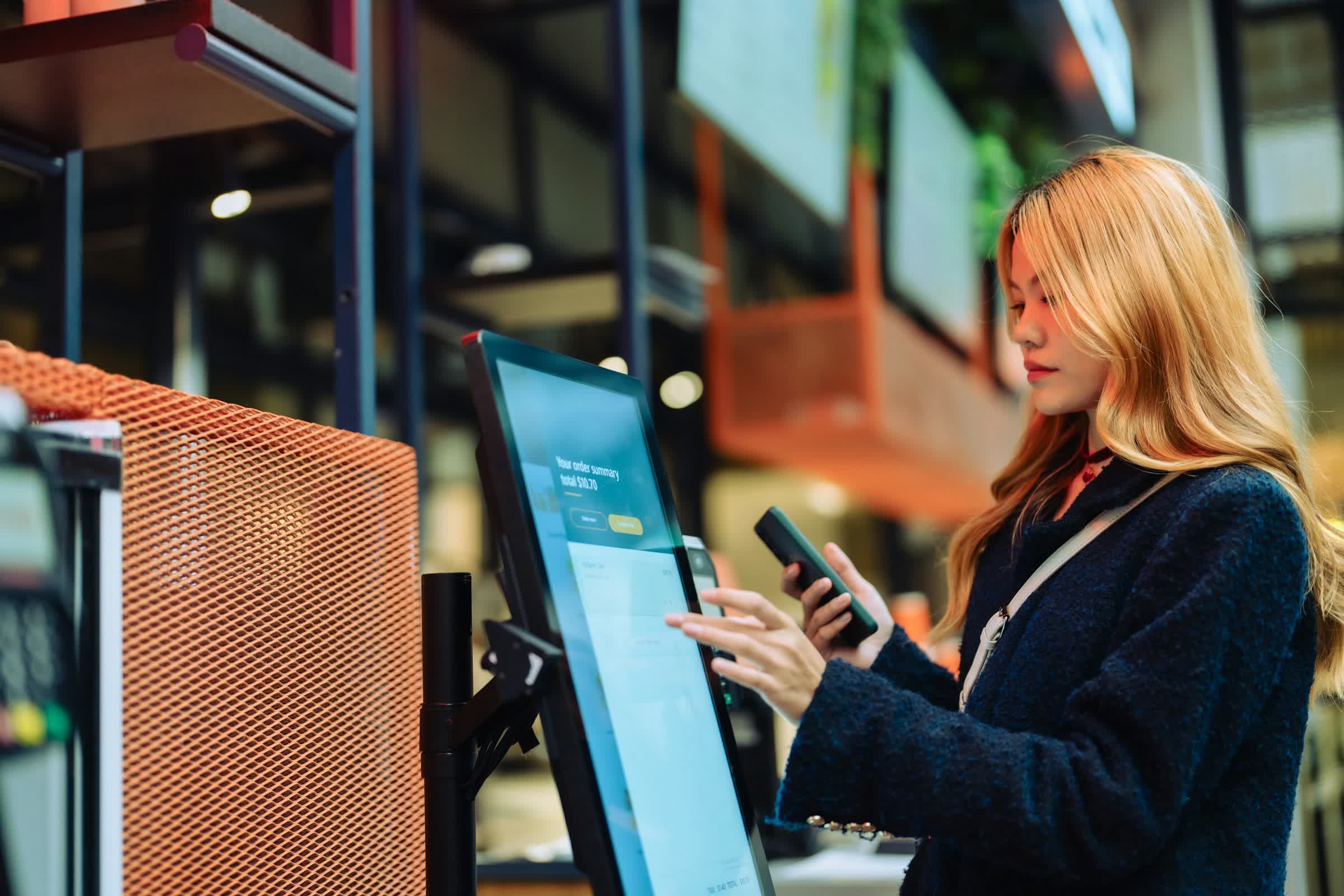
Only about one-third of surveyed retailers plan to invest in self-checkout technology this year, significantly fewer than in 2025, according to an annual retail industry report. While self-checkout lanes have always frustrated some customers, major retailers have only recently either stepped away from the technology or at least slowed down its deployment.

Of 340 retail operators surveyed in 2026's Voice of the Retail Industry Survey, only 36% say they plan to invest in self-checkout, down seven percentage points from last year. Self-checkout was the least popular technology and the only one to see lower interest YoY. Other investments, such as automated invoices, electronic shelf labels, and accounting software, attracted at least 40% of surveyed retailers.

Prior data on self-checkout suggests why: It largely hasn't delivered on its promises and may have revealed why retail still needs trained cashiers.
Many likely believe self-checkout saves time compared to a cashier lane, but the opposite may be true. Shortly after the practice began in the late 1980s, Kroger group vice president Donald F. Dufek told The Oklahoman that self-checkout actually takes shoppers longer, but shoppers believe the process is faster because they are the ones scanning items.

Compared with experienced staff, customers typically scan items more slowly and are more likely to make mistakes, thus holding up lines. Many shoppers also likely have stories of machines not scanning items properly. A 2021 survey showed that more than two-thirds of shoppers have experienced issues at self-checkout lanes. The technology also increases retailers' losses from theft, both accidental and deliberate.

Because of these and other issues, retailers still must hire staff to watch and assist customers in self-checkout lanes. In recent years, Walmart, Costco, and Kroger have increased staff involvement in self-checkout lanes. Meanwhile, Dollar General removed self-checkout from 12,000 stores in 2024. Around the same time, Target limited self-checkout lanes to 10 items or fewer because they are most useful for customers buying small numbers of items.

Amazon also famously tried to offload retail labor before changing course. In 2022, the company debuted grocery stores without cashiers or checkout lines but abandoned the idea two years later after admitting it had simply passed the work on to remote cashiers in India.

Permalink to story:

 
Always thought the technology behind it sounded too good to be true.

Maybe companies will realize they need to pay cashiers a little bit more and spend more time training and upskill their employees.
 
For those people here that think automated technologies are better....this research goes to you.

Happy to see companies have lost more money in the long run that if they would have kept those cashiers employed.
 
For those people here that think automated technologies are better....this research goes to you.

Happy to see companies have lost more money in the long run that if they would have kept those cashiers employed.

This isn't so much an automated technology, but letting customers do the job previously assigned to trained personnel. And surprise: Untrained customers are worse at it.
 
I LOVE self-checkout… there is usually 1 staff person assigned to 10 registers and I almost never need their assistance… yes, it’s faster to have a cashier - assuming there’s no line. But there’s almost always a line!

The grocery stores I use in Toronto have been increasing (and improving) their self-checkout, not decreasing/removing them. And I suspect as the tech improves, more and more will do it.

The problem with many people is that they try a new tech right at the beginning, see its flaws, and decide never to use it again.

Most companies exacerbate this by having rushed the tech in the first place…

But… the tech improves!! That’s what tech does!! So if you stick with it - or simply try it again a few years later - you’ll notice it’s actually quite useful.
 
I found that the self checkout process and it success or failure really depends on which store I use it in. The general rule is that it works great for just a handful of simple, easy to scan items. I do like it for these situations. This also really depends on how sensitive the "bagging" sensor is. The whole thing falls a part when the bagging sensor starts complain that you did or didn't put the time int the bagging area.

I find it horrible in the grocery store. I have yet to have a good experience there. Only if I buy like 2 or 3 items. Fruits or vegetables by weight, fails have the time. It just really depends.

The self checkout that both works and also aggravates me the most is Walmart. 10 self scan checkouts in an area, no where to actually put your bagged items, and half the machines are broken or now set aside for "spark" or whatever that is. The part that blows my mind is that in a super Walmart, there is one of these big self checkouts on both sides of the store connected with 10 or more human checkout lanes in between. However, not a single one of the human one open, instead, there are 5-10 Walmart works just standing around doing nothing.

I have found that HomeDepot setup has worked pretty well for me when I just go in an buy a few things. They only have scanner guns and you don't have to fuss with the bagging part. Almost everything is simple scan the barcode and move on. If you have more complex items (lumber, pipes, etc.) then the still have humans to help.

 
To me, the biggest appeal has always been the fact that most people hate it, therefore, the lines are almost always much shorter.

Other than that, I couldn't care less. It's often annoying with the weight mismatch, and the staff approval needed, and all that crap. But the most annoying is most certainly the sloth people that think self checkout means you can waste everyone else's time, because you prefer to pack your sh*t slowly.
 
I actually like self checkout because I don't like talking to or looking at people (introvert). I'm also very fast at it because I'm not low IQ like most of the other shoppers.

But it doesn't surprise me that it's slower overall and also that theft happens a lot.
 
Self-checkout is fine for just a few items. It is a complete pain in the behind if you have a trolley's worth of groceries. Our local large supermarket (in the UK) doesn't staff the tills after 7pm so there's no choice but to use it. There's not enough room to stack your items so the machine gets its knickers in a knot and the poor sap who has to sort it out is darting from self-checkout to self-checkout trying to keep things moving. Store managers should be required to have at least 1 till open at all times...but the poor company only made £1 billion last year (a 7.2% increase over the previous year). 😠
 
I prefer self-checkout over cashiers, mainly because I hate the inane small talk encountered with cashiers. Even more so I hate the false sincerity offered as good "customer service", the phony smiles and mindless regurgitation of company manufactured and insincere responses. I sucked at customer service because I could not and WILL NOT fake this tripe. Especially when something goes wrong, instead of just admitting they don't know (which I respect and appreciate) you are given pathetic excuses and B.S. There is zero shame in admitting you don't know!!!
 
Self checkout was awesome when you could quickly pay for a couple of items without waiting in line. THEN stores stopped staffing checkout - at times with no cashies available. When I have 40 grocery items to pay for it's a disaster!

Plus now there's a line for self checkout! WTF is that?!?!
 
There's another component to this.

Profitability of facial scans from the systems, paired with identity confirmation via payment card history has fallen with Flock now dominating the market. They can also get those scans from new angles now.

Have you ever seen a Walmart datacenter? They are not small.
 
Back