Uber commits up to $1.25 billion in Rivian to deploy 10,000 robotaxis

Skye Jacobs

Posts: 2,026   +59
Staff
What just happened? Uber is deepening its bet on autonomous driving with a move that could reshape its long-term strategy: a multi-billion-dollar partnership with electric vehicle maker Rivian. The ride-hailing company plans to invest up to $1.25 billion in Rivian as part of an initiative to introduce 10,000 fully autonomous SUVs into its fleet starting in 2028.
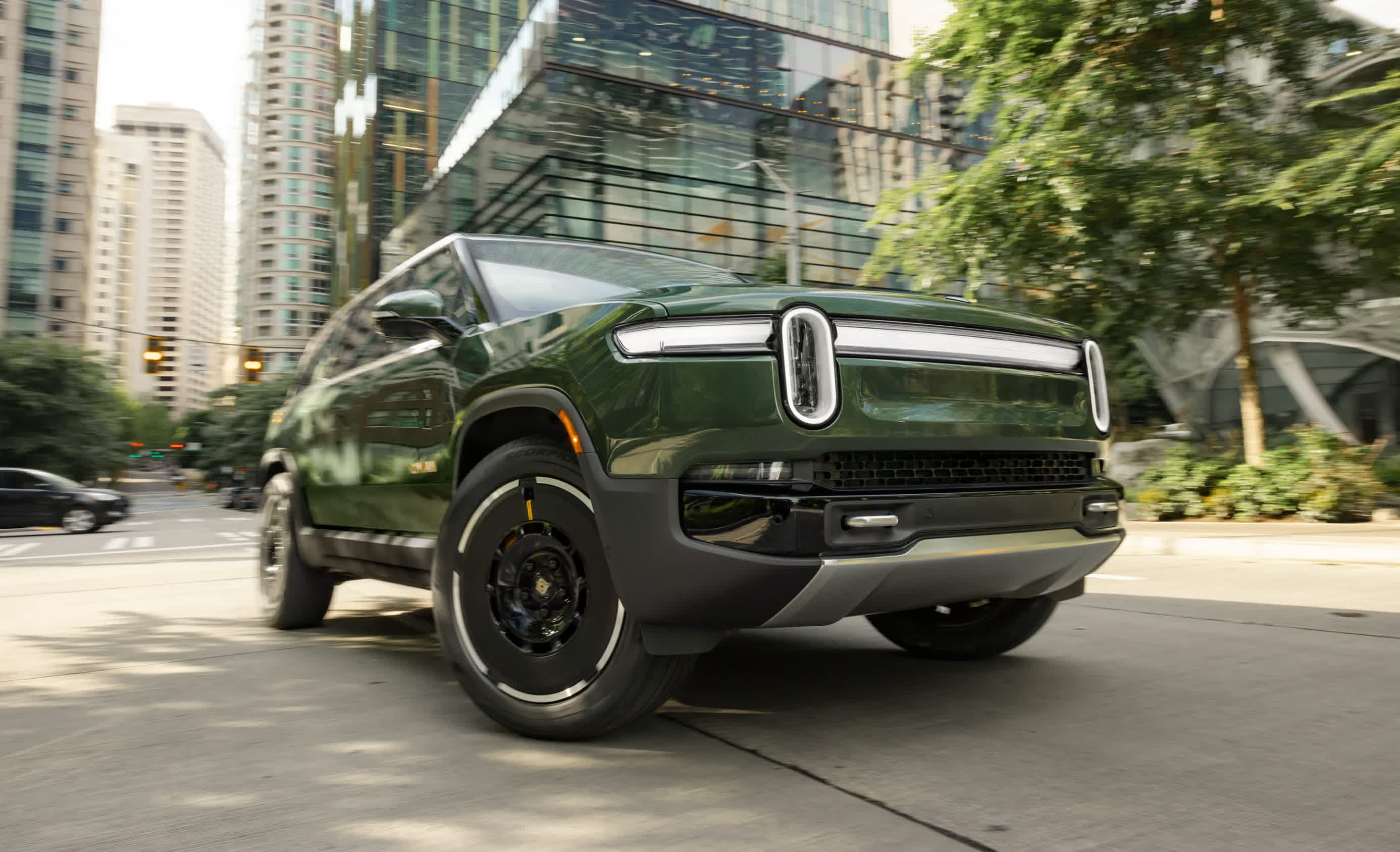
The deal provides both companies with strategic advantages. For Uber, access to a dedicated robotaxi fleet supports its broader push to integrate multiple self-driving partners across its platform. For Rivian, the capital infusion offers financial breathing room and a guaranteed customer as it accelerates the development of autonomous technology.

Uber's initial investment will total $300 million, with additional funding through 2031 contingent on Rivian meeting specific milestones on its self-driving roadmap.

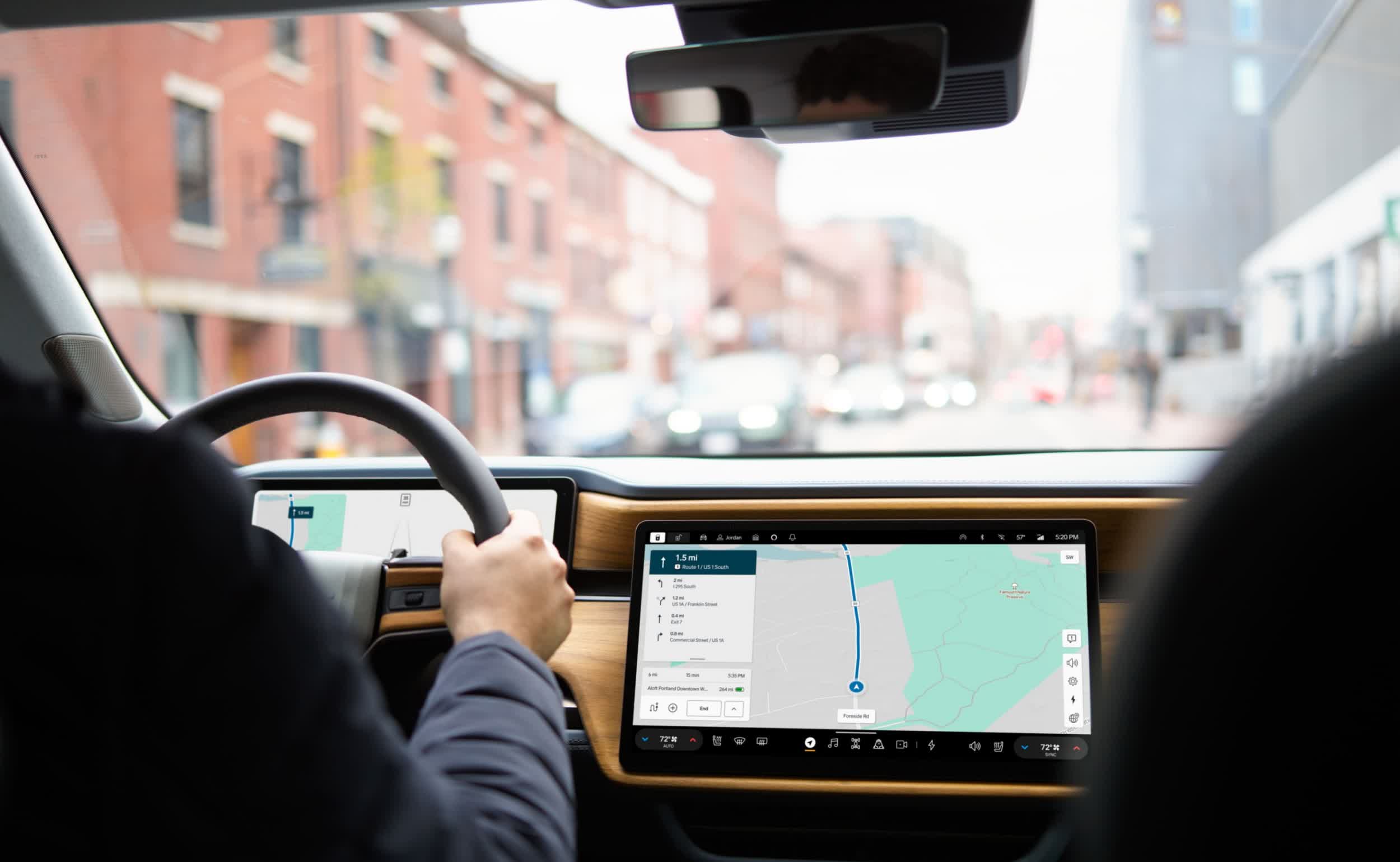
Rivian, known for its R1T pickup and R1S SUV, has yet to bring an autonomous vehicle to market. In December, however, it unveiled its first in-house computer chip designed specifically for self-driving capabilities. The company is also preparing to launch its smaller and more affordable R2 SUV this quarter – the model that will form the backbone of the new robotaxi fleet.
The investment comes as Rivian recalibrates its profitability expectations. The automaker now says it does not expect to achieve adjusted core profit in 2027, citing increased research and development spending tied to its autonomous efforts. Analysts, however, are largely unfazed.

"We believe this was widely expected," BNP Paribas analyst James Picariello told Reuters. He projected that Rivian will reach breakeven EBITDA in 2028 and generate positive free cash flow by 2030, adding that Uber's investment should offset much of the higher R&D spending.

Under the new agreement, Rivian's R2-based robotaxis will debut exclusively through Uber in San Francisco and Miami. Uber retains the option to purchase up to 40,000 additional vehicles beginning in 2030. If Rivian meets all milestones, the company expects to have autonomous taxis deployed across 25 cities in North America and Europe by the end of 2031.
For Uber, the Rivian deal builds on an expanding network of collaborations across the autonomous ecosystem. The company already works with Waymo, Baidu, and Lucid, among others, and leverages Nvidia's AI and simulation platforms to support the design and scaling of autonomous systems.

Uber's long-term vision is to become a marketplace for multiple robotaxi operators, connecting passengers to fleets regardless of manufacturer or autonomy stack.

Permalink to story:

 
The rivian R2 actually looks pretty good, but the robotaxi thing is still a wet dream of techbros. There's already horror stories of what is out there and then there's whole rain/snow problem.

Especially the purple one. That looks great. If Rivian ever gets off the ipad baby train and implements physical controls for HVAC, It'd be on my short list of interesting cars.
 
... the robotaxi thing is still a wet dream of techbros. There's already horror stories of what is out there.

"....Waymo’s autonomous vehicle fleet has surpassed 170 million miles of fully driverless operation without causing any serious crashes or injuries, highlighting a major milestone in self-driving technology. According to Waymo’s safety data, this total is roughly equivalent to 200 human driving lifetimes, and its AI-driven system continues to outperform human drivers in avoiding severe accidents....."

Meanwhile, human drivers continue to kill one million people a year, and maim several million more. Uber drivers have raped or sexually assaulted more than 10,000 women, with Lyft not terribly far behind, and licensed taxi drivers in just the city of London alone physically assault between 200 and 300 people per year.
 
Last edited:
"....Waymo’s autonomous vehicle fleet has surpassed 170 million miles of fully driverless operation without causing any serious crashes or injuries, highlighting a major milestone in self-driving technology. According to Waymo’s safety data, this total is roughly equivalent to 200 human driving lifetimes, and its AI-driven system continues to outperform human drivers in avoiding severe accidents....."

Meanwhile, human drivers continue to kill one million people a year, and maim several million more. Uber drivers have raped or sexually assaulted more than 10,000 women, with Lyft not terribly far behind.
Well, one could point out that those miles were all at 25 or less MPH, where serious crashes and injuries are extremely rare. Or that theyre all in areas with clear weather 99% of the time. Or that the deatha nd rape statistics you just brought up are irrelevant to the topic and the comment you are replying to.

Or that of course a company is going to say their product is great. No ****. They all do that.

But then you'd just accuse me of being a communist and plug your ears screaming "LALALALALA" so there's no point in arguing with you.
 
Well, one could point out that those miles were all at 25 or less MPH...
Waymos have a top speed of 65 MPH, which you'd know had you ever traveled in one.

...Or that theyre all in areas with clear weather 99% of the time...
Waymo operates in the very rainy cities of Miami, Orlando, Houston, and Atlanta, as well as San Francisco, one of the foggiest cities in the nation.

...Or that the deatha nd rape statistics you just brought up are irrelevant to the topic...
I'm pretty confident no woman will ever be raped by the driver of an autonomous Waymo taxi.

Or that of course a company is going to say their product is great. No ****. They all do that.
These are official NTSB statistics. Try again.
 
Good choice. These cares are huge which means mistakes autopilot makes will most likely result in no injuries for the passengers.
 
Waymos have a top speed of 65 MPH, which you'd know had you ever traveled in one.


Waymo operates in the very rainy cities of Miami, Orlando, Houston, and Atlanta, as well as San Francisco, one of the foggiest cities in the nation.


I'm pretty confident no woman will ever be raped by the driver of an autonomous Waymo taxi.


These are official NTSB statistics. Try again.

Top speed does not mean they actually achieve it. My car can go over 100mph for example but never has. It also depends if they operate in those conditions or not and if they limit speed too. Ontop of those America is the simplest country in the world for self driving with largely 90 degree lighted junctions. If you try the same in Europe it wouldn’t go well.
 
Top speed does not mean they actually achieve it.
They actually achieve it. Having traveled in several in multiple cities, I've noticed the only time they're moving less than the posted speed limit is when they'll accelerating or decelerating.

Still, it does tend to feel 'slow', as a normal taxi generally spends most of its time exceeding the posted limit.

Ontop of those America is the simplest country in the world for self driving with largely 90 degree lighted junctions. If you try the same in Europe it wouldn’t go well.
Almost none of Europe's traffic fatalities occur in roundabouts. Autonomous vehicles -- early versions at least -- did struggle to navigate these ... but not to the point of causing serious accidents. And of course, unlike human drivers, autonomous vehicles get safer every single day.

Having driven the world over, I can safely say the US is a more challenging driving environment than nearly all of Europe (though less so than Asia / Africa). In any case, we'll know for sure shortly, as Waymo is about to roll out their service in London in a few months.
 
Last edited:
They actually achieve it. Having traveled in several in multiple cities, I've noticed the only time they're moving less than the posted speed limit is when they'll accelerating or decelerating.

Still, it does tend to feel 'slow', as a normal taxi generally spends most of its time exceeding the posted limit.


Almost none of Europe's traffic fatalities occur in roundabouts. Autonomous vehicles -- early versions at least -- did struggle to navigate these ... but not to the point of causing serious accidents. And of course, unlike human drivers, autonomous vehicles get safer every single day.

Having driven the world over, I can safely say the US is a more challenging driving environment than nearly all of Europe (though less so than Asia / Africa). In any case, we'll know for sure shortly, as Waymo is about to roll out their service in London in a few months.
They travel at the posted limit in heavy traffic do they?

Also you can’t measure it in fatalities. If they’re crashing every 5 minutes because they don’t know priority that’s still bad. Especially when priority changes country to country.

Literally everything in America is signposted it’s one of the easiest countries to drive in, even if the standards are low.
 
Also you can’t measure it in fatalities. If they’re crashing every 5 minutes because they don’t know priority that’s still bad.
What people care about are accidents serious enough to cause injury. Waymo is already ten times better than human drivers, and improving every day:

"...Across all locations, Waymo recorded 0.02 serious injury or worse incidents per million miles, compared with 0.22 for human drivers. This also [includes] lower injury rates involving vulnerable road users, including 92% fewer pedestrian injury crashes and 85% fewer cyclist injury crashes..."

Literally everything in America is signposted it’s one of the easiest countries to drive in
The facts contradict you. Accident rates in the US are higher than most every European nation -- double what they are in the UK. And I don't know what led you to be that "signposts" help autonomous vehicles avoid accidents.

 
Good choice. These cares are huge which means mistakes autopilot makes will most likely result in no injuries for the passengers.
The R2 is an upcoming car and is much smaller than the Rivians you’re thinking of. It’s just a normal sized SUV unlike the R1S. This is the R1-3:
 
What people care about are accidents serious enough to cause injury. Waymo is already ten times better than human drivers, and improving every day:

"...Across all locations, Waymo recorded 0.02 serious injury or worse incidents per million miles, compared with 0.22 for human drivers. This also [includes] lower injury rates involving vulnerable road users, including 92% fewer pedestrian injury crashes and 85% fewer cyclist injury crashes..."


The facts contradict you. Accident rates in the US are higher than most every European nation -- double what they are in the UK. And I don't know what led you to be that "signposts" help autonomous vehicles avoid accidents.

No they’re interested in not getting crashes into to cause financial damage.

The accident rate in the US is higher because the standard of driving is terrible, the tests to get a licence are basically an attendance course and there’s no requirement to keep vehicles maintained.
 
No they’re interested in not getting crashes into to cause financial damage.
Eh? You realize we're talking about robotaxis here, right? If you're riding in a taxi that experiences a minor fender-bender, you're not financially responsible.

In any case, the point is moot. Waymo taxis are safer than human drivers. Stop trying to deny reality. In ten years these vehicles will be ubiquitous ... in 25 years, it'll be a crime to drive in most areas without AI assistance. Just hope they add a grandfather clause for your 1978 Pinto.
 
Eh? You realize we're talking about robotaxis here, right? If you're riding in a taxi that experiences a minor fender-bender, you're not financially responsible.
Which is great if you don’t need your car and it’s not written off. You’re reading marketing and not seeing where the information gaps are.
In any case, the point is moot. Waymo taxis are safer than human drivers. Stop trying to deny reality. In ten years these vehicles will be ubiquitous ... in 25 years, it'll be a crime to drive in most areas without AI assistance. Just hope they add a grandfather clause for your 1978 Pinto.
Based on what? You’re basing off of one type of incident which is largely due to where the vehicles are driving and at what speeds. If you’ve ever driven a car with assistance features you’d know how often they nearly cause crashes, especially in places where all junctions aren’t straight or turn 90 degrees. The percentage of times simple things like lane assist has tried to keep me on a roundabout rather than let me exit or has tried to drive me into a HGV in high wind is basically 1 for 1 every time I’ve been in a vehicle with it
 
Which is great if you don’t need your car and it’s not written off.
If you have your car with you, why would you be needing a taxi? We're talking about robotaxis, remember?

The percentage of times simple things like lane assist has tried to keep me on a roundabout rather than let me exit...
Learn to use your turn signal when exiting a roundabout, as the law requires, and this won't happen. Nor is lane assist anything remotely resembling AI autonomy ... it's a simple sensor feedback system.
 
Last edited:
Uber drivers have raped or sexually assaulted more than 10,000 women, with Lyft not terribly far behind, and licensed taxi drivers in just the city of London alone physically assault between 200 and 300 people per year.
I'm pretty sure that is an update to bring that customer experience back to the general public for which Uber will charge a premium for.
 
If you have your car with you, why would you be needing a taxi? We're talking about robotaxis, remember?
Because they can still crash into you?
Learn to use your turn signal when exiting a roundabout, as the law requires, and this won't happen. Nor is lane assist anything remotely resembling AI autonomy ... it's a simple sensor feedback system.
Which would be great if every one was a spiral where you don’t need to cross lanes before exiting or the magic roundabout style didn’t exist.

AI is literally a sensor feedback system. Do you think lane assist has no logic and AI doesn’t rely on the same sensors?
 
Which would be great if every one was a spiral where you don’t need to cross lanes before exiting or the magic roundabout style didn’t exist.
You fail to comprehend. Whether a normal roundabout or the exceedingly rare "magic" style -- you're still legally required to use your turn signals. If you follow the law, your lane assist feature won't complain. You're blaming the car for your inability to operate it correctly.

AI is literally a sensor feedback system. Do you think lane assist has no logic and AI doesn’t rely on the same sensors?
You scored a logical double fault there. Not only is the problem you believe you're having with lane assist an illusion, but even if it did exist, it wouldn't be shortcoming of the lane sensors. The logic reacting to those sensors is a simple binary check -- nothing else. Humans and planarian flatworms can both sense light ... but humans (most of us, at least) are able to react in a much more complex manner to a specific light signal.
 
Back