
Rumor mill: While Sony's CEO recently admitted that the PlayStation 6's launch date remains undetermined, rumors place both it and the next Xbox console at least a year away, if not two. Speculation about their hardware capabilities has circulated for over a year, and the latest reports suggest that their GPU specifications are locked in.
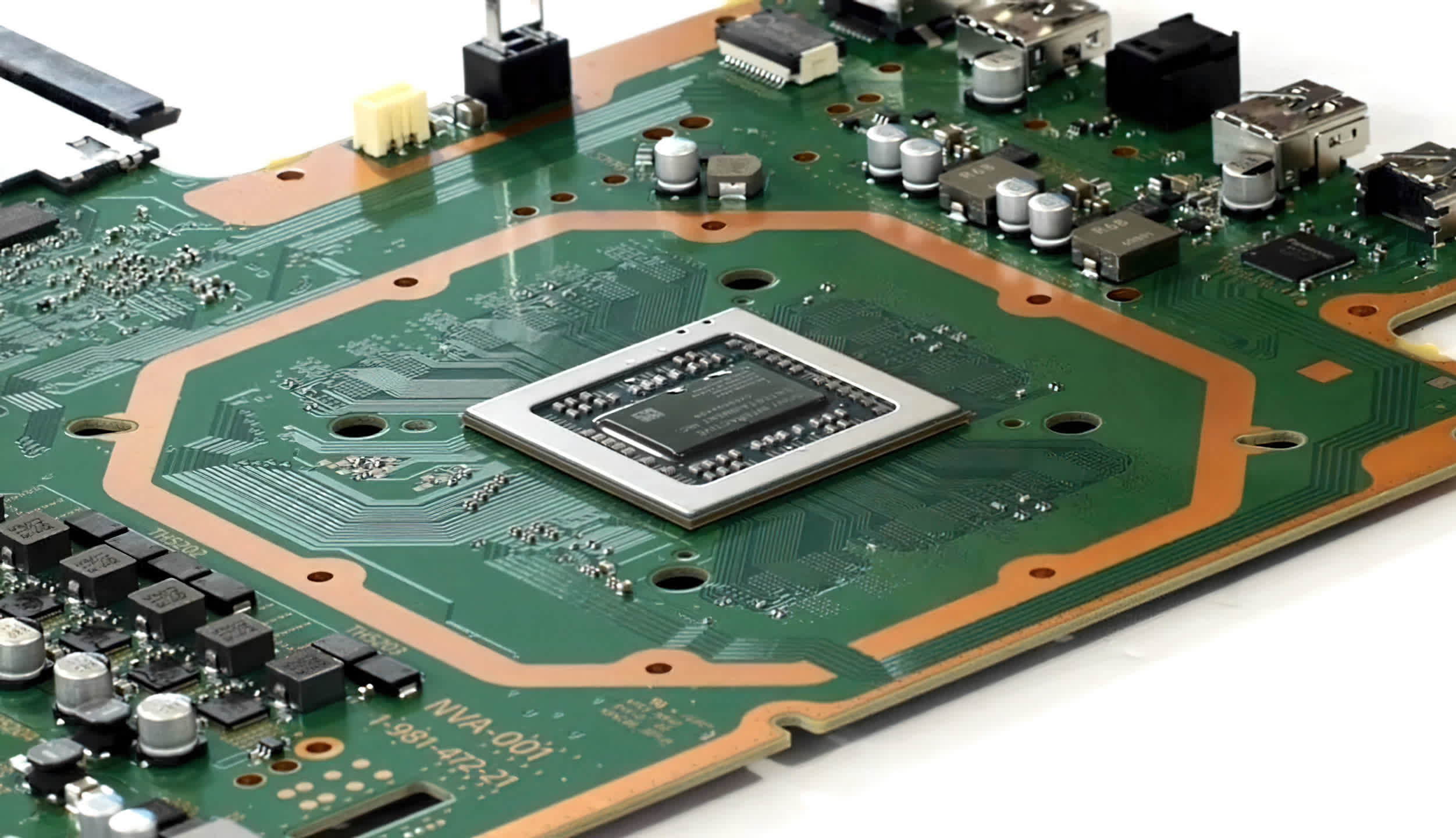
According to prominent leaker Kepler_L2, Sony and Microsoft have already taped out the graphics chips for the PlayStation 6 and next-generation Xbox, which can theoretically achieve 40 and 56 TFLOPs, respectively. The tipster made the claims amid a discussion about the dangers of relying on simple TFLOP comparisons.
TFLOPs (trillion floating-point operations per second) became a marketing buzzword for console and GPU manufacturers around a decade ago. For example, Microsoft advertised the Xbox One X by highlighting its 4 TFLOP GPU. However, the number, sometimes used as a shortcut to suggest how many polygons a graphics chip can display, usually doesn't enable apples-to-apples comparisons.

In addition to differences between single- and double-precision, the workloads possible with each FLOP also differ between GPU architectures and generations. As a result, the PS6's RDNA 5-based 40-TFLOP graphics chip is not directly comparable to the PS5's RDNA 2-based 10.3 TFLOPs or the RDNA 4-based AMD Radeon RX 9070 XT's 48.7 TFLOPs.
Since the PS6 and the next Xbox, codenamed Helix, are expected to use RDNA 5 GPUs, the numbers suggest that Helix's raw-performance advantage might reach 40%. However, even this comparison doesn't account for differences in CPU cores, clock speeds, memory, ray tracing performance, AI-related tasks such as upscaling, thermal design power, and other details. Ultimately, it will be third-party developers who decide how to utilize each console's advantages.
Reports from last year indicated that the PS6 might feature between 40 and 48 RDNA 5 Compute Units, eight AMD Zen 6 CPU cores, and a 160W TDP. Meanwhile, Helix is expected to include 10 Zen 6 cores with 20 threads, but its Compute Unit count remains unclear. RAM pools for both consoles also likely remain in in flux, given the memory shortages that have pushed consumer hardware prices upward. Four-digit MSRPs for both next-generation consoles when they arrive before the end of 2028 are a real possibility.
Kepler also maintains that Sony plans to launch a new handheld device using a cut-down version of the PS6's architecture.
Rumored specs put Xbox Helix's GPU 40% ahead of PS6 on paper, but TFLOPs don't tell the whole story


