
In a nutshell: Samsung and Google have unveiled a mixed reality headset that appears to be Android's answer to Apple's Vision Pro and visionOS, offering a similar range of features. But will cutting the price by nearly 50 percent be enough to succeed where Apple stumbled?
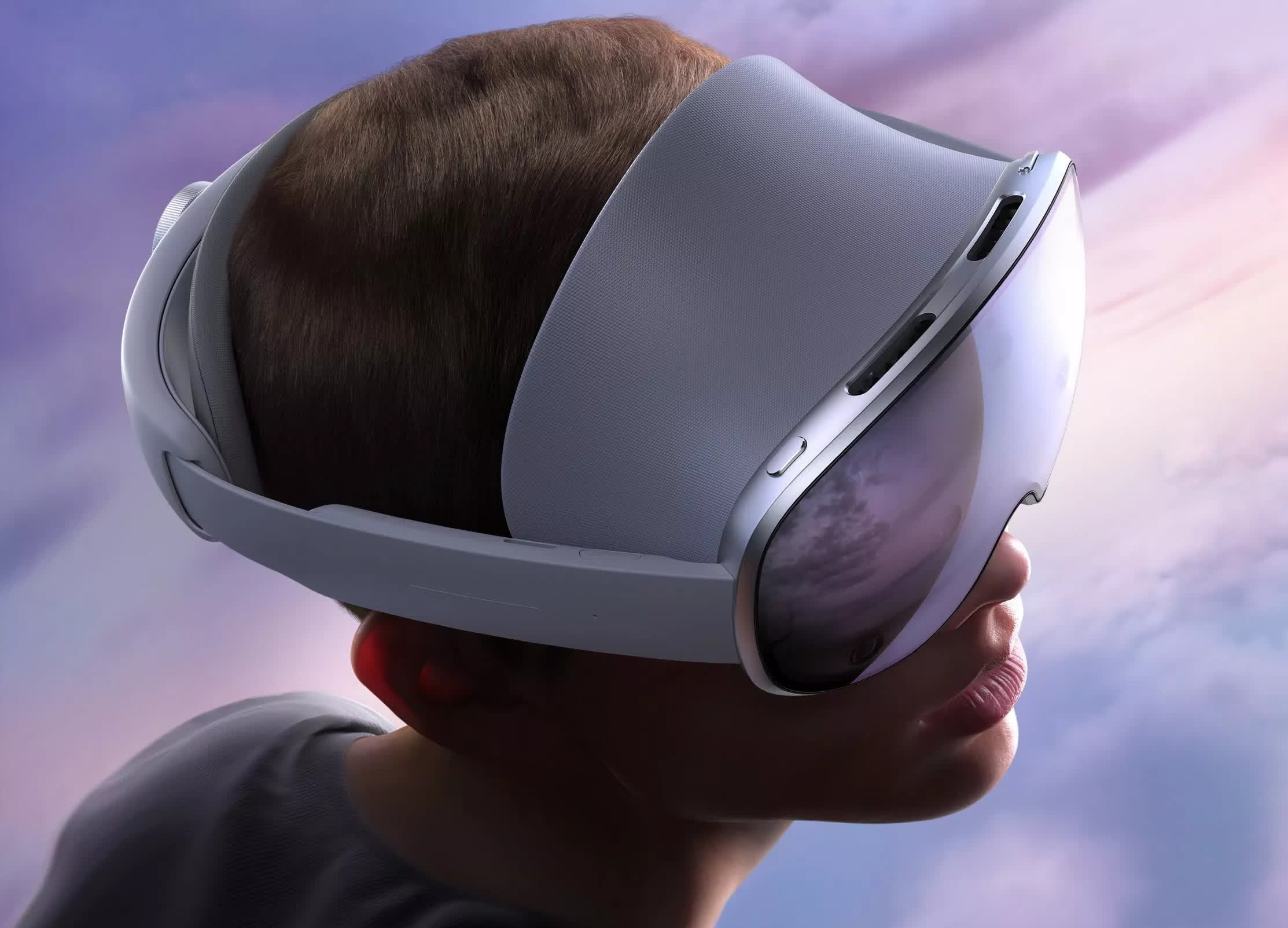
The Samsung Galaxy XR headset is now available, starting at $1,799. The device serves as the launch platform for Google's Android XR system, which brings the Android app ecosystem into the mixed reality space.
Like Apple's visionOS, Android XR aims to deliver immersive experiences through virtual screens, 3D media, and hand-tracking controls integrated with the Google Play Store. Interestingly, although Google never released a native YouTube app for the Vision Pro, the Galaxy XR includes a mixed reality YouTube portal.
Echoing the Vision Pro's Mac connectivity, the Galaxy XR can mirror apps from Windows PCs and supports full keyboard and mouse input. Unlike Apple, however, Samsung also offers traditional game controllers, starting at $174.99.
Artificial intelligence marks one of the biggest distinctions between the Vision Pro and the Galaxy XR. While Apple has only recently begun integrating Apple Intelligence into its headset, Google's Gemini assistant is built directly into Android XR, designed to guide and assist users across multiple apps.
For example, drawing a circle around an object using the headset's hand-tracking controls triggers an AI-powered reverse image search. The assistant also integrates with an immersive version of Google Maps, offering landmark information and helping users plan trips in mixed reality.
The Galaxy XR is powered by Qualcomm's Snapdragon XR2+ Gen 2 processor, paired with 16GB of RAM and 256GB of internal storage. Its Micro-OLED display delivers a resolution of 3,552 × 3,840 pixels per eye at up to 90Hz. Battery life matches the Apple Vision Pro's 2.5 hours of general use, but the Galaxy XR can be as much as 200 grams lighter, depending on the attachments used for either device.
Many Vision Pro owners expressed buyer's remorse in the months following the headset's release, citing its $3,500 price tag and limited app ecosystem. Apple ultimately halted production due to low demand. Although Samsung's device undercuts its rival by about $1,700, it remains to be seen whether it can build a more compelling software library.
Apple, meanwhile, hasn't abandoned mixed reality. The company is reportedly developing a lighter and more affordable version of the Vision Pro for release in the coming years, though it may prioritize smart glasses first – a move seen as a response to Meta's Ray-Ban Display glasses.
Samsung's new Galaxy XR headset undercuts Apple Vision Pro by $1,700


