Looking ahead: Recent advancements in scientific discovery methodologies are using AI and emerging quantum technologies to compress decades of materials research into months or weeks. While these technologies are still evolving, their early successes in battery development suggest a future where sustainable, high-performance energy storage could become more accessible and environmentally responsible.

Artificial intelligence and advanced computing are helping scientists quickly identify and develop new battery materials, reducing reliance on lithium and other scarce resources. In a collaboration between Microsoft and the Department of Energy's Pacific Northwest National Laboratory (PNNL), researchers have identified a promising new solid-state electrolyte, NaxLi3−xYCl6, which could reduce lithium use by approximately 70 percent, marking a significant step toward more sustainable and efficient batteries.
The process began with Microsoft deploying its AI-powered Azure Quantum Elements platform to sift through an immense dataset of 32 million inorganic compounds. The AI model, known as M3GNet, accelerates molecular dynamics simulations, evaluating properties such as atomic diffusivity, a factor critical to electrolyte performance. Through successive screening stages, the initial list was narrowed to approximately 500,000 stable candidates, and then further reduced to 18 promising materials within 80 hours – a task that would typically require years of traditional experimentation and computation.
PNNL researchers then synthesized the top candidate material, incorporating both sodium and lithium ions in its crystalline structure. This hybrid ionic approach was previously considered unlikely due to the differences in ionic sizes and similar charges, but testing revealed a synergistic effect, where sodium and lithium ions facilitate each other's movement through the electrolyte channels.
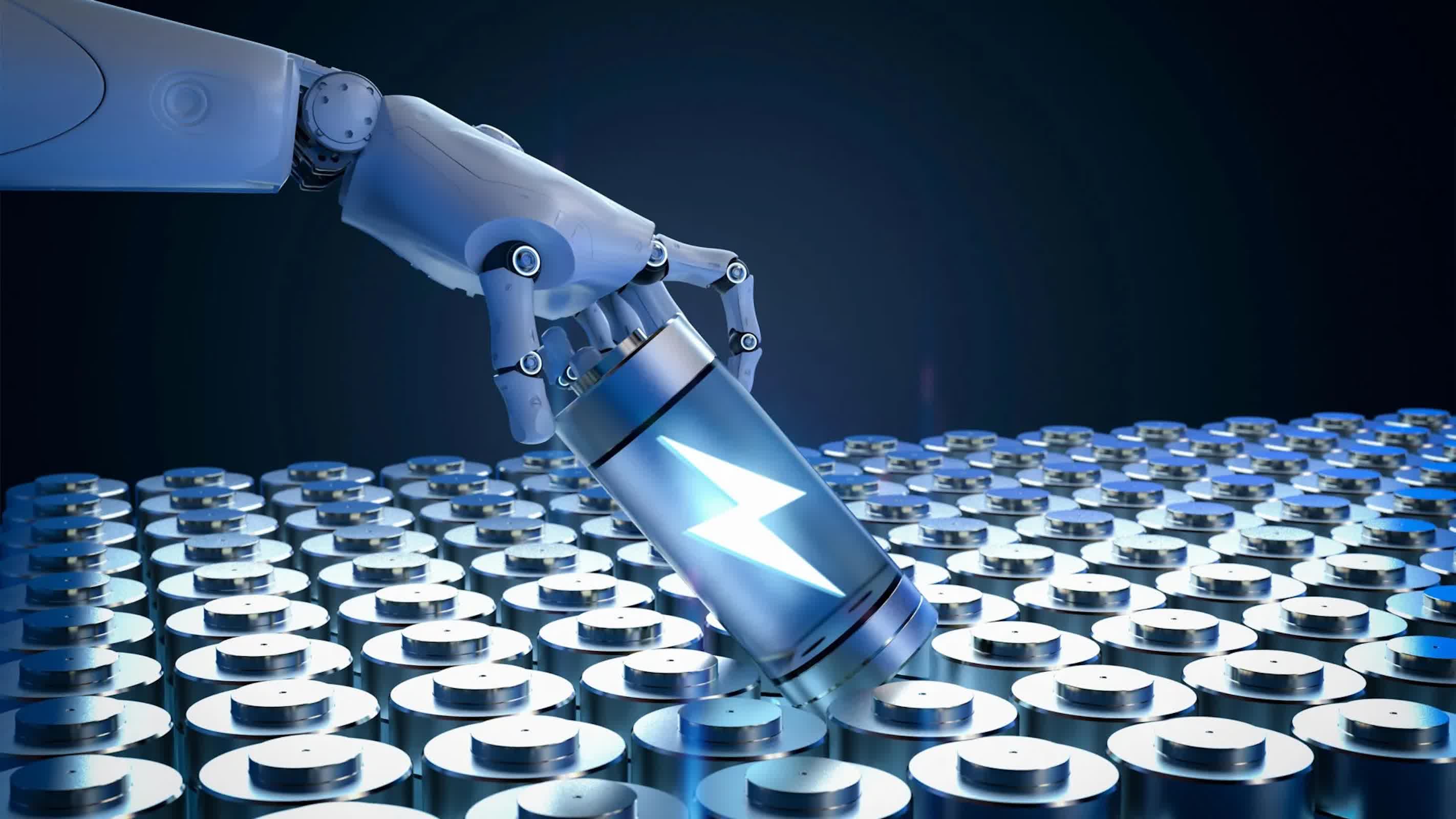
The new solid-state electrolyte demonstrated viable ionic conductivity across a range of temperatures, supporting its potential use in safer, high-density solid-state batteries. Solid-state batteries use a solid material instead of a flammable liquid, making them safer and capable of storing more energy than regular lithium-ion batteries.
Beyond this specific discovery, the broader push to leverage AI in battery research reflects a shifting paradigm. Researchers like Dibakar Datta at the New Jersey Institute of Technology have applied machine learning frameworks such as crystal diffusion variational autoencoders and large language models to explore multivalent batteries, which use ions like magnesium and calcium that are capable of carrying multiple charges. These larger ions present design challenges, as they may disrupt existing battery materials, but AI enables rapid screening of suitable porous structures to accommodate them.
At IBM Research, AI models trained on billions of molecules play a crucial role in identifying and optimizing complex electrolyte formulations. Using foundation models and deep search algorithms, IBM's team expedites the discovery of battery-safe chemicals with enhanced ionic conductivity and stability.
Additionally, IBM employs digital twins that simulate degradation over thousands of charge cycles. These models allow researchers to predict long-term performance in a fraction of the time laboratory tests require. IBM's collaborative projects include work with electric vehicle manufacturers to design next-generation high-voltage electrolytes following these AI-driven methods.
Looking forward, both Microsoft and IBM are exploring the role of quantum computing in battery materials research. Quantum computers have the potential to simulate atomic and molecular interactions at levels of detail that are unattainable by classical systems, enabling more precise modeling of complex solid-state materials and innovative chemistries, such as lithium-sulfur or sodium-ion batteries. This could accelerate discovery further and improve design optimization for battery longevity and energy density.


