
TL;DR: Anyone who's fallen face-first on thick ice will testify that it's pretty strong. But it's nothing compared to a new type of ice created by researchers. The aptly nicknamed super ice is an incredible 10 times stronger under compression than regular frozen water, making it close to the strength of concrete.
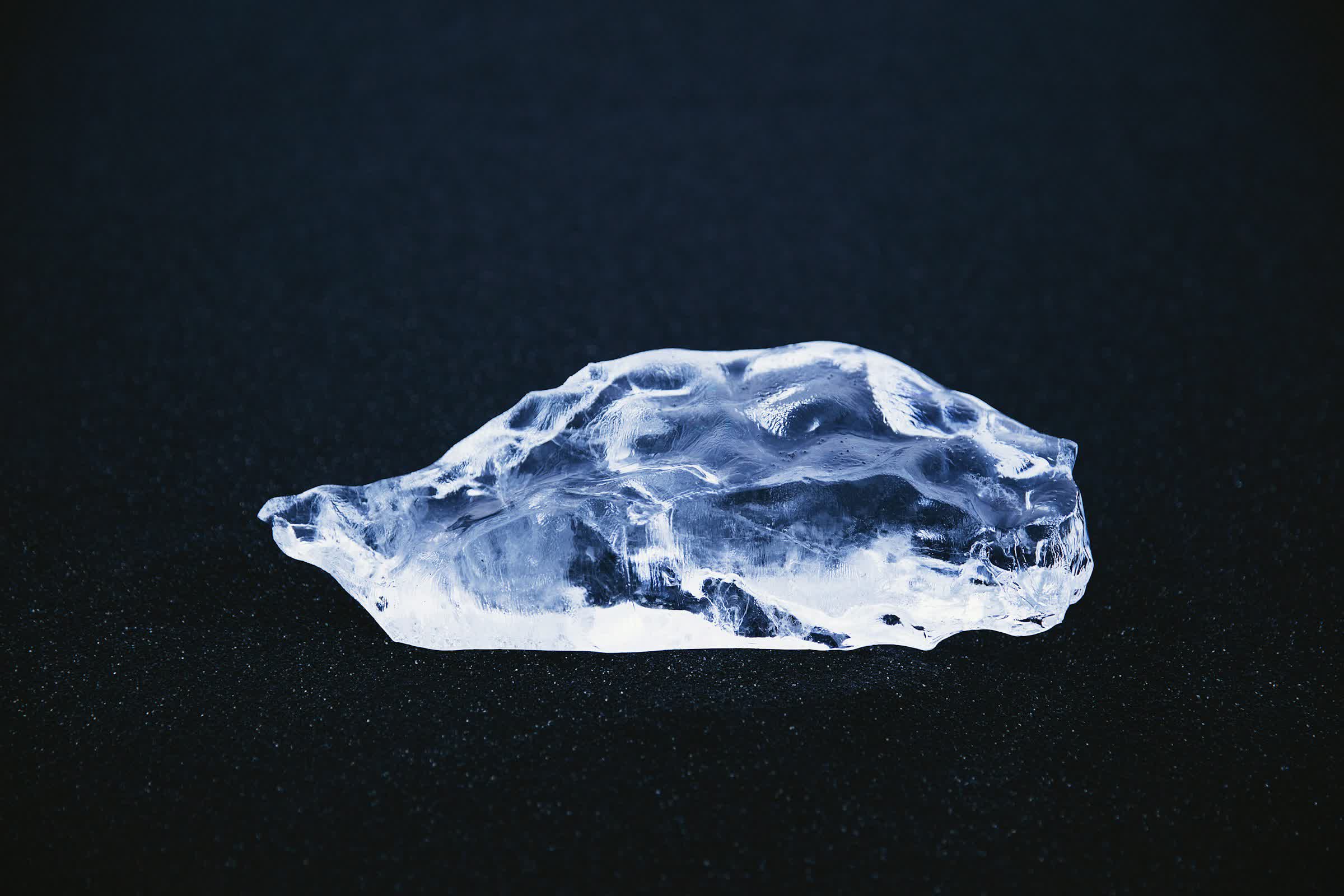
Called BioPykrete, the material was developed by a team led by researchers at the Hebrew University of Jerusalem. It combines ice, tiny plant-derived cellulose crystals, and a specially engineered protein. The resulting composite also absorbs around 70 times more energy before breaking than ordinary ice.
Regular ice can fail suddenly as cracks race through it. But BioPykrete deforms and gives way more gradually, potentially making it a more useful building material. So not only can it withstand pressure, it can also avoid shattering without warning.
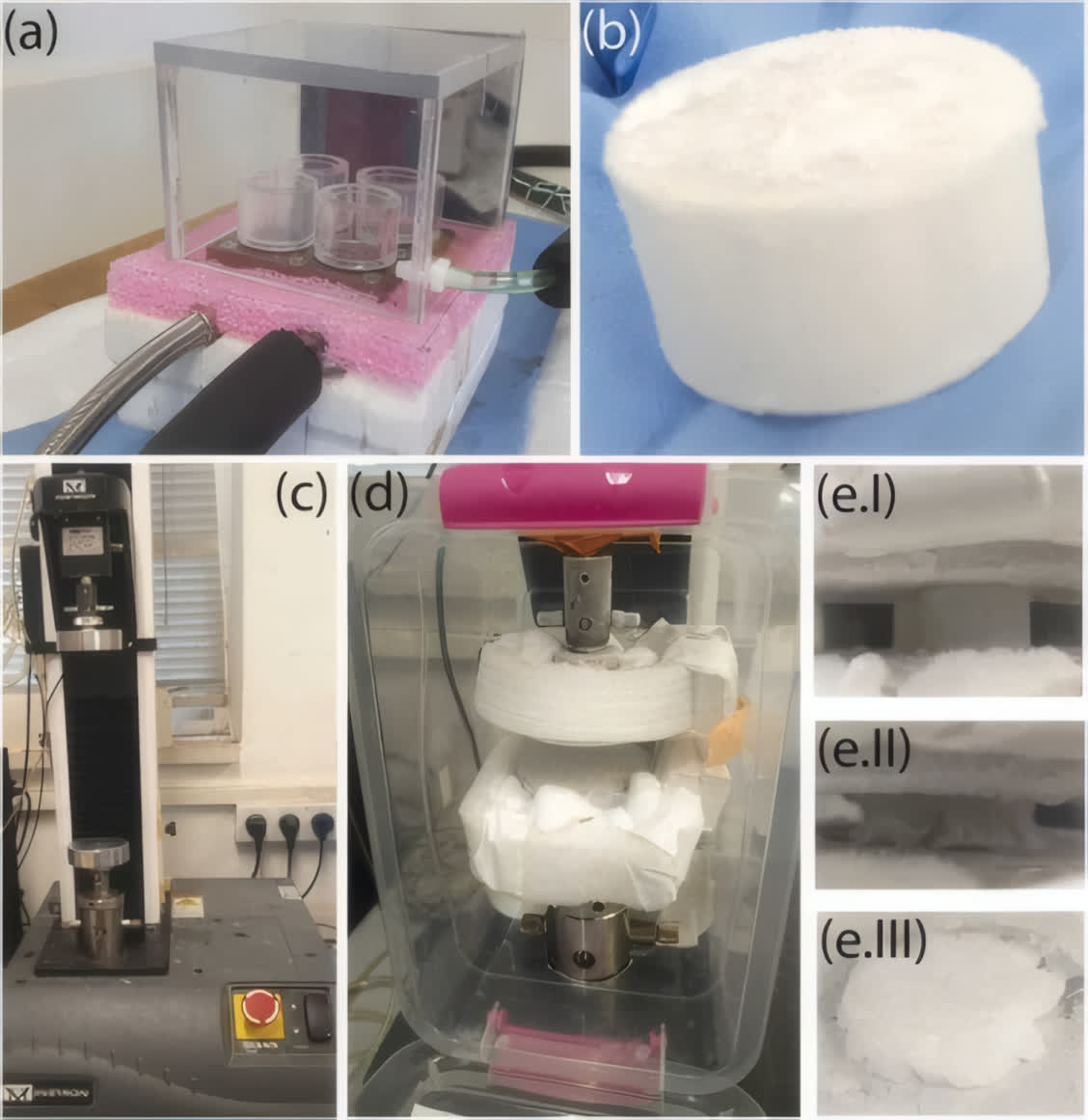
"We wanted to go beyond simply mixing fibers into ice and instead control how the different materials connect at the molecular level," said Professor Ido Braslavsky, one of the lead researchers.
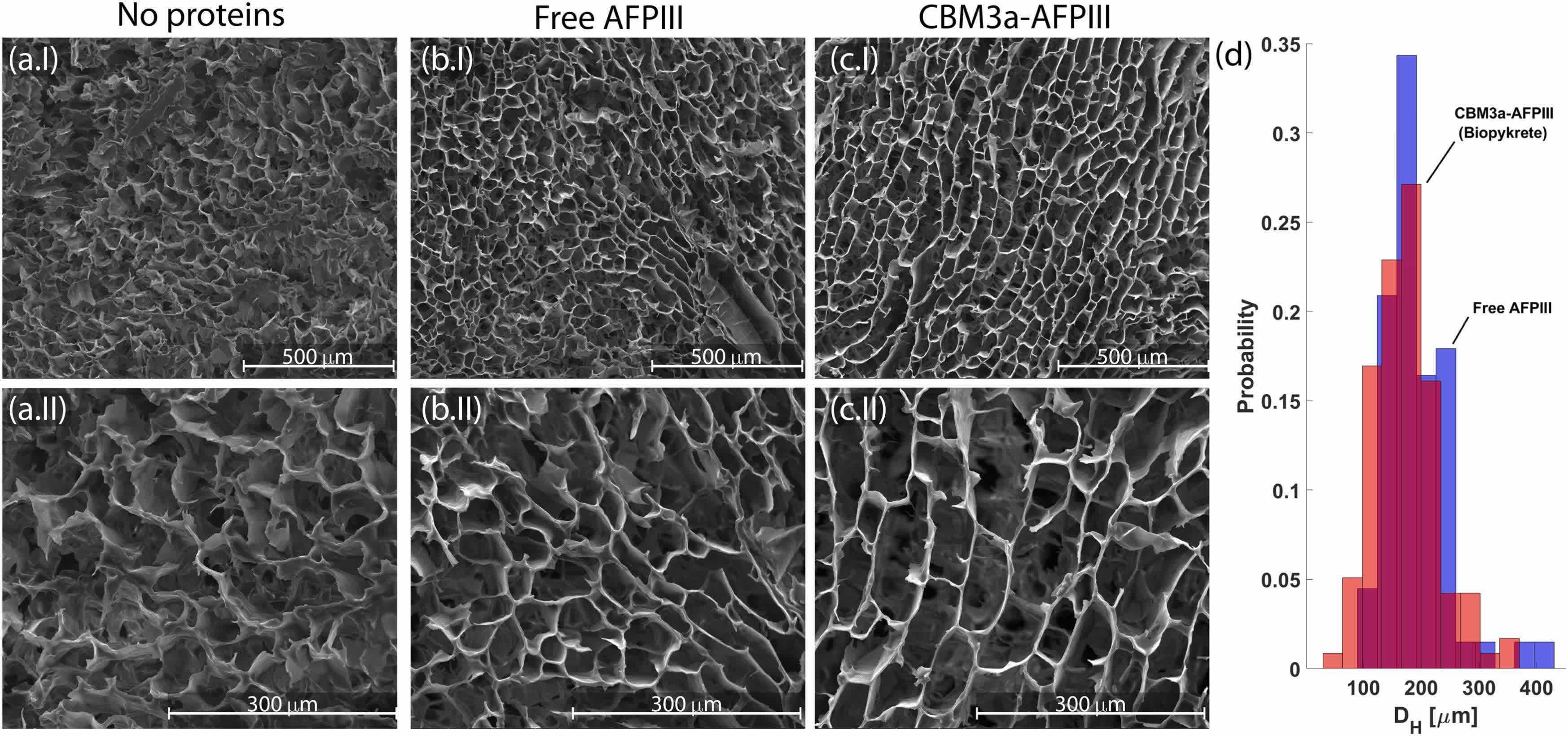
The cellulose nanocrystals form a three-dimensional network around microscopic pockets of ice during freezing. The protein, called CBM3a-AFPIII, connects the ingredients in a glue-like fashion. One part attaches to ice, while the other binds to cellulose.
The researchers believe that this reinforced network helps stop cracks from spreading freely. Adding the protein doubled both compressive strength and energy absorption compared with an otherwise identical ice-and-cellulose mixture. Those tiny connections appear to be doing plenty of heavy lifting, according to the study.
As ScienceAlert notes, the idea has an old ancestor. During World War II, Britain explored building an aircraft carrier from Pykrete, a mixture of ice and wood pulp. The project was abandoned, but the basic principle of reinforcing frozen water has clearly survived.
The intended destination this time is construction in Arctic and Antarctic regions. Shipping concrete and steel to these locations can be difficult and expensive. A material based mainly on water and plant cellulose could offer a biodegradable alternative with a potentially smaller carbon footprint.
This isn't the first time a natural element has been reinforced by science. You might remember Superwood, which strengthens wood by modifying its internal structure.
The study remains a proof of concept. As for what the next steps will be, the authors wrote that "establishing its suitability for infrastructure will require further durability, freeze – thaw, creep, and life-cycle testing." That means checking how it handles repeated freezing and thawing, whether it slowly deforms under a sustained load, and whether it can deliver real environmental benefits.
Scientists create super ice that's almost as tough as concrete


