SK Hynix boss says the memory chip shortage is going to last until 2030

Alfonso Maruccia

Posts: 2,584   +972
Staff
Facepalm: At this point, end users and consumer hardware enthusiasts are hoping the AI bubble will finally burst once and for all. Meanwhile, chip manufacturers remain unable to keep up with the explosive demand from Big Tech and AI data center ventures. SK Hynix now predicts that the silicon industry won't return to a more rational state anytime soon. It's better to prepare for the worst.
According to recent statements by SK Group chairman Chey Tae-won, ongoing issues in the memory and silicon supply chain are unlikely to improve for another four to five years. SK Group owns SK Hynix, the world's third-largest semiconductor manufacturer and an integrated device manufacturer with in-house foundry capabilities. While SK Hynix is currently experiencing a surge in revenue, it still cannot meet the demand from its enterprise customers.

Chey Tae-won spoke with reporters during Nvidia's GTC event in San Jose, California, confirming that SK Hynix and other major players in the silicon industry are expected to fall short of customer demand until 2030. The South Korean company is already struggling with a 20% backlog of orders for basic wafers needed to produce new memory chips.

SK Hynix now controls more than 50% of the global market for high-performance HBM memory chips, along with 32% of the overall DRAM market. Together with Samsung and Micron, the company is playing a major role in the AI sector and the broader technology industry. Prices are skyrocketing – but that's not even the worst part of the problem.
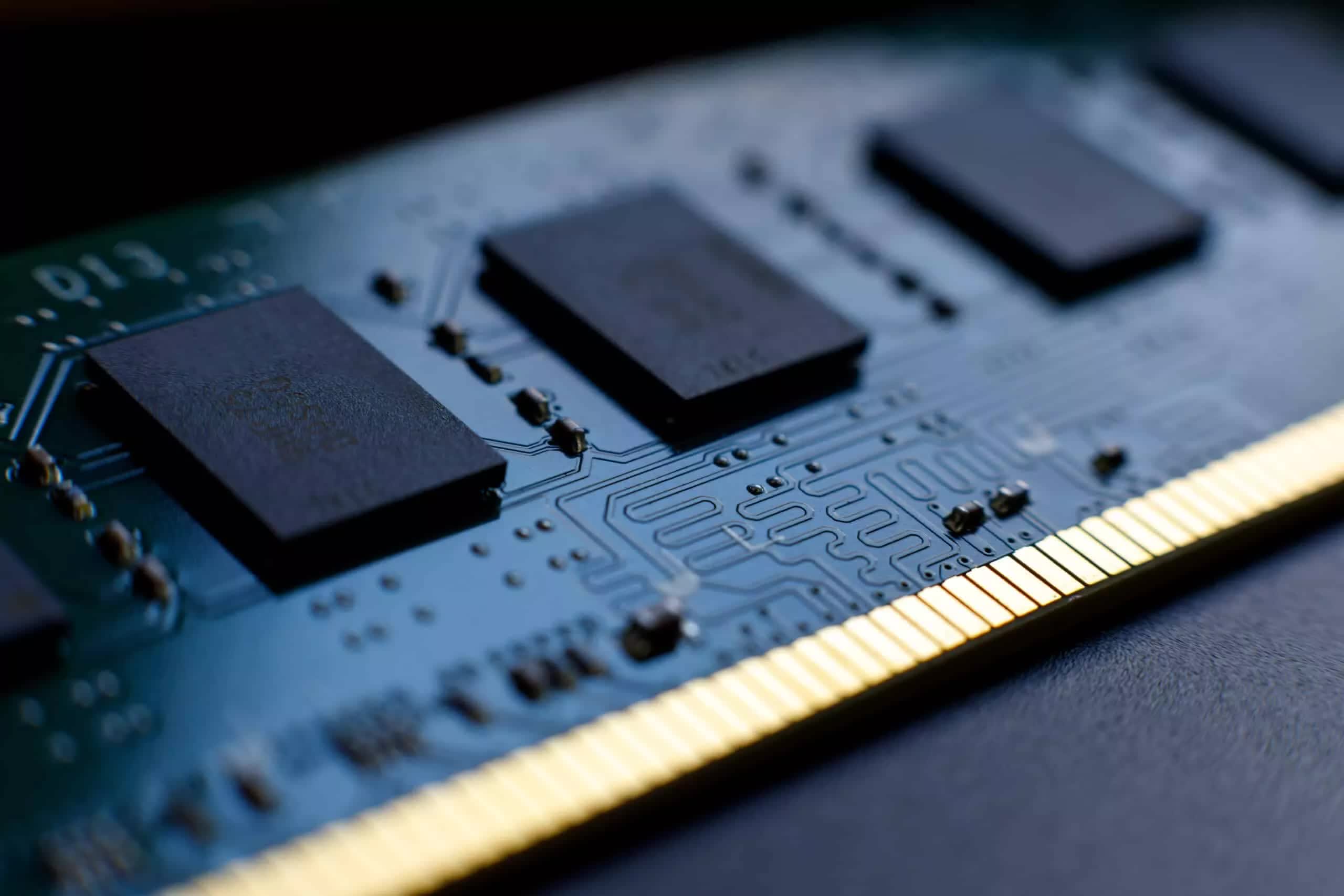
Tae-won noted that SK Hynix's inability to fully meet demand is beginning to affect its profit margins. The company has already invested in a major expansion of its manufacturing plants, and new plans are reportedly in the works to help stabilize market prices. However, SK Group's chairman did not provide any concrete details about these measures.

A few months ago, the Korean company stated that it had already sold its entire manufacturing capacity for memory products for 2026. Ongoing geopolitical tensions – including the US and Israel's military actions against Iran – are likely to exacerbate market uncertainties and supply chain disruptions, as demonstrated by the recent drone strike on a helium supply facility in Qatar.

Permalink to story:

 
I once went seven years between major upgrades. Considering that I paid just over $200 for the 64GB of DDR5 in my current system, and that same kit is now over $1100, I have a feeling it is going to be beyond 2030 before I perform another MB/CPU/DRAM upgrade. The AI collapse can't come soon enough.
 
I'm sure they're weeping at the situation as they jack prices and rake profits. They can have it. My workload is static and I have spares.
 
All these frequent articles about memory and storage shortages, but oddly enough there are no articles of any of these big companies pledging to drastically (or at all) increase production capacity to ease shortages. I guess if it was up to them they would keep prices sky high forever by creating an artificial shortage. Yay capitalism!
 
All these frequent articles about memory and storage shortages, but oddly enough there are no articles of any of these big companies pledging to drastically (or at all) increase production capacity to ease shortages.
You haven't been paying attention. Every major memory maker has not only pledged to drastically increase production, but is already doing so. Here's just one of thousands of stories:

 
MAYBE, just maybe (hope anyway), that this will help BREAK the cycle of buying a new
computer, watch, tv, phone every couple years, and keeping them until they "wear out".
This buy something new, and in a year your phone carrier talks you into upgrading to a
new one. It's silly and those devices not repurposed are sent to a landfill.
 
I once went seven years between major upgrades. Considering that I paid just over $200 for the 64GB of DDR5 in my current system, and that same kit is now over $1100, I have a feeling it is going to be beyond 2030 before I perform another MB/CPU/DRAM upgrade. The AI collapse can't come soon enough.

I upgraded from the 4770k to the 13700k, so that's 9 years. I think I'll be keeping my 13700k & 32gb DDR5 for a similar time line (Intel dropped the ball on the 13xxx series, but it runs cool with an undervolt & power limits).
 
I don't think this is much of an issue.

Many ppl here drive $150K cars and each own a 5090, a 2KW PSU and multiple rigs.

I am sure they can cough up $1K-2K for RAM. It's easy, just swipe credit card and you're done.

You make it sound like the end of the world is nigh, but no. You'll just keep paying like you paid $4K to buy a 5090 and call it a day.
 
SK Hynix is ​​complaining that they can't rake in as much as they'd like. The "shortage" they describe is their own inability to serve even more customers and collect even more profit margins.
When Chey says that "the inability to meet demand affects margins," he's not talking about losses—he's talking about untapped potential revenue. It's a first-world problem.
 
There is no chip shortage we are manufacturing full 100% no shortage, you ***** are just going to have to pay more because we need money to build massive AI
 
All these frequent articles about memory and storage shortages, but oddly enough there are no articles of any of these big companies pledging to drastically (or at all) increase production capacity to ease shortages. I guess if it was up to them they would keep prices sky high forever by creating an artificial shortage. Yay capitalism!
That's not capitalism, that's monopoly.
Cartel agreement of three manufacturers (SK Hynix, Micron, Samsung)
 
Back