Soaring DDR5 prices lead to falling motherboard sales and calls for gamers to boycott RAM

midian182

Posts: 11,738   +177
Staff member
A hot potato: The chaotic state of RAM prices continues to impact the industry. According to a new report, motherboard sales have fallen by as much as 50% as a result of the crisis. It has also led to gamers calling for a RAM boycott in hopes of easing the situation, but the reality is that such a move is unlikely to work.
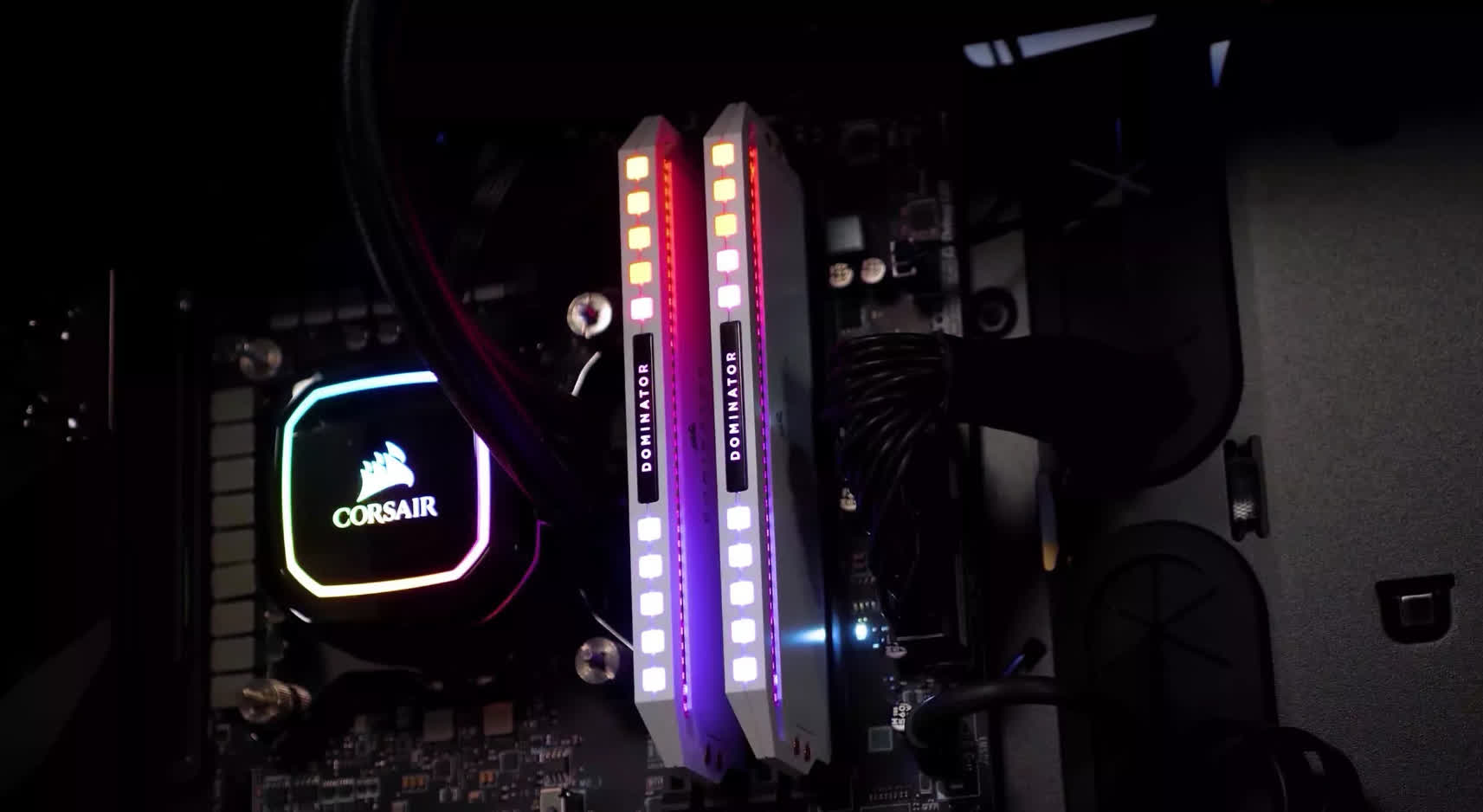
We've covered the memory-pricing crisis since it began, including this deep dive into the problem and how it's caused by demand from AI data centers that require massive amounts of DRAM.

A new report Japanese from outlet Gazlog states that out-of-control DDR5 prices are impacting motherboard sales, forcing manufacturers such as Asus, MSI, and Gigabyte to significantly lower their sales targets.

DDR5 prices are simply stupid right now. A 64GB kit is now more expensive than a PS5 console or an RTX 5070. We've even seen several stores remove fixed pricing signs from DDR5 displays, relying on market rates because costs are changing so rapidly each day.

The problem for motherboard makers is that people upgrading from DDR4 or older systems – along with first-time builders --need DDR5 to pair with their shiny new boards. But with prices so high, it's a bad time to buy.

The result is a 40-50% decrease in motherboard sales compared to the same period a year earlier, writes Gazlog, leading to a lowering of sales targets. It's expected that CPU sales will eventually experience a similar fall in sales due to the RAM situation.

In an attempt to fight back, there are now calls on Reddit for gamers to boycott RAM completely in the hope that prices will return to normal.

The RAM Shortage is Deliberate. Refusing To Pay These Prices Now Will Save Us All A Fortune
byu/Arbiter61 inpcmasterrace

Unfortunately, the rallying cry is likely to have very little, if any, effect. The biggest issue, as we know, is that DRAM supply and future manufacturing capacity have already been bought out by companies to support their aggressive data center-building plans, causing the shortage.

Most memory manufacturers' sales come from industry, enterprise, data-centre, and other segments that aren't consumer PCs. And while it's true that a mass boycott would have some impact on their bottom lines, there's the other issue: not everyone will take part.

As we saw during Covid with graphics cards, calling for the public to boycott something for the greater good – regardless of whether it would work anyway -- rarely succeeds when there are always people willing to pay any price. And that's not mentioning the scalpers who are always ready to take advantage of other people's misery.

The memory crisis is also affecting graphics cards. AMD looks set to raise prices by 10%, while both Lisa Su's firm and rival Nvidia are rumored to be considering axing some low- and mid-range cards.

Permalink to story:

 
Reddit will cry, the world will continue forward and for every stick of memory that consumers don't buy, an AI service will happily take instead. Instead of "boycotting", just wait for the inevitable fire sale, in 18-24 months, when loans start to come due and companies can't repay because there aren't enough consumers, because they were laid off because of the AI.
 
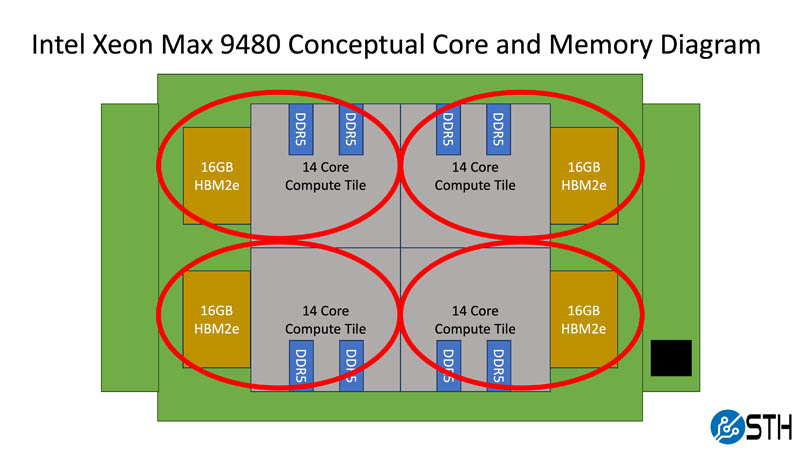
The only way forward and the only viable solution is for AMD and Intel to take the matter into their own hands and commit to producing affordable CPUs at scale, similar to the Xeon Max 9480(10nm, 2023), featuring 64+ GB of integrated L4 HBM cache directly on the chip. After all in the age of AI, such capacity isn’t a luxury anymore.
Intel-Xeon-Max-9480-Conceptual-Diagram-SNC.jpg


Intel-SC-22-Press-deck-final-Embargo-6am-PT-Nov-9-1-page-017-1456x819.jpg
 
Last edited:
AI bubble will pop well before a grass roots effort has any meaningful effect. I would say the solution will come with future AI accelerators that are more efficient and rely less on DRAM or a software algorithm or combination of both.

The LLM is simply too inefficient at almost every level, from compute to power requirements. The industry knows this and the race for efficiency is on.
 
The only way forward and the only viable solution is for AMD and Intel to take the matter into their own hands and commit to producing affordable CPUs at scale, similar to the Xeon Max 9480(10nm, 2023), featuring 64+ GB of integrated L4 HBM cache directly on the chip. After all in the age of AI, such capacity isn’t a luxury anymore.
As much as I disagree with how Apple does things, mainly how they use soldered-down RAM in which if you don't buy enough RAM at first, you're screwed—I think that things are ultimately going to go the same way with PCs.

Going forth, only the likes of AMD and Intel are going to have the market clout to be able to buy enough DRAM chips at scale to keep prices low. Apple was the first one, they're one of the biggest DRAM buyers in the world second only to AI companies, hence for the most part they'll be shielded from the worst of the price increases.

Get ready folks, the days of modular PCs are done as long as all of this AI stuff continues on. And this isn't just a fad; AI is here to stay whether we like it or not. Will there be less companies doing AI soon? Sure! However, if you think AI will just go *poof*, forget about it.
 
Boycott! LOL!!

Yeah, just like boycotting GPUs during the mining craze worked.

The world would be better if most people had a basic grasp of economics/business. Of course then you'd have less mindless drones that believed any marketing/propaganda so not a lot of incentives to roll out that useful education.
 
As much as I disagree with how Apple does things, mainly how they use soldered-down RAM in which if you don't buy enough RAM at first, you're screwed—I think that things are ultimately going to go the same way with PCs.

That's fine I think. The current cycle of new architectures is 3-4 years and once you have a decent build on a certain architecture you're unlikely to upgrade individual components (or even be able to upgrade) very much. When the time comes you will do a brand new build on whatever the new architecture is.

So in reality I don't really know if there are still many people who start out with 8GB of low speed RAM, and then after 2 years upgrade to 32 higher speed RAM. Having on chip soldered RAM is faster and probably cheaper too.
 
As much as I disagree with how Apple does things, mainly how they use soldered-down RAM in which if you don't buy enough RAM at first, you're screwed—I think that things are ultimately going to go the same way with PCs.

Going forth, only the likes of AMD and Intel are going to have the market clout to be able to buy enough DRAM chips at scale to keep prices low. Apple was the first one, they're one of the biggest DRAM buyers in the world second only to AI companies, hence for the most part they'll be shielded from the worst of the price increases.

Get ready folks, the days of modular PCs are done as long as all of this AI stuff continues on. And this isn't just a fad; AI is here to stay whether we like it or not. Will there be less companies doing AI soon? Sure! However, if you think AI will just go *poof*, forget about it.
Soldering the RAM does absolutely ZERO to the wholesale price the RAM so I don't know why you think that modular PCs are done for.

RAM will be crazy for the next year -possibly two- and then things will come back to normal.
1) Regardless of AI bubble popping this race to build massive data centers are hitting other bottlenecks: water and especially power generation. MS's CEO already admitted that they have pallets of GPUs that won't be installed because of lack of power. The peaker power units new data centers are using in the meantime are out of jet engines that run them so they can't buy more of those. Etc. etc. These realities of construction are going limit AI's growth. There is no reason to continue to overpay for RAM if you can't use it for two+ years - especially as investors are becoming wary of continued hype without profits.
2) RAM manufacturers will expand to make the excess profits while they can which helps on the supply side. This takes time but 6-12 months and we'll have significantly more RAM being made.

In the meantime modular PCs will have more expensive parts, but they will not go away.
 
Yes indeed, because shrinking demand turning into oversupply doesn't reduce market prices, as well all know.
The only way the demand is going to shrink enough to affect supply is if either the AI bubble bursts, or the production is ramped up to meet supply.
Hobbyists aren't making much of a dent with demand considering how much more AI demands it lol
 
Boycott! LOL!!

Yeah, just like boycotting GPUs during the mining craze worked.

The world would be better if most people had a basic grasp of economics/business. Of course then you'd have less mindless drones that believed any marketing/propaganda so not a lot of incentives to roll out that useful education.

In the end it just comes down to looking out for yourself. If you can't afford it don't buy it. Wait, save, buy something from older generations, stick with your current setup and have some backup parts for any future repairs. So many games out there now with limitless gameplay from The Elder Scrolls to Dying Light and countless varieties of war games there will always be something to play even with a pc designed for 2011 and earlier gaming. Then there is always finding another hobby which delivers the same visual and mental stimulation like tabletop gaming etc.
 
Soldering the RAM does absolutely ZERO to the wholesale price the RAM so I don't know why you think that modular PCs are done for.
Soldering RAM itself doesn't fix the issue, yes... I agree. However, when companies can buy up crap loads of RAM, that's where your economies of scale come in.

For instance, Apple can buy up a lot of RAM, so can AMD and Intel. They can buy a whole lot more RAM at wholesale prices as versus us mere mortals that buy a stick or two at a time. Look for AMD and Intel chips to come with RAM already onboard the chip in the near future.

Heck, that's the way I see GPUs going as well. It started with AMD and their APUs. Modularity will soon be a thing of the past with the way things are going.

Ultimately, games will have to become more optimized, or they will simply not sell because nobody will be able to afford to buy the hardware needed to drive graphics-heavy games.

Either that, or gaming will go into the cloud where you rent time on a GPU which lends credence to the idea "You will own nothing, and you will be happy."
 
Soldering RAM itself doesn't fix the issue, yes... I agree. However, when companies can buy up crap loads of RAM, that's where your economies of scale come in.

For instance, Apple can buy up a lot of RAM, so can AMD and Intel. They can buy a whole lot more RAM at wholesale prices as versus us mere mortals that buy a stick or two at a time. Look for AMD and Intel chips to come with RAM already onboard the chip in the near future.

Heck, that's the way I see GPUs going as well. It started with AMD and their APUs. Modularity will soon be a thing of the past with the way things are going.

Ultimately, games will have to become more optimized, or they will simply not sell because nobody will be able to afford to buy the hardware needed to drive graphics-heavy games.

Either that, or gaming will go into the cloud where you rent time on a GPU which lends credence to the idea "You will own nothing, and you will be happy."
Economies of scale are on the production side. I.e., efficiencies created by building more.

Apple buying large quantities gives them a stronger negotiating position with the RAM manufacturers but does not change the cost structure in creating said RAM. Apple can get closer to cost than Dell and get other niceties like orders filled earlier, but they are still limited by the cost to make RAM like everyone else.

Modularity isn't going anywhere as long as there enough customers that want it. Businesses want everyone's money, not just the rich or big companies money. And there is nothing that can keep prices super high for long. AI will level off soon (they simply can't keep spending at the current rates) and if it doesn't the desire for more profits will expand the supply side.
 
I still rock a R5 5600 with 32GB of 3600MHz RAM (way more than I really need on a regular basis, but it was cheap) and just upgraded my GPU from a GTX 970 to a RX 9060 XT I bought during the last Black Friday. Given those DDR5/newer systems prices, and since my Asus TUF B550M-Plus WiFi II supports up to a Ryzen 9, I'll keep my current setup for the next 4 or 5 years at least.
 
Apple buying large quantities gives them a stronger negotiating position with the RAM manufacturers but does not change the cost structure in creating said RAM.
That's true.

However, this is what I don't think you understand why all of this is going on. AI is, in fact, buying up all the DRAM that's being manufactured and the DRAM manufacturers are only too happy to provide. Why? Because it's practically guaranteed income whereas the consumer market isn't.

The same will go for the likes of AMD, Apple, and Intel if they choose to bundle DRAM with their own CPUs. Guaranteed income for DRAM manufactures.

This is all about economies of scale here. Why sell a few hundred thousand DRAM modules when you can sell millions?
 
With that being said, DRAM fabs are insanely expensive to build and maintain. A leading-edge fab costs anywhere from $10 to $30 billion, takes years to spin up, and must run near capacity to be financially viable.

So, if you're a memory manufacturer (Samsung, SK Hynix, Micron), you care about:
* Predictable demand
* Locked-in supply contracts
* High margin products
* Lower distribution overhead
* Less volatility

And if we compare buyers:

Consumers
They buy 1–2 sticks at a time. They're unpredictable. Lower margins.​
OEMs (Dell, Lenovo, HP)
They buy thousands–millions of identical modules. Predictably? High. Margins? Moderate.​
Big AI/cloud players (Apple, Microsoft, Meta, Nvidia’s partners)
They buy millions of chips at a time, often customized, multi-year contracts. Predictably? Extremely high. Margins? Very high.​

Which one is a manufacturer going to prioritize? There’s no contest—volume enterprise customers win every time.

Suffice it to say, we're moving into an era of technology becoming more expensive to manufacture simply because the complexities keep adding up. Physics limits are being hit. Manufacturing complexity is skyrocketing.
 
Last edited:
Boycotts are worthless! The good news, eventually, the prices will again plumet in the future.
 
Soldering the RAM does absolutely ZERO to the wholesale price the RAM so I don't know why you think that modular PCs are done for.

RAM will be crazy for the next year -possibly two- and then things will come back to normal.
1) Regardless of AI bubble popping this race to build massive data centers are hitting other bottlenecks: water and especially power generation. MS's CEO already admitted that they have pallets of GPUs that won't be installed because of lack of power. The peaker power units new data centers are using in the meantime are out of jet engines that run them so they can't buy more of those. Etc. etc. These realities of construction are going limit AI's growth. There is no reason to continue to overpay for RAM if you can't use it for two+ years - especially as investors are becoming wary of continued hype without profits.
2) RAM manufacturers will expand to make the excess profits while they can which helps on the supply side. This takes time but 6-12 months and we'll have significantly more RAM being made.

In the meantime modular PCs will have more expensive parts, but they will not go away.
I agree. And by the time they finally build their data centers and are ready to use all that RAM they are currently stockpiling... DDR6 will be out and they sure won't want to use 5 anymore.
So they'll have to dump it all and then we can buy at reasonable prices again. (as long as you don't need to jump on the DDR6 bandwagon immediately)
 
I agree. And by the time they finally build their data centers and are ready to use all that RAM they are currently stockpiling... DDR6 will be out and they sure won't want to use 5 anymore.
So they'll have to dump it all and then we can buy at reasonable prices again. (as long as you don't need to jump on the DDR6 bandwagon immediately)
Unless, of course, they're modules that we don't care about. You know, modules that are of the right CAS latency, speed, etc.
 
A boycott. Absolute idiocy. What's to boycott? I'd been putting off a new refresh of my main PC for some time. Bought a Samsung 9100 NVMe in October in anticipation of starting the ball rolling. But there's no point now, frustratingly. I was going to bump from 64gb to 128gb because reasons. $1,200 for the memory alone? You've got to be kidding me. What's to boycott, nobody is going to spend that much outside of a business requirement! I'm just some doddering old putz who wanted to goose up his gaming machine, even though he has the reflexes of a sloth at this point.

Building a new machine used to be fun (particularly when the formula used to be higher performance --> lower prices over time). But the fun is diminished when the pricing is insane.

I'm kicking myself for putting it off. Regrets, I've had a few.
 
It screams Futurama and the "eye phone". A tech reaches behind the curtain to bins chock full of product, dolling them out one at a time...
 
Back