Sarah Connor warned us: Multiple reports are routinely confirming that the alleged "AI revolution" is not going the way Big Tech and VC investors would like it to. SoftBank's founder and largest shareholder, however, still believes the revolution will come to pass. AI skeptics, in his view, are simply on the wrong side of history. Or are they?
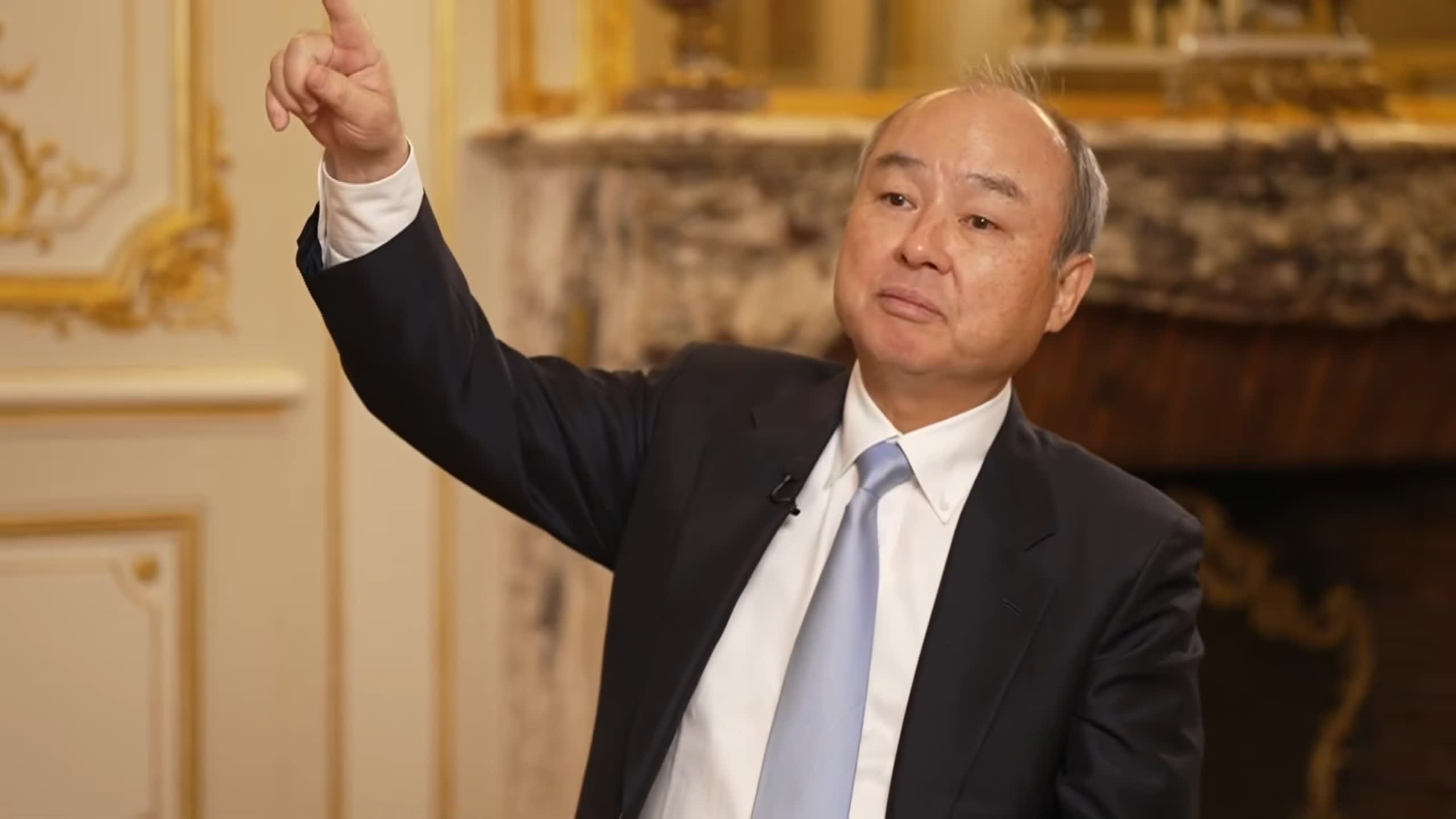
Masayoshi Son is hell-bent on bringing AI to the masses, and he's ready to spend the enormous sums required to reach this historic goal. Speaking at SoftBank's annual corporate conference in Tokyo, the outspoken founder shared a few numbers about that spending, though he chose not to elaborate on exactly where the money would come from.
Son believes developing and deploying AI for the wider society will cost $5 trillion a year through 2040. He said he's "confident" that figure reflects the true cost of the AI revolution. His reasoning: if AI-related revenue eventually accounts for 20% of global GDP by 2040, spending $5 trillion, or roughly 800 trillion yen, a year to get there will ultimately amount to a rounding error.
In recent years, Son has emerged as one of the most enthusiastic proponents of generative AI, chatbots, and other LLM-related technologies. SoftBank has invested heavily in OpenAI and several other AI-related unicorns, and Son has previously predicted that the first true artificial general intelligence (AGI) will arrive by 2030.
Given all that, Son doesn't want to hear anything about an AI bubble. Asking about one, he says, is an absurd proposition, and people who raise the question, in his words, simply don't understand what AI is about. SoftBank has made a few prescient bets on tech unicorns in the past, providing early investment to Chinese giant Alibaba and bringing the iPhone to the Japanese market.
However, the conglomerate has also made some costly mistakes. WeWork, the office sharing company SoftBank valued at $47 billion in 2019, ultimately filed for bankruptcy a few years later.
The AI revolution could hand the Japanese conglomerate and its "boss" another massive stream of profits, a second Alibaba, but with exponentially bigger margins. Or it could turn into an exponentially larger dot-com bubble, one that burns large parts of the financial world, Wall Street included.

According to Deutsche Bank analysts, the AI boom may currently be the only thing keeping the US economy out of a recession. Separately, several surveys suggest many CEOs privately believe an AI bubble does exist, yet remain in full FOMO mode, planning to keep investing regardless. Meanwhile, nearly half of the data center projects planned for 2026 in the US aren't likely to come online on schedule, and rising geopolitical tensions in the Middle East add another layer of uncertainty.
And yet, Son appears unfazed. SoftBank's CEO predicts AI data centers will need 3 terawatts of power generation by 2040, nearly double the total power consumed worldwide today.
To meet that demand, Son said gas will serve as the primary power source in the near term, with nuclear fusion, not traditional nuclear plants, eventually taking over as the cheaper, cleaner alternative. Asked whether space based solar power, as championed by Elon Musk, could be the answer instead, Son said both could play a role, but that fusion on Earth would ultimately be the more practical option.
Within the next decade and a half, Son believes, AI agents will be the ones calling the shots, as many as 100 trillion of them by 2040. "We will go from a human-centric world to an agent-centric world. The age when humans are the highest life form on Earth will end. For better or for worse, it will happen, and it can't be stopped," Son said.
SoftBank boss says the AI revolution will cost $5 trillion a year, also, there's no bubble