Solar-powered cars are impractical at scale but this tiny build finds a sweet spot

Skye Jacobs

Posts: 2,010   +58
Staff
In brief: Solar-powered cars are still not practical at full scale. Panels are cheaper and more efficient than they used to be, but they do not generate enough energy to move a standard vehicle over long distances. The core issue is energy density – there simply isn't enough surface area on a typical car to produce the power it needs in real time, but shrinking the size of the vehicle helps.
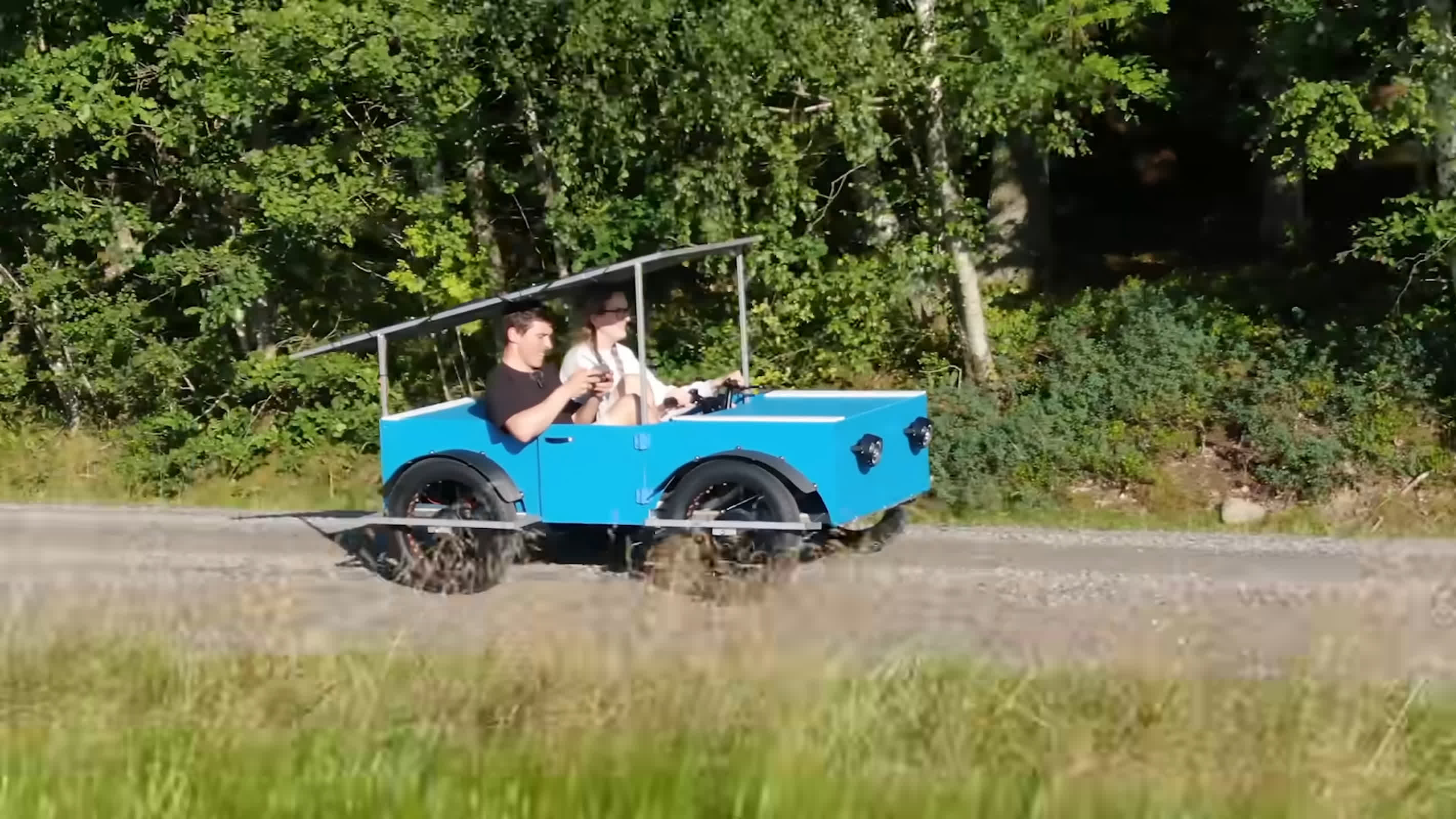
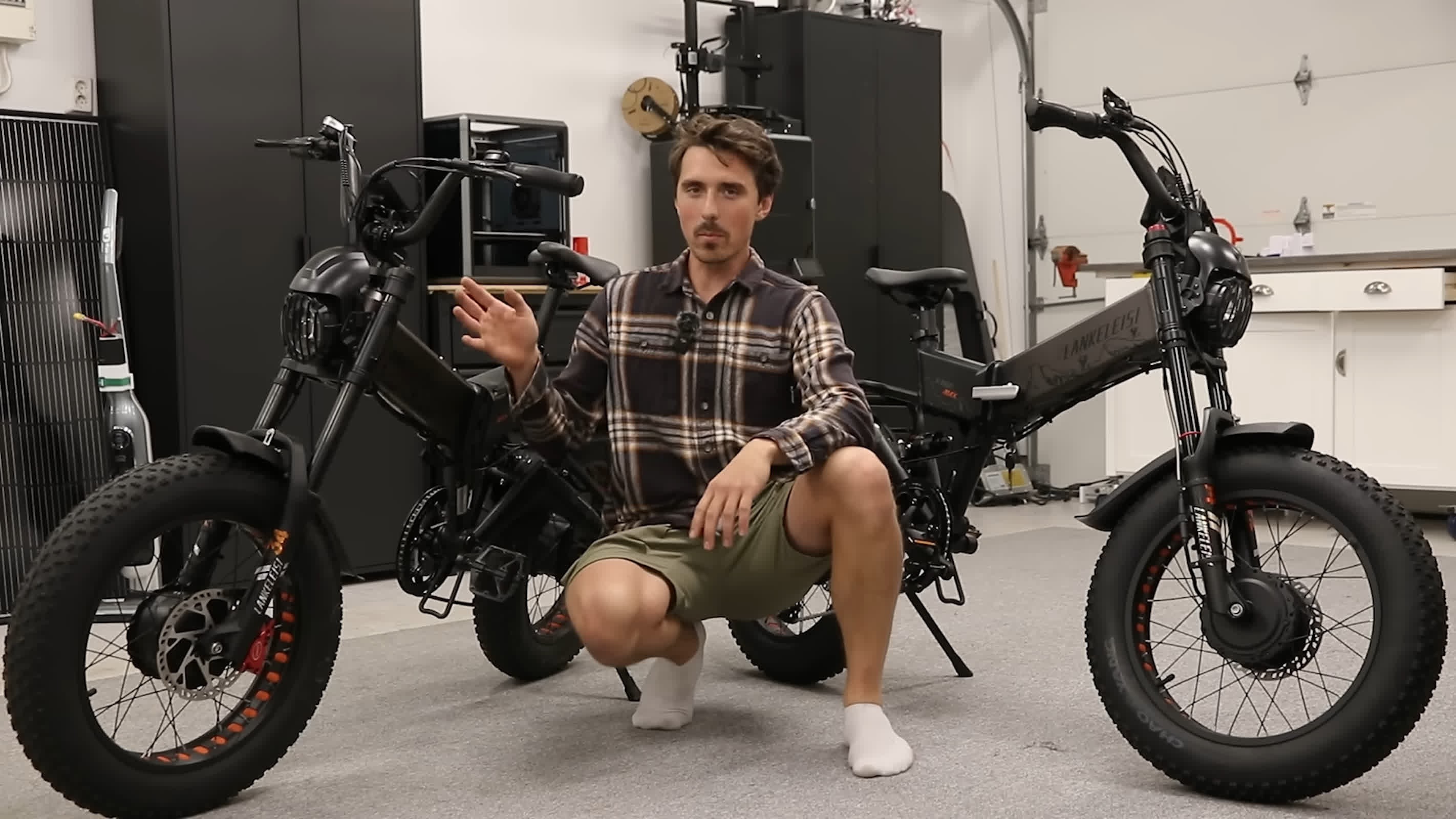
Earlier this year, YouTuber Simon Sörensen built a compact two-seat solar car using parts from two electric bikes. Instead of developing a full automotive platform, he reused existing e-bike drivetrains and built a lightweight vehicle around them. The approach keeps both cost and complexity down while making better use of the limited energy that solar power can provide.

The drivetrain is the most notable part of the build. Each wheel is fitted with its own hub motor, creating a four-motor setup that delivers power directly to the wheels instead of relying on a central motor and drivetrain. "What's cool about this particular setup is that I have a 1,000W hub motor in each wheel," Sörensen told SupercarBlondie. That configuration allows the vehicle to switch between front-wheel, rear-wheel, and four-wheel drive, depending on how the motors are controlled.

The frame is made from steel tubing, keeping the structure simple and rigid while supporting the weight of the battery and solar panels. Steering is based on Ackermann geometry, which helps maintain consistent wheel angles during turns. This becomes more important in a setup where each wheel is independently powered, since uneven torque distribution can affect handling.
Power comes from a combination of solar input and battery storage. Three lightweight panels mounted above the vehicle generate up to 300 watts under ideal conditions. That energy feeds into a 48-volt battery that supplies power when solar output drops. In strong sunlight, the car can cruise at low speeds with minimal battery use.

Sörensen estimates the car can travel close to 20 miles on solar power alone before relying more heavily on stored energy. The total range depends on conditions and usage. "The range, by the way, is about 50 km [31 miles], but on a sunny day you can probably go upwards of 100 km [62 miles]," he added. Those figures reflect how much the solar panels can extend the range rather than replace the battery entirely.

The vehicle tops out at around 30 miles per hour. That places it above typical e-bike speeds but below standard road vehicles, positioning it closer to neighborhood electric vehicles. Lower speeds reduce power demand, making the solar contribution more meaningful.

The build doesn't solve the broader limitations of solar-powered transportation, but it does show how the technology can work within a smaller, lighter platform. By using off-the-shelf electrical components and modest solar input, it demonstrates a practical way to extend range without relying entirely on grid charging.

Permalink to story:

 
It's a neat idea. I wish we had our own Kei-car classification for small single passenger cars, they would be prime EV material and most of us dont normally carry multiple people in a vehicle.
 
Electric Vehicles are the future. Solar Powered cars "could" work, but they'd basically require you to be in direct sunlight in the desert or tropical islands - and then you'd probably be using most of your energy just keeping the vehicle cool inside.

The grand compromise I think is a lightweight solar roofed vehicle like the Model Y (with solar panels on the hood and the panoramic glass as a solar panel which also has a decent battery (85 kWh - 100 kWh) so you can recharge to full on 100v or 220v.

My neighbor recently got solar panels installed. My Electric bill - even with my Cadillac Vistiq - is just $200 a month ($100 for charging the car). I charge during super-off-peak hours (7PM - 5AM/ Weekends) and I get through my entire week on just 300 miles range.

What I need to see is solar panels for my houses with a battery backup (at least 50 kWh), fast EV charging capability and electric furnaces with electric water boiling before I can fully abandon oil.

 
Electric Vehicles are the future. Solar Powered cars "could" work, but they'd basically require you to be in direct sunlight in the desert or tropical islands - and then you'd probably be using most of your energy just keeping the vehicle cool inside.

The grand compromise I think is a lightweight solar roofed vehicle like the Model Y (with solar panels on the hood and the panoramic glass as a solar panel which also has a decent battery (85 kWh - 100 kWh) so you can recharge to full on 100v or 220v.

My neighbor recently got solar panels installed. My Electric bill - even with my Cadillac Vistiq - is just $200 a month ($100 for charging the car). I charge during super-off-peak hours (7PM - 5AM/ Weekends) and I get through my entire week on just 300 miles range.

What I need to see is solar panels for my houses with a battery backup (at least 50 kWh), fast EV charging capability and electric furnaces with electric water boiling before I can fully abandon oil.
It wont work even in direct sunlight.

The vehicle in the article here works by being, effectively, two e bikes in a box. Any production car is going to have to comply with modern safety regulations, which means a lot more weight. It also means a not flat roof, because the roof is structurally integral to the vehicle design. The actual amount of solar power you can collect on a regular car roof is significantly curtailed by the shape, needed to be painted and clear coated, ece.

Even Kei cars are far too heavy for this idea to work.
 
It wont work even in direct sunlight.

The vehicle in the article here works by being, effectively, two e bikes in a box. Any production car is going to have to comply with modern safety regulations, which means a lot more weight. It also means a not flat roof, because the roof is structurally integral to the vehicle design. The actual amount of solar power you can collect on a regular car roof is significantly curtailed by the shape, needed to be painted and clear coated, ece.

Even Kei cars are far too heavy for this idea to work.


Aptera and a few other companies have working solar powered cars.

The simple fact is, if you can trickle charge the vehicle long enough, the battery will eventually have enough power to drive.
 
Aptera and a few other companies have working solar powered cars.

The simple fact is, if you can trickle charge the vehicle long enough, the battery will eventually have enough power to drive.
Aptera is an outright scam and has been called out repeatedly for lying about, well, everything, just like Nikola. From production readiness to the actual tech being used nothing they make actually works. The only functional car must be reviewed with Aptera's blessing and reviewers are not allowed to do things, like, take it out of state, or try to actually push the mileage they claim, or deviate from the pre established route given to them.

You could charge a Tesla with a phone charger too, doesnt mean its practical in any fashion.
 
I vaguely recall an old movie where a group of people builds a land ship with a sail to get away from a psycho. That movie is very old, I watched it looong ago.
This is where it could be practical, wide and very flat areas where it never rains.
Make very light cars with sales/solar panels. Let the sun drive it, or if the wind is favorable,
drive double speed.

 
Sounds like total BS.

The question we need answered is how long it will take to travel 20 miles, starting with an empty battery.
I bet I'll arrive first if I start walking 🤣

"up to 300 watts under ideal conditions" is ~100 W in reality, and that's not even laughable.

 
So solar can possibly half power an e bike golfcart at walking speeds in ideal conditions.

Even at the full direct sun rating the solar cells can power 30% of 1 of the 4 motors or 7.5% what’s needed to make the cart go 30mph.
 
Aptera and a few other companies have working solar powered cars.

The simple fact is, if you can trickle charge the vehicle long enough, the battery will eventually have enough power to drive.
Yeah, trickle charging so slowly it'll take you a whole summer month to get half a charge

It's not technically impossible, but it is completely and wildly stupid, since at that point you should just put the damn solar panels on the ground or a building - plus a battery - and charge from that when not driving, like what normal people already do. Since the actual 'charging WHILE driving' thing is utterly useless (even 4sqm of panels that were aligned in perfect sun-facing orientation at the height of exact noon with clear skies would only provide 880W of power (1,100W/sqm at Earths surface x 0.2 panel efficiency x 4sqm), literally not enough to half power a toaster), we're only really talking about it's usefulness as a stationary charger, so just put the panel on the damn ground.

**** doesn't need to always be combined all the time like this, you don't need solar panels on your car like you don't need shoes with a built-in umbrella
 
Aptera and a few other companies have working solar powered cars.
No they don't. They have toys they claim are solar powered.

The simple fact is, if you can trickle charge the vehicle long enough, the battery will eventually have enough power to drive.
Sure. If you park it in the desert for a few days, you can drive it to work .. if you recharge it from a station once you get there.

The simple fact is that the "rated" power for solar panels is at noon, in a low latitude location, with no cloud cover, and no nearby trees or tall buildings ... and with the panel oriented perfectly perpendicular to the incoming solar radiation. Even solar farms sited optimally generally only average between 25-35% of rated power. In an obstructed urban environment, with the panels at a fixed angle on a car's roof or hood, you'll be lucky to see 10% of the rated power. And that's if you never have to use a parking garage.
 
Every story on solar is an instant dinosaur magnet.

My solar set up is currently charging my car at 7kw with enough left over to power some appliances and a couple of crypto miners but according to many people, solar is trash 🥴
 
No they don't. They have toys they claim are solar powered.


Sure. If you park it in the desert for a few days, you can drive it to work .. if you recharge it from a station once you get there.

The simple fact is that the "rated" power for solar panels is at noon, in a low latitude location, with no cloud cover, and no nearby trees or tall buildings ... and with the panel oriented perfectly perpendicular to the incoming solar radiation. Even solar farms sited optimally generally only average between 25-35% of rated power. In an obstructed urban environment, with the panels at a fixed angle on a car's roof or hood, you'll be lucky to see 10% of the rated power. And that's if you never have to use a parking garage.


Spoken like someone who doesn't own nor understand EV.

The reason they started putting solar panels on EV roofs was to trickle charge the battery which ultimately returned small amounts of energy, but "enough" to offset the cost of using the HVAC.

I stand by what I said.

I owned a 2024 Cadillac Lyriq
I own a 2026 Cadillac Vistiq
 
The reason they started putting solar panels on EV roofs was to trickle charge the battery which ultimately returned small amounts of energy, but "enough" to offset the cost of using the HVAC.
But under normal conditions, it's not nearly enough to even compensate for that.

I owned a 2024 Cadillac Lyriq
I own a 2026 Cadillac Vistiq
Neither of these have solar panels. And even if they did, I doubt you'd want to park your new toy outside, continually exposed to the elements, merely to save a few pennies of electricity.

Otherwise, if your work commute is three hours on a desert highway, then you'll get a trickle charge enough to make a small difference -- if you're driving in the peak 9am-3pm period when most people are at work. But in an obstructed urban environment, driving during mornings and evenings? No.
 
But under normal conditions, it's not nearly enough to even compensate for that.


Neither of these have solar panels. And even if they did, I doubt you'd want to park your new toy outside, continually exposed to the elements, merely to save a few pennies of electricity.

Otherwise, if your work commute is three hours on a desert highway, then you'll get a trickle charge enough to make a small difference -- if you're driving in the peak 9am-3pm period when most people are at work. But in an obstructed urban environment, driving during mornings and evenings? No.


Ummmm... My new toy is always parked outside exposed to the elements... 24-7.
 
Some technologies are still in their infancy; perhaps solar power -->electric is one of them. after about another 100 years, but few if any of us will be around then. :D
 
Back