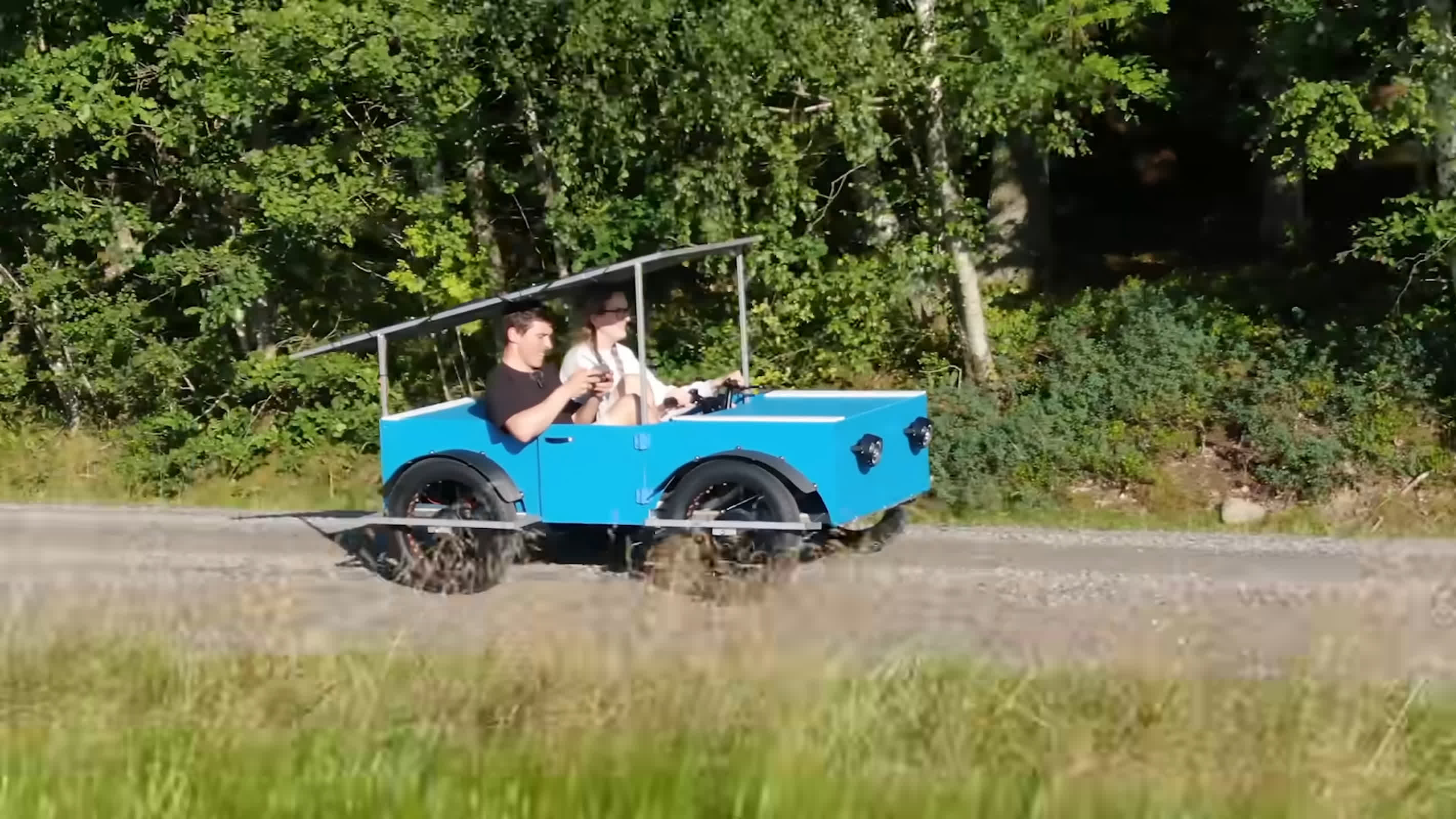
In brief: Solar-powered cars are still not practical at full scale. Panels are cheaper and more efficient than they used to be, but they do not generate enough energy to move a standard vehicle over long distances. The core issue is energy density – there simply isn't enough surface area on a typical car to produce the power it needs in real time, but shrinking the size of the vehicle helps.
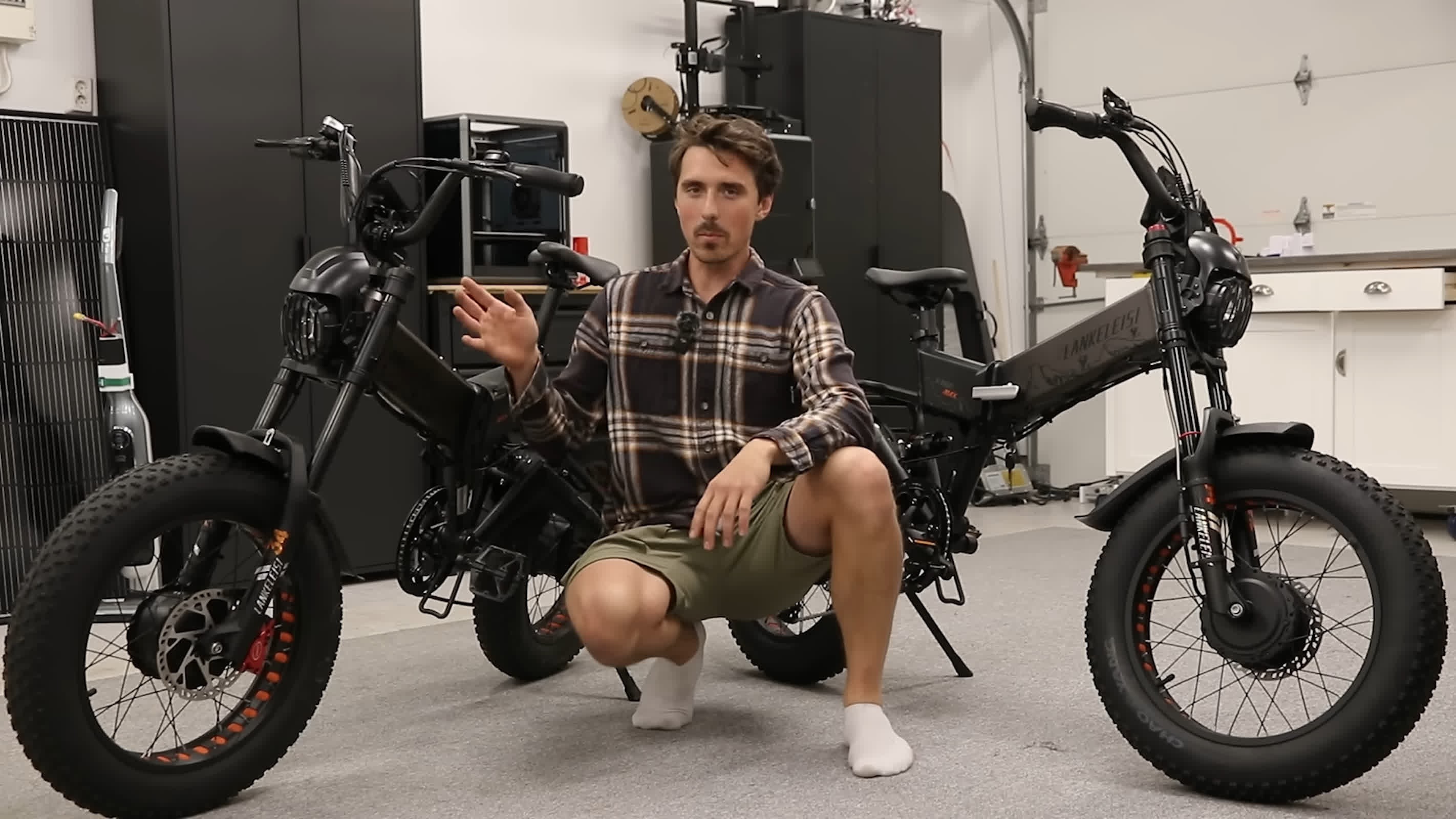
Earlier this year, YouTuber Simon Sörensen built a compact two-seat solar car using parts from two electric bikes. Instead of developing a full automotive platform, he reused existing e-bike drivetrains and built a lightweight vehicle around them. The approach keeps both cost and complexity down while making better use of the limited energy that solar power can provide.
The drivetrain is the most notable part of the build. Each wheel is fitted with its own hub motor, creating a four-motor setup that delivers power directly to the wheels instead of relying on a central motor and drivetrain. "What's cool about this particular setup is that I have a 1,000W hub motor in each wheel," Sörensen told SupercarBlondie. That configuration allows the vehicle to switch between front-wheel, rear-wheel, and four-wheel drive, depending on how the motors are controlled.
The frame is made from steel tubing, keeping the structure simple and rigid while supporting the weight of the battery and solar panels. Steering is based on Ackermann geometry, which helps maintain consistent wheel angles during turns. This becomes more important in a setup where each wheel is independently powered, since uneven torque distribution can affect handling.
Power comes from a combination of solar input and battery storage. Three lightweight panels mounted above the vehicle generate up to 300 watts under ideal conditions. That energy feeds into a 48-volt battery that supplies power when solar output drops. In strong sunlight, the car can cruise at low speeds with minimal battery use.
Sörensen estimates the car can travel close to 20 miles on solar power alone before relying more heavily on stored energy. The total range depends on conditions and usage. "The range, by the way, is about 50 km [31 miles], but on a sunny day you can probably go upwards of 100 km [62 miles]," he added. Those figures reflect how much the solar panels can extend the range rather than replace the battery entirely.
The vehicle tops out at around 30 miles per hour. That places it above typical e-bike speeds but below standard road vehicles, positioning it closer to neighborhood electric vehicles. Lower speeds reduce power demand, making the solar contribution more meaningful.
The build doesn't solve the broader limitations of solar-powered transportation, but it does show how the technology can work within a smaller, lighter platform. By using off-the-shelf electrical components and modest solar input, it demonstrates a practical way to extend range without relying entirely on grid charging.