Sony's upcoming handheld could outperform Xbox Series S with next-gen upscaling

Daniel Sims

Posts: 2,480   +75
Staff
Rumor mill: Rumors and leaks have long suggested that Sony plans to release a new, non-streaming handheld device alongside the PlayStation 6. New information indicates that, despite its portable form factor, it could deliver impressive rendering, ray tracing, and upscaling capabilities thanks to advancements in AMD's core technology stack.
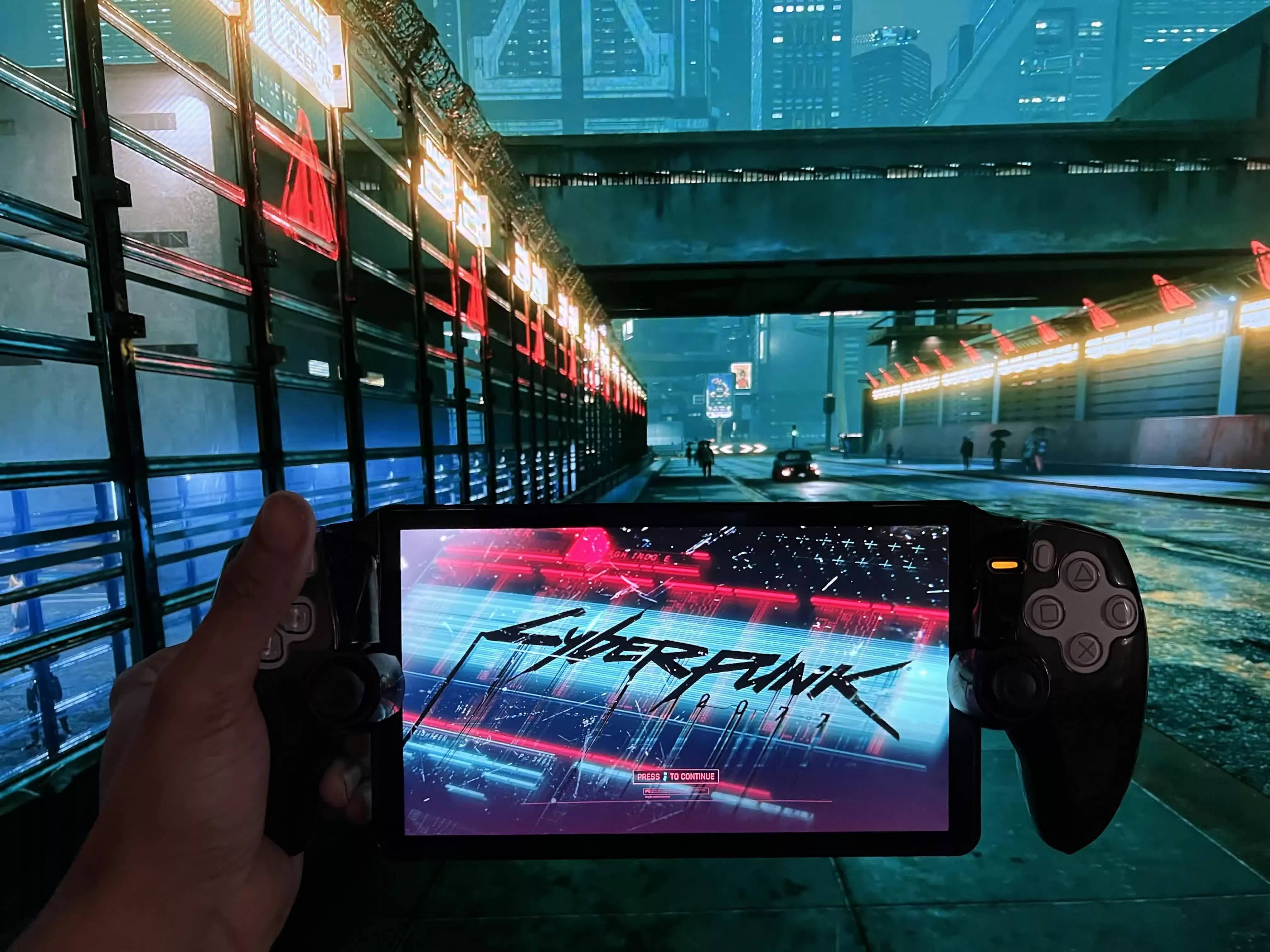
Prominent leaker KeplerL2 recently claimed that Sony's rumored handheld will feature a faster graphics chip than the Xbox Series S. The device, codenamed Canis, is expected to complement the PlayStation 6, which is not expected to arrive before late 2027.

The Sony handheld is said to be slightly ahead of Microsoft's entry-level console in traditional rasterized workloads and far ahead in ray tracing. That's before factoring in ML-based upscaling. If accurate, the next-gen PS handheld should be capable of running most modern games locally, avoiding the need for streaming as seen with Sony's PlayStation Portal.
The upcoming device, based on an SoC that leaked last year, would presumably support all digital PlayStation 4 titles and at least some PlayStation 5 and PS6 games, though details remain unclear. Sony could aim for full PS5 compatibility and require PS6 titles to scale down, or leave it up to developers to deliver handheld-specific optimizations.

If the system does outperform the Series S, developers who already target Microsoft's console would have a clear baseline to work from. Sony's handheld is also expected to be noticeably faster than the Nintendo Switch 2, though likely at a higher price, which could still make it attractive to third-party developers.

Upscaling may be another key advantage for Canis. Both the handheld and the PS6 are expected to support upcoming revisions of AMD FSR and Sony's FSR-based PSSR solution, which are targeting to deliver better image quality than DLSS 4.5.
According to prior reports, Canis could feature four CPU cores based on AMD's upcoming Zen 6C architecture, clocked at up to 2.2GHz, alongside 12 to 20 RDNA 5 GPU compute units, LPDDR5X-7500 memory on a 128-bit bus, and a 15W TDP.

The PS6 is expected to use a similar architecture with eight Zen 6 cores clocked up to 3GHz, 40 to 48 compute units, and a 160W TDP. RDNA 5 is also expected to significantly improve ray tracing performance and narrow the gap with Nvidia's path tracing capabilities.

Kepler also says that the Steam Deck 2 will arrive after Canis, possibly in 2028 or later, with no real detail yet on its specifications. Valve has previously indicated it is waiting for at least a 50% gain in performance per watt over the current Steam Deck before moving forward.

Permalink to story:

 
If this thing really lands somewhere between Series S and PS5 with modern upscaling, that’s kind of wild. Feels like we’ve gone from “handheld = compromise” to “handheld = just turn on FSR and pretend it’s fine.” The real question is battery life… 15W on paper vs 15 minutes in real life.
 
Let's think with some sense here....

Series S, released in 2020
Upcoming hardware with a 2028 release date

Of course a newer piece of hardware is going to be better 8 years later...especially since computing capabilities have increased significantly since everything is A.I based nowadays.

The real question is:
Would that handheld release at the price point of the Series S?....I suspect we already know the answer to that question, so why even compare hardware capabilities to begin with.
 
Last edited:
It would be nice if we could get the same chip in non-locked down Windows/Linux handheld, or hell even a thin & light laptop. 4 zen 6c cores would still be plenty adequate for basic web browsing/office stuff, and having better gaming performance than anything else in the category would be a good selling point.
 
We’d have a Steam Deck 2 by now if AMD didn’t hold back so much tech from their APUs.
AMD is really frustrating me with their APUs right now. If I want their fastest GPU in an APU, I need to buy their fastest CPU. I have to pay $1000 for a CPU (395 AI MAX) if I want something with the graphics power to lick the boots of a desktop 5060. I know why they're doing it, they think they'll sell more high end chips. The thing is, their top chip is so expensive that I end up just not upgrading at all. Then they all use LPDDR5x, which means I can't upgrade the memory and I have to buy the system with all the RAM I want at the time of purchase. What COULD be a $5-600 purchase ends up turning into a $3000 purchase in today's market.
 
AMD is really frustrating me with their APUs right now. If I want their fastest GPU in an APU, I need to buy their fastest CPU. I have to pay $1000 for a CPU (395 AI MAX) if I want something with the graphics power to lick the boots of a desktop 5060. I know why they're doing it, they think they'll sell more high end chips. The thing is, their top chip is so expensive that I end up just not upgrading at all. Then they all use LPDDR5x, which means I can't upgrade the memory and I have to buy the system with all the RAM I want at the time of purchase. What COULD be a $5-600 purchase ends up turning into a $3000 purchase in today's market.
Agreed. And it's really strange given the success of the Steam Deck, Ally series, and others.

They are either afraid that it will cannibalize their sales somehow or Sony/Xbox have some agreement to keep iGPUs slow to help console sales.

Both are silly reasons the former is a different market and the latter has a large die and 10X more power.

I completely understand having a weak cheap iGPU for most of your chips, but a few models should have the latest or last years GPU tech in 8-16 CUs (whatever fits in the TDP). At this point, I'm better off buying an Intel 2 in 1 and a controller than a handheld.
 
Back