SpaceX says a near-collision with Chinese satellite shows how crowded orbit has become

midian182

Posts: 11,902   +182
Staff member
What just happened? Not for the first time, the increasing number of satellites in low Earth orbit has resulted in a near-miss. The latest incident involved a SpaceX internet satellite that avoided a Chinese spacecraft by just 200 meters (656 feet). Following the close encounter, a Starlink exec has called for increased coordination between satellite operators.
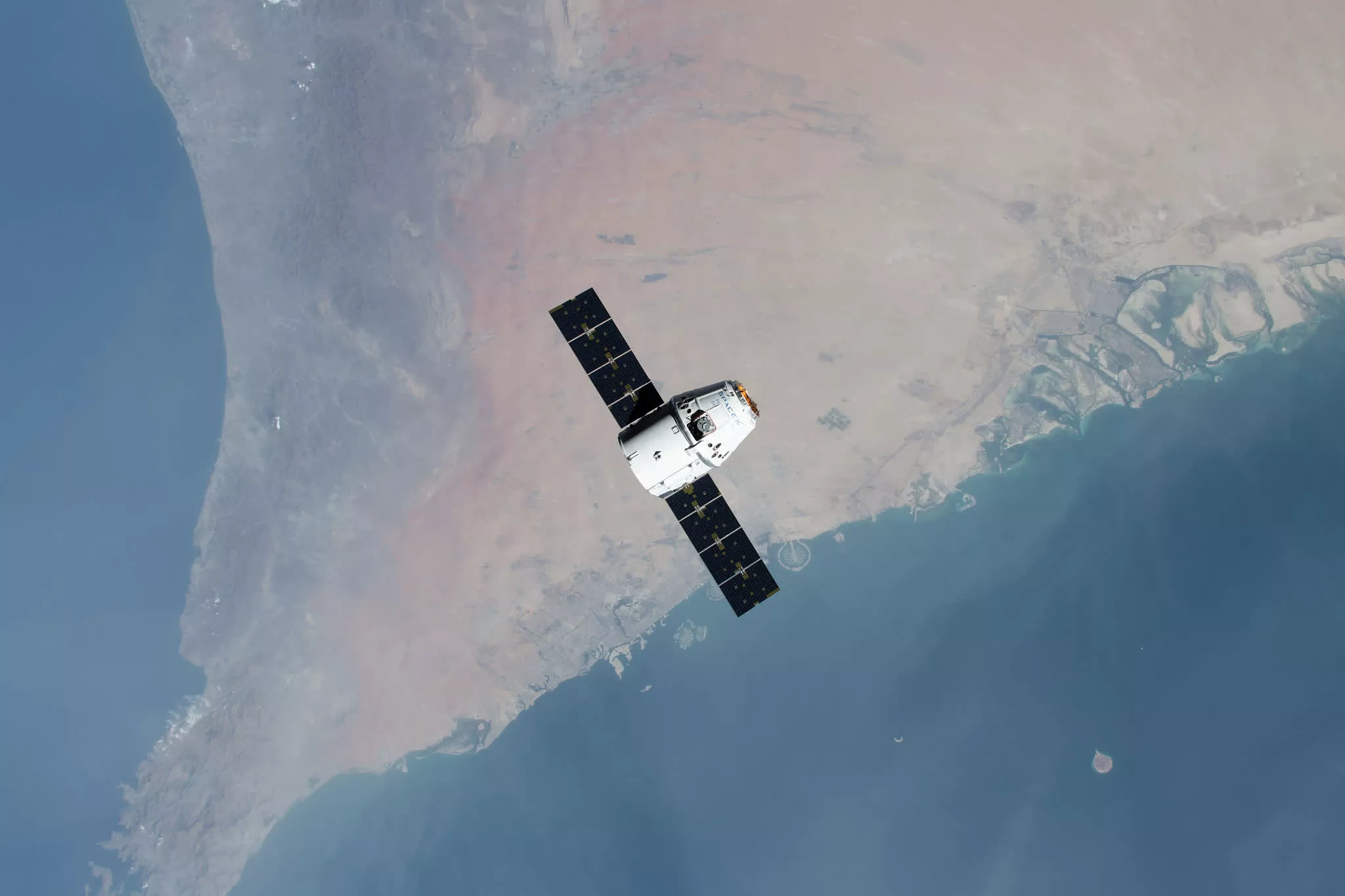
On December 12, one of the nine spacecraft launched atop a Chinese Kinetica 1 rocket from commercial space company CAS Space almost collided with a SpaceX satellite.

Michael Nicolls, a vice president of Starlink engineering at SpaceX, wrote, "As far as we know, no coordination or deconfliction with existing satellites operating in space was performed, resulting in a 200 meter close approach between one of the deployed satellites and STARLINK-6079 (56120) at 560 km altitude."

"Most of the risk of operating in space comes from the lack of coordination between satellite operators – this needs to change," Nicolls added.

The 100-foot-tall Kinetica 1 rocket launched on December 9 from Jiuquan Satellite Launch Center in the Gobi Desert. Its launch load consisted of six Chinese multifunctional satellites, an Earth-observation satellite for the United Arab Emirates, a scientific satellite for Egypt, and an educational satellite for Nepal, according to China Daily. Nicolls did not specify which of these satellites was the one that almost hit the SpaceX spacecraft.

Astronomer and satellite tracking expert Jonathan McDowell said the near-miss occurred at around 1:42 am EST Friday, December 12 over the eastern Pacific Ocean.

CAS Space said it was gathering more details. The company added that its launch windows are selected using the ground-based space awareness system to avoid collisions with known satellites/debris.

CAS added that if confirmed, the incident occurred nearly 48 hours after payload separation – long after the launch mission had concluded.

"CAS Space will coordinate with satellite operators to proceed. This calls for re-establishing collaborations between the two New Space ecosystems," the Chinese launch provider said.

McDowell said CAS' response was "reasonable."

There are around 13,000 satellites in Earth orbit, almost four times more than the 3,400 spacecraft that were there in 2020. Around 9,300 of these satellites belong to SpaceX.

This isn't the first time a SpaceX satellite has come close to hitting a Chinese spacecraft. In 2021, China complained to the UN over claims that SpaceX Starlink satellites had almost crashed into its space station twice over the past year.

Jonathan McDowell, an astrophysicist at the Harvard-Smithsonian Center for Astrophysics, noted at the time that the US space station has on several occasions over the past ten years had to dodge pieces from the Chinese military anti-satellite test of 2007.

In July, the space industry warned reducing support for the Office of Space Commerce and its TraCSS program would endanger both commercial and government satellites, increase operational costs, and potentially drive American space businesses to relocate overseas.

Permalink to story:

 
To add on, Space.com reports:
Mike Wall said:
Starlink satellites avoid potential collisions autonomously, maneuvering themselves away from conjunctions predicted by available tracking data. And this sort of evasive action is quite common: Starlink spacecraft performed about 145,000 avoidance maneuvers in the first six months of 2025, which works out to around four maneuvers per satellite per month.

That's an impressive record. But many other spacecraft aren't quite so capable, and even Starlink satellites can be blindsided by spacecraft whose operators don't share their trajectory data, as Nicolls noted.

And even a single collision — between two satellites, or involving pieces of space junk, which are plentiful in Earth orbit as well — could spawn a huge cloud of debris, which could cause further collisions. Indeed, the nightmare scenario, known as the Kessler syndrome, is a debris cascade that makes it difficult or impossible to operate satellites in parts of the final frontier.
McDowell further recommended that China should create its own version of space-track.org so that accurate orbital data is publicly available. SpaceX writes that it relies on data from that third-party website, which tracks 50k objects in orbit (the US Space Command posts 17k observed objects there as well). SpaceX posts their orbital data to space-track.org as well as their own website. https://starlink.com/satellite-operators
 
Gee... who could've thought that putting a bunch of stuff up in orbit would lead to something like this happening?

*surprised Pikachu face*
 
"SpaceX says a near-collision with Chinese satellite shows how crowded orbit has become"

...Then stop sending more of your stupid satellites into space...!
Starlink satellite deployment is slowing down relative to customers :p But as far as I know they're currently allowed 12k satellites while currently requesting 30-50k of the FCC and ITU.


EDIT: Considering each satellite costs about $336k, the average annual gross profit per satellite is $700k (including costs to build and deploy each satellite for a 5 year lifetime). I don't see why they'd want to slow down. They could potentially sell Internet for $50/month or less depending on how much their operational and R&D costs are. The satellite costs are based on information from 1.5 years ago too when each satellite served half the number of customers. No wonder Starlink is supposed to make SpaceX IPO for such a high valuation.

Sources: https://satellitemap.space/vis/constellation/starlink/growth / https://en.wikipedia.org/wiki/Starlink#Subscribers /
 
Last edited:
It seems to me that the big problem is the deliberate complication of the product.
"The KISS principle states that most systems work best when kept simple rather than complicated. Therefore, simplicity should be a key design goal, and unnecessary complexity should be avoided."
They've shifted all the responsibility onto computers. This could all end badly.
 
Space X is responsible for as much "space junk" as anybody else. Remember how they nagged and pleaded to put thousands of satellites in orbit for "Starlink"?

At this point, about the only thing that the Chinese can be blamed for is having bad aim. Of course, that's predicated on whether their aim was accidental, or on purpose.
 
It seems to me that the big problem is the deliberate complication of the product.
"The KISS principle states that most systems work best when kept simple rather than complicated. Therefore, simplicity should be a key design goal, and unnecessary complexity should be avoided."
They've shifted all the responsibility onto computers. This could all end badly.
Unfortunately, the second that someone proposed "Satellite Internet" of any form, Internet access, for those who's preferred, and perhaps only available, option is "Satellite Internet," things got complicated.
 
Imagine writing this article and not even knowing how orbits work.
Pi is needed for orbital mechanics.

 
Space X is responsible for as much "space junk" as anybody else. Remember how they nagged and pleaded to put thousands of satellites in orbit for "Starlink"?

At this point, about the only thing that the Chinese can be blamed for is having bad aim. Of course, that's predicated on whether their aim was accidental, or on purpose.
Worth noting that Starlink satellites have multiple redundancies to prevent contributing to space junk:
1. They orbit at around ~550km, which is low enough that parasitic atmospheric drag will naturally deorbit the satellite even if it completely dies within ~5 years (fast by space standards)
2. Every Starlink satellite is tracked and has onboard thrusters to give it the ability to avoid collisions, even having autonomous capability if needed.
3. At the end of the service life of a Starlink satellite (when it gets too low on fuel to be able to avoid collisions) it uses it's de-orbit reserves to descend safely, lowering into the atmosphere and disintegrating on re-entry.
 
Worth noting that Starlink satellites have multiple redundancies to prevent contributing to space junk:
1. They orbit at around ~550km, which is low enough that parasitic atmospheric drag will naturally deorbit the satellite even if it completely dies within ~5 years (fast by space standards)
2. Every Starlink satellite is tracked and has onboard thrusters to give it the ability to avoid collisions, even having autonomous capability if needed.
3. At the end of the service life of a Starlink satellite (when it gets too low on fuel to be able to avoid collisions) it uses it's de-orbit reserves to descend safely, lowering into the atmosphere and disintegrating on re-entry.
Maybe it will become a thing if they can time multiple failures to about a year apart.

Just think, not only will we have the Perseid meteor shower and others, we could have the, "Starlink meteor shower" as well. (y) (Y) ;)
 
Maybe it will become a thing if they can time multiple failures to about a year apart.

Just think, not only will we have the Perseid meteor shower and others, we could have the, "Starlink meteor shower" as well. (y) (Y) ;)
That would be awesome. I'd sign that petition
 
Back