
Rumor mill: Since launching the Steam Deck in 2022, Valve has been vague regarding plans for a successor, even as competitors release more powerful handheld gaming PCs. A trusted leaker recently claimed that a Steam Deck 2 is more than two years away, potentially granting Valve access to transformative hardware enhancements.

Prominent leaker KeplerL2 has predicted that Valve won't release a major upgrade for the Steam Deck until 2028. Although waiting another two years might disappoint some fans, the date aligns with prior comments from Valve and AMD's tentative roadmap.
Last year, Valve's Lawrence Yang said that the company doesn't plan to follow up on its popular handheld gaming PC until it can achieve a generational performance improvement while matching the original Steam Deck's battery life. Chipsets that hardware partner AMD plans to unveil in 2026 and later might provide what Valve is looking for.
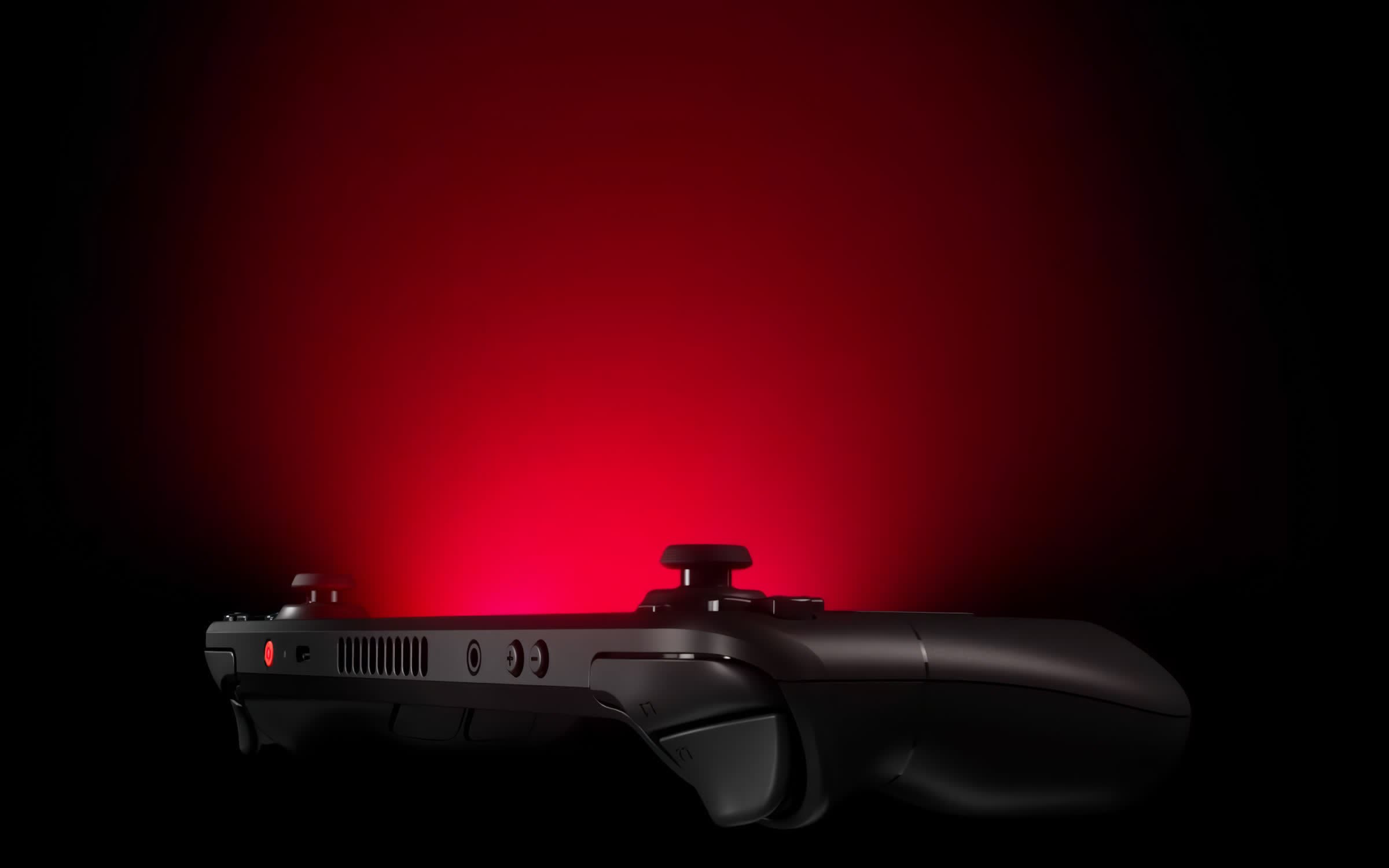
While the Steam Deck and its OLED refresh have stuck to an APU based on a Zen 2 CPU and RDNA 2 graphics, GPD, Asus, MSI, and other competitors have used newer AMD architectures. Although they sometimes achieve noticeably higher framerates than the Steam Deck, the overall experience is fundamentally similar, and benchmarks with the Lenovo Legion Go S prove that Windows 11 is holding them back.
GPD in particular has updated its handheld PCs annually, and its upcoming Win 5 will attempt to brute-force performance limitations with a high-end laptop APU that requires an external battery. Although annual PC hardware refreshes are common, Valve thinks they would be unfair to existing Steam Deck owners. A six-year wait between the original Steam Deck and a Steam Deck 2 could result in a performance jump that resembles what typically occurs between console generations.
By then, AMD will likely have released APUs based on Zen 6 and RDNA 5 (also referred to as UDNA), the latter of which is expected to substantially improve ray tracing, neural rendering, and potentially even path tracing performance. Prior reports, including some from Kepler, suggest that Sony and Microsoft will release consoles and handheld devices based on the new architectures in 2027.
By 2028, a Steam Deck 2 might be able to compete with them with RDNA 6 (UNDA 2), further enhancing performance and efficiency. A recently leaked mobile processor roadmap suggests that Valve's next handheld could utilize something related to AMD's Medusa Point architecture or its successor.
Steam Deck 2 may not arrive until 2028 as Valve waits for next-gen performance


