
In a nutshell: Since Valve allowed Steam Machine owners to replace the mini PC's standard Linux-based operating system with Windows 11, it was only a matter of time before benchmarks comparing the two operating systems emerged. One of the first indicates that switching to Windows 11 does not sacrifice performance.
A brief benchmark from ETA Prime shows that games running on Valve's Steam Machine via Windows 11 mostly achieve framerates similar to SteamOS. However, one synthetic benchmark gives Windows a significant advantage.
SteamOS, which allows users to launch and play PC games from a console-style interface without a mouse or keyboard, is one of the Steam Machine's primary selling points. However, Valve released Windows drivers for the mini PC earlier this month in case owners wanted to install software and games that SteamOS does not yet support, such as multiplayer titles with strict anti-cheat systems.
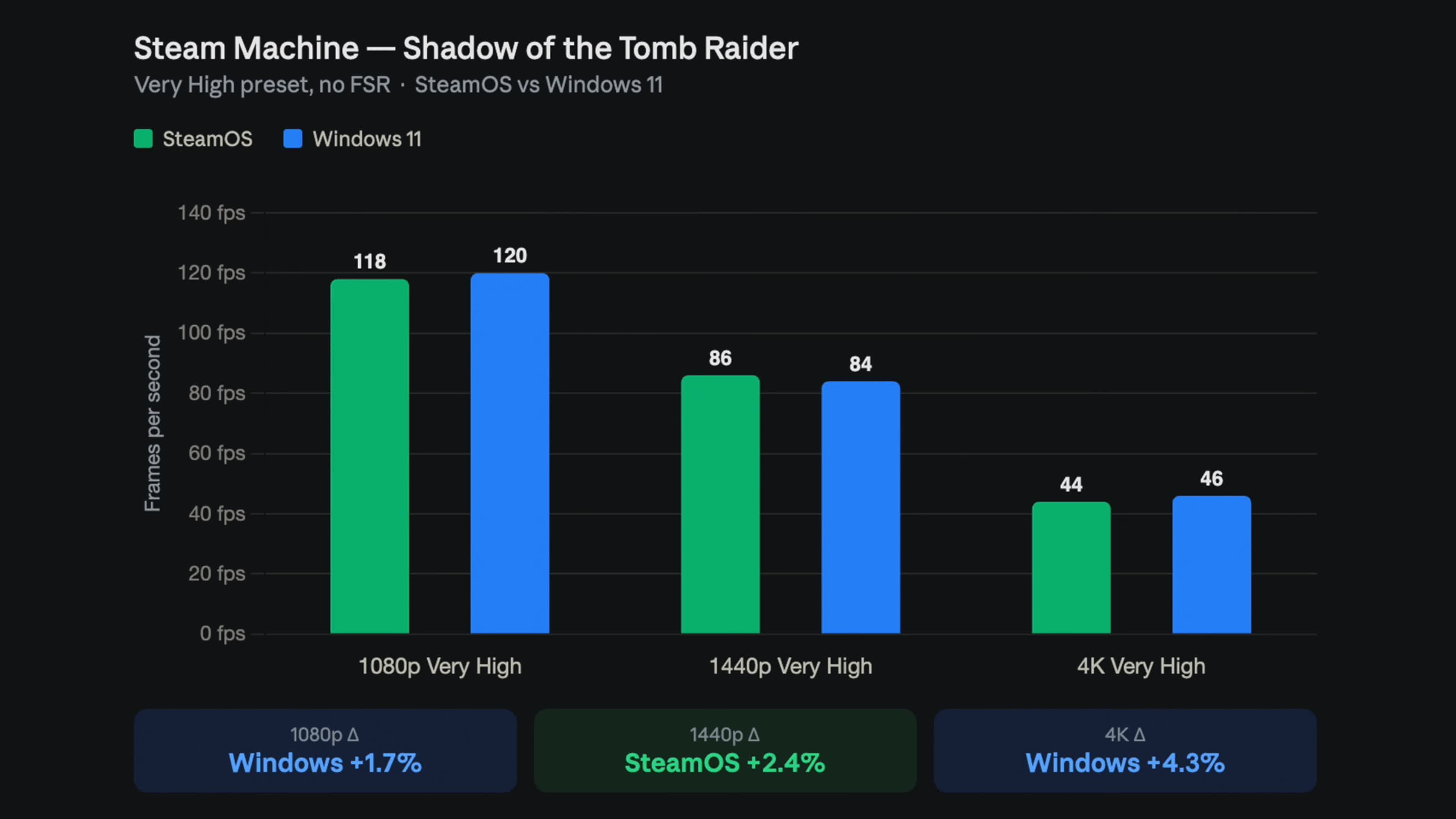
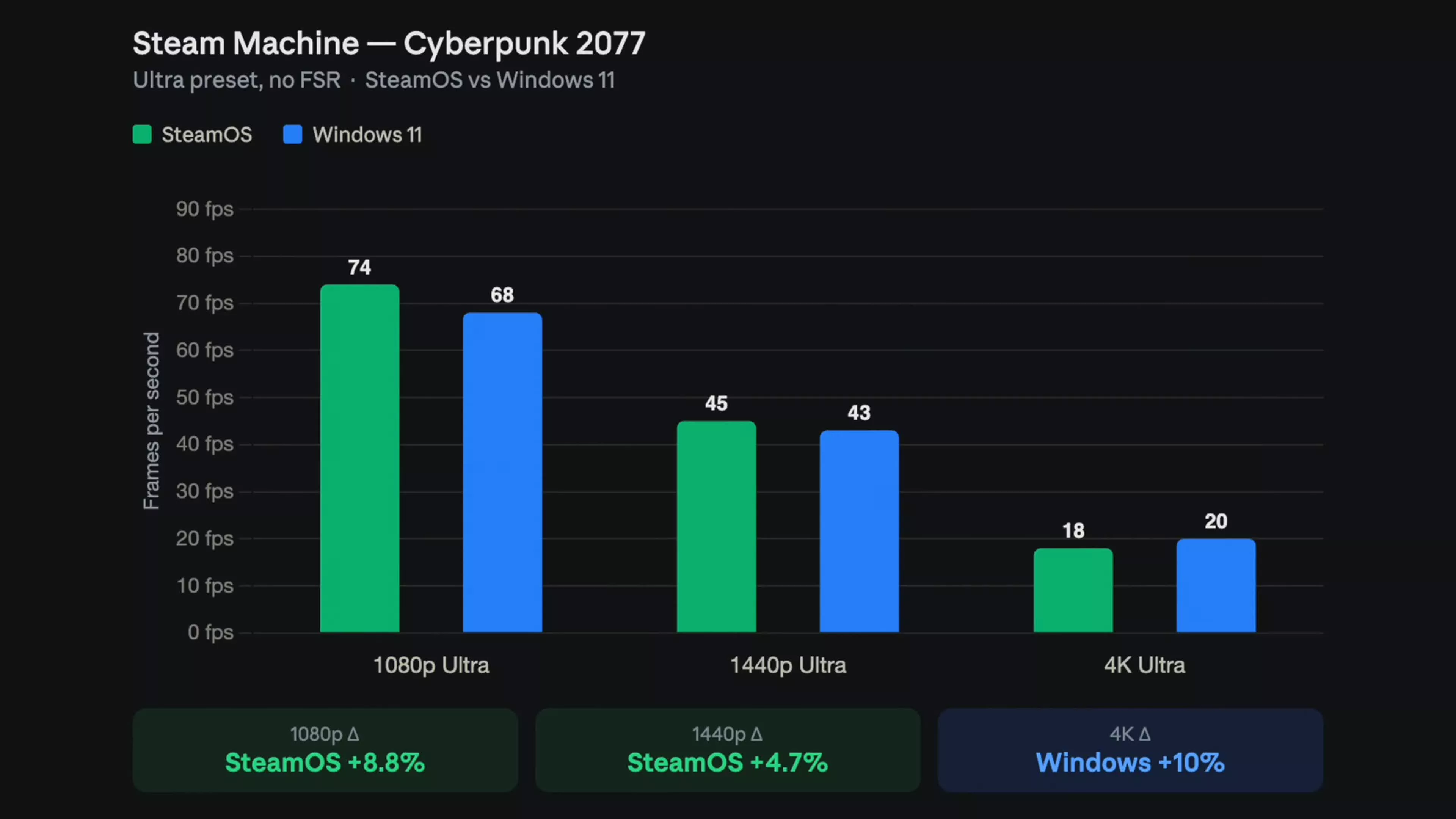
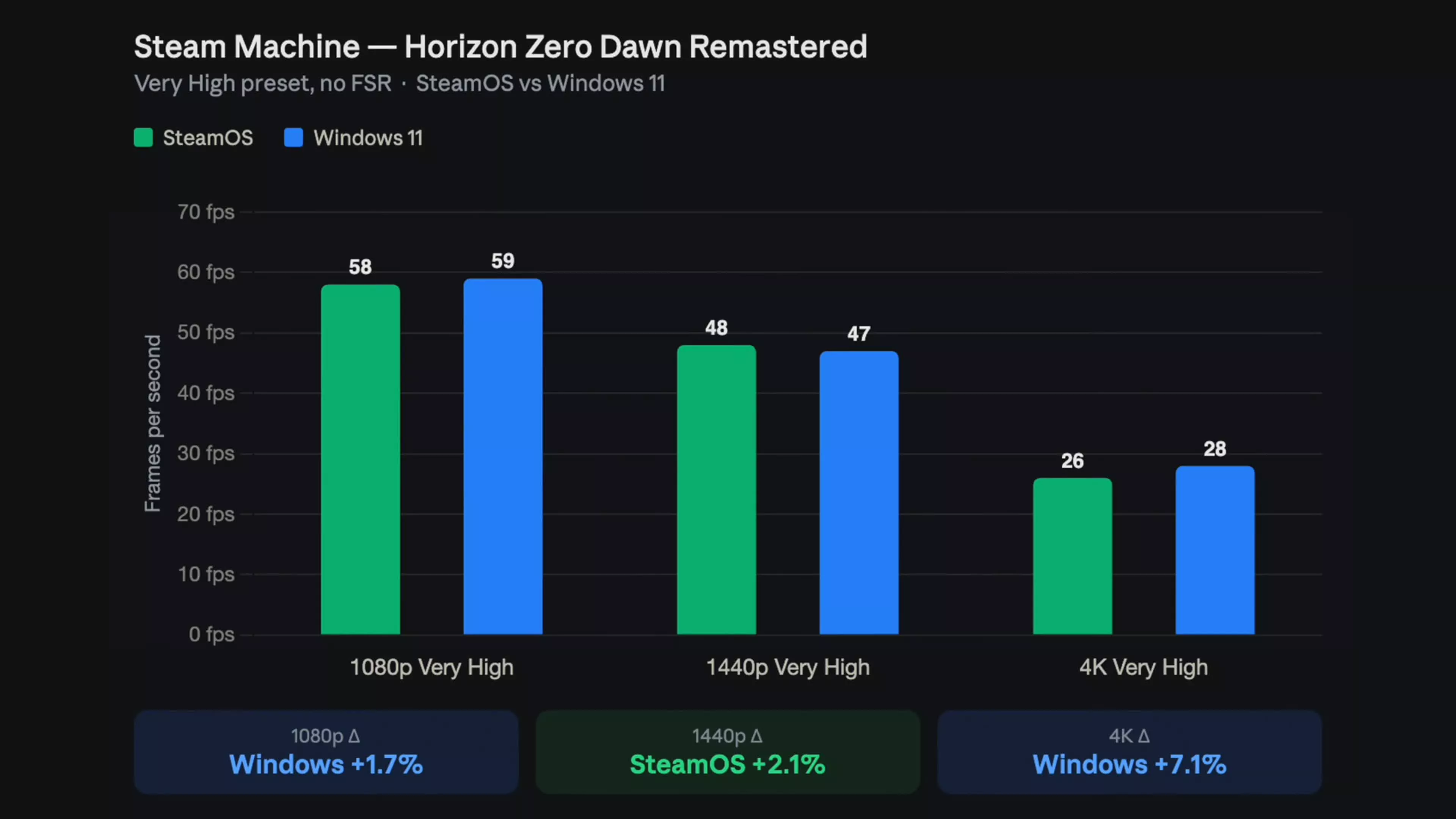
In prior comparisons, SteamOS pulled significantly ahead of Windows when running on handheld gaming PCs with unified memory. But that advantage disappeared in a series of late 2025 tests on custom desktops with dedicated graphics cards, especially those with less than 12GB of VRAM. Subsequent SteamOS updates aimed to improve performance on 8GB GPUs, but further testing is needed to determine whether they were effective.
ETA Prime's benchmarks showed that, at least in Shadow of the Tomb Raider, Cyberpunk 2077, and Horizon Zero Dawn Remastered, Windows 11 and SteamOS on the Steam Machine remain within a few frames of each other. SteamOS's advantage can exceed 8% in Cyberpunk at ultra settings in native 1080p, but the gaps in other tests were usually below 3%. However, ETA Prime did not specify whether he activated ray tracing in Cyberpunk, which is where SteamOS struggled most in last year's tests.
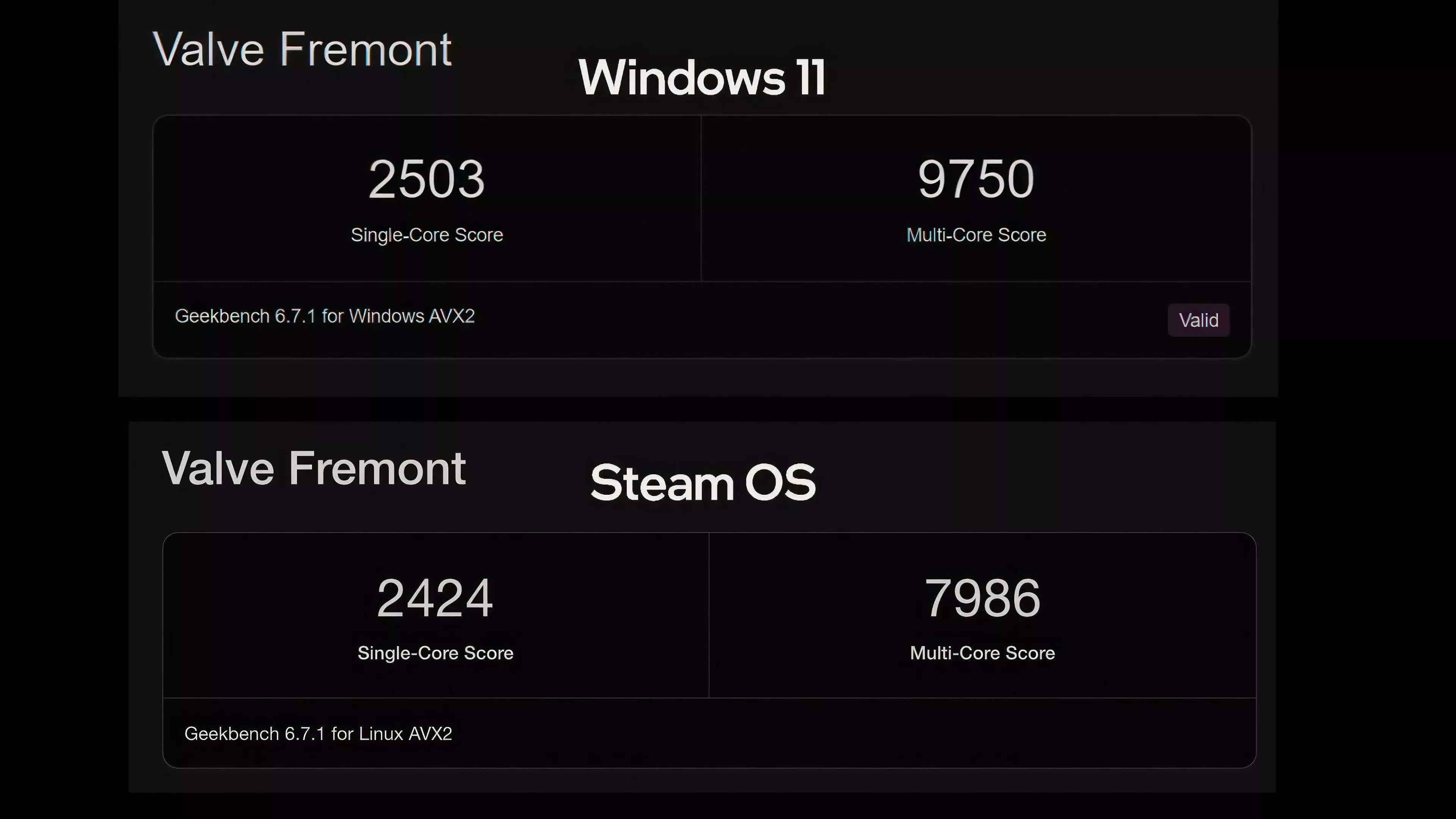
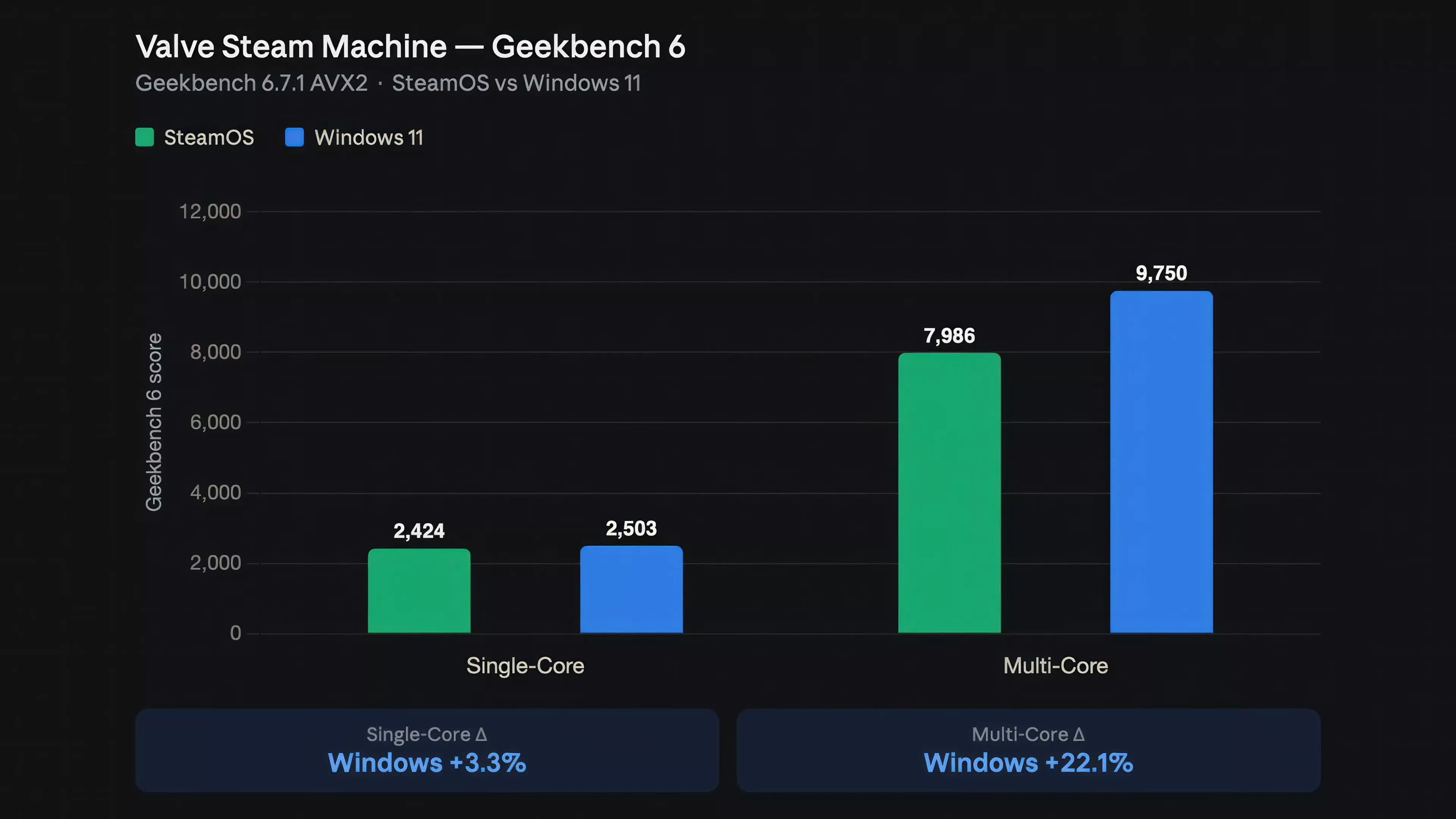
Meanwhile, Windows 11's only big win came in the sole synthetic benchmark that currently supports SteamOS – Geekbench. While the two OSs received similar single-core results, Windows won out by a whopping 22% in Geekbench 6's multi-core test.
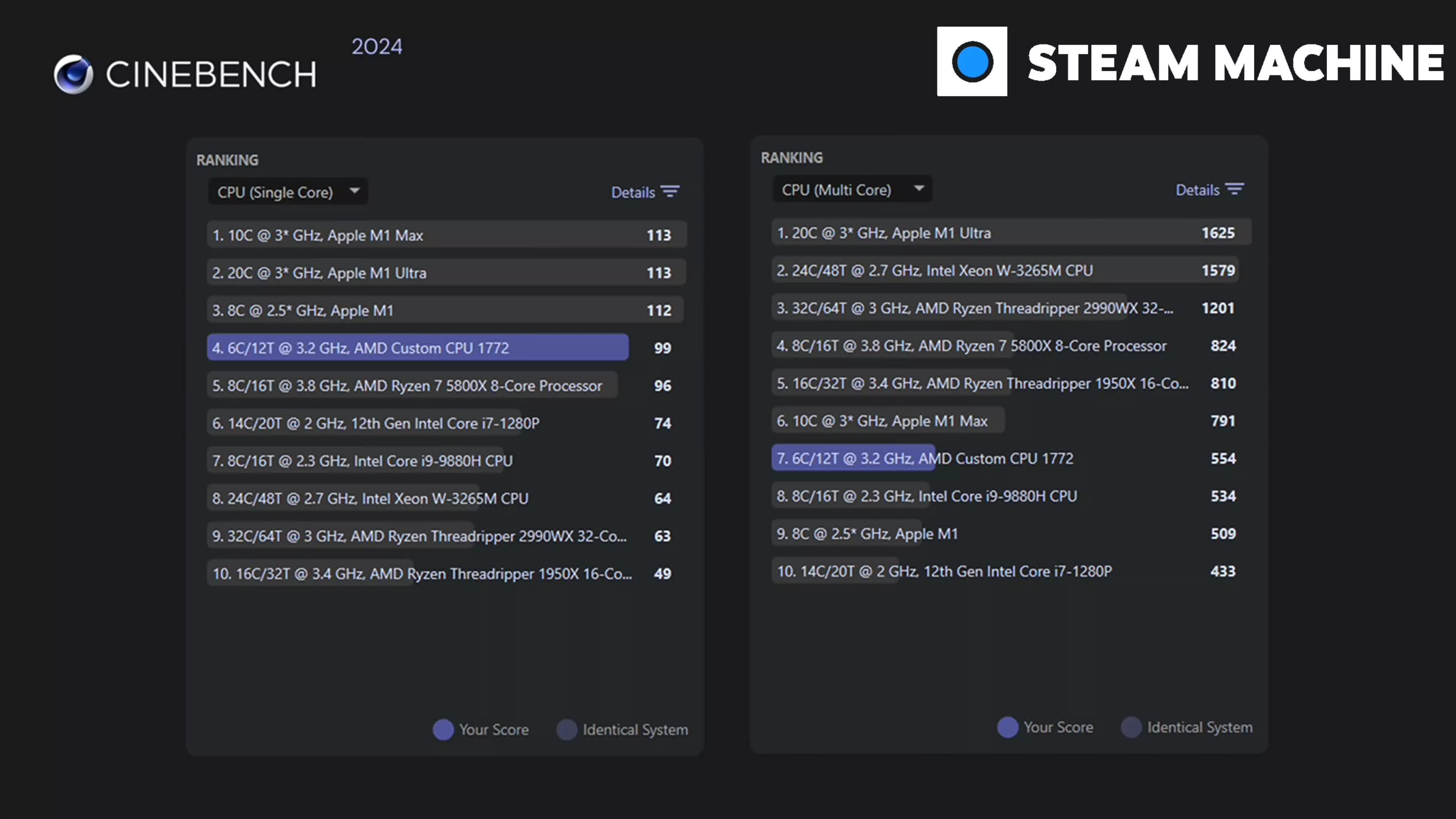
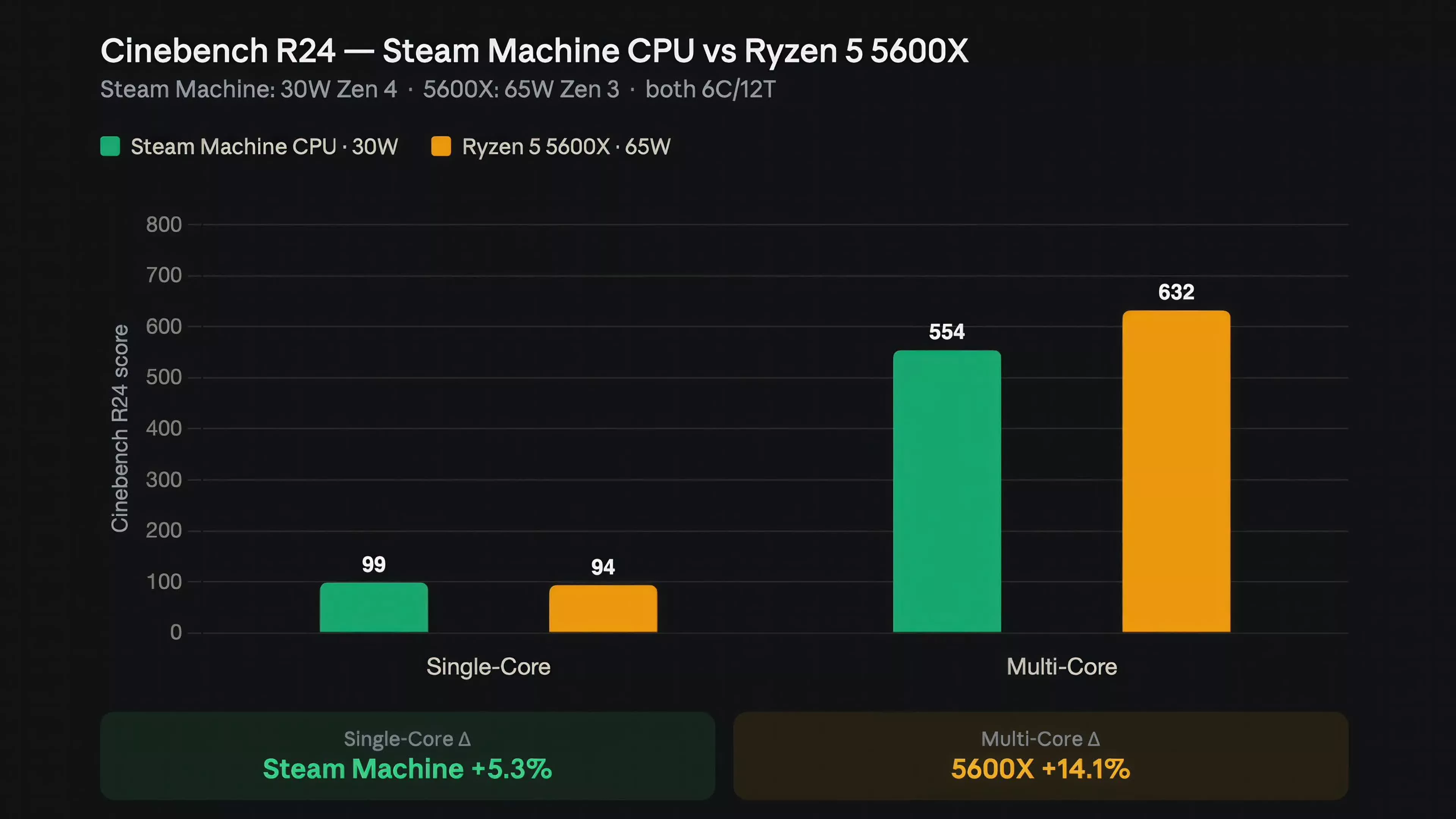
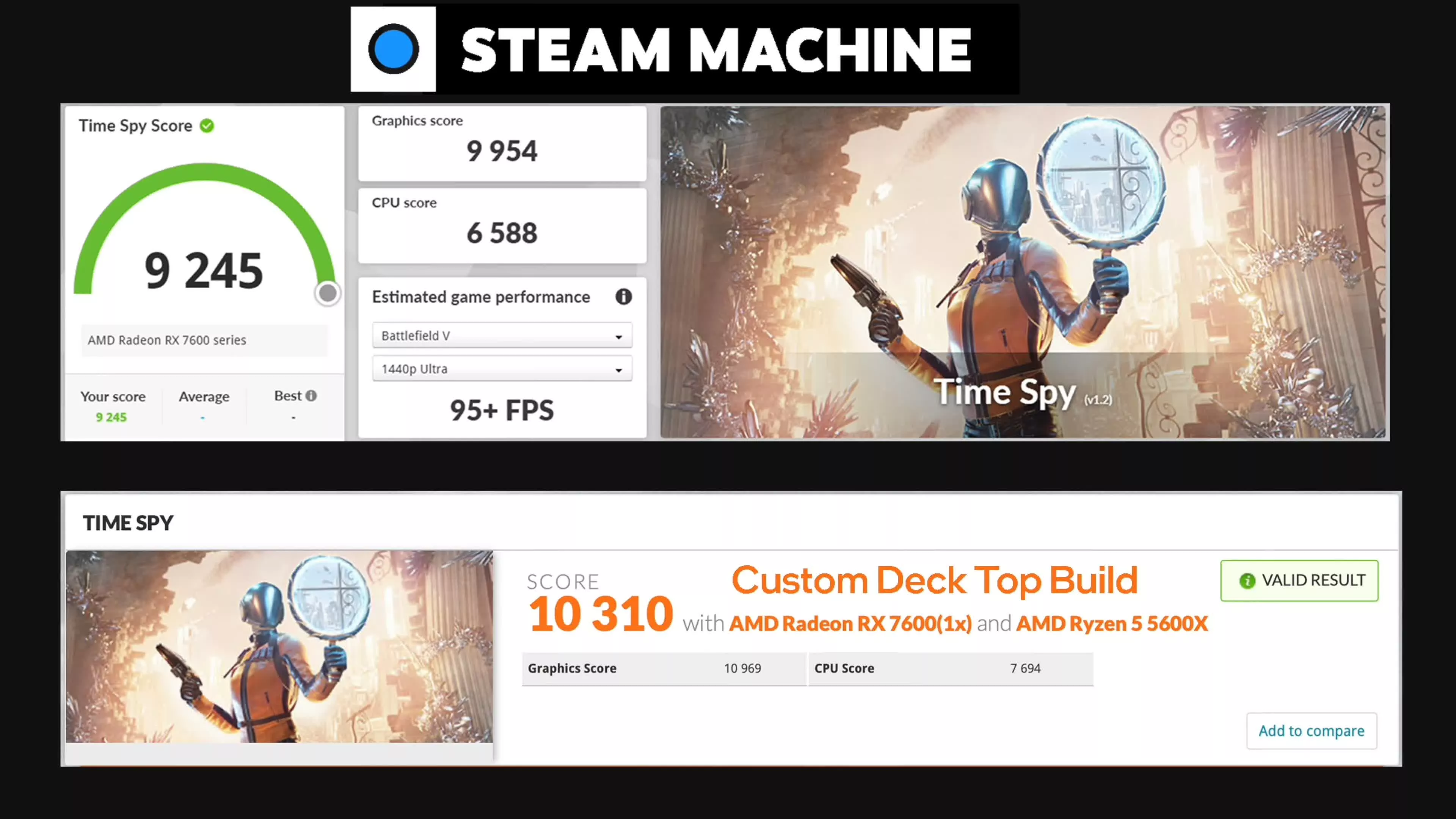
Other benchmarks, such as Cinebench and Time Spy, could only be conducted on Windows, but still offered a glimpse of the Steam Machine's performance compared to other PCs. Cinebench placed Valve's custom Zen 4 CPU just behind Apple's M1 series, but the chip's six-core design held back its multi-core performance back compared to the Ryzen 7 5800X and M1 Ultra. Notably, the Steam Machine's multi-core weakness also emerged in a comparison with the Ryzen 5 5600X, which features the same core count but uses the older Zen 3 architecture.
Valve aims to enhance SteamOS's features and performance via constant patches, but for now, its straightforward user experience appears to be its primary advantage over Windows 11.
Steam Machine benchmarks show SteamOS and Windows 11 within a few frames of each other in most games


