Students are learning to write for AI detectors, not for humans

Skye Jacobs

Posts: 1,912   +58
Staff
Facepalm: AI writing detectors were supposed to identify machine-generated text; instead, they are quietly reshaping how students write and how they use AI in the first place. Across classrooms and campuses, tools built on opaque language models and probabilistic pattern matching are pushing some of the strongest writers to tone down their style, study the detectors themselves, and even adopt generative AI defensively just to avoid being flagged.

In one case, an AI checker pre-installed on a school-issued Chromebook flagged a student's essay on Harrison Bergeron by Kurt Vonnegut as "18% AI-written" simply because it contained the word "devoid."

When the student replaced "devoid" with "without," the score dropped to zero, even though the underlying ideas and structure remained unchanged. That behavior is typical of current detection systems, which rely on statistical signals such as word choice and distribution rather than any meaningful understanding of authorship.

As a result, students are learning that a richer vocabulary or more confident prose can appear suspicious to a classifier and may need to be stripped out.

Writing instructor Dadland Maye describes college students who began experimenting with generative AI tools only after hearing that certain stylistic features such as em dashes might trigger detectors used in their courses.

One student who had always written her own work started running her drafts through AI tools not to outsource the writing, but to test how likely they were to be flagged as AI-generated and adjust accordingly.

Another student, after being falsely accused in a different class, responded by subscribing to multiple AI services and studying detection techniques in detail so he could anticipate and avoid future false positives.
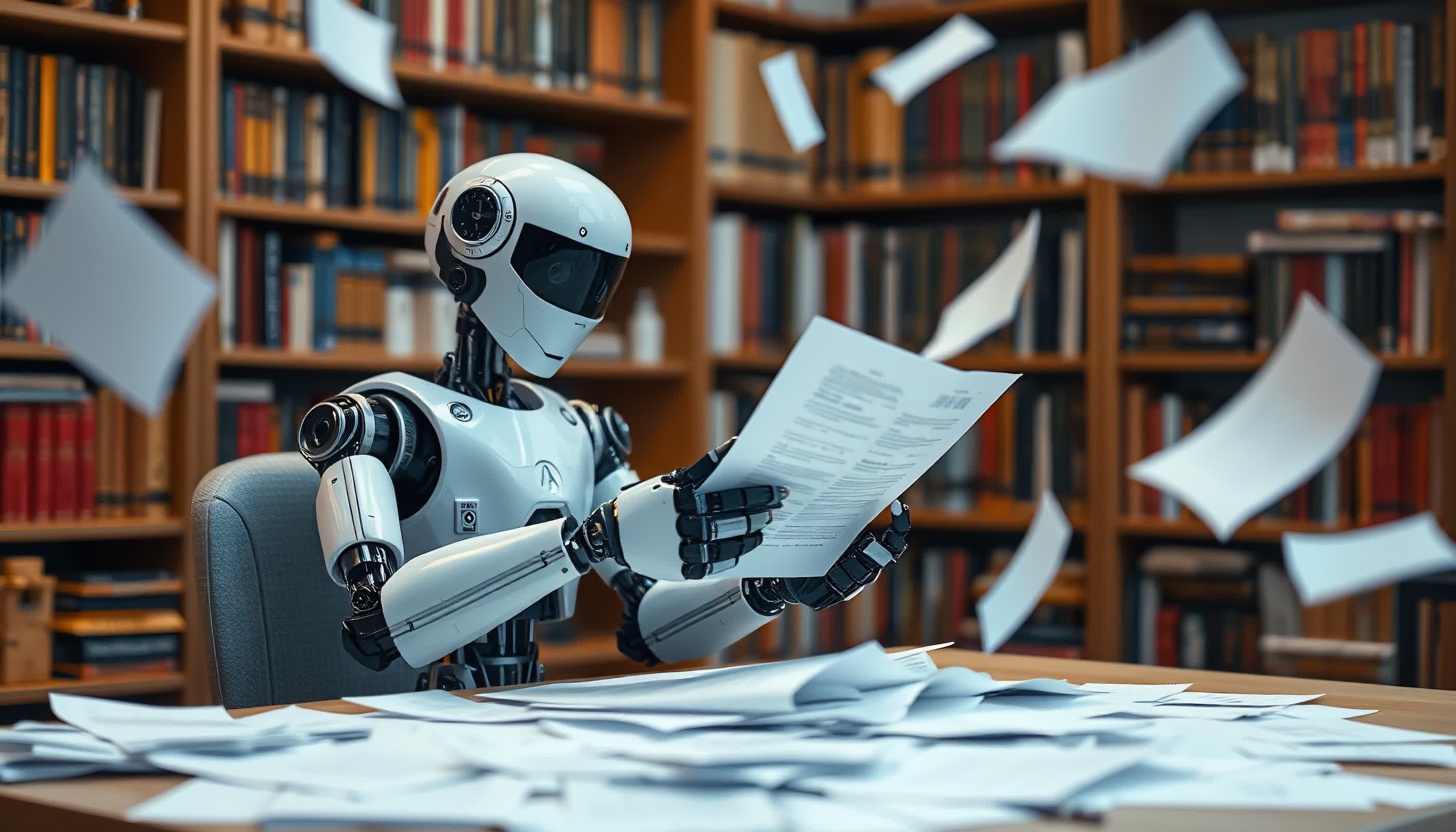
Technically, the incentives align with what economists call the Cobra Effect: a policy aimed at reducing a behavior ends up encouraging it by rewarding the wrong signals. AI detectors estimate the probability that a text was produced by a large language model based on features such as token frequency, syntactic patterns, and "burstiness," the variation in sentence length and structure.

Students quickly learn that certain markers can raise those scores, while text that appears more generic or flattened tends to pass. The rational response, especially when grades or disciplinary action are at stake, is to either write more blandly or let the same models detectors are designed to spot help generate "safe" phrasing that blends into the statistical background.

Maye reports that this dynamic hits hardest at open-access institutions such as City University of New York, where students often work 20 to 40 hours a week, speak multiple languages, and face a patchwork of AI policies that vary from course to course.

One student told Maye they spent hours rephrasing sentences that detectors labeled as machine-generated, even though every line was original; another said simply, "I revise and revise. It takes too much time."

What these systems teach about writing may be their most significant long-term effect. Students internalize that style can count against them, and that sounding too fluent may become a liability. Over time, this shifts the goal away from expressing ideas clearly or developing a voice and toward producing text that is sufficiently unremarkable to clear a statistical threshold.

Faced with this reality, Maye eventually told students they could rely on AI tools for research and outlining while keeping drafting in their own hands. He also began teaching prompt design, the limitations of automated summaries, and the warning signs that a model was beginning to replace rather than support their thinking.

The dynamic in the classroom changed. Students began approaching him after class not to contest accusations, but to ask how to use these systems responsibly – for example, how to gather background information without copying generated text, or how to recognize when an AI-written summary had drifted away from the source material.

The experiences described by Maye and others suggest that treating AI as an instructional challenge – teaching when it helps, when it harms, and when its use becomes a crutch – may be more effective than relying on detectors that push students toward a narrow, algorithm-approved mean.

Permalink to story:

 
Even in the old days, the aspiring writer often began their journey with flamboyant prose, trying to imitate, crudely, some great master or poet. As time goes by, the glitter loses its dazzle. Many tone down their prose, realising that simplicity is key. Others continue with an ornate style, imagining they will take their reader by storm. There is room for both Addison and Dickens; Orwell and Tolkien.
 
Dumbing down of society seems to be the name of the game. It’s a race to the bottom, in nearly every aspect of society nowadays (economic, literary, financial, foreign policies, etc).
That's how 'They' stay in control.... . . . .
 
There is a bigger issue going on here, than just "students are writing for the AI, not the human proctor" and you can see it everywhere. The issue isn't just "reducing word complexity", "it's reduced conceptualization and comprehension" because intellectual debate and rational discourse, sophistication of mind and spirit, is being flagged as cheating or is censored, or is otherwise considered "wrongthink". We are incentivizing people to stiffle their creativity, because our system rewards "teaching to the test". This has been going on for a long time, but never before has it more specularly backfired. Automation tools are supposed to amplify free writing and creative expression, but now those very tools are observing the intended goal as a barrier to success. We are literally authoring a world of literary desolation and we can't stop it, because there are too many systems in place which reward comformity and muted expression. Hell, I use "em" dashes all the time (that's just the way I write, because I understand how grammar works) and I have a strong suspicion that my writing style would be flagged as "written by AI", with a 99% probability. I write too much like AI (or, actually, AI writes too much like "a sophiscated writer") and some people who read this thread might be inclined to think that I am AI; on that basis, they might dismiss literally everything I say, because "well, if an AI detector thinks this is AI, that means a human didn't write it and therefore, it's not worth scrutiny, because it's inherently suspect".

It's the same thing with YouTube comments. They censor words like "as*" and "f*ck", because swearing is too "mature" for the probably "13 and over" crowd to bear witness, even though they've probably been using sailor talk since they were 10. People think rational free thought dies because "content mills" reward the "flavor of the week" algorithmically-trending slop, but I think it died long before then. When students are penalized for clear and concise observations of reality, because grades are everything and they try writing using their own style while simulatenously satisfying the ever-scrupulous demands of a drill sargeant masquerading as a cheat detector tools, that can give failing grades without mercy and there is no mechanism to dispute the results, what kind of future does that produce?
 
Last edited:
Writing an essay based on Kurt Vonnegut while simultaneously endorsing the bombing of Iranian children is complete bullshit.
 
I'm so glad I learned to read and write in the 50's and 60's.If I had learned recently I would be a monosyllabic. I wish I had learned punctuation.
 
If sounding articulate raises your AI score, the logical strategy becomes writing like a corporate email from 2007. Short sentences. Very safe words. Nothing interesting. Detector passes. Soul leaves body.
 
That's how 'They' stay in control.... . . . .
Who is "they"?

Our current leaders stay in control because we keep electing the same types of people over and over again and let R vs D blind us with partisanship. AI is already unnecessary for them to retain power.
 
Even in the old days, the aspiring writer often began their journey with flamboyant prose, trying to imitate, crudely, some great master or poet. As time goes by, the glitter loses its dazzle. Many tone down their prose, realising that simplicity is key. Others continue with an ornate style, imagining they will take their reader by storm. There is room for both Addison and Dickens; Orwell and Tolkien.
Imitation is the first step to developing your own style. Everyone has a unique voice that fits their life experiences. Simplicity isn't for everything or everyone. In my own writing, I try to make it accessible to people who may be less fluent but I also have my own limitations because of my upbringing, just as anyone else would.
 
I'm so glad I learned to read and write in the 50's and 60's.If I had learned recently I would be a monosyllabic. I wish I had learned punctuation.
I don't see any issues with your writing here. Many people have trouble with commas and "its" vs. "it's". It's OK if you don't know these things though as your writing would still be clear enough.
 
There is a bigger issue going on here, than just "students are writing for the AI, not the human proctor" and you can see it everywhere. The issue isn't just "reducing word complexity", "it's reduced conceptualization and comprehension" because intellectual debate and rational discourse, sophistication of mind and spirit, is being flagged as cheating or is censored, or is otherwise considered "wrongthink". We are incentivizing people to stiffle their creativity, because our system rewards "teaching to the test". This has been going on for a long time, but never before has it more specularly backfired. Automation tools are supposed to amplify free writing and creative expression, but now those very tools are observing the intended goal as a barrier to success. We are literally authoring a world of literary desolation and we can't stop it, because there are too many systems in place which reward comformity and muted expression. Hell, I use "em" dashes all the time (that's just the way I write, because I understand how grammar works) and I have a strong suspicion that my writing style would be flagged as "written by AI", with a 99% probability. I write too much like AI (or, actually, AI writes too much like "a sophiscated writer") and some people who read this thread might be inclined to think that I am AI; on that basis, they might dismiss literally everything I say, because "well, if an AI detector thinks this is AI, that means a human didn't write it and therefore, it's not worth scrutiny, because it's inherently suspect".

It's the same thing with YouTube comments. They censor words like "as*" and "f*ck", because swearing is too "mature" for the probably "13 and over" crowd to bear witness, even though they've probably been using sailor talk since they were 10. People think rational free thought dies because "content mills" reward the "flavor of the week" algorithmically-trending slop, but I think it died long before then. When students are penalized for clear and concise observations of reality, because grades are everything and they try writing using their own style while simulatenously satisfying the ever-scrupulous demands of a drill sargeant masquerading as a cheat detector tools, that can give failing grades without mercy and there is no mechanism to dispute the results, what kind of future does that produce?
I like to swear. It's more humane than hitting people.
 
That's how 'They' stay in control.... . . . .
Problem with using a generic "they" is that everyone can interpret it as their favorite evil genie. (And I use the word "genie" because "they" is pretty much a hobgoblin term for whatever group you dislike.)
 
Imitation is the first step to developing your own style. Everyone has a unique voice that fits their life experiences. Simplicity isn't for everything or everyone. In my own writing, I try to make it accessible to people who may be less fluent but I also have my own limitations because of my upbringing, just as anyone else would.
Yes, all writers start with imitation, and at length strike out a style of their own. Style should fit the content. For students in academic writing, though, cultivating simplicity would, I think, lead to clearer thinking. Too often, a lack of substance is veiled with pompous language.
 
Too often, a lack of substance is veiled with pompous language.
Too often, the "pompous language" is the substance. If form follows function, then we've long since abandoned sanity. We can no longer distinguish craftsmanship from counterfeit, because our collective "objective reality" gauge has been replaced with a "subjectivity of circumstances" meter. All we have now, are cheap imitations that rely on consensus to prove authenticity. If there is truth in advertising, it is that people want to be decieved: a good lie sells better than a painful truth.

Nothing proves this more opaquely than that time Supreme made a brick―a literal brick, like the kind you use to build a house, painted with the "Supreme" logo―and people responded by willingly paying hundreds of dollars for it. Not because it is useful, not because it does anything, but merely because it is pure vanity. They have enough disposable income and little enough sense to buy something, simply because a brand made it and others might want it. It turned an everyday object into a speculative asset. Supreme converted reckless spending and impulse purchasing into social currency: a "flex".

Likewise, AI has turned writing into an assault on the mind. People who follow "old school" principles of fairness, sensibility and justice, are increasingly being left behind. The world has always belonged to the Elon Musks and Bernie Madoffs of the world, but at least in the past, there was an illusion of justice. That the world rewarded good works. A well-written novel could move a nation. Good advice was worth its weight in gold.

Then, something changed. Optimism was besieged and now has largely been replaced with cynicism, skepticism and pessimism. The light of reason is dimming. Not gone, but lessened. There's little room for joy, when you know every other person you meet is a scoundrel or thief, looking for their next mark. "Goodness" is a choice, but it's also motivated. Take away that motivation and it languishes and dies.
 
Last edited:
Too often, the "pompous language" is the substance. If form follows function, then we've long since abandoned sanity. We can no longer distinguish craftsmanship from counterfeit, because our collective "objective reality" gauge has been replaced with a "subjectivity of circumstances" meter. All we have now, are cheap imitations that rely on consensus to prove authenticity. If there is truth in advertising, it is that people want to be decieved: a good lie sells better than a painful truth.

Nothing proves this more opaquely than that time Supreme made a brick―a literal brick, like the kind you use to build a house, painted with the "Supreme" logo―and people responded by willingly paying hundreds of dollars for it. Not because it is useful, not because it does anything, but merely because it is pure vanity. They have enough disposable income and little enough sense to buy something, simply because a brand made it and others might want it. It turned an everyday object into a speculative asset. Supreme converted reckless spending and impulse purchasing into social currency: a "flex".

Likewise, AI has turned writing into an assault on the mind. People who follow "old school" principles of fairness, sensibility and justice, are increasingly being left behind. The world has always belonged to the Elon Musks and Bernie Madoffs of the world, but at least in the past, there was an illusion of justice. That the world rewarded good works. A well-written novel could move a nation. Good advice was worth its weight in gold.

Then, something changed. Optimism was besieged and now has largely been replaced with cynicism, skepticism and pessimism. The light of reason is dimming. Not gone, but lessened. There's little room for joy, when you know every other person you meet is a scoundrel or thief, looking for their next mark. "Goodness" is a choice, but it's also motivated. Take away that motivation and it languishes and dies.
Part of the problem is the lowering of standards in many fields. The general texture is mediocre, but excellence has been reached here and there. If we went back to the books, thought, and models of the past, while retaining the advances, quality should rise. The light of reason has dimmed because we aren't exposed to the best thinkers of old, and technology's endless loop dissipates our attention, leading to broken thought. It can be fixed, taking individual effort.

Regarding the optimism of the past, that might have been temporal or geographic, and certainly, wasn't universal. For many, the world was a dire, unequal place; today, there are improvements in the regard. Nevertheless, something is wrong in the world today, and many feel it, leading to cynicism and emptiness. Can it be rising inequality as the rich grow richer? A loss of faith in divinity? Increased awareness of the scams our governments are? No doubt, these and more. There is no easy answer, but I think individual effort, decency, and holding onto all that is good, especially when difficult, will do much.
 
Back