Superwood has arrived - wood up to ten times stronger than steel and six times lighter

midian182

Posts: 11,620   +175
Staff member
What just happened? A US company has launched a new type of wood that it says has up to 10 times the strength-to-weight ratio of steel and is six times lighter. The aptly named Superwood has the potential to revolutionize industries, especially construction.
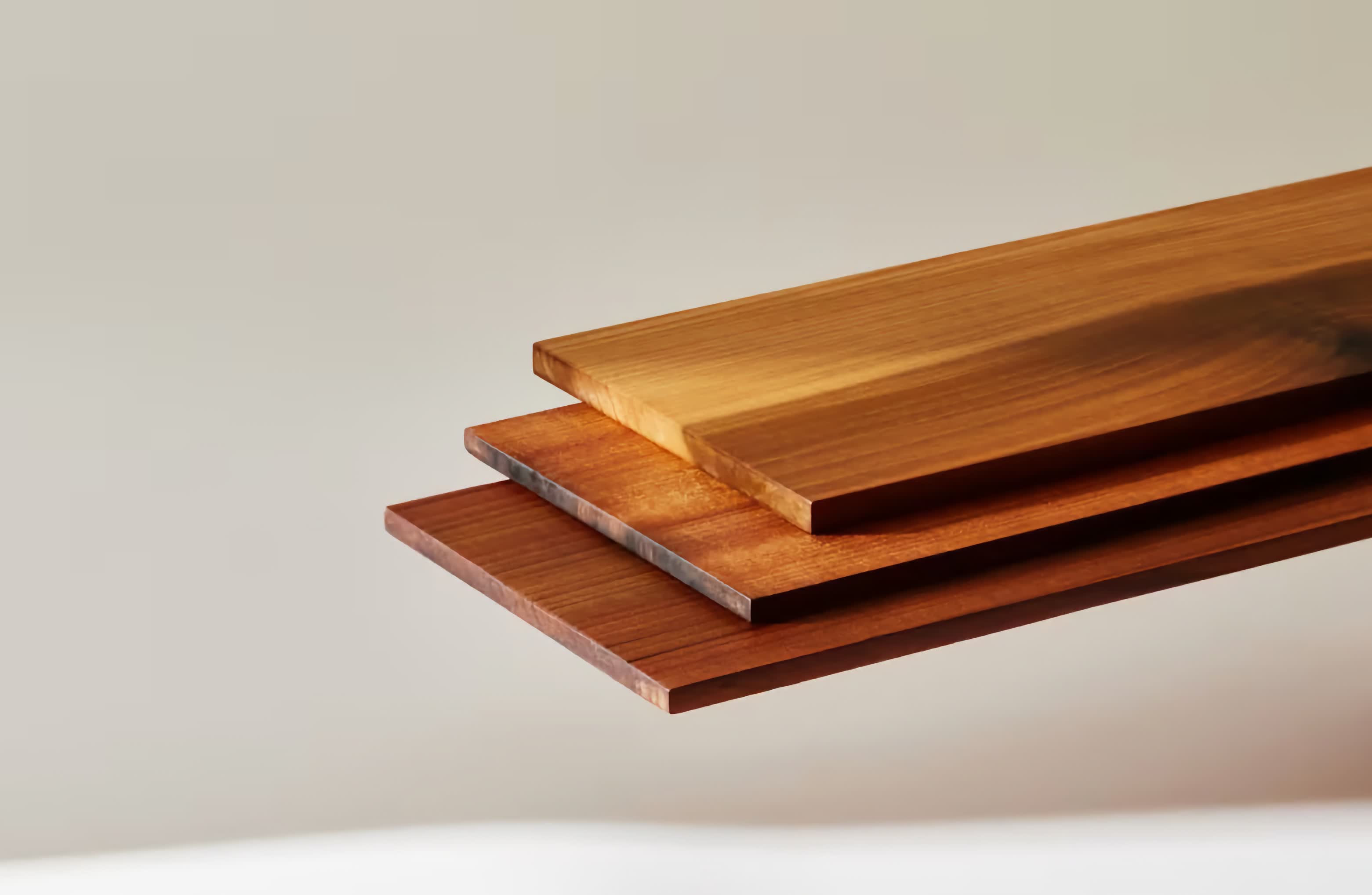
Superwood, which we looked at earlier this year prior to its launch, is the result of a lengthy mission by material scientist Liangbing Hu, co-founder of the InventWood company that now sells the commercial product.

Hu started looking at ways of re-engineering wood while working at the University of Maryland 's Center for Materials Innovation over ten years ago, writes CNN. The professor wanted to make wood stronger by enhancing cellulose, the main component of plant fiber.

In 2017, Hu first developed the process that led to Superwood. It involves removing certain components from the wood, boiling it in a bath of water and "food industry" chemicals, then hot-pressing the material to increase the hydrogen bonds between molecules, significantly increasing its density.

At the end of the process, the wood is left with a strength-to-weight ratio "higher than that of most structural metals and alloys," according to the journal Nature.

InventWood CEO Alex Lau said that Superwood could allow the creation of buildings that are four times lighter than current structures. This would make them more resistant to earthquakes and be easier on the foundations, which should result in faster and easier construction.

Lau added that despite being so much stronger and lighter than the regular thing, Superwood still looks and acts just like normal wood.

InventWood initially plans to use Superwood for external applications such as decking and cladding. It hopes to expand production to interior applications such as wall paneling, flooring and home furniture sometime next year. Lau said Superwood could replace the metal components in furniture, including the screws, nails, and joints, resulting in a product that is not only stronger but also lighter.

Lau said that the end goal is for an entire building to be made of Superwood.

Some other impressive facts about Superwood include it being 20 times stronger than regular wood, 10 times more resistant to dents, impervious to fungi and insects, and boasting the highest rating in standard fire resistance tests. The creation process works on any kind of wooden material, so it's expected to lead to more efficient use of wood.

There are some caveats, though. Superwood does cost more than regular wood and it has a larger manufacturing carbon footprint. But Lau said that compared to the manufacturing of steel, the material it is competing with, the carbon emissions are 90% lower.
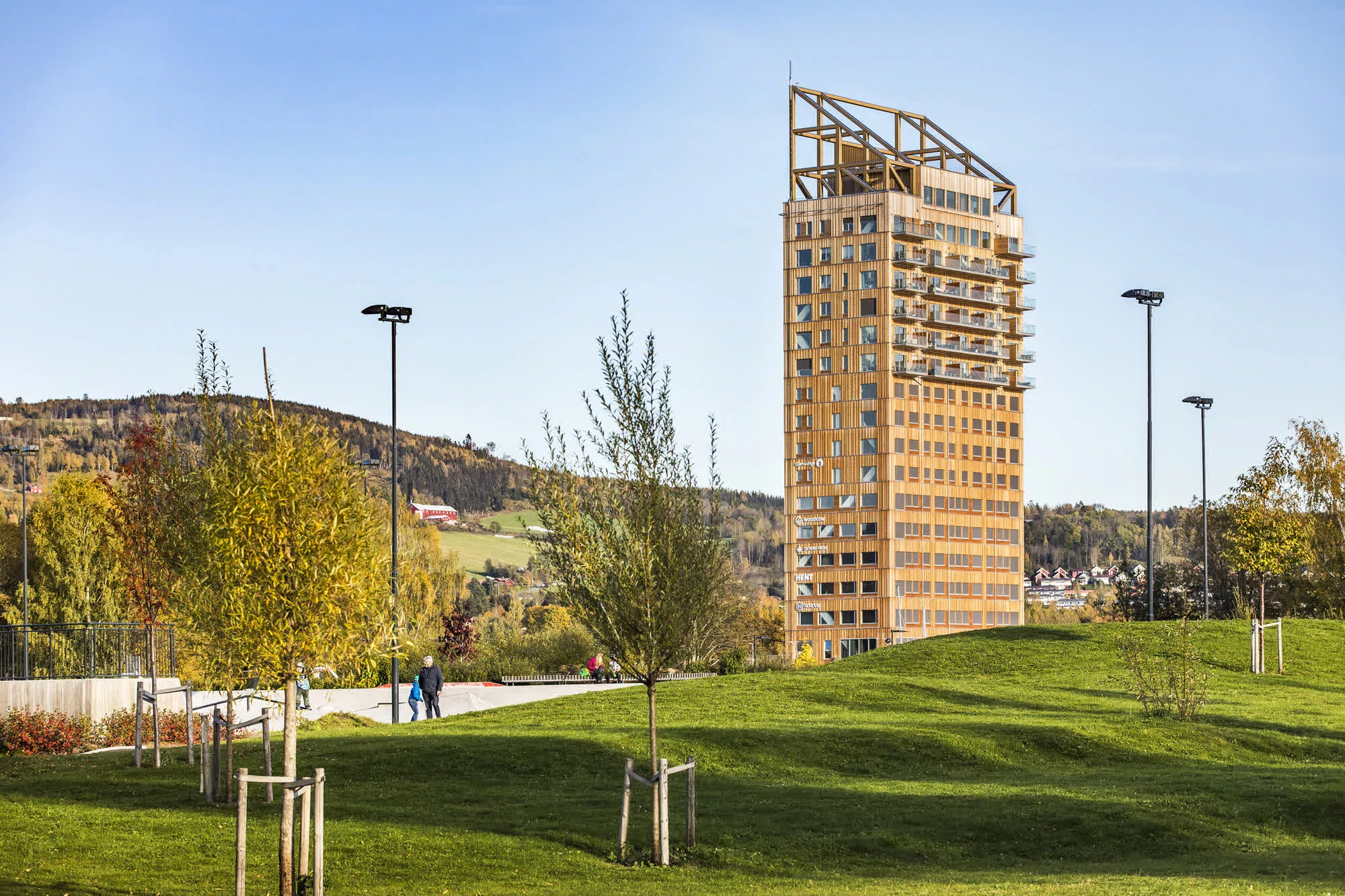
We've already seen wood that can somewhat replicate the strength of steel beams and concrete. "Mass timber" construction technology has led to Ikea-style wooden skyscrapers appearing around the world, including the 25-story Ascent tower in Milwaukee.

Permalink to story:

 
This article was posted (maybe not the exact same, but about the same thing) some months or maybe a year ago on TS.....I found it, see link below.

You guys could have just updated the original story:
https://www.techspot.com/news/10794...e-steel-concrete-sustainable-alternative.html
Hey brother, rough night? :D

Part of the first sentence after the summary paragraph has that link and says:
"Superwood, which we looked at earlier this year prior to its launch"

But anyway, my comment in that original still stands.
It is much stronger, but it's not exactly trying to replace paper structures.

Builders are more than happy with the status quo.
 
Last edited:
I wonder if someday we’ll see a supercar built from Superwood instead of carbon fiber. It might not perform quite as well, but the idea of a sculpted body with smooth, flowing woodgrain has a certain beauty to it. Even if it’s more art piece than speed machine, a Superwood supercar would interesting to see.
 
I wonder if someday we’ll see a supercar built from Superwood instead of carbon fiber. It might not perform quite as well, but the idea of a sculpted body with smooth, flowing woodgrain has a certain beauty to it. Even if it’s more art piece than speed machine, a Superwood supercar would interesting to see.
If you know what you are doing, you can create what looks like sculpted carbon fiber, too.

The main reason that carbon fiber is not used, as I am sure you know, is that it is expensive. However, wider use of carbon fiber would bring down its cost.

I highly doubt that this material would outperform carbon fiber, more specifically, composite sandwich construction with a light-weight core, like honeycomb or balsa wood, for instance, with carbon fiber outside layers made from carbon fiber with an extremely high elastic modulus, such as the carbon fiber made by the company Toray.
 
Builders are more than happy with the status quo.
I'm sure that is partly based on cost, and partly based on not having experience with "different" materials, among other things.

I'm sure the cost of this material factors into its use as a replacement construction material. Using it in the right situations would be key to an appropriate application of it.

To me, what it takes to make it sounds intensive, and that last step of compressing it is not something that is easily done, IMO.

But then again, what do I know? :laughing:
 
Sounds fantastic ... Now, where's the catch?

And what exactly "ten times stronger than steel" means?
Given a piece of superwood and a piece of steel with the same dimensions, does superwood withstand 10x greater load and torque in all directions and under all conditions - hot/ cold/ high temp. amplitudes/ wet/ prolonged exposure to solar radiation etc.?
It would be super-mega-great if it does, but I somehow suspect the answer is either 'No', or 'We have no idea yet'.
 
Sounds fantastic ... Now, where's the catch?
The catch is that it's way more expensive than regular wood. This article makes no mention of price, but a quick Google search reveals why this product won't go anywhere.

Superwood: Currently $12.50 to $25+ per pound.
Regular structural wood: $0.50 to $2 per pound.
Steel: $1 to $2 per pound.

So yeah, they can hype this product all they want, no one is going to build a house using this. Even if you're rich, you got better things to waste your money on than this.
 
The catch is that it's way more expensive than regular wood. This article makes no mention of price, but a quick Google search reveals why this product won't go anywhere.

Superwood: Currently $12.50 to $25+ per pound.
Regular structural wood: $0.50 to $2 per pound.
Steel: $1 to $2 per pound.

So yeah, they can hype this product all they want, no one is going to build a house using this. Even if you're rich, you got better things to waste your money on than this.
Price is not an issue.
This new product is currently exotic. If it's technically as good as advertised, price can be slashed 10x as the production ramps up, and then slashed 10x again, and then again ..
 
Price is not an issue.
This new product is currently exotic. If it's technically as good as advertised, price can be slashed 10x as the production ramps up, and then slashed 10x again, and then again ..
They will always spend a lot on electricity. The artile mentions boiling the wood. Giant pools of water with boiling water 24/7, that won't get cheaper.
 
They will always spend a lot on electricity. The artile mentions boiling the wood. Giant pools of water with boiling water 24/7, that won't get cheaper.

Energy required to boil 1m^3 water: 4,189 MJ
Energy required to melt 1m^3 steel: 10,800 MJ.

If steel is $1-$2 per pound, this can get cheaper too.
 
The catch is that it's way more expensive than regular wood. This article makes no mention of price, but a quick Google search reveals why this product won't go anywhere.

Superwood: Currently $12.50 to $25+ per pound.
Regular structural wood: $0.50 to $2 per pound.
Steel: $1 to $2 per pound.

So yeah, they can hype this product all they want, no one is going to build a house using this. Even if you're rich, you got better things to waste your money on than this.
Those numbers are make believe. First, the steel is way off. Galvanized steel is about $0.59/#. Second, comparing by weight is useless since the masses are do different and wood is much heavier for equivalent strength.
 
I didn't read the whole article, but since it is WOOD, what effect would TERMITES and such have on this?
 
Those numbers are make believe. First, the steel is way off. Galvanized steel is about $0.59/#. Second, comparing by weight is useless since the masses are do different and wood is much heavier for equivalent strength.

Fine, then release the price in board feet...Somehow I don't think the comparison will get much better. While we're at it, how DO you work with this stuff? Will standard woodworking tools work? Will it have to be custom molded by application? How about round or curved pieces?

As with most new and shiny wonder thingys, There are always more questions than answers.
 
It sounds like it might have some niche applications. Steel is useful not just for its strength but also for creating alloys with various purposes, and it's non-flammable. 🤣
 
Price is not an issue.
This new product is currently exotic. If it's technically as good as advertised, price can be slashed 10x as the production ramps up, and then slashed 10x again, and then again ..

Since it is just normal wood that has gone through additional processing, by definition it can never be cheaper than regular wood, so you're talking rubbish
 
They will always spend a lot on electricity. The artile mentions boiling the wood. Giant pools of water with boiling water 24/7, that won't get cheaper.
Electricity needed to boil water is far less than the electricity needed to melt iron.
Besides, boiling water is a perfect way of utilizing the (very cheap) excessive energy from renewables. I guess it's even possible to use solar energy directly, without conversion to electricity.
 
Back