Tesla ends Full Self-Driving purchases, shifts to subscription-only next month

midian182

Posts: 11,746   +178
Staff member
In a nutshell: Tesla will stop allowing customers to purchase its Full Self-Driving (FSD) software as a one-off payment starting next month. Instead, the autonomous driving assistance feature will only be available in its current $99 per month subscription model.
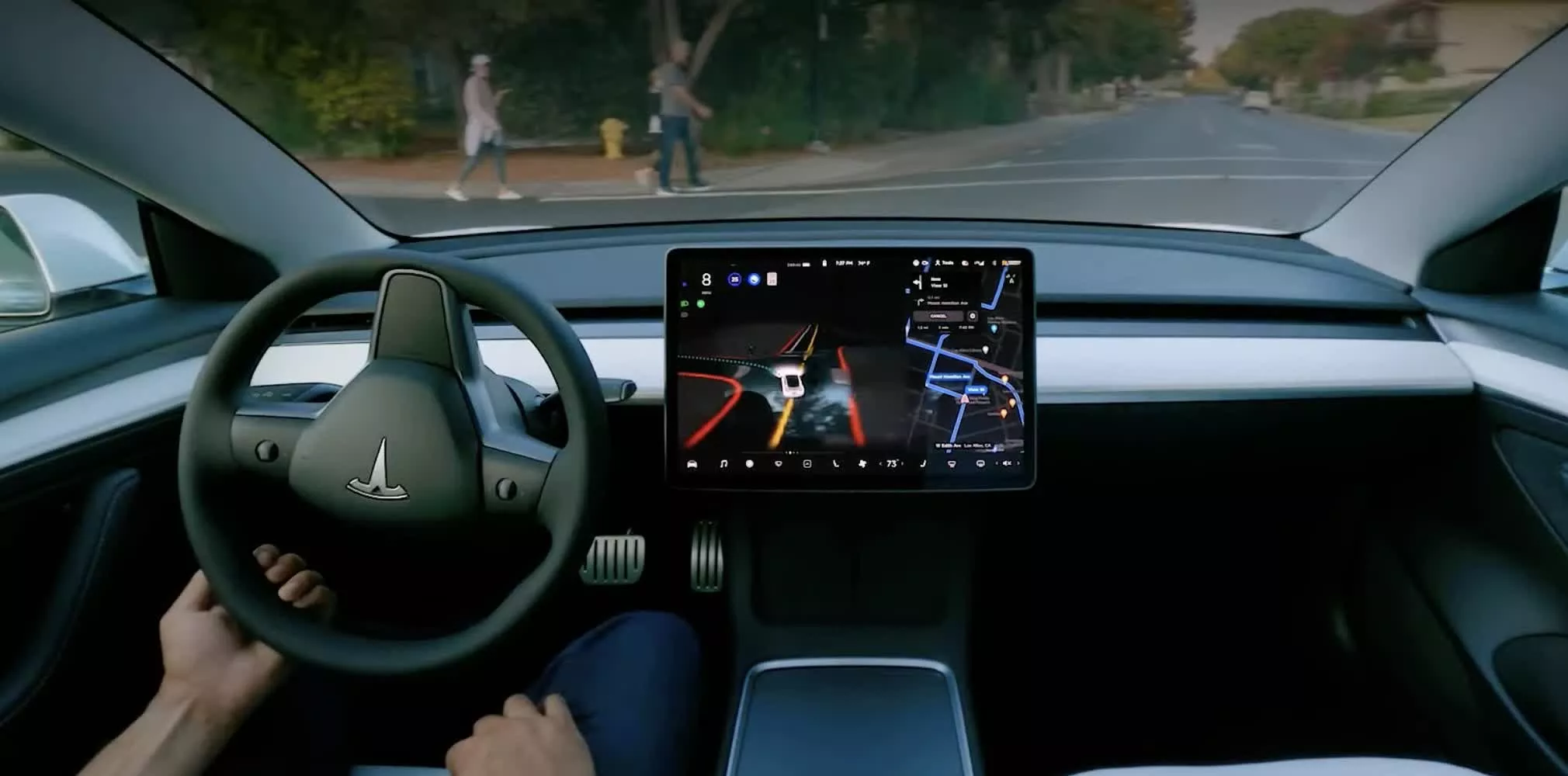
Tesla CEO Elon Musk announced the change in an X post yesterday. The world's richest person never gave a reason for moving to subscription-only.

The one-off price of FSD has changed a lot over the years. It started at $5,000 in 2019 before increasing to its record high of $15,000 in 2022. This was cut to $12,000 a year later, before Tesla reduced it to the current $8,000 in 2024. The company also reduced the subscription price from its original $199 to $99 in 2024.

In November, Musk admitted that no other automaker wants to license Tesla's FSD technology. He also bemoaned the low adoption rate during Tesla's third-quarter earnings call. Chief Financial Officer Vaibhav Taneja said in October that only 12% of the company's current fleet subscribes to the software.

The change is likely driven by a condition of Musk's $1 trillion pay package, approved by Tesla's board last year, that requires reaching 10 million active FSD subscriptions. Making the feature subscription-only is obviously going to help reach that milestone.

Tesla's FSD/Autopilot and related systems have been subject to several NHTSA investigations. In 2024, a report from the NHTSA linked Tesla's Autopilot systems to nearly 1,000 crashes from the last few years, over two dozen of them fatal. The agency launched a new investigation into FSD in October covering about 2.88 million vehicles equipped with the technology. By December 2025, the NHTSA had identified at least 80 instances of alleged FSD violations.

Tesla's official materials consistently emphasize that FSD is a supervised assistance system, not full autonomy, and that the driver must remain engaged. The company's official position is that the human driver retains ultimate responsibility – to stay attentive, keep hands on the wheel, be ready to intervene, control speed, and not treat the system as "self-driving," despite the system's name.

According to Slingshot Strategies' Electric Vehicle Intelligence Report for August, which surveyed more than 8,000 Americans, only 14% of consumers said FSD makes them more likely to buy a Tesla vehicle. About a third of participants (35%) said it makes them less likely to do so, while 51% said it makes no difference.

Permalink to story:

 
:rolleyes: For the world's richest man, this seems intent on bolstering those riches by siphoning more money out of his customers' pockets. IMO, its either that or Tesla is feeling pressure from BYD.
 
It was meant to happen eventually. We live in the age where every more or less rational businessman KNOWS that small monthly payments are a lot better for business growth.

Oh and to all fans of "cheap" Chinese EVs that offer all and forever, I will have to remind that it would only stay so till they can beat competition, spamming EV at such amounts that they can be sold cheaper even before CCP subsidies kick in.
 
This would upset me if I wanted Fake Self Driving.

Let me know when I can take a nap while my car drives me 1000 miles across everything from interstates to country back roads with zero human assistance.
 
FSD levels 4-5 are undoubtedly a competitive advantage, regardless of what the polls say. Let's assume the company has evaluated the license cost at ~$10,000, and at that price, ~10% of buyers purchase the license. There is no reason to place a logistical barrier between a competitive advantage and the buyer. Instead of selling the license to only 10% of buyers, the cost could be spread across all of them (~ a $1k increase in the car's price, with FSD bundled they can increase it even $2k and the sales not only they drop but they will go up) and made the default, perpetual feature bound to the hardware (the car). This way, it will be easier for the new ecosystem to receive legal approval because citizens will demand it.

This is a competitive advantage, meaning it's a reason for customers to choose this product over others that don't yet offer it. This approach would scale much more efficiently. If they believe it's not a fundamental competitive advantage, why did they develop it in the first place?
 
Tesla openly admits there have been around 1,400 accidents on FSD. They list 7.26B miles total have driven via FSD and its vehicles go 5.1M miles on average between each major accident, which is a great track record: https://www.tesla.com/fsd/safety

If the NHTSA didn't investigate emerging technologies, they wouldn't be doing their job. Considering that out of the thousand accidents, they only found 80+ were traffic violations by FSD that means the vast majority of those were not caused by FSD, but the other party in the collision. That means using FSD is safer than not using FSD.
 
Tesla openly admits there have been around 1,400 accidents on FSD. They list 7.26B miles total have driven via FSD and its vehicles go 5.1M miles on average between each major accident, which is a great track record: https://www.tesla.com/fsd/safety

If the NHTSA didn't investigate emerging technologies, they wouldn't be doing their job. Considering that out of the thousand accidents, they only found 80+ were traffic violations by FSD that means the vast majority of those were not caused by FSD, but the other party in the collision. That means using FSD is safer than not using FSD.
Quoting the following paragraph would have been more pertinent to the article rather than who caused what:
According to Slingshot Strategies' Electric Vehicle Intelligence Report for August, which surveyed more than 8,000 Americans, only 14% of consumers said FSD makes them more likely to buy a Tesla vehicle. About a third of participants (35%) said it makes them less likely to do so, while 51% said it makes no difference.
Translation: Most consumers could care less whether Tesla has FSD or not.
 
Quoting the following paragraph would have been more pertinent to the article rather than who caused what:

Translation: Most consumers could care less whether Tesla has FSD or not.
First of all, marketing has nothing to do with safety which is what I was responding to. So it wouldn't have been more pertinent.

Secondly, that report was worthless because it wasn't consumers interested in Teslas, nor was it Tesla's marketing that was being shown to respondents in the survey. It went even further by misrepresented Tesla's marketing of FSD in order to elicit a certain response, making it borderline malicious. It's a nice gotcha for reports that love clickbait headlines though.
 
LOL, YA THINK? 🤣

In November, Musk admitted that no other automaker wants to license Tesla's FSD technology.
 
Back