Tesla Semi enters volume production after years of delays

Skye Jacobs

Posts: 2,295   +64
Staff
The takeaway: Tesla has begun volume production of the Semi, its battery-electric heavy truck, at a new facility next to Gigafactory Nevada. The launch marks a more serious commercial phase for the Semi after years of delays. The company says the first Semis produced at the new factory are now being delivered to customers.
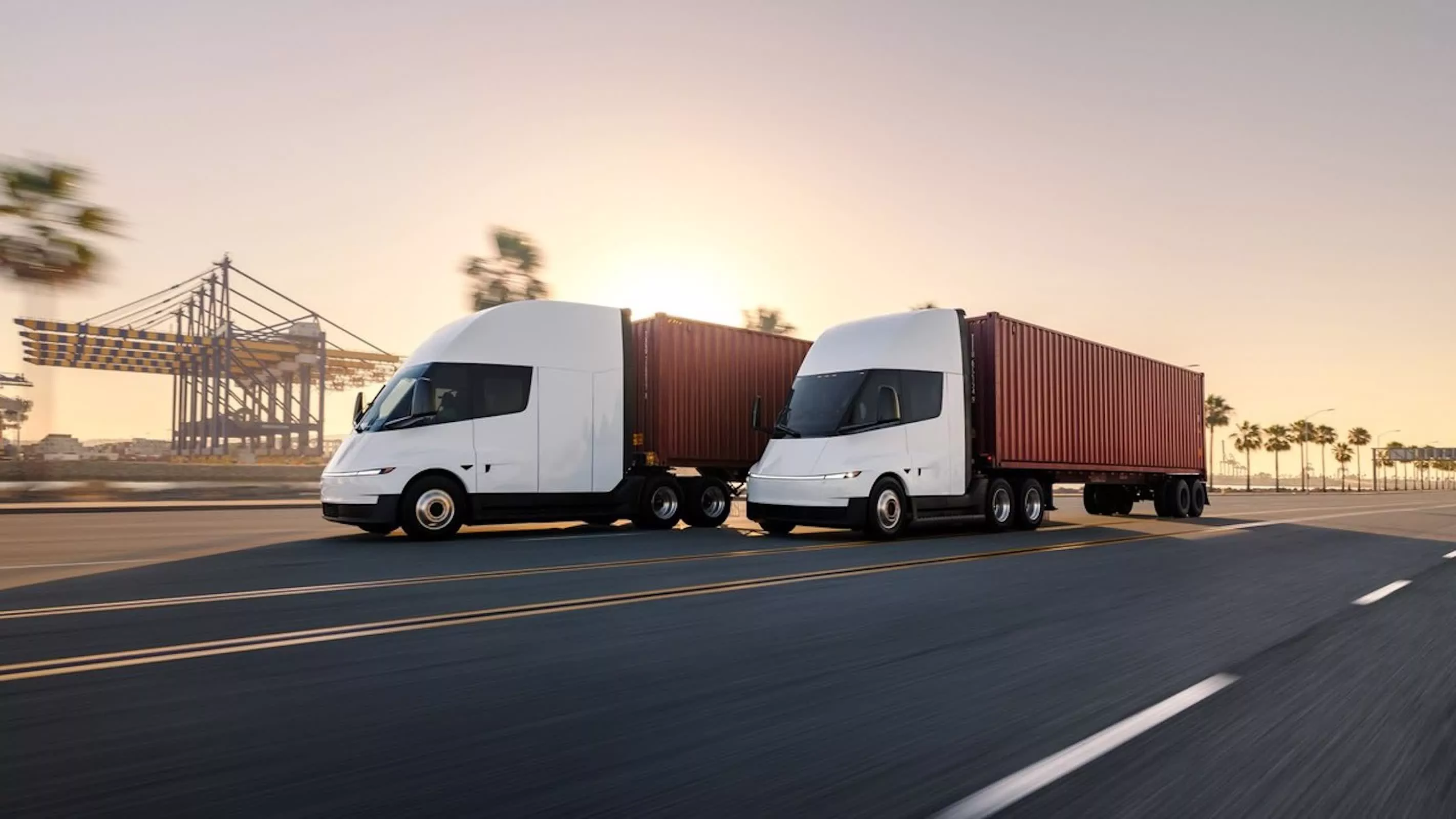
The Sparks, Nevada, plant can eventually produce 50,000 trucks a year, or about 1,000 a week, according to Tesla. Before this milestone, the company delivered a small number of trucks to PepsiCo in 2022, but those vehicles were built on a pilot line.

Tesla used an event at the factory to highlight changes made to the truck's battery, powertrain, and charging system. It also named customers that include PepsiCo, US Foods, DHL, WattEV, ABF Freight, Einride, IMC Logistics, and OK Produce.

The Semi will be sold in two versions. Tesla lists the Standard Range model at 325 miles of range when hauling a full 82,000-pound gross combination weight trailer. The Long Range model is rated for 500 miles under the same conditions. Tesla executives said the Long Range truck could reach about 600 miles with a lighter load of roughly 60,000 pounds.

Tesla has not released current prices or total reservation figures. When the company introduced the Semi in 2017, it set the starting price at $150,000 for a 300-mile version and $180,000 for a 500-mile version. Electrek reported earlier this year that Tesla was quoting some customers about $290,000 for the 500-mile truck.

The production Semi uses Tesla's 4680 battery cells rather than the 2170 cells used in earlier test vehicles. Tesla says the truck's battery pack has 822 kWh of capacity. The company says it has reduced the truck's energy consumption to about 1,700 watt-hours per mile when fully loaded, down from an original target of 2,000 Wh/mile.

Those efficiency gains are important because they allow Tesla to use a lighter battery pack while maintaining its range target. The company also said it cut nearly 1,000 pounds from the truck during development.

Tesla also reworked the drive system. The earlier design used a carbon-fiber-sleeved rotor. The production version uses a steel-caged rotor and a bar-wound stator that Tesla also uses in the Cybertruck. Tesla says the redesigned drive axle is about 80 kilograms lighter.

The company also simplified the truck's lubrication system. The hub no longer uses oil, while the motor and gearbox share a single oil supply. Tesla says that oil should last more than 250,000 miles.

The Semi now has redundant electric power steering instead of hydraulic steering. Tesla says the new system gives drivers better response and control. It also allows a tighter wheel cut, which the company says brings the Semi's turning radius close to that of a Model Y. That could matter in crowded industrial yards, city streets, and loading docks.

Tesla has also carried over elements of the Cybercab's thermal-management system. The Semi uses an indirect system with pumps, compressors, and heat exchangers that manage temperatures across the cab, battery, and drive unit. Tesla says the design reduces the amount of refrigerant plumbing needed throughout the vehicle and can move heat where it is needed.

Charging remains one of the larger questions around the truck. A Semi's 822-kWh pack requires far more power to charge than a passenger EV. Tesla is building Megacharger stations that can provide as much as 1.2 megawatts per stall. At the event, Tesla showed a truck charging from 3% to 60% in about 30 minutes.

The company says it plans to have more than 30 Semi charging locations, with over 200 megawatt-capable charging posts, by the end of the year. It also expects fleet operators to install overnight charging equipment at their own facilities.

Tesla is pitching the Semi as a fleet product with remote diagnostics, mobile service, over-the-air updates, and driver profiles that can follow drivers from one truck to another. It says its current Semi fleet has recorded more than 98% uptime.

Some fleet operators have already placed large orders. Einride announced a 500-truck deal in August. IMC Logistics said this week that it plans to buy 50 Semis for California drayage work. A shipper coalition also selected Tesla to provide 2,500 trucks for zero-emission freight operations in California.

Tesla argues that electric trucks can cost less to operate than diesel models because they require less maintenance and are less exposed to swings in fuel prices. "You know, volatility in the oil market and the diesel market goes up and down," Tesla Vice President of Engineering Lars Moravy told The Verge. "But typically, we've seen in the history of the last 20 years, electricity is pretty flat. And wouldn't it be great to have a flat cost in your shipping rates?"

Permalink to story:

 
I expect Cybertruck owners to start trading in for these, otherwise I will question their loyalties to the musky man.
 
Right so they have 1/4 of the range at best, take an age to charge to 100% and will be ungodly heavy.

HGVs need to be hydrogen powered. Cars should be too if you’re actually serious about the environment and have a basic understanding of the real world.
 
I wonder how long these would last. They are a bit more expensive than what ICE trucks cost today. But given battery reliability and longevity, they might be more profitable in the long run.

Distance and time matters. If it takes a day longer to deliver cargo then you’re late. They’re also not more reliable and as soon as you move outside of ideal conditions the range gets even worse. Test them somewhere cold in winter and the not realistic 500 miles is going to get even worse.
 
As someone who has a state thruway 50 feet from my back yard, I wonder if these are any quieter. Would be nice. The wife sure would appreciate that.

Engine and exhaust noise (duh) will be almost non existent, I guarantee you that. There will be no *******s with large strait (deleted mufflers) exhausts nor "jake brakes" to annoy people.

But tire noise will continue for sure, and those will be heard at night.
 
As someone who has a state thruway 50 feet from my back yard, I wonder if these are any quieter. Would be nice. The wife sure would appreciate that.
Unless you live in Southern California I don't think you are going to be seeing these in person for a long time. Due to fuel costs and the guaranteed ability to get high utilization in that area all the companies that buy them are guaranteed to prioritize that area for deployment.
 
Right so they have 1/4 of the range at best, take an age to charge to 100% and will be ungodly heavy.

HGVs need to be hydrogen powered. Cars should be too if you’re actually serious about the environment and have a basic understanding of the real world.
Hydrogen makes absolutely no sense to use for passenger cars. It's far more energy intensive, reliant on fossil fuels for creation, cannot be stored long term, oh yeah, and its EXPENSIVE AF. And uses a ton of electricity....that you could just put in your car instead.
Distance and time matters. If it takes a day longer to deliver cargo then you’re late. They’re also not more reliable and as soon as you move outside of ideal conditions the range gets even worse. Test them somewhere cold in winter and the not realistic 500 miles is going to get even worse.
Perhaps, if you need to deliver over very long distances, you could use....a train. OTR long distance trucking is a massively wasteful industry.
Unless you live in Southern California I don't think you are going to be seeing these in person for a long time. Due to fuel costs and the guaranteed ability to get high utilization in that area all the companies that buy them are guaranteed to prioritize that area for deployment.
The first batches will be big business in the docks.

But I'd bet you see plenty of these for last mile operators and local trucking companies. The potential in fuel savings is massive.
As someone who has a state thruway 50 feet from my back yard, I wonder if these are any quieter. Would be nice. The wife sure would appreciate that.
Most of the highway noise is coming from tires, not engines.

Electric busses are eerily quiet compared to diesels, but that is at much lower city speeds. Once you get over about ~30-35 MPH wind and tire resistance creates the vast majority of perceived traffic noise.
 
Hydrogen makes absolutely no sense to use for passenger cars. It's far more energy intensive, reliant on fossil fuels for creation, cannot be stored long term, oh yeah, and its EXPENSIVE AF. And uses a ton of electricity....that you could just put in your car instead.
You can literally just power generation from wind, solar and nuclear… it can be stored long term, it’s less dangerous than what we currently use, it’s only expensive be sure it’s limited in supply now and it solves numerous issues around BEVs such as battery materials, disposal and you can stockpile it so you don’t put a massive strain on the energy grid when everyone plugs in their EVs at 1730. Companies don’t want it because most countries would be able to produce their own nationalised fuel.
Perhaps, if you need to deliver over very long distances, you could use....a train. OTR long distance trucking is a massively wasteful industry.
The first batches will be big business in the docks.
Not always an option otherwise long distance trucking also willing be a thing. You’re also shipping it on diesel trains so you’re just moving the issue not solving it.
But I'd bet you see plenty of these for last mile operators and local trucking companies. The potential in fuel savings is massive.
Most of the highway noise is coming from tires, not engines.
Doesn’t outweigh the cost of the vehicle itself.
 
Right so they have 1/4 of the range at best, take an age to charge to 100% and will be ungodly heavy.

HGVs need to be hydrogen powered. Cars should be too if you’re actually serious about the environment and have a basic understanding of the real world.

Where are you getting this info from?

Regional trucking or hub to hub this thing makes complete sense financially.

Charging in 30 min for breaks works from 20-80%.

Cost of diesel and maintenance can make the Tesla semi as an addition to trucking fleets in this case 4-5 years over regular semis.
 
Where are you getting this info from?

Regional trucking or hub to hub this thing makes complete sense financially.

Charging in 30 min for breaks works from 20-80%.

Cost of diesel and maintenance can make the Tesla semi as an addition to trucking fleets in this case 4-5 years over regular semis.

It only makes sense for shorter distances. Driver time is expensive. Look at your example. The trucking company pays a driver salary for that 30 minutes in order to add 60% to a range of 500 miles. Note that 60% of 500 miles is 300. The average long haul trucker in WA state earns about $100k/year. Assume they work 8 hours/day (big assumption), that's around $50/hour or $25/half hour. Plus benefits.

So, the company pays $25 to add 300 miles range to the EV truck. That's roughly 9 cents/mile.

The average IC long haul truck has a 1200-1800 mile range. Refueling time is probably half of the EV. Therefore the driver cost is roughly $12 to add 1200 miles, or 1 cent per mile.

I doubt that EV trucks have less maintenance than diesel. And can you imagine the cost of replacing an EV truck battery pack? Tesla warranties their batteries for 150k miles. Your average long haul trucker puts on 150k miles every year. They'll need a new battery EVERY YEAR. YIKES!

And what if an EV truck gets stuck on a railroad intersection and gets broadsided by a locomotive? Whoa! You can kiss that town goodbye.

Batteries are the death knell of electric vehicles. For long haul, nothing beats diesel. Now if Trump would just pull out of Iran and end his ridiculous blockade and sanctions...
 
Last edited:
Where are you getting this info from?

Regional trucking or hub to hub this thing makes complete sense financially.

Charging in 30 min for breaks works from 20-80%.

Cost of diesel and maintenance can make the Tesla semi as an addition to trucking fleets in this case 4-5 years over regular semis.
That a truck typically has a range of 1000-2000 miles and this has a range south of 500?

Aside from if doesn’t because batteries don’t charge linearly after they get to 50% they taper off massively.

Aside from they don’t as EVs chew through tyres at a rapid rate, you have to stop more and you still have to service items like brakes. The cost of parts for trucks isn’t actually that bad. You change oil a few times a year and belts every couple and you schedule it for non driving days. Spends the same amount of time in the shop as an EV if not fewer due to tyres

You're absolutely correct. There's a reason that Diesel rules in long-range applications. Look at diesel-electric locomotives. Or the giant ships. It's all diesel.
 
It only makes sense for shorter distances. Driver time is expensive. Look at your example. The trucking company pays a driver salary for that 30 minutes in order to add 60% to a range of 500 miles. Note that 60% of 500 miles is 300. The average long haul trucker in WA state earns about $100k/year. Assume they work 8 hours/day (big assumption), that's around $50/hour or $25/half hour. Plus benefits.

So, the company pays $25 to add 300 miles range to the EV truck. That's roughly 9 cents/mile.

The average IC long haul truck has a 1200-1800 mile range. Refueling time is probably half of the EV. Therefore the driver cost is roughly $12 to add 1200 miles, or 1 cent per mile.

I doubt that EV trucks have less maintenance than diesel. And can you imagine the cost of replacing an EV truck battery pack? Tesla warranties their batteries for 150k miles. Your average long haul trucker puts on 150k miles every year. They'll need a new battery EVERY YEAR. YIKES!

And what if an EV truck gets stuck on a railroad intersection and gets broadsided by a locomotive? Whoa! You can kiss that town goodbye.

Batteries are the death knell of electric vehicles. For long haul, nothing beats diesel. Now if Trump would just pull out of Iran and end his ridiculous blockade and sanctions...
Drivers have mandated breaks. Even regional and hub to hub.

nobody said it’s a long haul solution.

Just by sheer mechanical/electrical simplicity, yea they have less maintenance. No oil changes, def, turbos, transmission exchange.

Battery packs for regular teslas can be 500k. And given recyclability and design, can be replaced easily.

You’re right diesel is good for long haul, nobody is saying that it isn’t.
 
Will be interesting to see how they sell with the current price of diesel so high.
The timing is indeed curious. 9 years of vaporware, only to launch exactly after the Iran East-West pipeline strike resulted in record diesel prices. It's almost like there's exactly one person benefiting from this whole mess.
 
Back