
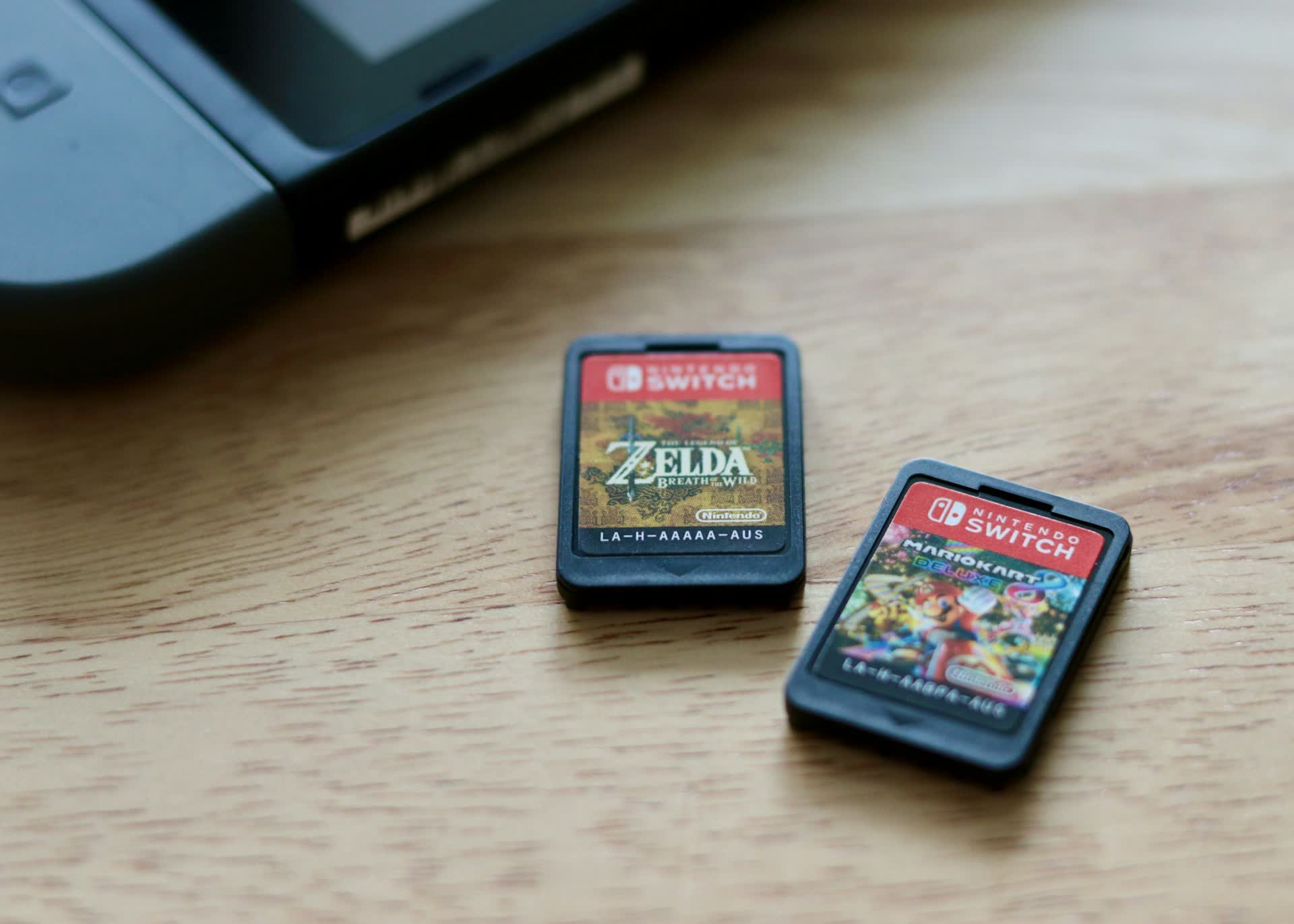
The big picture: Memory makers have spent most of this year steering their factories toward AI data centers, a shift that is reportedly impacting the chips inside Nintendo Switch game cartridges. Taiwanese chipmaker Macronix is one of the main suppliers of the ROM in those cards. It's now winding down that business to make more flash memory instead. That said, Nintendo likely won't run short of cartridges anytime soon.
MST Financial analyst David Gibson posted about the change on X after digging through the company's latest quarterly report. Macronix won't develop any new ROM products from here on. The latest quarter is also the last in which Macronix will report ROM sales separately. Those sales made up just 5% of revenue, down from 26% a year earlier.
Meanwhile, the rest of Macronix's business has never made more money. The company booked NT$10.95 billion (about $338 million) in net profit last quarter on a 70.5% gross margin. A year earlier, that margin sat at just 13.5%.

Nearly all of Macronix's revenue now comes from NAND and NOR flash, which split the company's sales almost evenly. NOR has been especially hard to come by. TrendForce estimates a single AI server needs three to five times more of it than a regular server. That's part of why NOR contract prices roughly doubled in the first half of this year.
Chairman Miin Wu said during the company's earnings call that data center customers are "chasing us for more capacity." So none of Macronix's planned NT$37.8 billion (about $1.2 billion) in new spending is going toward ROM. Micron made a similar call late last year when it shut down its Crucial consumer brand to free up supply for AI customers.
For Nintendo, the fallout looks manageable for now, since Rohm group companies also make ROM for its game cards. Gibson himself thinks physical cards will stick around for a while yet.
It's also unclear how much of this reaches the Switch 2. Gibson's thread says Macronix's chips sit in cards for both consoles. But Nintendo Life has since pulled the Switch 2 from its own headline over conflicting reports.
Still, Gibson expects the move to nudge more games toward digital, including Game-Key Cards that hold only a download license rather than the game itself. Downloads already account for around 60% of Nintendo's software sales. Even so, a Nintendo executive said just last month there are "no plans to ditch physical" on the Switch 2.
The memory crunch is already squeezing Nintendo on another front, too. The company reported today that Switch 2 sales fell 41% year over year to 2.67 million units last quarter. That came after it raised the console's price in the US, Canada, and Japan as memory costs climbed.
Image credit: Jacob Spaccavento / Taylor Vick
The AI boom is coming for Switch cartridges, as a key chip supplier quits making ROM


