The Arctic's extreme cold is breaking even the world's most advanced military tech

Skye Jacobs

Posts: 1,913   +58
Staff
In context: For all its strategic allure, the Arctic remains a frontier that resists human technology. While melting sea ice is opening new routes and raising interest in the region's wealth of minerals and energy resources, the environment continues to overwhelm machines designed for milder climates. Whether future wars – or future discoveries – can be fought and won there depends as much on materials science and resilient design as on political ambition.
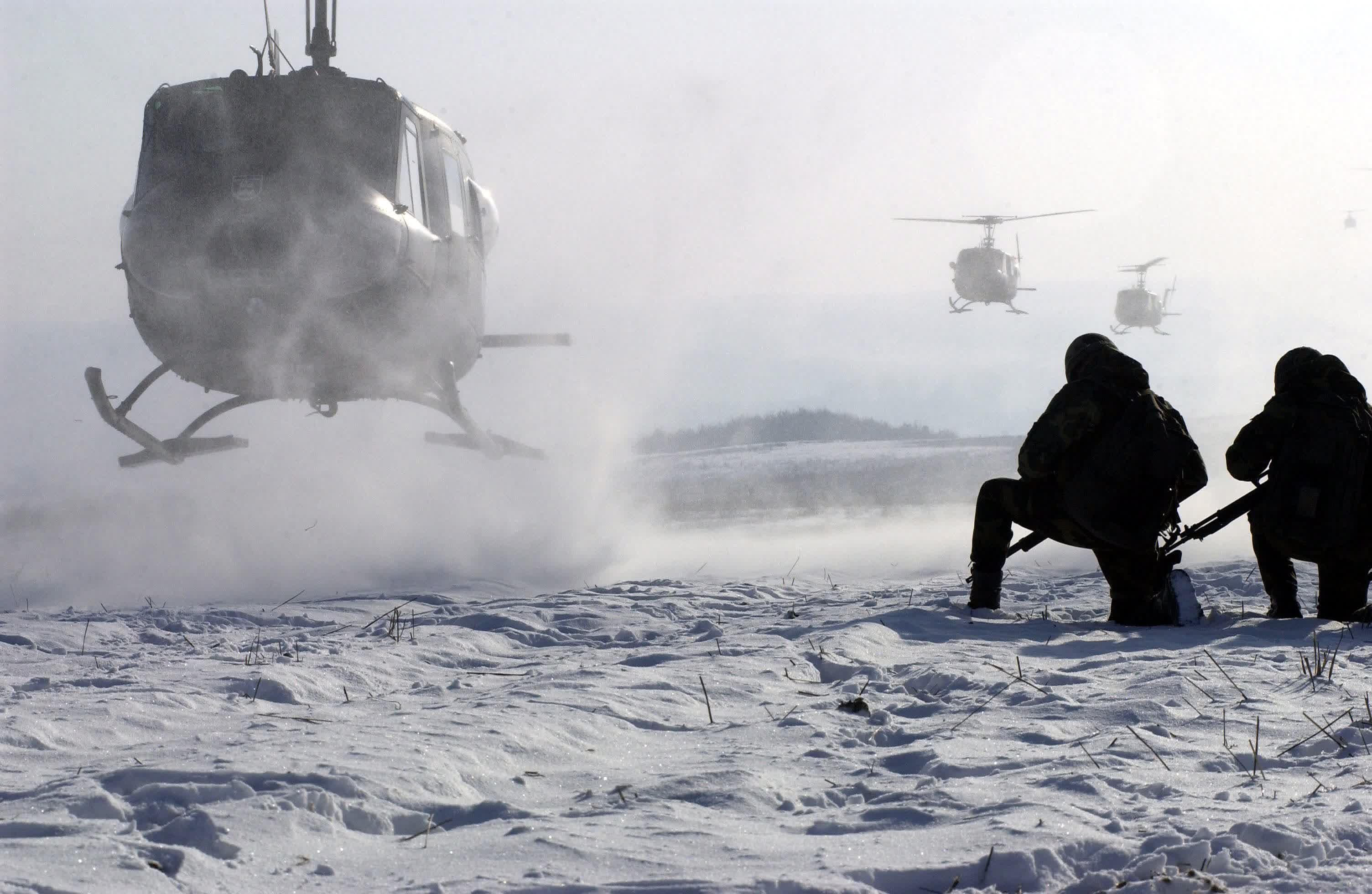
In the global race to control the Arctic, the challenge isn't just geopolitical – it's technological. As governments plan for the possibility of conflict in the planet's coldest terrain, they are discovering that even their most advanced weapons and tools falter under the region's punishing conditions.

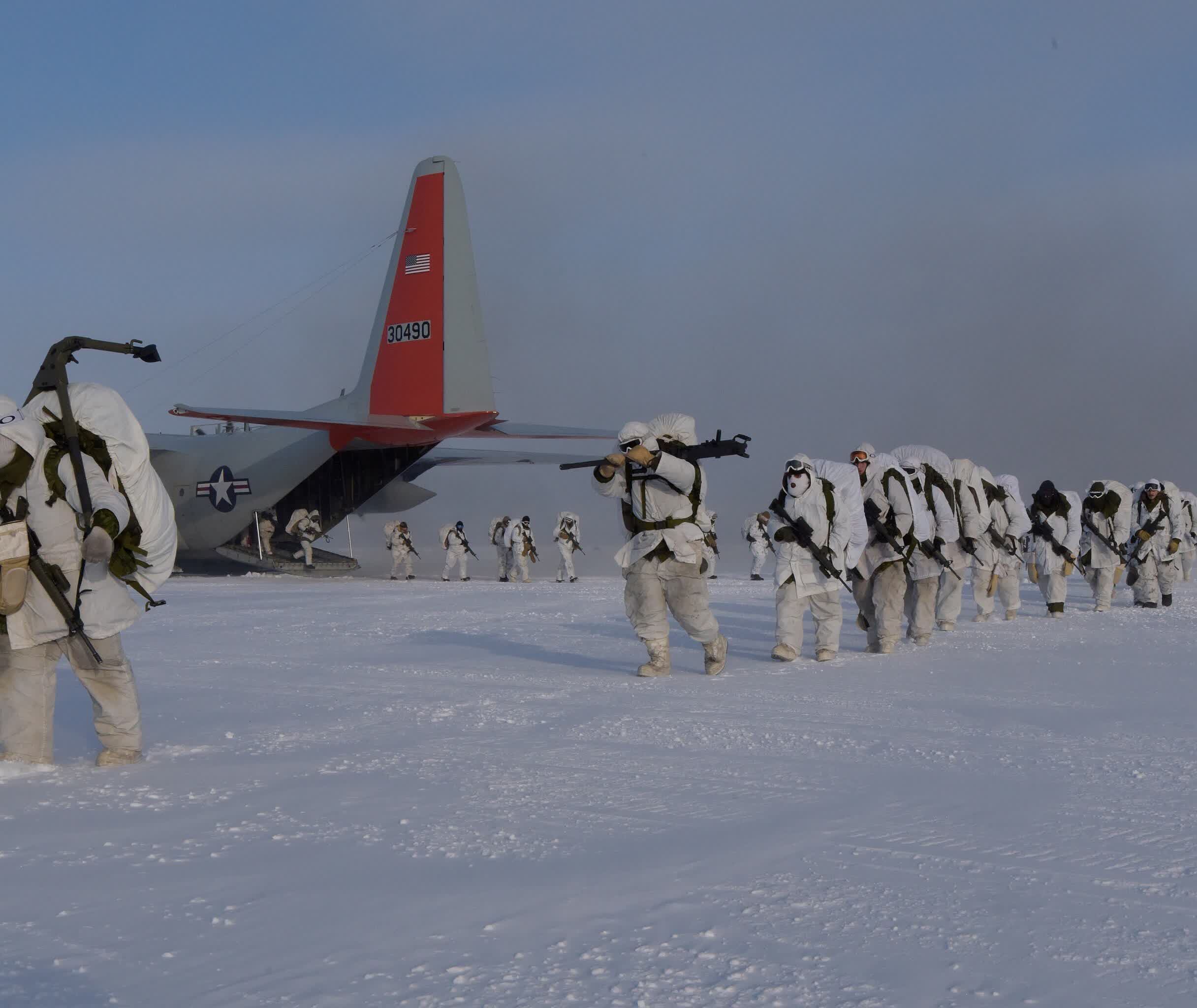
Extreme temperatures, magnetic interference, and the scarcity of reliable navigation signals quickly reduce cutting-edge systems to costly failures. During a seven-nation exercise in northern Canada earlier this year, US all-terrain vehicles designed for the Arctic stopped working after just 30 minutes when hydraulic fluids solidified in the cold. Swedish troops had similar trouble when $20,000 night-vision goggles failed because the aluminum casings cracked at – 40 °F.

Cold weather doesn't merely inconvenience equipment – it transforms basic materials. Rubber seals stiffen and leak, traces of moisture form ice that shreds pumps, and standard wiring sheathed in PVC can fracture like glass. Even oil and lubricants congeal, turning syrupy inside hydraulic systems. A single freeze-up can disable an aircraft control system, stall missile launchers, or immobilize radar masts and vehicles.

In this environment, even power supply becomes a logistical puzzle. One company recently proposed a battery charger for Sweden's armed forces weighing more than 400 pounds – so heavy it would bog down in powder snow before reaching soldiers in the field. "The problem right now is that many in the industry have no idea what the guys on the ground need," Frederik Flink, commander of the international training wing at Sweden's Subarctic Warfare Center, told The Wall Street Journal. He added that although his troops know what they want from equipment, their ideas are "probably not technically realistic."
The modern battlefield elsewhere – especially in Ukraine – has relied heavily on drones, rapid data transfer, and AI analytics. But the Arctic environment makes those tools unreliable. Off-the-shelf quadcopters powered by batteries can't fly far in subzero air, and digital communications degrade when geomagnetic storms sweep across the polar sky.

Drones for this region must run on jet fuel or diesel, include deicing systems, and withstand strong winds, making them heavy enough to require trailers or runways for launch.

AI, too, loses relevance. In eastern Ukraine, dense infrastructure and abundant data allow algorithms to process information in near real time. Arctic Scandinavia and Finland, by contrast, have only about five people per square mile – leaving almost no visual or logistical inputs for AI to analyze. The scarcity of roads, sensors, and power grids strips smart systems of the data that gives them value.

Even the heavens add to the difficulty. The Aurora Borealis – beautiful to tourists, disastrous for military planners – creates magnetic disturbances that disrupt radio and satellite communication. Satellites in equatorial orbit appear low or vanish entirely over the curve of the Earth at high latitudes, limiting signal reception. That makes jamming efforts by neighboring states exponentially more effective.

Norway's communications regulator, Nkom, recorded six GPS disruptions in Eastern Finnmark in 2019. By 2022, the total jumped to 122, and by late 2024 the interference became so routine that the agency stopped keeping count.

To address the issue, more than 100 companies convened in September on the Norwegian island of Andøya for "Jammertest," an annual stress trial for Arctic communications hardware. They tested everything from atomic clocks to antennas against the region's radio interference. Heidi Andreassen, partner and founder of Testnor, which organizes the event, said she believes the jamming stems from Russian self-defense systems shielding the Kola Peninsula rather than direct acts of aggression. "In the Arctic, if you have very challenging weather conditions and no line of sight, then jamming can be critical," she said. "Just a few years ago, this was not something people cared about because it was rare. But now, it has become a daily problem."

The adaptation effort is increasingly led by the private sector. Inspired by lessons from Ukraine, new ventures are taking on the Arctic problem with designs that borrow from space exploration. British explorers Ben Saunders and Frederick Fennessy have launched Arctic Research and Development, a startup that builds autonomous systems and mapping software specifically for polar use. Both veterans of long-distance Arctic expeditions, they liken their work to creating a "miniature space program."

Their team – a mix of experts in space technology, intelligence, climate science, and defense – tests equipment inside a specialized cold chamber in rural England that can reproduce temperatures down to – 94 °F.

Among their prototypes is Icelink – a 40-pound, suitcase-sized orange hub that combines high-bandwidth communications, GPS antennas, and long-lasting batteries. Saunders knows firsthand how fragile even small components can be: on a previous solo expedition to the North Pole, a broken ski binding forced him to abandon a $200,000 trip.

Permalink to story:

 
Swedish RND must be crap. Could have bought proper ones, from Russia, but no, the stick in the butt won’t let them. Enjoy your own arrogance!
 
Impossible, the world is heating up, soon we'll be well done and ready to be served (since the 60's).
 
Reminds us how, in the vast domain of the universe and its unrelenting laws, man is suspended on a tiny, hair's-breadth of a band where he can survive: an oasis in a sea of darkness. Step outside those parameters, and man realises that he is but a guest in this world.
 
So we can build structures and aircrafts that can withstand space (avg -200 F) but not the arctic?
 
So we can build structures and aircrafts that can withstand space (avg -200 F) but not the arctic?
We can, but the problem this article basically points out is threefold: existing stuff doesn't work well there, new stuff costs money, and that new stuff may be different enough to render that technology less useful than it is in other battlespaces. A drone (or swarm of them) is useful in warm weather, but if winter-proofing a drone, say, triples its weight (thus reduces its effective range), is that same technology still effective, and what tactics need to be changed to accommodate that?
 
Reminds us how, in the vast domain of the universe and its unrelenting laws, man is suspended on a tiny, hair's-breadth of a band where he can survive: an oasis in a sea of darkness. Step outside those parameters, and man realises that he is but a guest in this world.
Your post reminds me of Pale Blue Dot. "A mote of dust suspended in a sunbeam."
 
So we can build structures and aircrafts that can withstand space (avg -200 F) but not the arctic?
Space might be cold but to lose that heat you really need atoms to pass the heat to - air will take heat but water will remove the heat quicker. Things in a pure vacuum can only lose heat by radiation which is a slow process. Which is why it's harder to stay warm in the artic than in space.

It's a similar thing for keeping the atmosphere on a space ship. You'd think keeping maintaining the air pressure on a space craft would be tough but the difference between on board the space ship and outside is just 1 atmosphere. The difference between on board that Titan submarine that explored the Titanic and outside was nearly 400 atmospheres. Maybe that's why it imploded.
 
Reminds us how, in the vast domain of the universe and its unrelenting laws, man is suspended on a tiny, hair's-breadth of a band where he can survive: an oasis in a sea of darkness. Step outside those parameters, and man realises that he is but a guest in this world.
Or there is life out there beside us. Only the hubris of man could lead him to believe he is the sole sentient life in the universe of near infinite possibility.
Swedish RND must be crap. Could have bought proper ones, from Russia, but no, the stick in the butt won’t let them. Enjoy your own arrogance!
Proper russian vehicles? Surely you jest, those wouldnt have even MADE it to the arctic before breaking down because Vlad sold the insulation to buy more vodka.
So we can build structures and aircrafts that can withstand space (avg -200 F) but not the arctic?
The cold is insidious. Technology that works in the vaccum of space =! technology working in the Arctic. MBK already covered it, losing heat in space is an actual challenge that limits how much waste heat you can produce. In the Arctic, you will lose far more heat and the challenge is containing it. In that kind of cold batteries are near useless and the heavy insulation flies right int he face of other design parameters like weight, cost, or flexibility. How exactly do you insulate and heat hydraulic lines, which need to be able to move with the machinery? Fuel? You gotta find a way to move and heat that fuel! Electricity? How you gonna make it? Solar isnt going to work there and wind turbines will freeze, fi the wind isnt too strong that is. This is why the Soviets ran their arctic lighthouses with cobalt-60 filled RTGs by the thousands.

The cold is really hard to deal with. Designing for space is unironically easier, the challenge with space is getting things up there.
 
Or there is life out there beside us. Only the hubris of man could lead him to believe he is the sole sentient life in the universe of near infinite possibility.

Well, I do not doubt that there is life out there, and am the first to make fun of man's arrogance and pretensions to being special. It would be a massive waste of space, time, and energy if it were only us.

I was trying to say that life, all life, teeters on a fragile tightrope. Just think of the tremendous violence of a black hole, the heat of a star, or the distant future where entropy has reached a point where work isn't possible, and it's easy to see that worlds supporting life, such as Earth, have dug out a tiny band where everything is held in a precarious balance, which, on a day-to-day basis, we forget.
 
Last edited:
Impossible, the world is heating up, soon we'll be well done and ready to be served (since the 60's).
This is a typical climate change denier talking point. How can the planet be getting warmer if the arctic is so cold?! The thing that you brain dead slobs can't seem to grasp is that "climate change" is just that, CHANGE. Meaning, it can go to both extremes; too hot as you get closer to the equator and too cold as you reach the poles. Is this is really that hard to grasp?

I live in the Southern most region of Canada and 30+ years ago we used to get snow during the winter that was up to your knees during some winters. Since then we've been getting less and less snow every winter and every year the winters are getting warmer and warmer. This Christmas day a week ago the temperature was 7C (45F). You think this is normal for Canada?
 
This is a typical climate change denier talking point. How can the planet be getting warmer if the arctic is so cold?! The thing that you brain dead slobs can't seem to grasp is that "climate change" is just that, CHANGE. Meaning, it can go to both extremes; too hot as you get closer to the equator and too cold as you reach the poles. Is this is really that hard to grasp?

I live in the Southern most region of Canada and 30+ years ago we used to get snow during the winter that was up to your knees during some winters. Since then we've been getting less and less snow every winter and every year the winters are getting warmer and warmer. This Christmas day a week ago the temperature was 7C (45F). You think this is normal for Canada?
This is typical climate change doomer misdirection. "Climate change" was previously known as "global warming" and had to change names because despite the calls of the apocalypse, we are all still here chugging along.

When the 1990s ice age didnt occur, when Al Gore's predictions all spectacularly failed, when you claim, for the 5th decade in a row, that your previous data was wrong but THIS time your instruments are more advanced and the data is correct, do you expect everyone to just fall in line? Did you ever read "The boy who cried wolf"?

Also Liranan's comment was pretty clearly a joke.
 
1. A hypothetical opponent would have the same difficulties.
2. Global warming is inevitable and there is no anthropomorphic impact.
3. The universe ends beyond the Kuiper belt, and everything else (black holes, etc.) is just an optical illusion.
4. The end of the world will come after a collision with a comet, and they arrive from the south.
5. People also freeze sometimes (Thermodynamics).

Throughout history, every winter military campaign has ended with the mass extinction of the opposing sides (General Frost).
Fight in the summer and stock up on insect repellent (but you can drown in a swamp).
 
Last edited:
It rendered as negative 40 to me, same number on either scale.
Huh, it's formatted weird. They used a '–' (I'm used to seeing these as a break in a paragraph or similar) instead of a standard '-' (dash/negative sign). They also put a space inbetween number and sign, and not just do -40°.
 
All I can say is, everything seems to be melting up there and it doesn't seem like a place I'd like to live in or visit. Swamps are notorious for mosquitoes and other dangers. If we still have some cold places, be happy and let it stay natural.
 
It's interesting the wording used in the article, words like "frontier", "a race to control" and "future conflict". It sounds like the conquest of the Artic is almost noble however the arctic is already owned by other countries like Canada, Denmark (via Greenland), Finland, Iceland, Norway, Russia and Sweden. That means your "conflict" will be with one of these countries. Russia might be a push over at the moment but the rest are in NATO which means that other members WILL come to their assistance. It might not be pretty.
 
Proper russian vehicles? Surely you jest, those wouldnt have even MADE it to the arctic before breaking down because Vlad sold the insulation to buy more vodka.

More ignorant Russia haters. FYI, Russia has been building very effective vehicles for their operations in Antarctica for MANY years.

 
Here's what's going on with the Antarctica stuff.

Russia has been developing a trade route through the Arctic. It's like the China Silk Road, only it's through the Arctic. They want a path with no vulnerable chokepoints that the US could cut. It will bypass the Suez Canal, India, Africa, and the North China Sea. This is why Russia is building a large fleet (at least 13) of nuclear ice-breakers. Naturally, China is a major partner.

The US response is multifold.
1) Annex Greenland (and possibly Canada). This will allow the US to put bases much closer to the Russian Arctic trade route.
2) Develop military capability that can operate effectively in cold environments.

 
Believe it or not, the Gaza war is related to US actions in the Arctic. The US and Israel want to build a canal from the Red Sea through Israel and directly to the Mediterranean. Unfortunately it needs to go right through Gaza. Hence the enormous pressure to drive 2 million people out of Gaza. It's part of the US/EU/Israel effort to create secure East-West passages that are under their control. They also want to be able to exert crippling pressure on passages that are not under their control. This is why Trump was bloviating about taking over Canada, Greenland and Panama.
 
Back