Why it matters: The world's most important technology network doesn't exist in data centers or server farms. It lies on the seafloor – 750,000 miles of fiber-optic cables carrying 99% of global internet and AI traffic. As the race to expand those cables accelerates, so too does a parallel effort to defend them from potential sabotage.
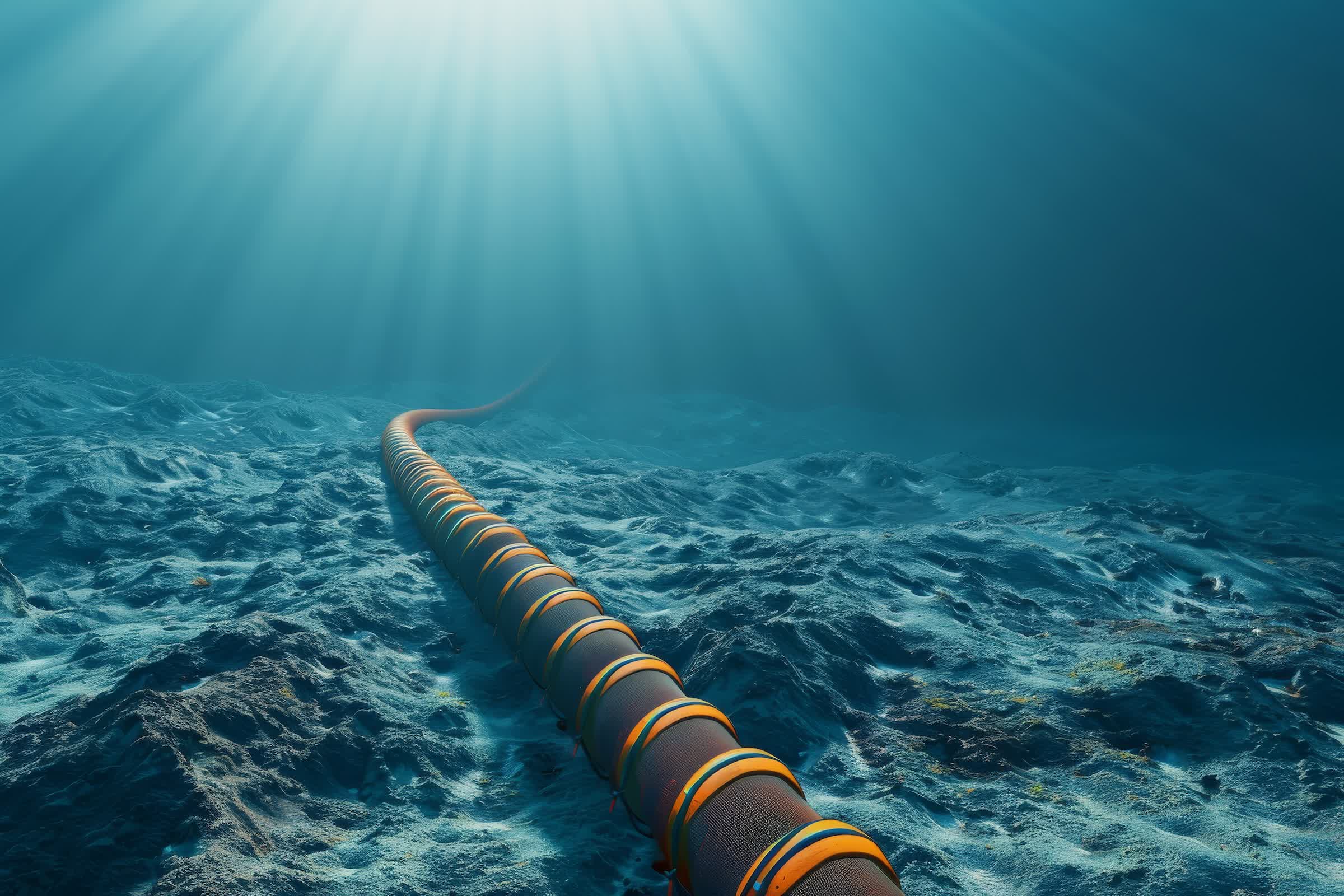
Submarine-cable construction is surging as the growth of artificial intelligence drives demand for more network capacity. According to TeleGeography, 119 new undersea cables are planned worldwide this year, up from 66 in 2020.
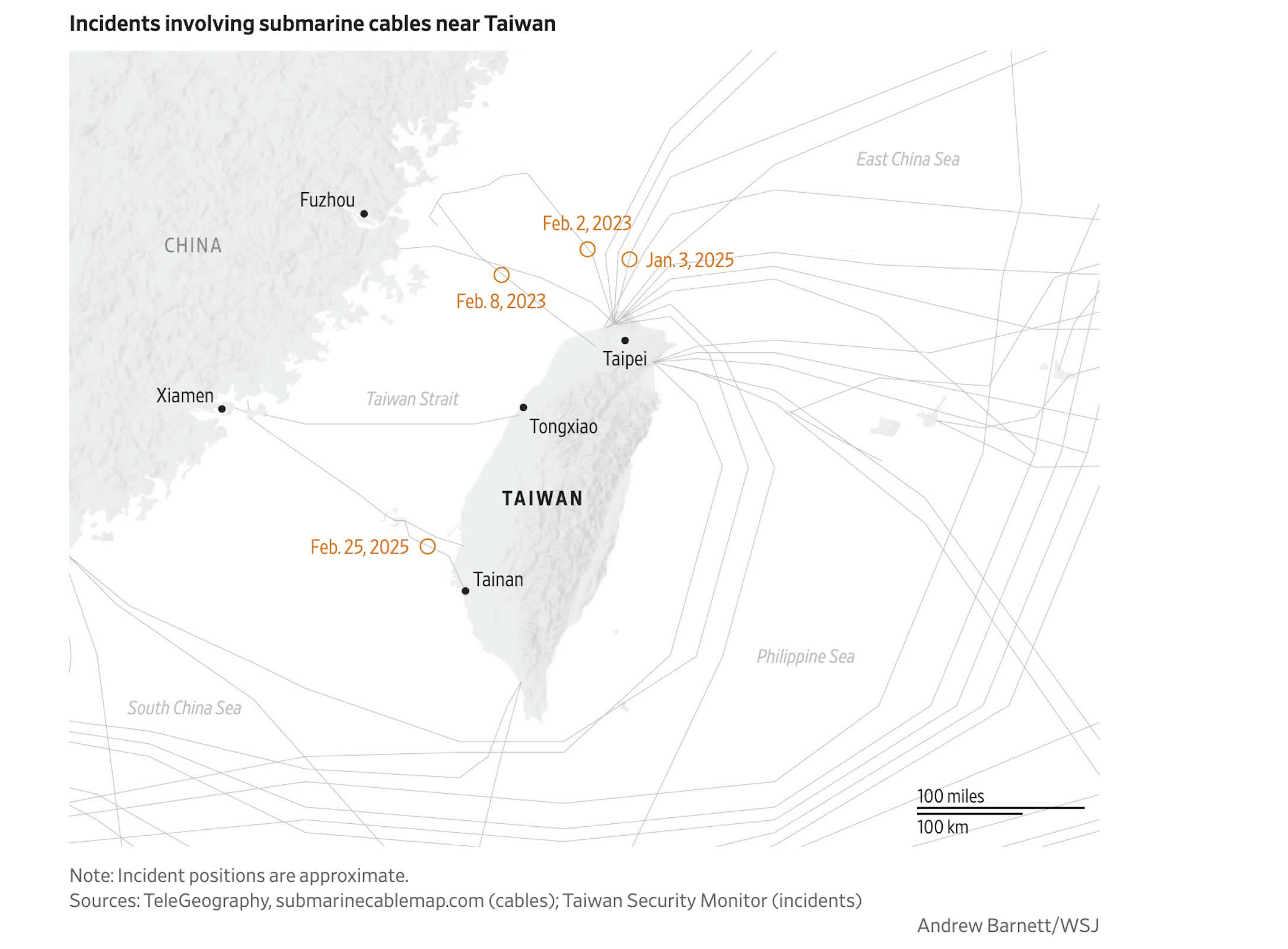
But while capacity is expanding, so are the risks. Recent incidents – from the Baltic Sea to the Taiwan Strait – have exposed how easily the cables that sustain digital life can be damaged or cut.
"The submarine cable industry goes to great lengths to protect cables, provide resilient networks and minimize disruptions," Dean Veverka, chairman of the International Cable Protection Committee and chief technology officer at Southern Cross, told The Wall Street Journal. Still, as he acknowledged, "bad actors too can cause disruptions if they really wanted to."
Nations and companies are responding with technology that merges defense and network innovation. Startups such as Lumetec are using distributed acoustic sensing to turn optical fibers into long-range microphones. By sending laser pulses through the cable and analyzing the returning light, operators can detect nearby ships or disruptions in real time. "We can tell you it's a tanker, it's a fishing vessel, it's a speedboat, it's a sailing boat," said Zack Spica, a University of Michigan assistant professor and Lumetec co-founder.
Defense contractor Anduril Industries has developed a seafloor surveillance device called Seabed Sentry, which can stay underwater for months and detect vessel movements through sonar arrays. Together, such technologies signal a pivot toward active monitoring of the world's least visible infrastructure.
But many governments view technology alone as insufficient. In Northern Europe, NATO is using ships, aircraft, and drones to guard critical cables as part of Operation Baltic Sentry. Commander Arlo Abrahamson, spokesperson for NATO's Allied Maritime Command, said the program has improved deterrence. "It's a persistent mission and it's difficult to do," he said. "But it demonstrates that the alliance can achieve deterrence through collective action."
Asia has become another flashpoint. Taiwan has increased coast guard patrols after multiple deliberate or suspicious cable cuts disrupted its connections. A 2025 case saw a Taiwan court sentence the captain of a Chinese-crewed, Togo-flagged vessel to three years in prison for intentionally severing a line. "This attribution challenge has paralyzed the international community's response," said Jason Hsu, a former Taiwan legislator now at the Hudson Institute, referring to the difficulty of proving state involvement when ships sail under third-country flags.
Damage also comes from the everyday mechanics of the sea. "Those anchors on the commercial vessels, all the cargo ships, are gigantic," said TeleGeography's Tim Stronge. "A little bit of extra steel is not going to stop it from being ripped up." Despite armoring, cables – often no thicker than a ping-pong ball – remain vulnerable to everything from anchors to earthquakes. The industry reports roughly 150 to 200 cable faults per year, most accidental.
At the same time, scientists warn of emerging tools that could make intentional sabotage easier. A Chinese research team has reportedly developed a diamond-tipped device capable of cutting cables at depths of about 13,000 feet, a range that includes many newly deployed trunk lines. Researchers have described it as a tool for deep-sea resource development; however, some analysts see potential military implications.
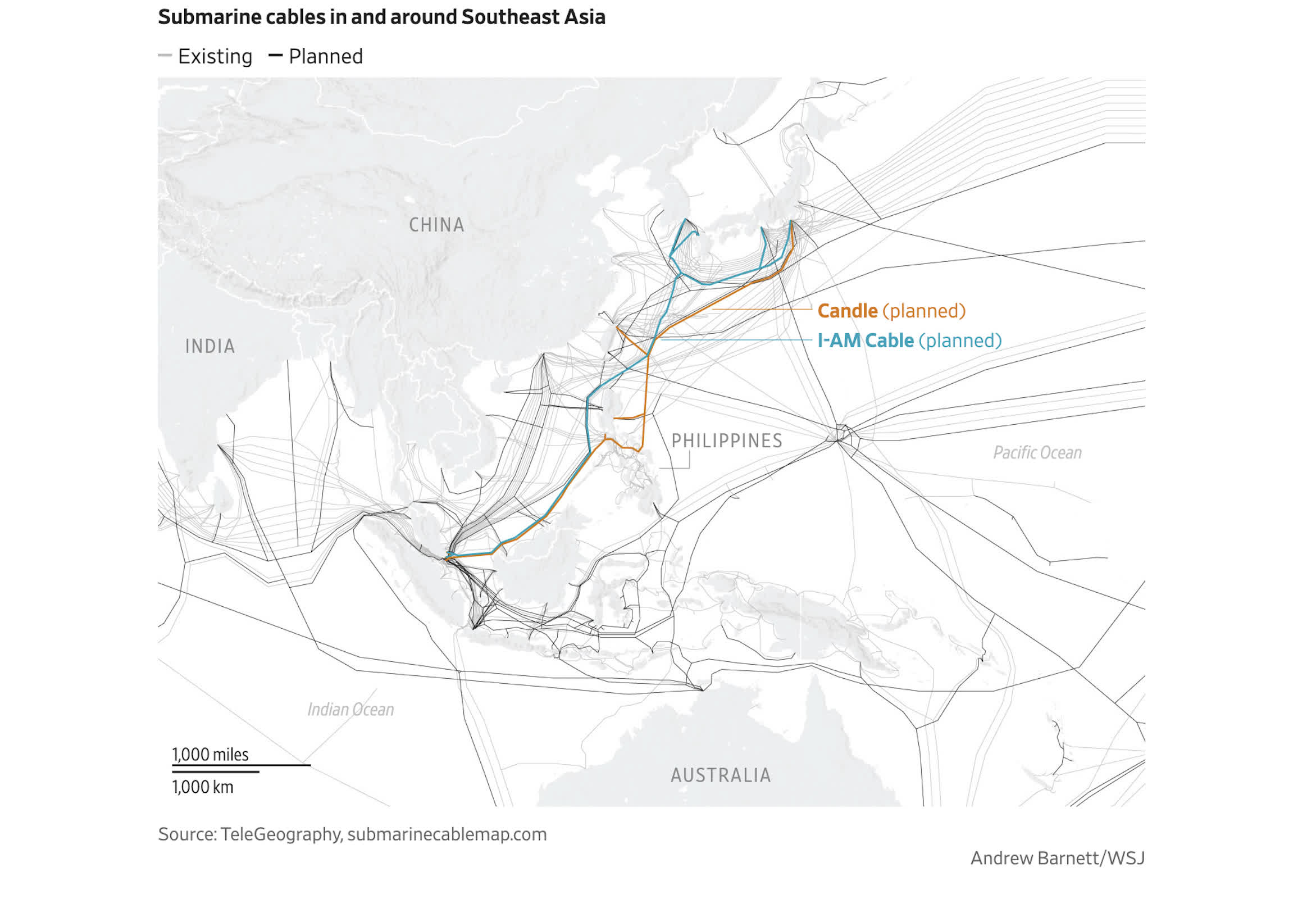
Singapore, a key hub in global data flows, is responding by doubling its cable connections to more than 50 and expanding beyond its two existing landing sites. "Being able to divert traffic quickly to another cable is the best way to keep it resilient," said Loh Woon Sien, a senior director at the country's Infocomm Media Development Authority.
Image credit: The Wall Street Journal
The cables powering the internet are under the ocean – and under threat


