The 2026 Polestar 4 has no rear window, and that is the point

Skye Jacobs

Posts: 2,010   +58
Staff
First look: The 2026 Polestar 4 removes a feature that has defined automotive design for more than a century: the rear window. In its place, the vehicle uses cameras and sensors to provide rearward visibility, a move that is dividing opinion.
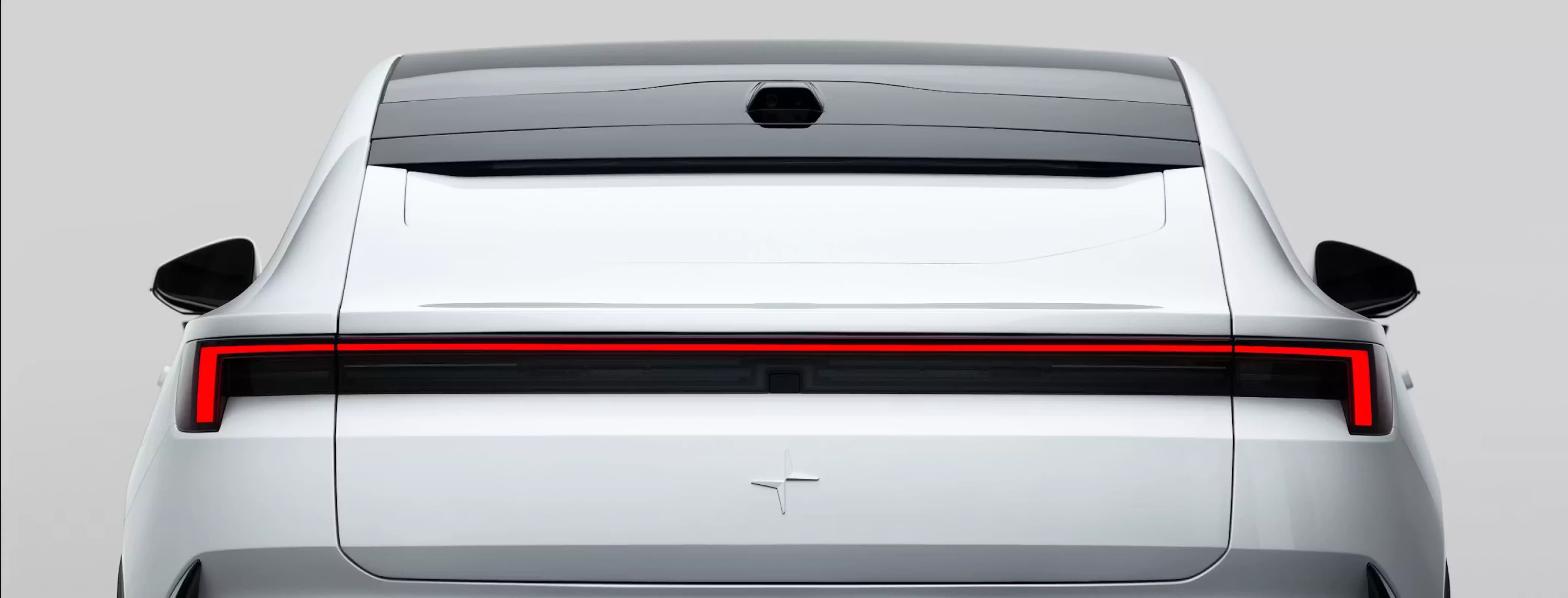
Instead of a traditional rear window, the Polestar 4's glass roof extends back to meet the rear deck, leaving no glass behind the rear seats. The trunk is built into the body lines, so the surface stays smooth and uninterrupted. Inside, the glass roof ends just past the rear headrests, with an enclosed section behind it.

The system integrates side mirrors, ultrasonic sensors, four short-range cameras for 360-degree imaging, and a dedicated rear-facing camera. The feed appears on a screen mounted at the top of the windshield, designed to resemble a conventional rearview mirror.

Rear visibility is already limited in many modern SUVs. The distance to the rear glass, combined with headrests and a taller ride height, can make the mirror less useful, especially for objects close behind the vehicle. Sports cars have dealt with the same issue for years, often trading rear visibility for design and packaging.
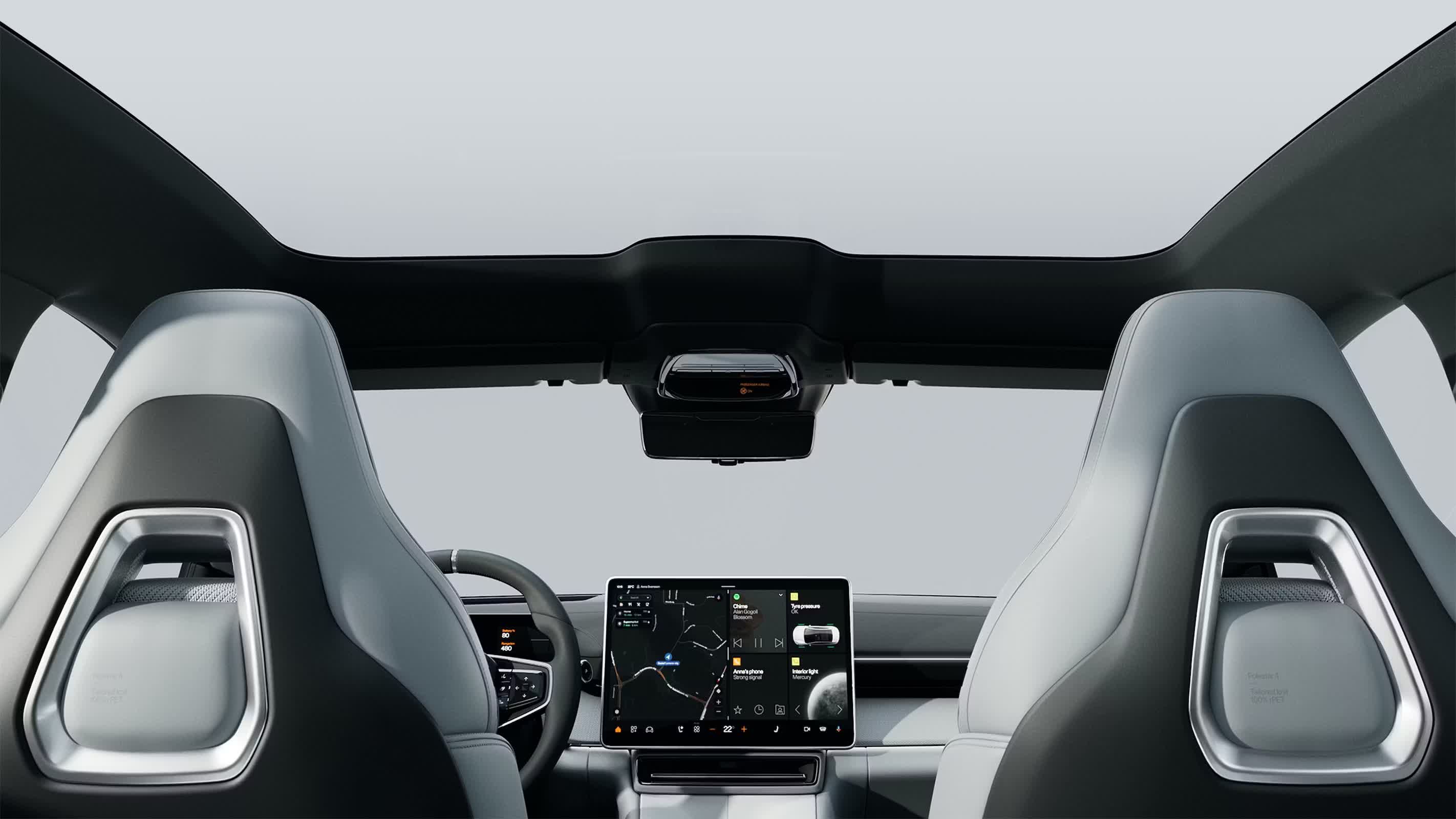
Eliminating the rear window also improves aerodynamics. A traditional backlight disrupts airflow across the rear of the vehicle, increasing turbulence and drag. For an all-electric vehicle like the Polestar 4, reducing drag directly supports driving range.

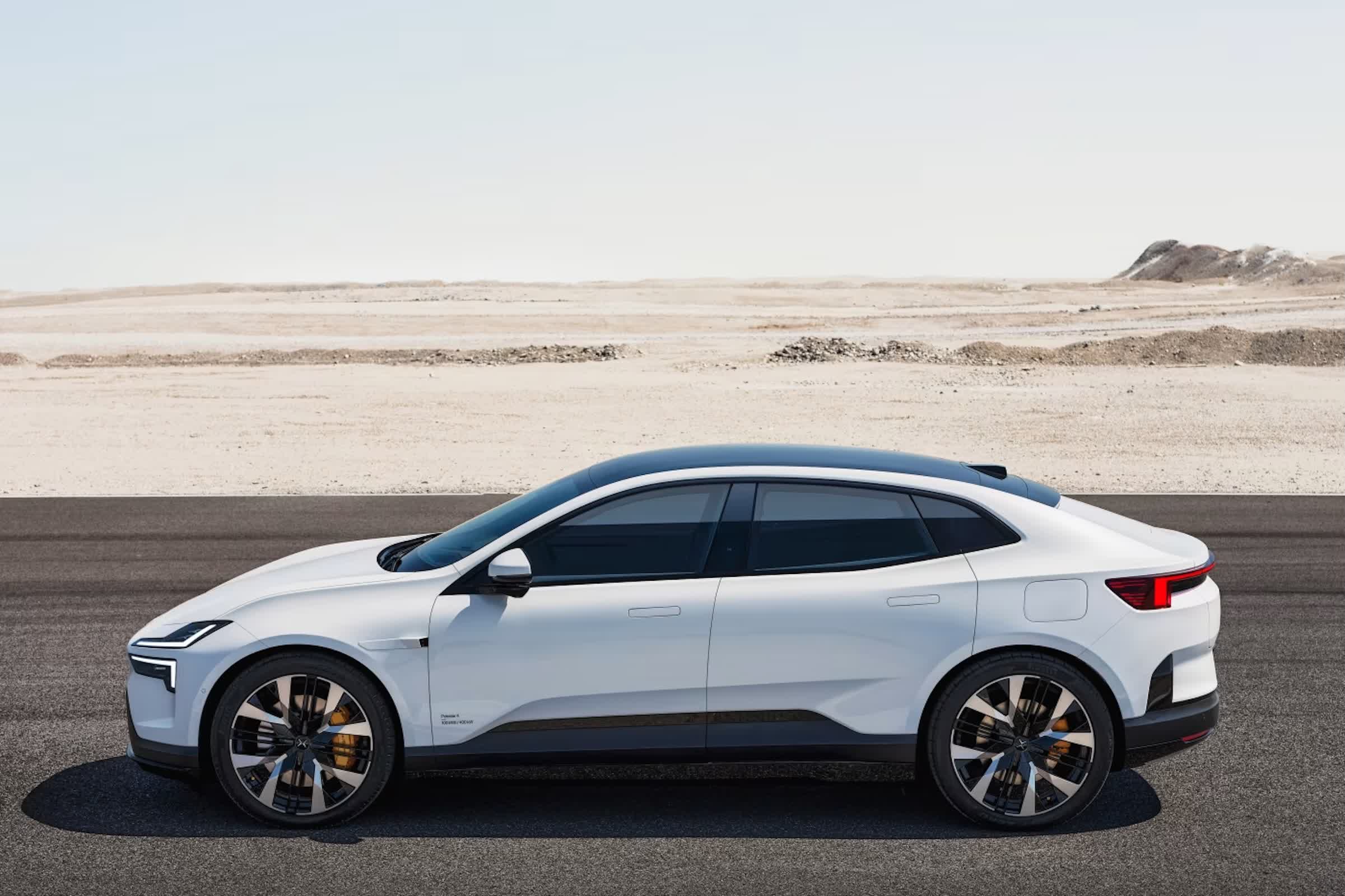
The Polestar 4 is positioned as an SUV coupe, though its proportions and styling lean toward a lower, more car-like profile. It is the fourth model from Polestar, the Swedish-Chinese brand developed from Volvo Cars' performance division. Exterior options include metallic finishes and accent details such as colored seat belts, brake calipers, and valve caps, alongside body-colored lower trim.

The model range begins with a single-motor, rear-wheel-drive configuration producing 272 horsepower and an estimated 310 miles of range, starting at $56,400. The dual-motor variant, priced at $81,800, adds a second electric motor on the front axle, delivering a combined 544 horsepower and 506 lb-ft of torque. The vehicle rides on 22-inch forged aluminum wheels.
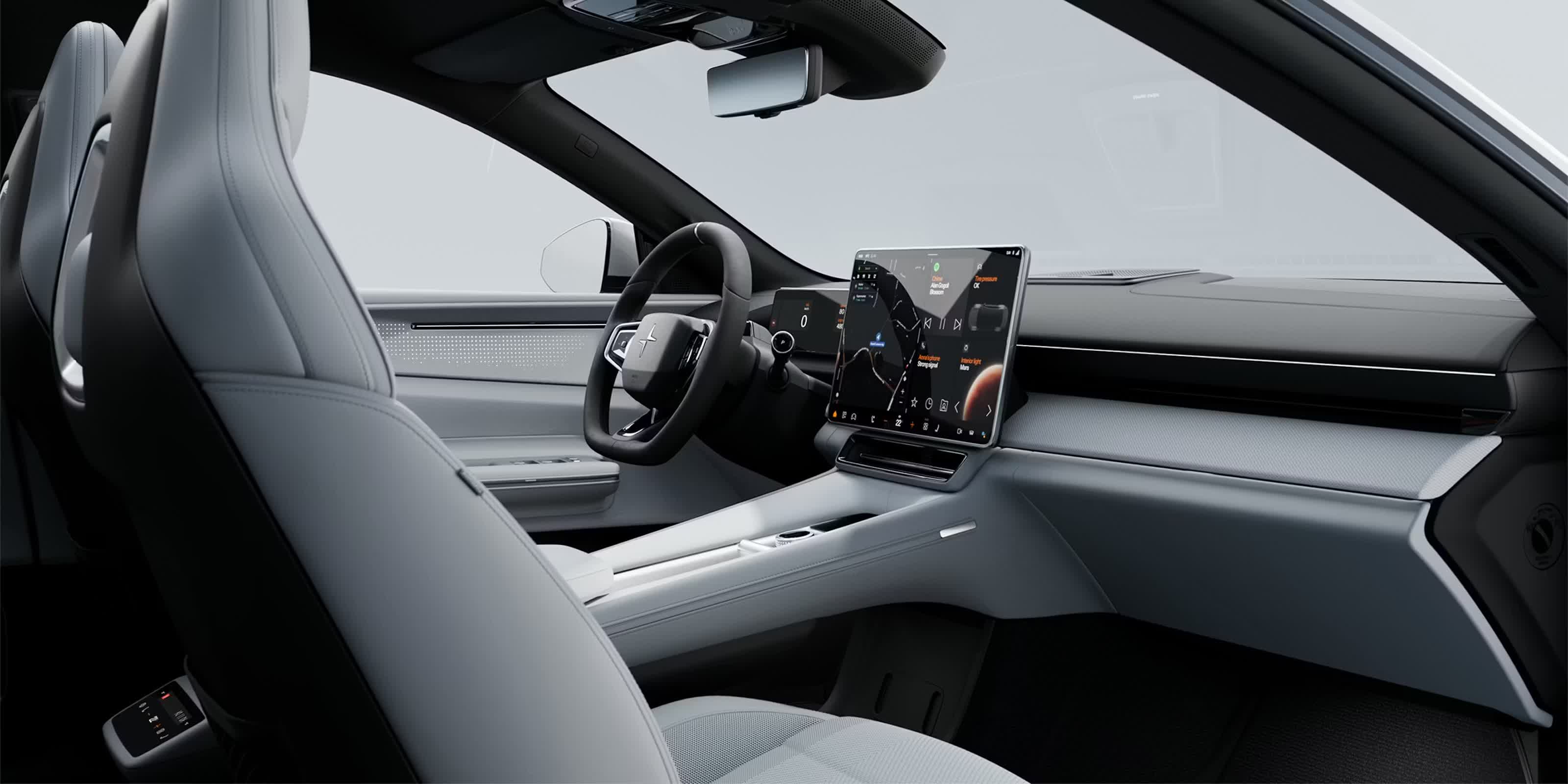
The dual-motor version ranks among the quicker EVs in its class. It accelerates from 0 to 60 mph in 3.7 seconds and remains responsive at highway speeds.

Energy storage is provided by a 100kWh battery pack using nickel-manganese-cobalt chemistry. The system operates on a 400-volt architecture, with a maximum charging rate of 200kW, which allows the battery to charge from 10% to 80% in approximately 30 minutes. In the dual-motor variant, the estimated range is 255 miles.
The battery system uses current-generation technology from Geely's portfolio, which also includes newer lithium-iron phosphate batteries and 800-volt charging platforms in other vehicles. As a result, it lacks the newer battery chemistry and faster charging systems used in some related models.

Permalink to story:

 
I'm pondering here in the US the legality of not having the window.
There is no actual requirement to have a rear window in the US. There have been a few exotic but street legal sports cars that lacked rear windows, and for something more common, vans that lack rear windows are something you probably drive by everyday.

That said, not a fan of the idea of removing them on every commuter vehicles like this.
 
In my state a car with an obstructed rear window is not legal to drive, there are no exceptions for cars with no rear window even if they have a camera.
 
At this price, they can afford to experiment with replacing reliable things with unreliable technology. I am not criticizing it, I just think if they wanted to do something cool, they could have picked a different area.

Also, 25k for a second motor, are they making them from pure gold? Electric motors were meant to be simpler, easier to make.

Finally, whenever I see an article about Chinese-European EV made for Europe, the charging is ALWAYS slower than the charging time on many EVs made in China. Why can they not "borrow" the fastest batteries from their Chinese partners? Is it purely a safety practice used to comply with strict European regulations?
 
Finally, whenever I see an article about Chinese-European EV made for Europe, the charging is ALWAYS slower than the charging time on many EVs made in China. Why can they not "borrow" the fastest batteries from their Chinese partners? Is it purely a safety practice used to comply with strict European regulations?
Well, the first thing I would ask is if the charging time in China is actually faster than on the Euro version, or if they are just fudging the numbers more in their home market.
 
At this price, they can afford to experiment with replacing reliable things with unreliable technology. I am not criticizing it, I just think if they wanted to do something cool, they could have picked a different area.

Also, 25k for a second motor, are they making them from pure gold? Electric motors were meant to be simpler, easier to make.

Finally, whenever I see an article about Chinese-European EV made for Europe, the charging is ALWAYS slower than the charging time on many EVs made in China. Why can they not "borrow" the fastest batteries from their Chinese partners? Is it purely a safety practice used to comply with strict European regulations?
I think it is brave the Polestar has decided to do away with the rear window, as I see it they have done away with a compromise which was being less and less worth having. As in there is a bunch of SUV type cars where their current rear window is minuscule and of very little use if the SUV is loaded with people.
Instead of pretending a small window is fine they have done away with, making use of the freedom the choice gives and made a better car. Also Polestar is essentially the electric arm of Volvo, that makes me sure they have made a safe car.

As for adding a 2nd motor and the cost, that motor isn't something you haul around in a box for display purpose - the power it bring calls for lots of details in order for its power to get to the road in a useful way. And also you're mistaken if you think as motors being simple when they are also to be light, powerful and efficient.

Finally China is a very big entity, car companies are very competitive and on the same time also somewhat conservative because most customers aren't trailblazers when it comes to car buying. So there is lots of reasons non-Chinese cars don't necessarily have the latest battery tech. Another thing is also that the Polestar 4 is a 2023 car.
 
In my state a car with an obstructed rear window is not legal to drive, there are no exceptions for cars with no rear window even if they have a camera.
What about vans and trucks?

Driving without a rear view window is perfectly fine, it just requires good mirrors. There isn't back windows in lots of things on the road, with the arrival of back up cameras that became even less of a issue.
 
Such a silly removal of a basic feature, backup cameras and mirrors aren't a replacement for a rear window. This car even appears to have the shape in the rear hatch for a window.
Although not having rear window visibility is a whole car industry problem, because everyone insists on making SUV's and crossovers, loaded with a bunch of overpriced tech.
 
Ah, but I've been in a car like this. Although it has a rear window, the Chevy Camaro's window view is pretty much useless. But all of these things have one glaring error. When I looked at the rear view mirror, the camera display was quite blurry, A problem I don't have with a conventional rear view mirror. The need for reading glasses makes the focal point of the "video" rear view mirror only about 18" and is quite out of focus. vs the actual focal point of what's behind you with a conventional mirror that doesn't change focus for your eyes when looking behind and ahead.
 
"Energy storage is provided by a 100kWh battery pack using nickel-manganese-cobalt chemistry. The system operates on a 400-volt architecture, with a maximum charging rate of 200kW"

"The battery system uses current-generation technology from Geely's portfolio, which also includes newer lithium-iron phosphate batteries and 800-volt charging platforms in other vehicles. As a result, it lacks the newer battery chemistry and faster charging systems used in some related models."

Techspot, these are contradictory statements made right next to each other. This is where the AI writing accusations are coming from. Which is it? Does it use 400v nickel magnesium cobalt or 800v lithium iron phosphate? Is it using newer battery tech or older battery tech?

It feels like you're TRYING to say this car doesnt use the newer 800v LiFe batteries and relies on oldr tech, but that sure isnt what is written here.
Such a silly removal of a basic feature, backup cameras and mirrors aren't a replacement for a rear window. This car even appears to have the shape in the rear hatch for a window.
Although not having rear window visibility is a whole car industry problem, because everyone insists on making SUV's and crossovers, loaded with a bunch of overpriced tech.
Work vans have worked without rear windows long before backup cameras existed, and have done just fine.

The lack of rear window visibility has nothing to do with crossovers. It's safety. Ever expanding roof load requirements and modern crash safety standards need ever higher beltlines and thicker pillars to hold multiples of the cars weight, which means that rear window keeps getting smaller.
Well, the first thing I would ask is if the charging time in China is actually faster than on the Euro version, or if they are just fudging the numbers more in their home market.
China has access to a lot of proprietary charging tech. BYD chargers using their blade battery can hit 1,200kw, where as Europe tops out at just 350kW. Others are pushing 1,500kW. All their new public chargers are using 800v charging with 500 amp cables. Most in Europe and the US still use the passively cooled 400 amp cables.

Western charging tech has really stalled out in both rollout and capability. Aging Wheels on youtube has done multiple trips with EVs and cataloged how hard it can be to find fast chargers that actually charge fast.
 
Work vans have worked without rear windows long before backup cameras existed, and have done just fine.

The lack of rear window visibility has nothing to do with crossovers. It's safety. Ever expanding roof load requirements and modern crash safety standards need ever higher beltlines and thicker pillars to hold multiples of the cars weight, which means that rear window keeps getting smaller.
Work vans also usually have larger side windows with large side view mirrors, the average person isn't getting groceries or taking kids to school in a work van either.

It's definitely a SUV and crossover vehicle issue, the remaining 4 door sedans still have enough of a rear view window.
 
To me, it is just one more electronic device that has the potential to fail, lag, or reset... :(
I've seen rear window setups that are basically ceremonial in utility, there because "it's supposed to be". You know the ones: a tiny, almost slit-like viewfinder masquerading as "the back of the car", in some luxury vehicles; the viewing area so narrow, as to be functionally useless.

This would be an improvement over that―assuming it is stable and the video clear-enough. You already probably rely on your backup camera to park your car, if you have one, so this is just that, but...all of the time.
 
Well, the first thing I would ask is if the charging time in China is actually faster than on the Euro version, or if they are just fudging the numbers more in their home market.
I frequently read about the newest Chinese EVs, and it seems that many of them do not require more than 10 minutes to charge to 80% or so.
30% minutes to 80 sounds like something that was created 3-4 years ago there.
So yeah, my best guess is safety. I do not see why the Chinese would not attract Europeans with their best batteries. Having ability to charge even 40% in 5 minutes seems like a huge advantage compared to the time this car offers.
 
I would not be scared away about this.

What I know for sure tho, I will be driving an EV from now on. Love it.

1½ years with EV now. So good. I drive for free pretty much. I charge for about 1-2 euros at home on average, for 80% charge, charging out using turbo chargers is more like 8-10 euros but still vastly cheaper than my old disel (no comparison at all) - Takes 15 minutes after 400-500 km I typically need a break anyway. Range anxiety is something you mostly have, before you get an EV and see that is no problem (unless your country is behind on infrastructure)

Sometimes (most often during Summer obviously) it is even 100% free to charge at home (on high wind/sunny days) - and yeah, insane acceleration, so fun to drive. I blow past pretty much all ICE cars with a light touch on the pedal. Never again I will get milked by high oil prices. I see people everywhere complaining about gas prices right now. Even EV haters are now considering EVs. A friend of mine said he would never get an EV. Last week he came to visit me, in his new EV... Praising the acceleration after just a few minutes.

Most people that complain about EVs, never had an EV and probably can't afford a good EV, or live in countries that don't have the infrastucture yet. In Europa, especially Northern Europe, infrastrure is insanely good, chargers everywhere. EV is pretty much easier than regular cars here. Often you can get a free parking spot in big cities while charging too. EV exclusive parking spots. Diesel cars are banned in many major citites as well. We don't want the air pollution that is proved to cause cancer.

I don't miss filling the tank for 100-150 euros... That is for sure. My old BMW M5 Diesel became hungry in the end. Luckily I got a good price before selling it. Never again.
 
Last edited:
backup cameras and mirrors aren't a replacement for a rear window....the average person isn't getting groceries or taking kids to school in a work van either.
Do you normally drive not looking at the road ahead, but instead turning to peer through your rear window ... or do you use the rear-view mirrors? Do you believe that work van drivers don't need to see behind them when driving?

There is absolutely zero reason that mirrors and display screens can not only replace a rear-view window, but be superior to it. I've had at least one convertible for the last 30+ years, and most of them have rear-view windows that are near-useless. A high-res wide-angle screen would be a much-desired upgrade.
 
Last edited:
What about vans and trucks?

Driving without a rear view window is perfectly fine, it just requires good mirrors. There isn't back windows in lots of things on the road, with the arrival of back up cameras that became even less of a issue.
I haven
What about vans and trucks?

Driving without a rear view window is perfectly fine, it just requires good mirrors. There isn't back windows in lots of things on the road, with the arrival of back up cameras that became even less of a issue.
Consumer vans and trucks are still required to have unobstructed rear windows. Commercial vans are trucks are under a more stringent commercial licensing regulation.
 
Back