The Commodore Amiga returns in style with Apollo's high-end A6000

Alfonso Maruccia

Posts: 2,511   +934
Staff
In brief: Four decades after revolutionizing the home computer market, the Amiga still draws significant interest from hardware developers. The legendary gaming machine has been recreated countless times in cheap plastic clones and clunky emulation boxes, but Apollo now aims to deliver the ultimate Amiga experience for affluent Commodore enthusiasts.
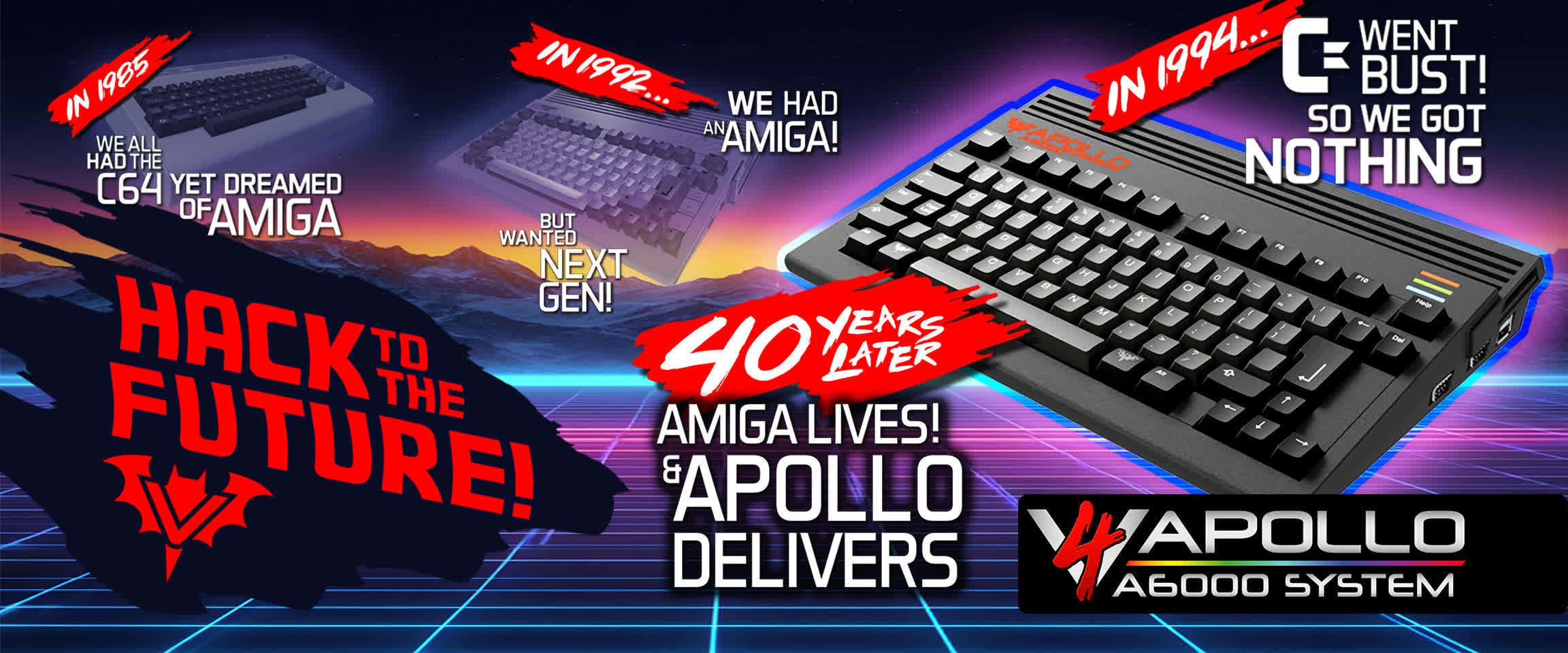
The Commodore Amiga left a lasting impression on countless computer users in the 1980s, and demand for new Amiga hardware persists to this day. Apollo, a German company best known for developing modern Amiga accelerator cards, is now bringing a complete Amiga system to market. As with previous retro computing efforts, enthusiasts are eager to get their hands on one of these costly machines.

Apollo describes its new A6000 as the most powerful Amiga 68k-compatible computer ever developed. At its core is the Apollo V4 AC68080 accelerator, designed to deliver full compatibility with original Amiga hardware while offering orders-of-magnitude improvements in CPU and graphics performance.

Built on a modern FPGA-based reinterpretation of the classic Motorola 68000 architecture, the A6000 also integrates everything needed for a contemporary yet nostalgically faithful computing experience.
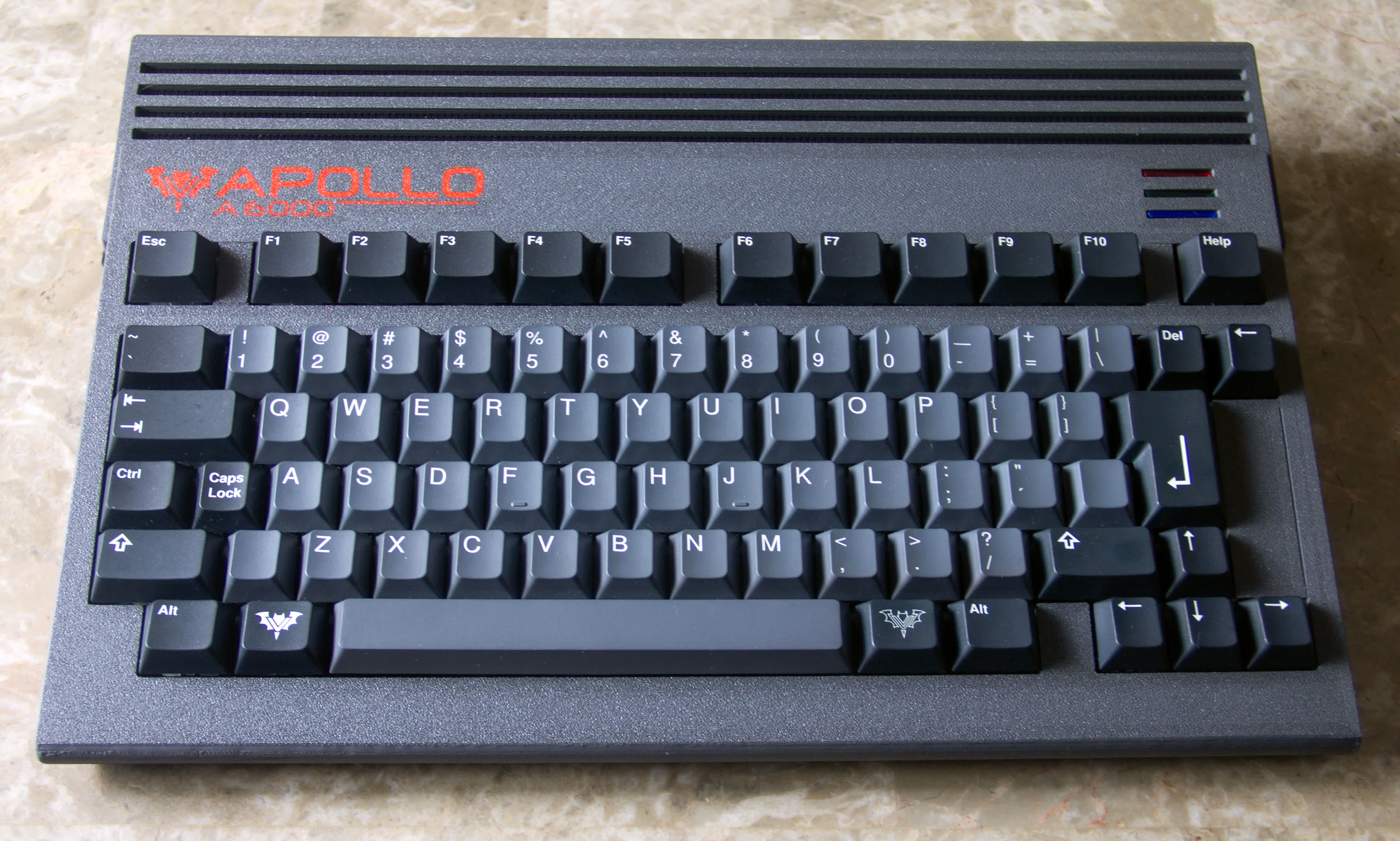
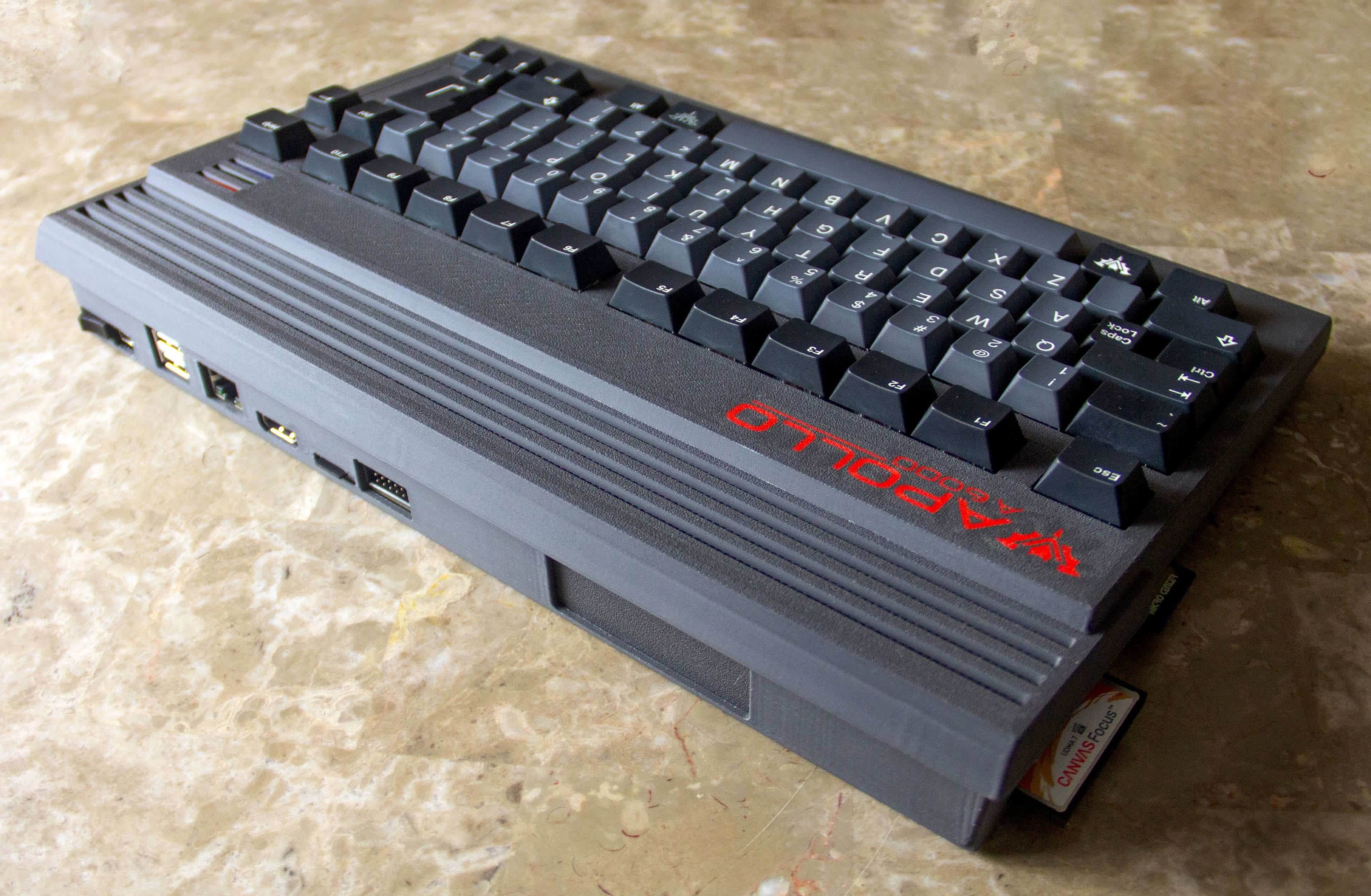
The Apollo A6000's case is 3D-printed to both replicate and refine the compact form factor of the original Amiga 600, which debuted in 1992 just months before the release of the 32-bit Amiga 1200. The system features a mechanical keyboard with durable ABS plastic keycaps and Cherry MX switches, along with 2GB of Fast RAM, 12MB of Chip RAM, and a 128GB CF card pre-loaded with ApolloOS.

While retaining compatibility with legacy Amiga hardware ports and software standards, the A6000 introduces a range of modern upgrades. These include dual SD card slots, HD video output, a 100Mbit Ethernet port, four USB ports, and more. The premium package also ships with a USB mouse, gamepad, video cables, and even a mouse pad.

Designed for maximum compatibility, the machine supports the full library of Amiga software and can even run titles originally developed for Motorola-based Atari and early MacOS systems.

Apollo said its team spent nearly a decade reverse-engineering the complex Amiga chipset and Motorola's M68000 CPU architecture. The new AC68080 processor now delivers performance levels unimaginable to Amiga fans in the 1980s, while also addressing several bugs in the original 680x0 design and adding extra capabilities on top.

The first production run of the Apollo A6000 was a special First Edition created to mark the Amiga's 40th anniversary. All 40 FE units have already sold out, but Apollo plans to begin taking new orders in October. The system is priced at €960 (around $1,128), which is not dramatically higher than the cost of some heavily used Amiga 1200 units still circulating on eBay.

Permalink to story:

 
Neat, it has 16 audio channels. The original 4 channels was always something of a nerf. I always liked the way the Amiga did its audio with each audio channel fed by its own DMA channel. No processing to mix the channels.
 
I wished they made an Amiga 500 or an Amiga 1200 design, far more iconic than the A600. Also a 1Gb Ethernet port wouldn't hurt.

It can certainly operate both as A1200 and as A500. It's got special hardware compatibility modes. Or do you mean in looks?
 
If it supports an Amiga floppy drive, I might consider it. All of my software is on 3.5" floppies.

Mine too, But I recently got a greaseweazle and this has allowed me to backup my Amiga floppies on the PC then burn the files to CD or put them on an SD card for use on SDBox... So I might just pack away all my old hardware and buy one of these instead.
 
Mine too, But I recently got a greaseweazle and this has allowed me to backup my Amiga floppies on the PC then burn the files to CD or put them on an SD card for use on SDBox... So I might just pack away all my old hardware and buy one of these instead.

My a4000 has both IDE for hard drives and SCSI for my CD-ROM (even have a 2086 bridgeboard and V-lab motion). Most of my software is on the hard drive as well. The info on the site shows a picture of a 1010 drve, but mostly talks about DMA access. The hardware description makes no mention of a hardware floppy port. I mostly use the 1010 drive with my CDTV. That still works perfectly.
 
I now think the floppy update in that news item is talking about extended support into 100% of chip-ram on the various accelerator boards that can be plugged into old A500/A1200/A2000 machines using the AGA/ECS/OCS chipsets and old floppy port on those chassis. In other words, I suspect it doesn't apply to the standalone new gear.

They probably can't supply new floppy drives so it's not much value providing a floppy drive connector on the standalone builds.
 
Happy with WinUAE with all the original floppies in IPF format along with WHDLoad with unlimited storage and "hardware" combination makes up for any lack of real machines.

Everytime some company come up with a revival of a classic machine, I'm so glad that there are emulators available.

Besides, I can run Amiga or any other "systems" - consoles and all, anytime anywhere in my laptop. And nothing can beat that convenience.

I know many want the real thing, but with the real thing, you need the space, the cables, and need to get glued to a particular place.
 
Happy with WinUAE with all the original floppies in IPF format along with WHDLoad with unlimited storage and "hardware" combination makes up for any lack of real machines.

Everytime some company come up with a revival of a classic machine, I'm so glad that there are emulators available.

Besides, I can run Amiga or any other "systems" - consoles and all, anytime anywhere in my laptop. And nothing can beat that convenience.

I know many want the real thing, but with the real thing, you need the space, the cables, and need to get glued to a particular place.
Emulation in WinUAE is Emulation in FPGA; with a GreaseWeazle, WinUAE can access the original floppies and save $1,200. For that amount of money, one could have a very nice A1200 with a 68060 and Indy MK3
 
FPGA's are not an emulation. They are configurable logic that can be gate for gate copy of original hardware. Just they are reduced logic density, clock frequency and power efficiency compared to the same in mass produced ASIC form.
If is not the original hardware, then it is emulation.
 
Happy with WinUAE with all the original floppies in IPF format along with WHDLoad with unlimited storage and "hardware" combination makes up for any lack of real machines.
And you don't need a high end system to run it perfectly.

Still, this hardware is very cool.
 
Back