The founder of Eidos-Montréal says the game industry has been taken over by spreadsheets and lost its soul

Alfonso Maruccia

Posts: 2,587   +973
Staff
Deep Cuts: Stéphane D'Astous founded Eidos-Montréal in 2007 as part of the Eidos Interactive brand. The studio went on to work on several blockbuster franchises, including Deus Ex and Tomb Raider, before becoming part of Embracer Group in 2022. Now, D'Astous believes the video game industry has lost much of its creative spark, as financial considerations and profit-driven expectations have become the primary focus.
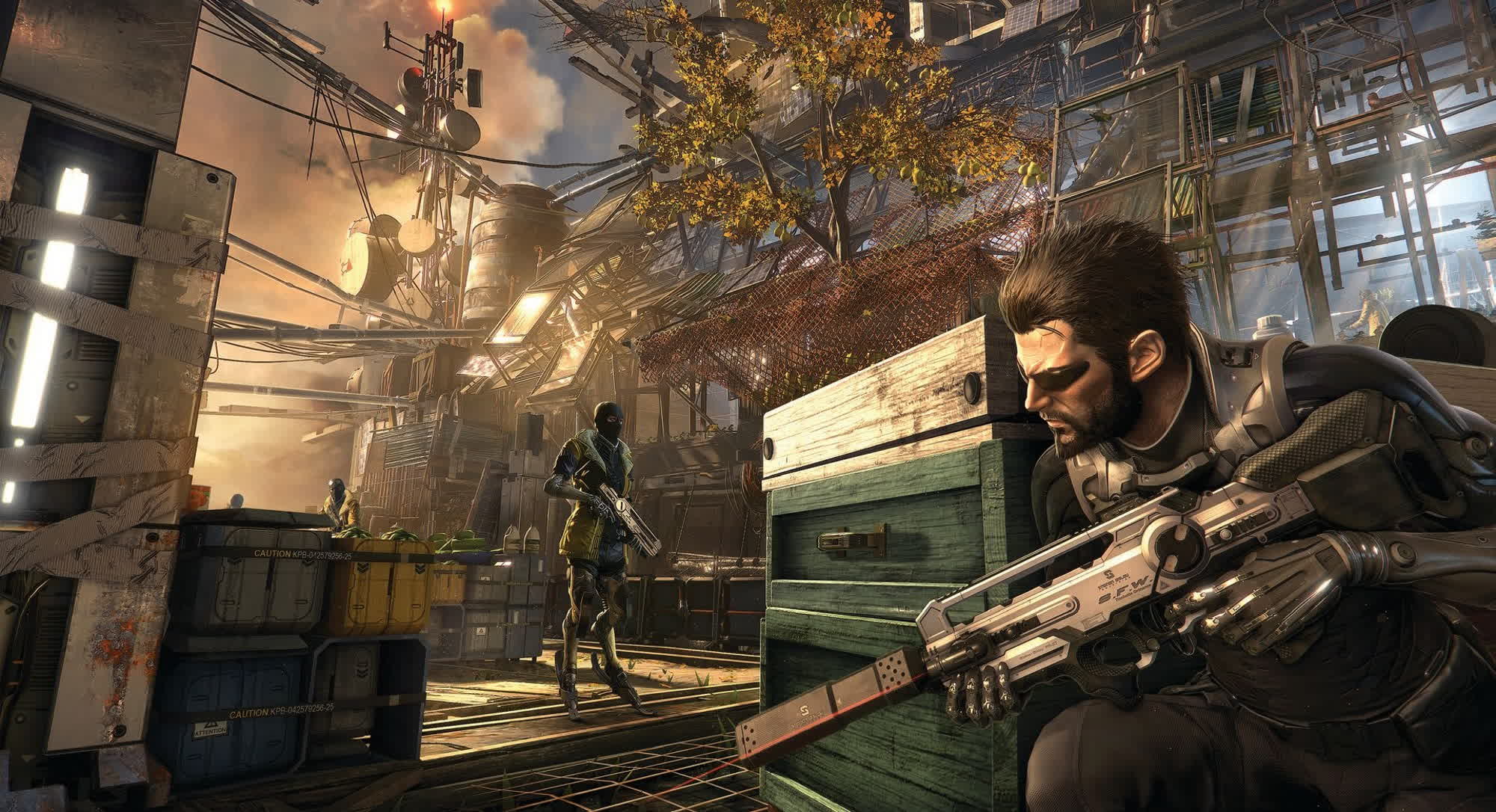
D'Astous in a recent interview said that game development has changed significantly. The modern gaming business somewhat resembles the cyberpunk setting depicted in the Deus Ex series, with a handful of mega-corporations pulling the strings and controlling most of the industry's money. Unfortunately, C-suites are no longer interested in creativity.

Over the next few years, D'Astous predicts we will see the first tangible results of fully AI-driven development efforts – and, in his view, things are not going to be pretty.

Modern AAA publishers are largely driven by Excel spreadsheets rather than a passion for gaming, D'Astous said in the interview. Over the past 15 years, the industry has been turned upside down. A small number of corporations now control most of the available funding in the business, leading to extreme consolidation and leaving little room to go against the prevailing trend.

Fewer decision-makers now control spending, and they have deeper financial resources than ever before. The creative DNA that gave rise to Deus Ex is largely gone. Back in 2005, development teams were much smaller and could work on more experimental projects capable of reshaping the industry.

During his Ubisoft tenure, D'Astous worked on the "modern" Prince of Persia trilogy (Sands of Time). Prince of Persia helped pave the way for Assassin's Creed, which has since become one of Ubisoft's flagship franchises.

Furthermore, big publishers have apparently lost their grasp on the reality of game development. "How many times have I been asked to do the Witcher 3-like game with a limited budget in less than four years with a new team?" D'Astous said, explaining that "this doesn't coincide with sustainability."

The executive believes that Covid and generative AI are two of the main reasons today's game industry is fundamentally broken. During the pandemic, studios overspent in an attempt to monetize the new entertainment habits of millions of people forced to stay at home. Management expected to generate sustained profitability from half-baked ideas, and AI is now making the situation even worse.

The AAA industry traditionally operates on four- to five-year development cycles, and we are now beginning to see the consequences of these investment decisions. D'Astous' predictions appear to align with the current wave of layoffs, which is significantly affecting both the games industry and the broader technology sector.

Speaking about his potential future projects, D'Astous said he would very much like to make a new Deus Ex title. The executive left Eidos-Montréal in 2013 but is confident he could bring together many former developers who would be interested in working on the project. After all, real-world technology has become dystopian enough to serve as a fitting backdrop for the series' interactive commentary.

Permalink to story:

 
In other words Millennials and Gen Z destroyed the business world.

All it's left is inflation and a disposable mentality.

Creativity, ownership and price value is all gone.
 
LOL "taken over by spreadsheets" is very well put :)

I've never been a serious gamer, but this is so true in so many other areas that it's hard to imagine that gaming can stay aside. Many big businesses are slowly infiltrated by the Excel & Powerpoint managerial plague. That's to a large extent a natural consequence of the regulatory regimes metastasizing everywhere and strangling the society - looks like you need bureaucracy to protect yourself from adversary bureaucracy.
That's why it's so important to resist mindless regulation and keep the risk taking startup culture vibrant. If we allow bureaucracy to kill that, like it happened in Europe, it would be fatal.
 
Gaming executives spent years turning creative studios into content factories, then seemed surprised when players noticed the content felt factory-made. Generative AI is not going to restore the missing soul. It will just help populate the spreadsheet faster.
 
Business exist to make money. Creating art was secondary, then it became tertiary behind embracing political messaging and navel gazing.

But ultimately, it is consumers to blame. Yes, businesses did dumb stuff, but consumers KEPT BUYING. Take Halo. Halo 4 was bad, halo 5 was worse, halo wars 2 was insulting, yet tens of millions lined up for halo infinite. Why? Just walk away!

Some have finally started learning, but even now games that should get buried still sell several million units. Battlefield 6 sold really well despite the developer and publisher's reputation, and surprise surprise, they ruined it. Just like every other game they have made this decade. Why did we rush into buying battlefield again?

Guarantee you that Halo remake, despite being a re release of a 25 year old game, containing only HALF the game, and not being a true remake, just UE5 slop plastered on the original engine, selling for $50 will sell millions of units. Even though, for $10, you can just buy the OG game with its remaster on PC and Xbox already through the MCC, and get access to the multiplayer.
In other words Millennials and Gen Z destroyed the business world.

All it's left is inflation and a disposable mentality.

Creativity, ownership and price value is all gone.
It's impressive that you can be this out of touch, you give old Boomers a run for their money.
 
... That's to a large extent a natural consequence of the regulatory regimes metastasizing everywhere and strangling the society - looks like you need bureaucracy to protect yourself from adversary bureaucracy.
Sadly, it's the opposite. The destruction of good regulation is letting the spreadsheets take over.
 
Thankfully some great gems are still coming out each year and sometimes from unexpected sources. The problem with most "classic" triple A franchises is that innovation has hit rock bottom and any new games will simply be made by the numbers (hence the spreadsheets :D). They became money making machines built around familiar templates that disregard any long term reputation for their respective brands. This business model hinders experimentation and, as such, the creation of truly new products. A.I. will only increase the grind if the artist has no soul.
 
It's the way of business. It's how it always goes. When it doesn't it is because control is in the hands of one.
 
I wish I had the power to create a golden age of gaming full of sole with the synergy of redundancy that LLMs bring to the table. Unfortunately it's all a pipe dream. Imagine if the artist carved out their own parallel universe full of lost soles that big gaming industry simply deletes at the whim of a quarter. I am a hopeless romantic lol!
 
I don't disagree but unfortunately I have to blame the customers first. The businesses are reacting to what players are spending their time and money on. I wish gamers were clamoring for the next Deus Ex instead of season 145 of Fortnite or League of Legends, but that's mostly not how it's going.

I'm very grateful for the less corporate devs who make what they are passionate about and I love it when one occasionally smashes it out of the park for huge rewards.
 
Wasn't base Witcher 3 some silly money, like $10M, and order of magnitude more for global marketing? Anyway, I'm sure the games are still made mostly by an army of "bots" from third world countries, and rest of the budget is leaked through some sideway "dealing" and "expenses", to rip of shareholders. So no, no more cheap games. Cocaine and h*kers cost more and more, every year, while number of potent gaming PCs to run the games is shrinking.
 
I don't disagree but unfortunately I have to blame the customers first. The businesses are reacting to what players are spending their time and money on.

Tens of millions of people are playing Elden Ring. No microtransactions, off-line, hundreds of hours of potential gameplay with absolutely no monetization walls to overcome first. So why Elden Ring is essentially in its own league, and we will likely seen nothing like it until FromSoftware will decide to make Elden Ring 2?
 
Embracer group needs to just sell the Deus Ex IP to someone else. (not MS, they can't own everything)
 
Sadly, it's the opposite. The destruction of good regulation is letting the spreadsheets take over.
Was that some weird joke? Please name just one removed "good regulation" which had been preventing game studios from prioritizing profits when producing their products. Just one.
 
Back