The great EV markdown is here: resale prices plunge, squeezing fleets and early adopters

Skye Jacobs

Posts: 2,031   +59
Staff
In context: Industry analysts expect 2026 to mark a year of recalibration for the electric vehicle market as both supply and demand adjust. For now, however, it remains in flux – its promise of cleaner transportation tempered by the hard economics of depreciation.
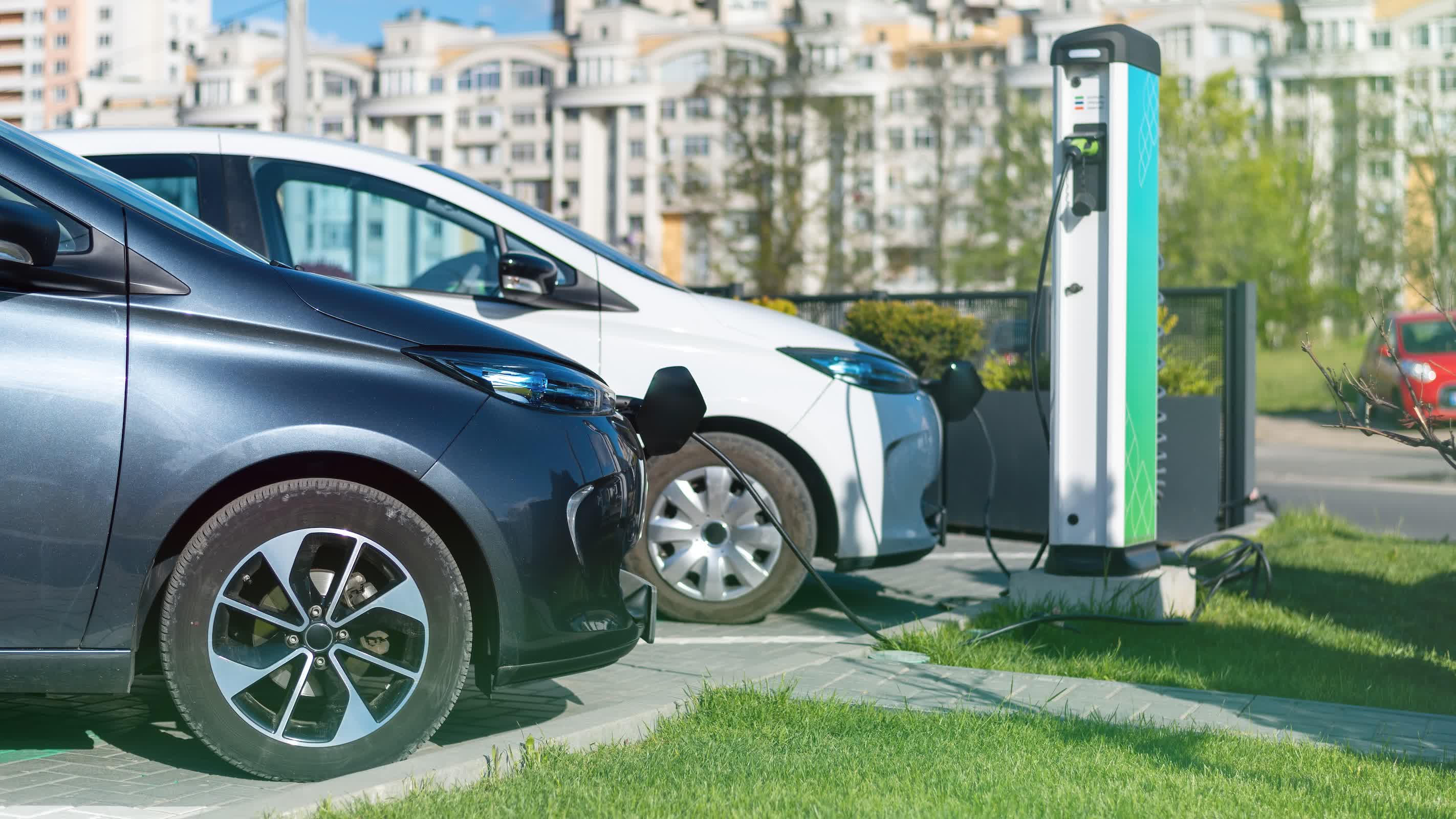
The global electric vehicle market is facing an unexpected reckoning. Once hailed as the future of transportation, battery-powered cars are now rapidly losing value, eroding the finances of private owners and corporate fleets that invested heavily in them.

Over the past year, electric vehicles have depreciated at nearly twice the rate of comparable gas-powered cars. Analysts say the reason lies in one of the EV's defining features – the battery – whose uncertain lifespan and replacement costs have upended traditional models for calculating resale value.

In India, the problem became painfully visible earlier this year when BluSmart, the country's first all-electric ride-hailing startup, collapsed amid allegations of financial misconduct. The company's fleet of thousands of EVs, once valued at more than $12,000 each, flooded the used market at roughly a quarter of that price. Industry observers say it was the first large-scale example of what happens when the theoretical risks of electric depreciation turn real.

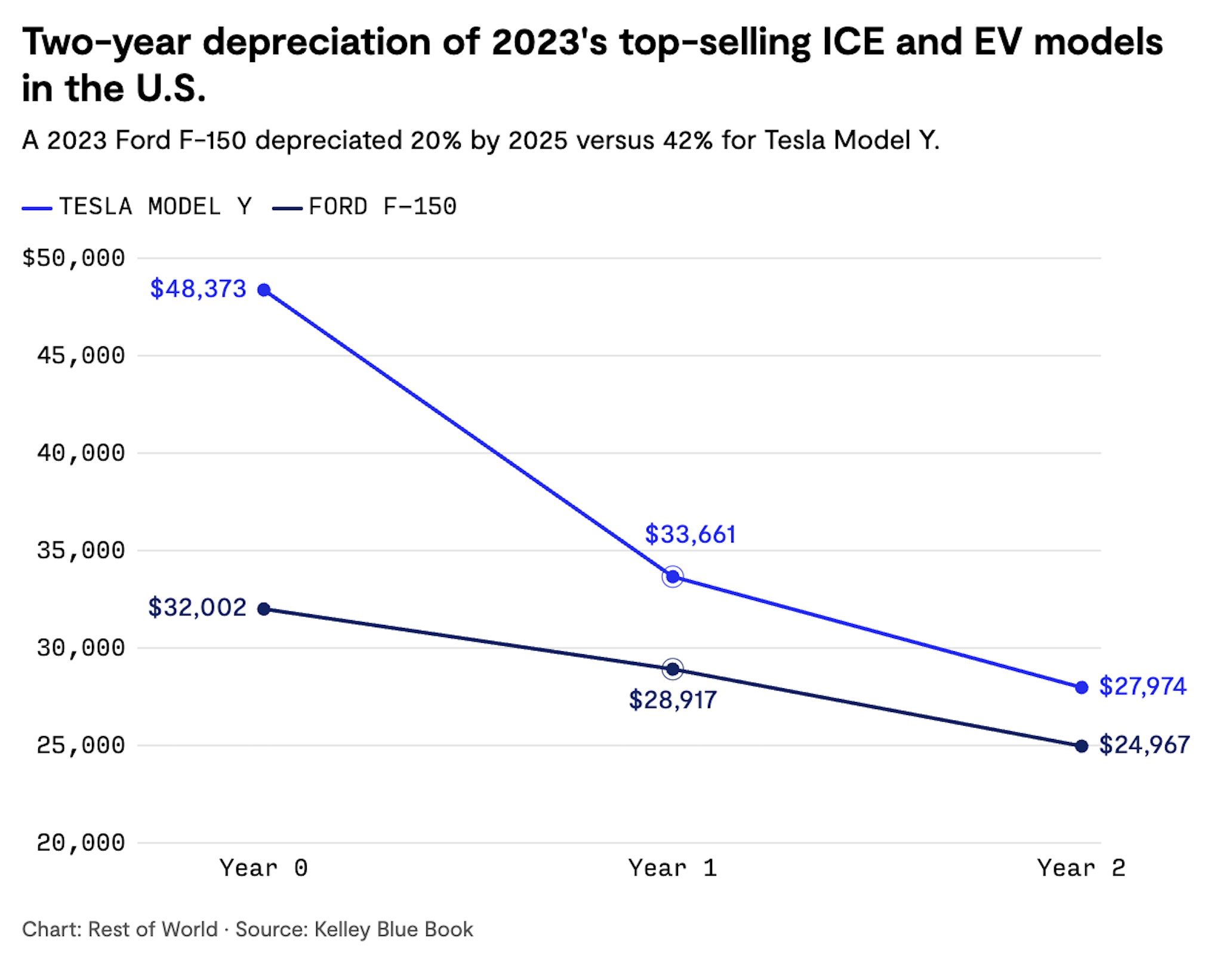
In the United States, the same pattern is emerging. A Tesla Model Y purchased new in 2023 is now worth about 42 percent less than its sticker price, according to resale tracking data. Over the same period, a Ford F-150 has lost only about 20 percent of its value. Studies from both the United Kingdom and South Korea show a similar trend, with three-year-old EVs losing more than half their value – far more than conventional vehicles of the same age.
"The fundamental problem is that nobody really knows what electric cars are worth in the secondhand market, as their value is largely tied to batteries with uncertain lifespans," Andrew Garberson, head of growth and research at Recurrent, a Seattle-based startup that evaluates the wear and tear on used EVs to bring transparency to the secondhand market, told Rest of World. "For gas cars, there's a 100-year process behind them based on odometer and major maintenance schedules and the expected life of combustion engine parts. Electric cars have fewer moving parts, and a lot of the value of the car is tied up in one component – the battery."

The impact is particularly severe for companies operating large vehicle fleets. From ride-hailing to delivery services, firms that embraced electrification as part of their sustainability goals are now struggling to reconcile green ambitions with financial losses.

Florida-based rental giant Hertz illustrates the scale of the challenge. The company purchased 100,000 Teslas in 2021, aiming to transition much of its fleet to electric. But by 2024, plunging resale prices, high repair costs, and extended maintenance times had turned that bet into a $2.9 billion loss. Hertz began selling off roughly 30,000 EVs – many for less than half their purchase price. A Tesla Model Y listed for resale this month was priced around $27,000, down from the $45,000 it cost just two years earlier.

"Fleet operators feel the risk most acutely because their entire business model depends on predicting total cost of ownership," said Jack Carlson, chief executive of Carvai.ai, an automotive analytics platform. "Retail buyers worry about range and charging; fleets worry about what happens when they try to resell thousands of cars."
Not all electric cars depreciate equally. Tesla vehicles have held their value better than most, reflecting both their longer market presence and stronger brand recognition. Chinese manufacturers such as BYD, XPeng, and Nio, though growing quickly, have struggled to build similar resale confidence abroad, according to Mariusz Sawula, head of the Poland-based vehicle history provider autoDNA. "Premium brands – whether gas or electric – consistently retain higher value," Sawula said. "The uncertainty comes with newer names that buyers don't yet trust."

Market geography also plays a role. In Europe and parts of Asia, where shorter commutes and government incentives make EVs more practical, secondhand prices have remained relatively stable. Countries such as Norway and China continue to show strong consumer demand for used electrics. But in North America, long distances, variable climates, and uneven charging infrastructure have depressed resale potential.

The volatility has prompted new approaches aimed at restoring confidence in the sector. Battery-as-a-service programs, in which fleet operators lease batteries rather than own them, are gaining traction. The model allows companies to isolate battery risk and treat it as a predictable operating expense rather than an unknown liability.

"Without predictable residual values, even profitable fleets can become unsustainable once vehicles reach their replacement cycles," said Anirudh Damani, managing director of Artha Venture Fund, an investor in India's Everest Fleet. "Battery leasing is one of the few mechanisms that can stabilize that risk."

Despite the turmoil, recent data suggest that the batteries themselves may be more durable than many assume. Recurrent's research shows modern EV batteries degrade by only one to two percent per year, with fewer than one percent of vehicles built after 2016 requiring replacement. Older models, by contrast, had a replacement rate exceeding 13 percent.

Some automakers and dealers are adapting. Certified pre-owned programs specific to electric vehicles now include detailed state-of-health battery reports, giving buyers the kind of transparency long taken for granted in traditional car sales. The rapid innovation cycles that once made older EVs seem outdated have also slowed, as manufacturers emphasize range stability and long-term reliability over frequent redesigns.

Image credit: Rest of World

Permalink to story:

 
Oh hey look, that thing we "luddites" called out was going to happen is happening. Huh. imagine that.

Now can we stop pretending EVs are jesus and start building out the infrastructure needed to properly support mass EV adoption?
If all EVs used LifePo4, this would not be a big problem.
LifePo4 is not a panacea. They still degrade, they still have issues with hot and cold weather, and they are still expensive to replace. The tradeoff for not suffering damage at 100% charge like lithium ions is having even worse energy density which is already a problem.
 
42% isn't bad at all. In China, the largest EV market, they lose up to 90% of their value within two years because they're toys and people buy them to virtue signal, not because they understand what they're buying.
 
In light of this from the article
Despite the turmoil, recent data suggest that the batteries themselves may be more durable than many assume. Recurrent's research shows modern EV batteries degrade by only one to two percent per year, with fewer than one percent of vehicles built after 2016 requiring replacement. Older models, by contrast, had a replacement rate exceeding 13 percent.
this article just goes to show that people much prefer conspiracy theories to actual fact about battery life. No surprises there.
 
Oh hey look, that thing we "luddites" called out was going to happen is happening. Huh. imagine that.

Now can we stop pretending EVs are jesus and start building out the infrastructure needed to properly support mass EV adoption?
Certainly, infrastructure is necessary and is considered one of the reasons that the EVs of the early 1900s were not successful.

As I see it, however, with the current political winds in the US, my bet is that political wind is driving the used EV prices and investment in future EVs/infrastructure more than anything else.

When the current administration was in from 16' - 20', Cheeto promised infrastructure improvements, in general, but never delivered and I'd guess he never gave it a second thought. Now, he seems to be succeeding at driving the US back to the Dark Ages circa 500 AD or so. That's what we get when the cabinet is full of Senate approved Queens of Hearts.

Fortunately, there are a few automakers out there that are building their own EV future like Toyota and its solid-state battery.

My bet is that the EV industry will not decline as much as Cheeto would like and that he will continue to try to kill it no matter what direction private industry takes.
 
Last edited:
Certainly, infrastructure is necessary and is considered one of the reasons that the EVs of the early 1900s were not successful.

As I see it, however, with the current political winds in the US, my bet is that political wind is driving the used EV prices and investment in future EVs/infrastructure more than anything else.

When the current administration was in from 16' - 20', Cheeto promised infrastructure improvements, in general, but never delivered and I'd guess he never gave it a second thought. Now, he seems to be succeeding at driving the US back to the Dark Ages circa 500 AD or so. That's what we get when the cabinet is full of Senate approved Queens of Hearts.

Fortunately, there are a few automakers out there that are building their own EV future like Toyota and its solid-state battery.

My bet is that the EV industry will not decline as much as Cheeto would like and that he will continue to try to kill it no matter what direction private industry takes.
See, you were so close to a good point, until you fell down the hole of Cheeto-posting.

Biden has 2 years of executive and legislative control on the back of a tsunami of votes never seen before. With that power, the left built a handful of $1.3 billion chargers then patted themselves on the back. No investment in non fossil baseline generation capacity, no mass deployment of charge points, nothing.

Neither half of the US is interested in doing their job. Look at Norway. THAT is proper investment in infrastructure. Even then charger wait times are still a serious issue. The US is decades away from the EV future being reality, and is pushing that future out every year because nobody is willing to cut the red tape and get things done.
 
See, you were so close to a good point, until you fell down the hole of Cheeto-posting.
Awww. My heart bleeds because I spoke the truth.
Biden has 2 years of executive and legislative control on the back of a tsunami of votes never seen before. With that power, the left built a handful of $1.3 billion chargers then patted themselves on the back. No investment in non fossil baseline generation capacity, no mass deployment of charge points, nothing.

Neither half of the US is interested in doing their job. Look at Norway. THAT is proper investment in infrastructure. Even then charger wait times are still a serious issue. The US is decades away from the EV future being reality, and is pushing that future out every year because nobody is willing to cut the red tape and get things done.
Both sides have done little, and yes, like it or not Cheeto is actively killing anything Biden and the democrats did. At least the Democrats made an effort to build rather than Cheeto's current effort to destroy, but it takes much more than the politicians in power to make something happen.

And this issue is like the proverbial lead balloon. There's a lot of entropy there, and its going to take vision to move it forward. One thing is for sure, nothing will move forward if one side just keeps crapping up the garden after the other side at least made an attempt to clean the crap out of the garden.

Whether you like it or not, Cheeto had a choice - move it forward, or believe that he is right about everything and in the process f' things up even more.

Norway's situation is entirely different than that in the US. They have plenty of renewable energy sources (> 99%) to work with. And speaking of renewable energy, tell me what is Cheeto's position on that??
 
Last edited:
The idea that BEVs were the end all, be all was always marketing hype. There are just so many issues (both technical and logistical) to overcome when replacing ICE vehicles. The ICE has been the backbone of civilization for over a 100 years. Did any one with half a brain really think that we could replace that in just a few years? Companies fell for it because of the illusion of $$$ saved. Consumers fell for it because they are ignorant.

To be clear, the push for BEVs and the resulting technology advancements has been impressive. Without all of this irrational exuberance, there would never have been the $$$ and forcing function to create the latest technology and make it practical. The biggest benefit we will see is the mass adoption of conventional-hybrid and PHEVs. This is where the real win will be over the next few decades until BEVs are no longer a political lightning rod and the technology and infrastructure finally reaches the true tipping point of acceptance.
 
Comparing pickup truck resale value to SUV resale value is a fundamentally misleading analysis. Pickup trucks hold their value better than any other vehicle type and ANYBODY working in the auto sales industry would tell you that. Second, if you compare the Tesla Model Y against an ICE SUV with similar miles and capabilities and compare resale on KBB or autotrader, you will see that the delta is much smaller in terms of resale.

If we are going to be fair, compare a GMC Denali EV pickup to a Ford F150 pickup with similar options and miles and see what the blue book value is. I think your viewers might be surprised how close they are.


https://zevaglobal.com/blog/stories...ies-really-last-2025-guide-to-lifespan-costs/

https://www.jdpower.com/cars/shopping-guides/how-often-do-tesla-batteries-need-to-be-replaced

Batteries can last up to 500k and 20y already. They're constantly improving too. What part of an ICE car can last that long? Only something like a Toyota or Honda was safe to buy with over 100k miles. I would not buy any American car with that many miles.

I keep hearing this nonsense about battery cost. What about cost of transmission, engine, rear end, new brakes, exhaust system, and a million of extra parts that need to be regularly replaced like sensors, fluids, belts and hoses that degrade? Add up all those trips to the mechanic for fluid flushing and changing and you'll hit the battery cost in a few years even if nothing major breaks.

I have $0 maintenance cost in 2y+ now. People need to look at the total cost of ownership not just the initial price. I have not done the math on how much I saved in gas. Average car is now $50k. You could easily get an EV for that.
 
Until batteries become much cheaper, EV's will continue to have massive drops in value over time.
That will happen.
It's just too expensive to replace the batteries.
IMO, that's a vast oversimplification of the issue.

In the US, and any place where salt is used on the road during the winter months, its more likely the vehicle will have to be replaced due to rust before the battery ever needs to be replaced, and rust is an issue with ICE vehicles. There's no difference. The only difference is people ignorant of how long a BEV battery will last and listen to the FUD from people who know less than nothing about battery longevity.

Furthermore, Length of warranty on the battery is NOT an indicator of the battery's actual lifetime. Even with today's battery technology, a battery will likely out-live an ICE engine.
 
They been taking the piss with the prices of these EV's anyways. The vehicle market in general need to crash!
 
In light of this from the article
this article just goes to show that people much prefer conspiracy theories to actual fact about battery life. No surprises there.
It's a lie. Every taxi driver I've spoken to has said that after the first year they need to recharge their cars twice a day, thrice after the second year. Batteries degrade fast.
 
That will happen.

IMO, that's a vast oversimplification of the issue.

In the US, and any place where salt is used on the road during the winter months, its more likely the vehicle will have to be replaced due to rust before the battery ever needs to be replaced, and rust is an issue with ICE vehicles. There's no difference. The only difference is people ignorant of how long a BEV battery will last and listen to the FUD from people who know less than nothing about battery longevity.

Furthermore, Length of warranty on the battery is NOT an indicator of the battery's actual lifetime. Even with today's battery technology, a battery will likely out-live an ICE engine.
There are almost no first or second gen EV's on the roads here due to low quality and battery death. Salt is the least of your worries when it comes to EV's.

https://zevaglobal.com/blog/stories...ies-really-last-2025-guide-to-lifespan-costs/

https://www.jdpower.com/cars/shopping-guides/how-often-do-tesla-batteries-need-to-be-replaced

Batteries can last up to 500k and 20y already. They're constantly improving too. What part of an ICE car can last that long? Only something like a Toyota or Honda was safe to buy with over 100k miles. I would not buy any American car with that many miles.

I keep hearing this nonsense about battery cost. What about cost of transmission, engine, rear end, new brakes, exhaust system, and a million of extra parts that need to be regularly replaced like sensors, fluids, belts and hoses that degrade? Add up all those trips to the mechanic for fluid flushing and changing and you'll hit the battery cost in a few years even if nothing major breaks.

I have $0 maintenance cost in 2y+ now. People need to look at the total cost of ownership not just the initial price. I have not done the math on how much I saved in gas. Average car is now $50k. You could easily get an EV for that.
I have yet to see an EV that lasts more than a few years, due to low quality construction and low quality batteries that only reach 1000KM as long as they're not turned on.

Also, every day I see videos of people getting barbecued in their cars because batteries decide to explode for the lulz. Unsafe and unreliable technology.
 
Oh hey look, that thing we "luddites" called out was going to happen is happening. Huh. imagine that.

Now can we stop pretending EVs are jesus and start building out the infrastructure needed to properly support mass EV adoption?
LifePo4 is not a panacea. They still degrade, they still have issues with hot and cold weather, and they are still expensive to replace. The tradeoff for not suffering damage at 100% charge like lithium ions is having even worse energy density which is already a problem.
With over 8,000 cycles to degrade to 80% of initial capacity, I disagree. Throughout the entire year, I would only use about 120-130 cycles. It would take 10 years to reach 1,200-1,300 cycles used.

It doesn't have to be, Lifepo4 cells are already dropping below $50/Kwh. So an average battery of around 50KWh will cost no more than $3000-4000 to replace.
 
With over 8,000 cycles to degrade to 80% of initial capacity, I disagree. Throughout the entire year, I would only use about 120-130 cycles. It would take 10 years to reach 1,200-1,300 cycles used.

It doesn't have to be, Lifepo4 cells are already dropping below $50/Kwh. So an average battery of around 50KWh will cost no more than $3000-4000 to replace.
As has been said, energy density is a serious problem with these batteries.
 
https://zevaglobal.com/blog/stories...ies-really-last-2025-guide-to-lifespan-costs/

https://www.jdpower.com/cars/shopping-guides/how-often-do-tesla-batteries-need-to-be-replaced

Batteries can last up to 500k and 20y already. They're constantly improving too. What part of an ICE car can last that long? Only something like a Toyota or Honda was safe to buy with over 100k miles. I would not buy any American car with that many miles.

I keep hearing this nonsense about battery cost. What about cost of transmission, engine, rear end, new brakes, exhaust system, and a million of extra parts that need to be regularly replaced like sensors, fluids, belts and hoses that degrade? Add up all those trips to the mechanic for fluid flushing and changing and you'll hit the battery cost in a few years even if nothing major breaks.

I have $0 maintenance cost in 2y+ now. People need to look at the total cost of ownership not just the initial price. I have not done the math on how much I saved in gas. Average car is now $50k. You could easily get an EV for that.
Person with money doesnt understand the plight of the poor and goes on a wild rant...more at 10!
 
It's a lie. Every taxi driver I've spoken to has said that after the first year they need to recharge their cars twice a day, thrice after the second year. Batteries degrade fast.
:rolleyes: Taxis are not the same use case that everyday drivers have. Taxis get far more use. That should be obvious, but go ahead, start another unfounded conspiracy theory.
 
There are almost no first or second gen EV's on the roads here due to low quality and battery death. Salt is the least of your worries when it comes to EV's.
While not a pure EV, my 06' Prius had 118K miles on it with no signs of battery degradation. Ask @scavengerspc about his experience with EVs.
Also, every day I see videos of people getting barbecued in their cars because batteries decide to explode for the lulz. Unsafe and unreliable technology.
I think your bullcrap detector needs a huge tuneup. Even with Teslas, vehicles catching on fire is rare unless the vehicle was involved in an accident.

I don't know what alternate reality you are in, but the reality certainly is not an everyday reality.
 
https://zevaglobal.com/blog/stories...ies-really-last-2025-guide-to-lifespan-costs/

https://www.jdpower.com/cars/shopping-guides/how-often-do-tesla-batteries-need-to-be-replaced

Batteries can last up to 500k and 20y already. They're constantly improving too. What part of an ICE car can last that long? Only something like a Toyota or Honda was safe to buy with over 100k miles. I would not buy any American car with that many miles.

I keep hearing this nonsense about battery cost. What about cost of transmission, engine, rear end, new brakes, exhaust system, and a million of extra parts that need to be regularly replaced like sensors, fluids, belts and hoses that degrade? Add up all those trips to the mechanic for fluid flushing and changing and you'll hit the battery cost in a few years even if nothing major breaks.

I have $0 maintenance cost in 2y+ now. People need to look at the total cost of ownership not just the initial price. I have not done the math on how much I saved in gas. Average car is now $50k. You could easily get an EV for that.
Just to touch on something critical with your comment; age and mileage go hand and hand with EV's, where that is not the case with a gas or diesel burner.
In fact, older sought after vehicles with low mileage( think sports cars, exotics, muscle cars, diesel trucks) that may be 20+ years old, will still carry heap loads of value and have still have potential to last a very long time. I 100% do not believe a 20+ year old EV, even with low mileage, is going to offer any sort of good value. I know some people with early Gen Prius's and let's just say, they're no longer Hybrid's at this point nor did it evolve into an all out EV. Working in the automotive industry for 18 years, I have seen a lot. The older both Hybrids and EV'S get, the worse they will fair. End of story.
 
If you have friends or family who want to buy a used EV, teach them how batteries age. Teach them to check the average life of a specific battery that goes into the car they are wishing to buy.
It is a reality that a lot of people are not interested in how stuff works.
It might be a shock for some to find out how much batteries cost to replace.
 
Back