
The big picture: Since RAM shortages have made the latest hardware unaffordable for many, demand for mature GPUs and CPUs has risen. Now, reports claim that memory and motherboards are following suit. As manufacturers face historically low sales, the PC industry seems to be turning the clock back to 2022.
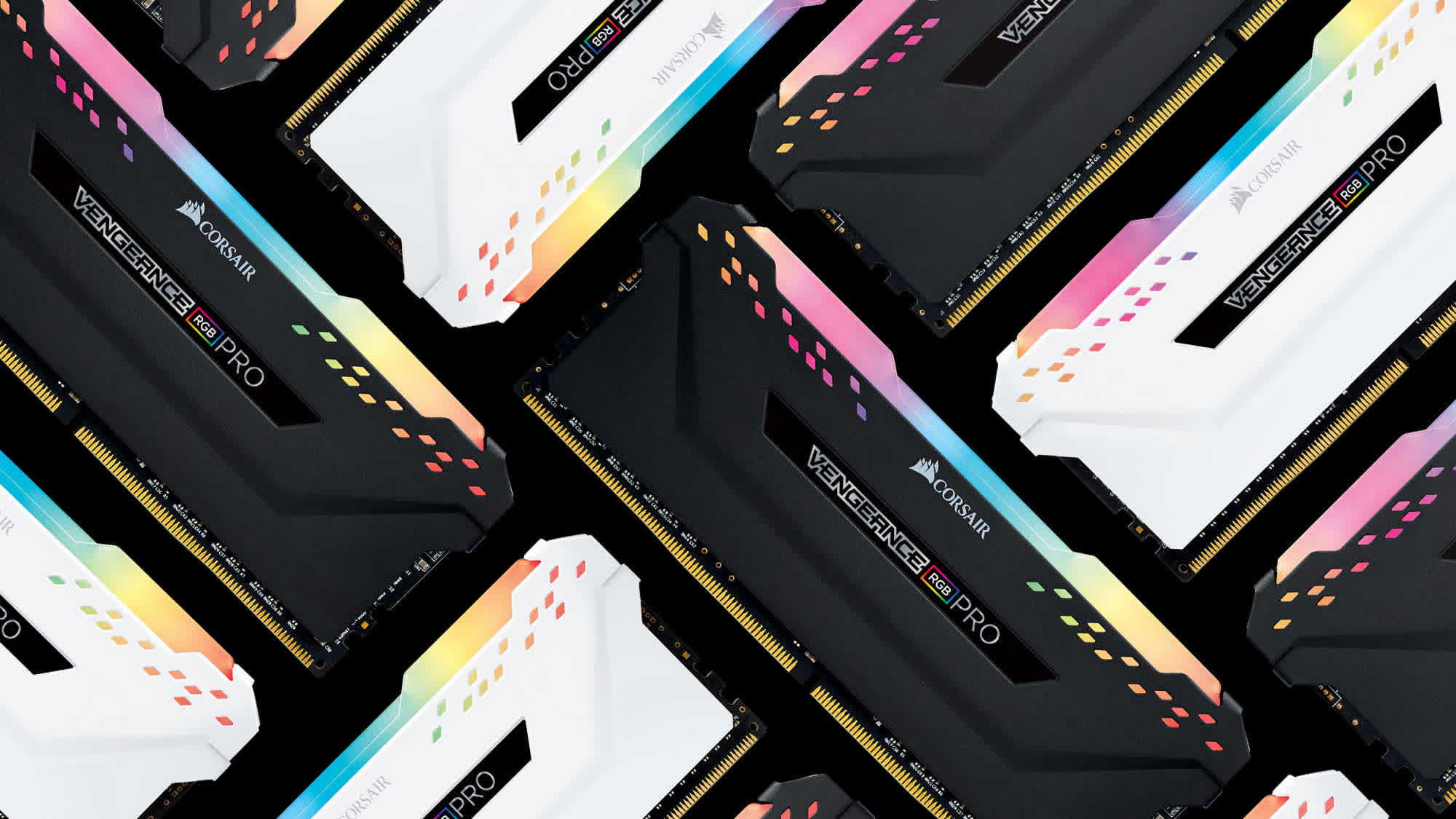
Several manufacturers at Computex 2026 informed Tom's Hardware that they are preparing to increase production of DDR4 memory and older motherboards that support it. Demand has increased significantly since DRAM and NAND shortages have made DDR5 RAM prohibitively expensive.
Over half a dozen motherboard and DIMM manufacturers told the outlet that they are shifting production back to DDR4-compatible platforms to meet renewed demand. One company claimed that sales grew by a double-digit percentage last quarter, while others simply stated that demand grew dramatically.
However, newly produced modules might only consist of DDR4-3600 RAM, as faster variants are no longer in production.

Although DRAM and NAND shortages driven by the mad dash to build AI data centers have raised DDR4 RAM prices, the impact on DDR5 modules has been far worse. According to PCPartPicker, a pair of DDR4 RAM sticks can cost nearly $200, compared to just over $50 last year.
In the same timeframe, average prices for pairs of DDR5 modules have skyrocketed from roughly $100 to over $400. Therefore, anyone who doesn't already possess DDR5 RAM is much less likely to purchase the latest motherboards and CPUs that require it. Collapsing sales of motherboards and CPUs reflect this trend.
AMD responded at Computex by announcing continued support for its last-generation CPU socket, AM4. The platform's most well-regarded processor, the four-year-old 5800X3D, has re-entered production to celebrate AM4's 10th anniversary and is set to return to store shelves on June 25 at a $349 MSRP.
The RAM crisis has also made the VRAM in graphics cards more expensive, prompting Nvidia to resurrect the 12GB RTX 3060, which initially launched five years ago. The return of budget laptops with only 8GB of system RAM is another effect of the skewed market.
However, such mitigations are unlikely to prevent hardware sales from plunging this year. IDC recently estimated that PC sales might fall by 20% in 2026. Smartphones also saw their worst decline since 2013. Analysts predict that prices will remain elevated until at least 2028.
The RAM crisis is resurrecting DDR4 memory and motherboard production as hardware cycle reverses


