The US Supreme Court is not interested in enforcing copyright for AI-generated images

Alfonso Maruccia

Posts: 2,586   +973
Staff
Some Good AI News: A lone man's dream of turning his autonomous system into the first case of proper AI copyright has come to an end. The highest court in the US just refused to hear the case, thereby implicitly reaffirming the principle that generative AI's output can neither be protected by the law nor earn digital "AI creators" any money anytime soon.
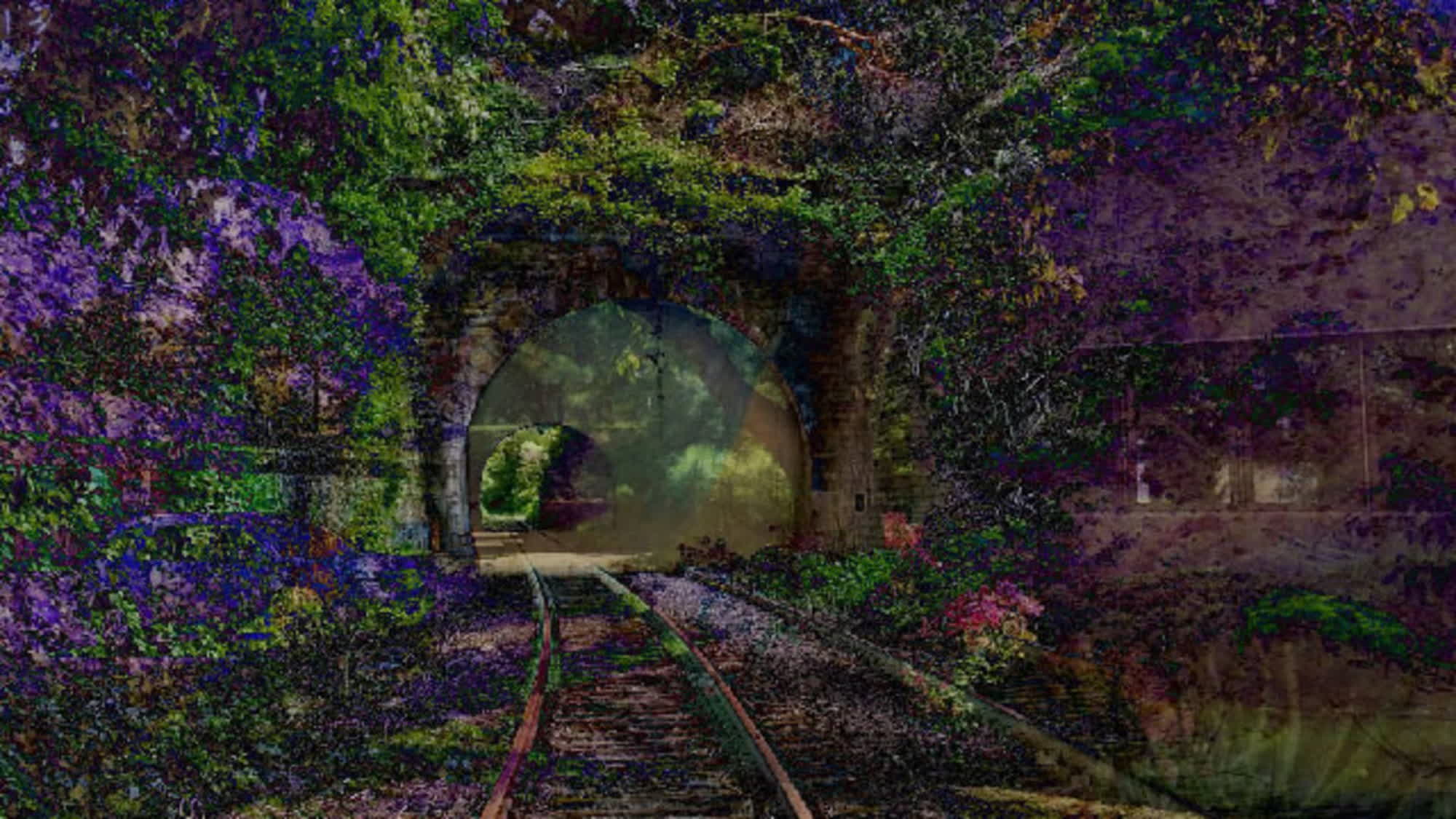
Computer scientist Stephen Thaler has repeatedly tried to turn an AI-generated image into copyrightable material, but the US Supreme Court has now declined to even hear his arguments. Thaler created the Device for the Autonomous Bootstrapping of Unified Sentience (DABUS) AI system, which was listed as the author of an image full of mangled pixels named "A Recent Entrance to Paradise."

The Missouri-based developer first asked to copyright DABUS' output in 2018, but the US Copyright Office declined his request. Content and art generated by DABUS cannot be considered as worthwhile inventions, because a human creator is still required to be in the loop. The USPTO later updated its guidance on generative-AI initiatives, stating that humans need to make a significant contribution to any invention seeking the protection of the law.

The US Supreme Court had already rejected Thaler's attempt to patent DABUS' alleged original ideas, and is now upholding the previous decision by the USPTO as well. In the 2023 case, the Copyright Office stated that human authorship remains a "bedrock requirement of copyright," while Thaler's lawyers tried to influence the SCOTUS role on the rapid growth of the generative AI business.
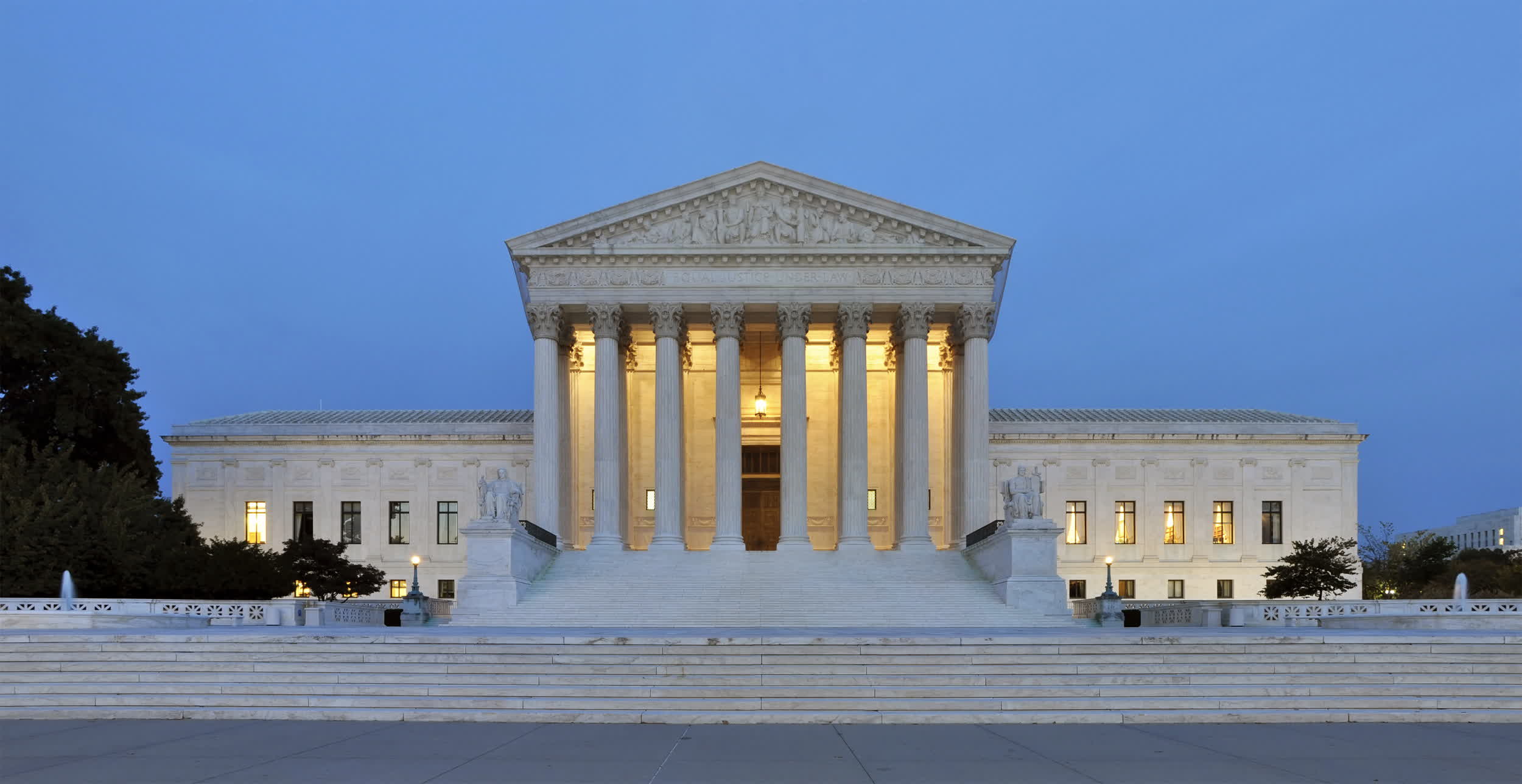
"The Copyright Office will have irreversibly and negatively impacted AI development and use in the creative industry during ⁠critically important years," Thaler's lawyers said after the USPTO rejected the patent application.

Thaler also tried to patent content generated through DABUS in other parts of the world. The UK Supreme Court rejected his application in 2023, stating that patents can only be registered by humans or human-made companies. He received similar responses from courts in the European Union and Australia, while he scored his only victory in South Africa.

The latest SCOTUS refusal might be the last step in DABUS' journey towards copyrightability. Generative AI technology is now inspiring an increasingly heated debate within the creative industry, and AI companies are trying to set a meaningful precedent that would legitimate their commercial endeavors.

DABUS and "traditional" chatbots such as ChatGPT may be two different kinds of AI technology, but the SCOTUS refusal to even hear the case could have lasting consequences for the generative-AI market. The court ultimately aligned with the Donald Trump administration, which asked the Supreme Court not to hear Thaler's arguments.

Permalink to story:

 
Of course the Supreme Court won't do anything as long as they keep looking out for Trump's agenda benefit.

So much for an independent branch of government.
 
Disclaimer: I am no friend of the AI craze.

If someone were to create something artistic / scientific. etc using say, Photoshop, GIMP, or an invention using Word, Excel, or whatever, chances are quite good and it's reasonable to assume it will be copyrighted (having met the criteria).

Why is the same thing not worthy of same protection if it was done using AI??

It seems to many, this SCOTUS is too busy protecting the guy who hired most of them to even think clearly or consider anything else worthy of real protection.
 
Disclaimer: I am no friend of the AI craze.

If someone were to create something artistic / scientific. etc using say, Photoshop, GIMP, or an invention using Word, Excel, or whatever, chances are quite good and it's reasonable to assume it will be copyrighted (having met the criteria).

Why is the same thing not worthy of same protection if it was done using AI??

It seems to many, this SCOTUS is too busy protecting the guy who hired most of them to even think clearly or consider anything else worthy of real protection.

If you make something using AI as a tool to do so, you can get copyright protection on it. What Thaler was trying to argue in the court is that an AI creation that did not have any human input in its creation other than very initial setup could get copyright, which judges at multiple levels have shot down. The key here is that to be copyrighted, there needs to be a human author involved. An AI system, or a monkey, or what have you, by itself can not be assigned copyright.

It should also be noted that the previous judges who ruled against Thaler, Judge Beryl Howell & Judge Patricia Millet (who wrote the opinion for the appeals court that declined Thaler's appeal) are both Obama appointees. So this legal decision is not really a partisan one.
 
Last edited:
Of course the Supreme Court won't do anything as long as they keep looking out for Trump's agenda benefit.

So much for an independent branch of government.
Your Trump Derangement Syndrome is flaring up again.

Opposing AI copyright doesnt benefit Trump in any way.
The Supreme Court is letting the decision of the lower appeals court stand in this case; that decision was written by Judge Patricia Milett, who was originally appointed by President Obama.
Facts dont matter when you have TDS, everything bad is because Orange Man Bad. There is no nuance to anything, its ALL for Cheeto Mussolini.

In reality this decision just makes sense. AI cannot create on its own, it can only infer from data it has been fed. AI is no more elegible for copyright then your monitor is. And the last thing AI companies need right now is the ability to copyright everything their LLMs hallucinate.
 
These silly newcomers are going to need to bring a lot more money and perks to the table if they want to lobby that hard. That's a big ask with an insufficient bribe.
 
It's a confusing topic that should have some level of protection. The AI did develop it, but the user defined the output. Now people can take what AI did from the person who used AI to create it, copy the AI video or audio and then it's legally theirs
 
It's a confusing topic that should have some level of protection. The AI did develop it, but the user defined the output. Now people can take what AI did from the person who used AI to create it, copy the AI video or audio and then it's legally theirs
In this case, Thaler was trying to argue in court that the AI created the work, not him, and the AI model should have authorship/be assigned the copyright. The courts said no, copyright requires a human author. Now, if he himself had claimed copyright of the image produced, with the system being a tool he used to produce it, well that had a good chance of having gaining a copyright on the image, but that is not what the specifics of this case were centered around.
 
Modify a single pixel then claim it as a personal work and copyright it along with the descriptive text that generated the image.
 
It's a confusing topic that should have some level of protection. The AI did develop it, but the user defined the output.
A standard already exists. To be copyrightable, a work must contain "sufficient, independent, and creative human" authorship. AI can assist in the process, but there's a certain level of human input required. For instance, a prompt telling Google's Nano Banana to "draw a pretty forest landscape" doesn't quality, no matter how beautiful the resultant image is. But if you gave it a lengthy, highly specific prompt, and worked through multiple iterations to tune it precisely, it likely would.
 
If we were to enforce copyright on AI outputs, approximately 90% of the rights would likely belong to the copyright holders of the training dataset. Roughly 9% could be allocated to those who provided and paid for the hardware used in training and 1% might go to those who designed the model's architecture. Nothing (0%) would go to the user who provided the prompt, as copyright pertains to creative expression, not ideas. For example, if you instructed Mozart with a prompt to 'write a sad song in D minor at 120 bpm for orchestra,' Mozart would hold the copyright because he made the creative decisions, not you.

Given that AI outputs typically have null copyright and are in the public domain, users gain full, unrestricted control over them via the fundamental right to free access to the information. Yet, they still complain. They can use these outputs as free materials for their own creations, as educational content, or engage in conversations with the model, which never tires of questions. What more could they possibly want?
 
Back