Bottom line: The US electric grid added more energy storage capacity in 2025 than in any previous year on record, achieving the milestone during a politically turbulent period for renewable energy development. Despite federal policy uncertainty surrounding clean energy, grid-scale battery installations increased by nearly one-third, according to the latest data from the Solar Energy Industries Association.
The US added 57 gigawatt-hours (GWh) of battery storage capacity to its electric grid last year – enough to supply the annual electricity needs of roughly five million homes. The SEIA report projects an additional 21 percent increase by the end of 2026, representing about 70 GWh of new capacity in a single year.
Less than a decade ago, the national total was barely half a gigawatt-hour. The rapid growth marks a technological inflection point: batteries are no longer merely supporting components of renewable projects but are becoming a central element in how utilities plan for rising electricity demand.
The expansion of energy storage has occurred alongside a broader reduction in clean-energy incentives following the passage of the One Big Beautiful Bill, which eliminated many tax credits for solar and wind generation. However, battery-related incentives largely remained intact, helping shield manufacturers and utilities from the disruption that affected other renewable sectors.
This resilience has been particularly visible in states not typically associated with environmental policy leadership. For example, Texas saw solar generation meet more than 15 percent of total electricity demand during the hottest summer months, surpassing coal generation for the first time. The SEIA study also projects that Texas will surpass California in deployed storage capacity this year.
Energy strategist Jigar Shah attributes part of this growth to the state's independent electricity market, operated through the Electric Reliability Council of Texas (ERCOT), which allows market signals to guide infrastructure investment. In his view, deregulation unexpectedly helped accelerate decarbonization.
"Texas basically says, 'I don't care about your cultural bias,' … 'These are the market signals,'" he told Wired. "You guys do what you want to do. If you want to build new coal plants, great. If you want to build batteries, great.'" He notes that "it happened to be that batteries were most incentivized."
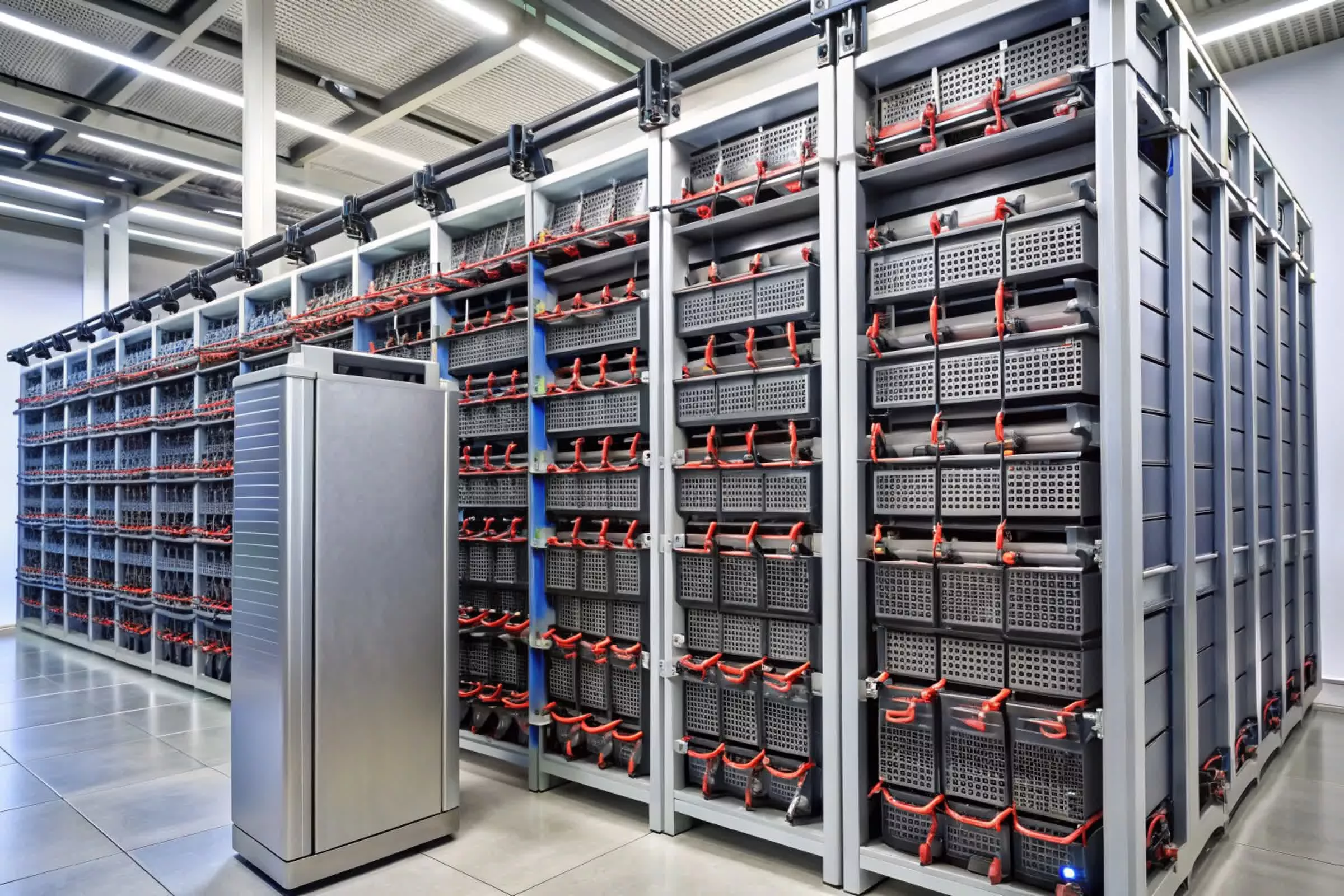
At a technical level, modern batteries – primarily lithium-ion, though long-duration chemistries are emerging in pilot testing – function as temporal buffers for electric grids. They allow operators to store excess power during periods of low demand and discharge it during peak usage, helping solve one of the most challenging physics constraints in renewable energy systems: maintaining real-time load balance without wasting generation capacity.
On average, US electricity grids currently operate at roughly 50 percent of installed generating capacity, maintaining large reserves to meet demand spikes that occur only a few hundred hours per year. Deploying distributed battery storage, both at utility scale and along local distribution feeders, enables operators to smooth demand fluctuations – an engineering optimization that produces significant economic benefits.
This distributed storage model has encouraged the growth of standalone battery installations that operate independently of solar or wind generation facilities. These systems are often located near substations or industrial clusters where electricity demand varies sharply, giving utilities greater operational flexibility without requiring major transmission upgrades.
Another sector driving storage expansion is digital infrastructure. As hyperscale data centers proliferate, their enormous electricity consumption has placed additional pressure on regional power grids. Increasingly, these facilities are deploying "behind-the-meter" battery systems – independent energy assets that are not directly connected to grid transmission operations.
Such systems can provide instantaneous backup power and reduce dependence on slow, costly grid interconnection projects. While fossil fuel generation still supplies a portion of their energy needs, battery storage offers a faster transitional solution until large-scale renewable generation capacity expands.
Despite its momentum, the battery sector faces several challenges. Supply chain restrictions associated with the One Big Beautiful Bill limit imports from China, Russia, Iran, and North Korea. Because Chinese manufacturers dominate global battery production, these restrictions could constrain access to critical materials and slow project deployment.
SEIA has warned that project cancellations could increase in 2026 as developers adjust to reduced solar incentives. Policy uncertainty has also affected market stability, as shifting government positions on natural gas and renewable energy have contributed to volatility in several clean technology sectors.
Nevertheless, some analysts remain cautiously optimistic. Shah argues that as electricity affordability becomes a politically important issue, policymakers are increasingly recognizing the stabilizing role of energy storage.
US grid battery storage hits record, even as clean energy incentives are rolled back


