US surgeons complete first-ever heart transplant using robotics

Skye Jacobs

Posts: 1,921   +58
Staff
What just happened? Surgeons at Baylor St. Luke's Medical Center in Houston have performed the nation's first fully robotic heart transplant, a milestone in American medicine. Completed in March, the procedure marks a significant leap in robotic cardiac surgery and offers new hope for patients with advanced heart failure.
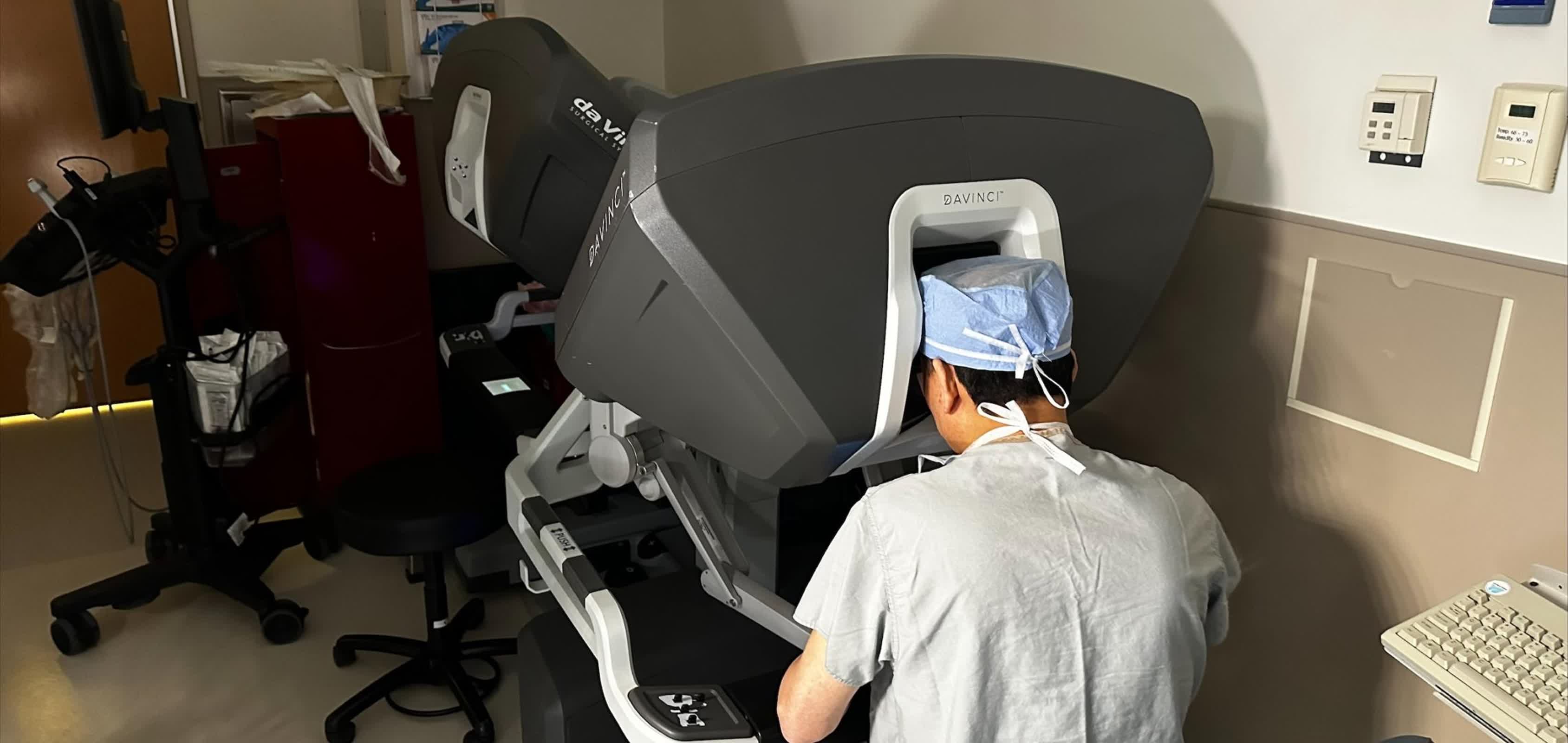
The patient, a 45-year-old man hospitalized for months with severe heart failure, became the first in the United States to receive a heart transplant using a minimally invasive, robot-assisted technique. Unlike traditional transplants that require splitting the breastbone to open the chest, this procedure uses a sophisticated surgical robot to make a series of small, precise incisions. Through these openings, the team removed the failing heart and implanted the donor organ while preserving the patient's chest wall.

Dr. Kenneth Liao, the lead surgeon and a pioneer in robotic cardiac procedures, explained the benefits of avoiding a large chest incision. By minimizing surgical trauma, the robotic approach speeds wound healing and recovery, which is especially important for patients on immunosuppressants. It also lowers the risk of infection and helps patients regain mobility and respiratory function more quickly.
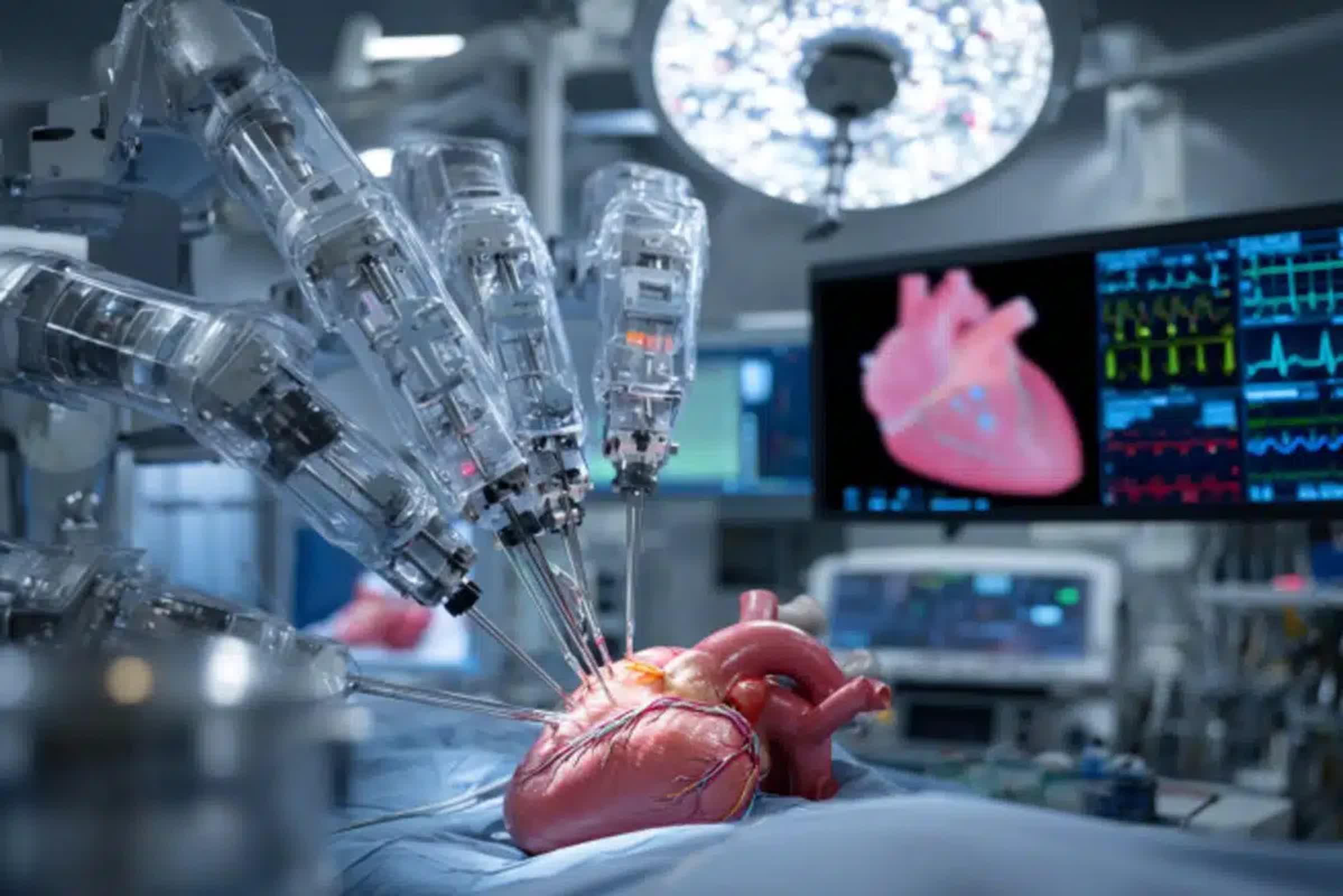
The breakthrough stems from the robotic system's precision and flexibility. Controlled from a console, its articulated arms move in ways human hands cannot, enabling delicate dissection and suturing in tight spaces.

During the transplant, surgeons accessed the heart through the preperitoneal space, avoiding the need to cut through bone. The approach reduces pain, blood loss, and the need for transfusions - an essential benefit for transplant patients who must carefully manage their immune response.

For the patient, the results were dramatic. He spent about a month recovering in the hospital before his doctors discharged him without complications.

Hospital leaders and medical staff hailed the operation as a milestone that could transform heart transplantation. Experts say wider adoption of robotic systems could offer more patients less invasive surgeries, faster recoveries, and fewer complications. Dr. Todd Rosengart, chair of Baylor's Michael E. DeBakey Department of Surgery, called the procedure "a giant step forward" in making even the most challenging surgeries safer.

Image credit: Neuroscience News

Permalink to story:

 
With all the scientific advances in technology and medicine you would think that the prices for such procedures and treatments would be declining and they'd be more accessible.

Unfortunately there are middle men with their hands out trying to keep that from happening.
 
You wonder how they control it. If the articulated arms move in ways human hands cannot then it's not just a question of copying a remote surgeons hand movements. It would be great if this sort of thing could reduce risk and cost of surgery plus allow specialist surgeons to operate anywhere in the world without them having to be there. Maybe not even needing a surgeon in future but sadly this is happening in the US so it will be just for the rich and very well insured.
 
With all the scientific advances in technology and medicine you would think that the prices for such procedures and treatments would be declining and they'd be more accessible.

Unfortunately there are middle men with their hands out trying to keep that from happening.
Well - two factors there:
1. Developing these breakthrougs costs billions of dollars in research - That applies for medicines and medical equipment. That's why initially it's super expensive, but the price goes down as mass production hits a certain level. At least that is the case in Europe
2. Given how healthcare is handled in the US - Prices are artifically high so both insurance companies and hospitals can make big money. This isn't a huge problem as long as you're properly insured, but it drives up the prices of both insurance and any procedure at a hospital. Big pharma is a part of this as well of course, which is why a typical standard pill costs up to 500% more than in Canada.

If you're covered by insurance - all is good, it's all the people that cannot afford full coverage that is forced into bankruptcy when they get something not on the list from their insurance company.
The European health care system isn't perfect, but at least you get covered no matter what ails you. Cues are longer - but you do get proper treathment
 
Well - two factors there:
1. Developing these breakthrougs costs billions of dollars in research - That applies for medicines and medical equipment. That's why initially it's super expensive, but the price goes down as mass production hits a certain level. At least that is the case in Europe
2. Given how healthcare is handled in the US - Prices are artifically high so both insurance companies and hospitals can make big money. This isn't a huge problem as long as you're properly insured, but it drives up the prices of both insurance and any procedure at a hospital. Big pharma is a part of this as well of course, which is why a typical standard pill costs up to 500% more than in Canada.

If you're covered by insurance - all is good, it's all the people that cannot afford full coverage that is forced into bankruptcy when they get something not on the list from their insurance company.
The European health care system isn't perfect, but at least you get covered no matter what ails you. Cues are longer - but you do get proper treathment


When you're burning your money on the military industrial complex funding wars in foreign countries, you suddenly have a whole lot less money for healthcare. Injure yourself in Europe or China and visit a hospital. Cost me way less than an injury here in America.
 
Last edited:
When you're burning your money on the military industrial complex funding wars in foreign countries, you suddenly have a whole lot let money for healthcare. Injure yourself in Europe and or China and visit a hospital. Cost me way less than an injury here in America.
One thing is certain - I don't think the US has ever lost money on a war. There's a reason there was more oil export than ever during the Afghanistan period and more oil refineries built than the 20 years before it. Someone always makes money on war - sad but true
 
Cues are longer - but you do get proper treatment
I heard horror stories about that.
Which I think varies based on a location.
But something tells me that is the ordinary folk that take the worst of this system, while being almost sole supporters of it.
And one specific thing that makes me uneasy about it is equal access, including for people whose contribution included getting in a boat and taking a trip to one of these countries. Why do they get to have the same privileges as those who make this system possible? It should be them, they should wait in longer lines, experience other shortcomings and trade offs. Them and the poor of course. Meanwhile, from what I heard, these people sometimes get preferential treatment which considering the state of modern liberalism does not surprise me.
It is not fair, it is not right. And I see how this becomes a political tool which is paid by everybody, including those who are not ok with the politics financed by their medical system.
There is no worse anticommercial than this: why don't you pay for this improved medical system which we, kind and generous people, will share with whomever we like for our gain and power.
I cannot believe I am the only person who sees their system deeply flawed for this and other similar reasons.
 
I heard horror stories about that.
Which I think varies based on a location.
But something tells me that is the ordinary folk that take the worst of this system, while being almost sole supporters of it.
And one specific thing that makes me uneasy about it is equal access, including for people whose contribution included getting in a boat and taking a trip to one of these countries. Why do they get to have the same privileges as those who make this system possible? It should be them, they should wait in longer lines, experience other shortcomings and trade offs. Them and the poor of course. Meanwhile, from what I heard, these people sometimes get preferential treatment which considering the state of modern liberalism does not surprise me.
It is not fair, it is not right. And I see how this becomes a political tool which is paid by everybody, including those who are not ok with the politics financed by their medical system.
There is no worse anticommercial than this: why don't you pay for this improved medical system which we, kind and generous people, will share with whomever we like for our gain and power.
I cannot believe I am the only person who sees their system deeply flawed for this and other similar reasons.
What you say isn’t accurate. You can’t travel to European countries for treatment unless your own country pays for it. You’ll get emergency treatment if you need it through your travel insurance - but that’s it. There are some treatments we do not offer in my country, so our government sponsors treatment in facilites abroad, but it requires special approval.
No horror stories in my country at least - you get excellent treatment by professionals and follow up as long as you need it. Non-critical surgeries will have up to 3 months of ques (cosmetic mostly) - and it’s free. Critical surgeries will always be done quickly.
You don’t pay for chemo or anything like that either.
Everyone gets things like Insulin as well - you pay up to 300 dollars a year, then you get a «free card», which means all further treatments and perscriptions are free for the remainder of the year.
As I said, not perfect - but you won’t die because you can’t afford treatment here.
 
Last edited:
There is no worse anticommercial than this: why don't you pay for this improved medical system which we, kind and generous people, will share with whomever we like for our gain and power.

Because, and I quote: "Socialism is bad"
 
When you're burning your money on the military industrial complex funding wars in foreign countries, you suddenly have a whole lot less money for healthcare. Injure yourself in Europe or China and visit a hospital. Cost me way less than an injury here in America.
But I guess the Yanks don't have much choice, other than to spend big bucks on defence, when the likes of the Chinese/North Koreans/Russians/ Iranians /Houthis et al have you in their sights.
 
What you say isn’t accurate. You can’t travel to European countries for treatment unless your own country pays for it. You’ll get emergency treatment if you need it through your travel insurance - but that’s it. There are some treatments we do not offer in my country, so our government sponsors treatment in facilites abroad, but it requires special approval.
No horror stories in my country at least - you get excellent treatment by professionals and follow up as long as you need it. Non-critical surgeries will have up to 3 months of ques (cosmetic mostly) - and it’s free. Critical surgeries will always be done quickly.
You don’t pay for chemo or anything like that either.
Everyone gets things like Insulin as well - you pay up to 300 dollars a year, then you get a «free card», which means all further treatments and perscriptions are free for the remainder of the year.
As I said, not perfect - but you won’t die because you can’t afford treatment here.
You did not address my argument though. How many people does a person who pays for this system "must" share with? That is not a static small issue. It is a growing elephant which people on the left do not even treat like an issue but as a blessing: everybody who needs free medical treatment come, we got enough for all. Generosity that comes from resources that you did not acquire is not generosity. But then, consciously encouraging people to come and take from it as they please, gives it even more questionable meaning.
I do not even argue that it has some killer features that put USA's medical system to shame. I am arguing about the world in which someone can knock to your door and say, here I am, feed me and cherish me, and one of your family members would say: we must take care of this fella. You, Sam, share your room with this whatever his name is.
In such world, giving things free is not a very smart idea. In such world, the rules of receiving free stuff should be 3 times stricter, not unlocked in a kiosk for anyone to take as many as they like.
 
With all the scientific advances in technology and medicine you would think that the prices for such procedures and treatments would be declining and they'd be more accessible.

Unfortunately there are middle men with their hands out trying to keep that from happening.
The largest driver is government regulation. When I did a project in the this area, the cost was 100 times greater to my client, than it would have been sans bureaucrats. I couldn't see where the regulation provided either safety or efficacy.
 
The largest driver is government regulation. When I did a project in the this area, the cost was 100 times greater to my client, than it would have been sans bureaucrats. I couldn't see where the regulation provided either safety or efficacy.
that's exactly who I mean when I said "middle men".
 
Back