USPS rolls out EVs and charging infrastructure as part of $40 billion modernization plan

Skye Jacobs

Posts: 2,002   +58
Staff
The big picture: The US Postal Service operates the government's largest fleet of vehicles so it's no surprise that under the Biden Administration, it's moving toward an all-electric fleet. However, reaching this point wasn't an easy task for Postmaster General Louis DeJoy, who initially struggled to justify the cost of switching to EVs.
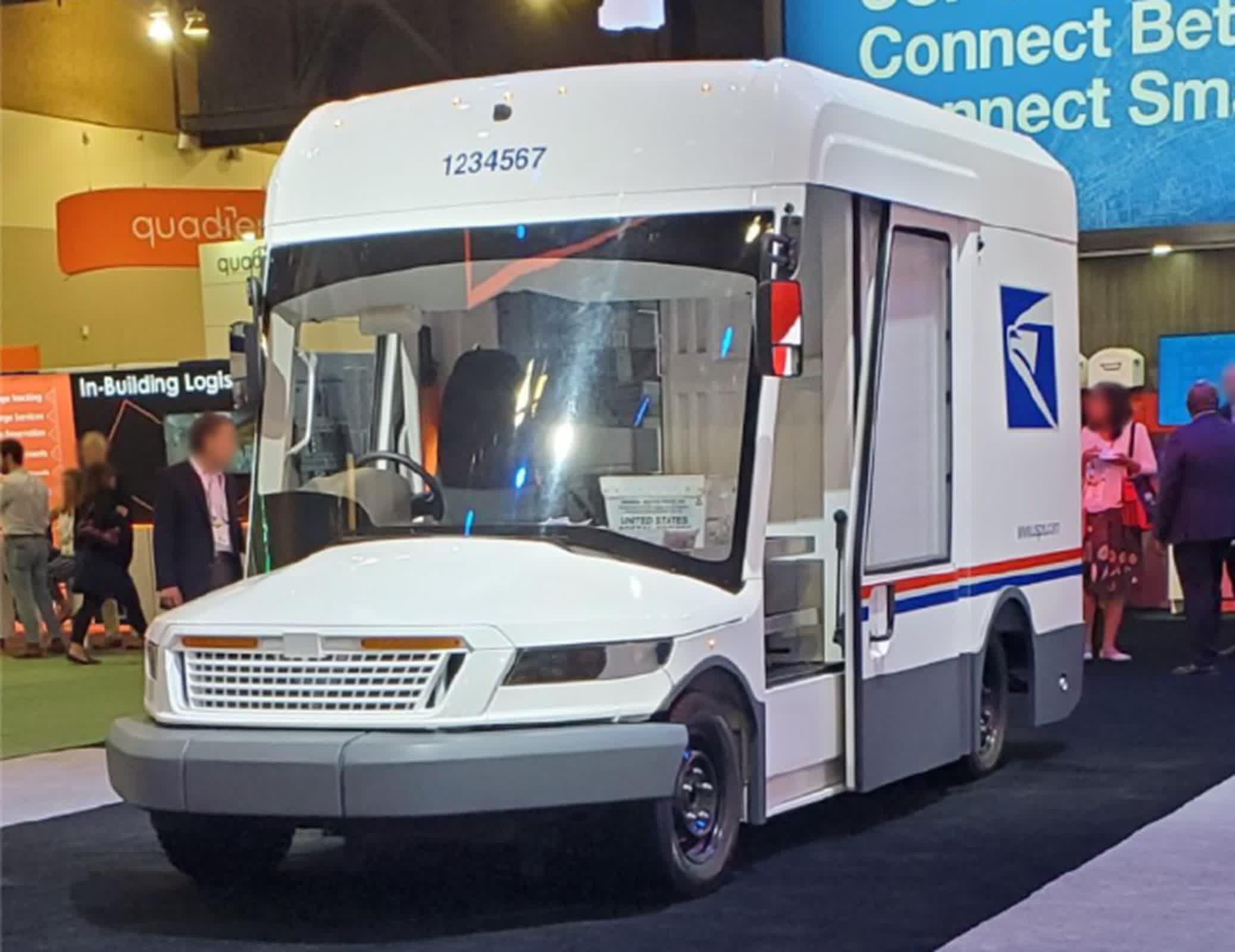
The first Postal Service EVs are hitting the streets, much to the delight of postal workers tired of the current fleet of trucks, some of which are over 30 years old. Their complaints are understandable: their vehicles lack modern safety features, often catch fire, don't have sufficient cargo capacity, and, perhaps worst of all, are not equipped with air conditioning.

The new mail trucks are part of a 10-year, $40 billion transformation led by Postmaster General Louis DeJoy. This initiative also includes renovating aging facilities and overhauling the processing and transportation network.

The vans have all the amenities the old fleet lacked, plus one more critical feature: they are electric. This marks a significant development for the Postal Service, which initially found the cost of converting to electric vehicles too steep for its already overburdened budget.

However, USPS now plans to procure a total of 21,000 commercial off-the-shelf EVs and add at least 45,000 battery-electric Next Generation Delivery Vehicles by 2028, bringing the total number of EVs in the delivery fleet to more than 66,000. The new trucks are being built by Oshkosh Defense in South Carolina.

In addition, hundreds of new sorting and delivery centers across the country will be equipped with charging stations, powering what is set to become the nation's largest EV fleet. USPS has partnered with Siemens, Rexel/ChargePoint, and Blink to manufacture its first 14,000 EV chargers. These stations will be capable of charging Postal Service EVs overnight, ensuring they are ready for the next day's deliveries.

DeJoy initially proposed that 90 percent of the next-generation vehicles in the first wave would be gas-powered, sparking outrage among environmentalists, who eventually filed lawsuits demanding the Postal Service electrify its fleet.

"Everybody went nuts," DeJoy told The Associated Press.

The primary issue was the high cost of the vehicles and the expense of installing thousands of charging stations. However, after a meeting with John Podesta, the Biden Administration's lead environmental adviser, DeJoy struck a deal in which the government provided $3 billion to the Postal Service, partially for the installation of electric charging stations.

Finally, in December 2022, DeJoy was able to announce that the Postal Service was buying 106,000 vehicles, including 60,000 next-generation vans – 45,000 of which would be electric models – along with 21,000 other EVs. He also pledged that starting in 2026, all new vehicle purchases would be electric.

Now, the agency expects to reduce carbon emissions by 40 percent by 2030. This summer, the Postal Service also received a Presidential Federal Sustainability Award, capping off what DeJoy called "an interesting journey."

Permalink to story:

 
I'm all for the USPS for getting new equipment, I've seen some of their delivery trucks at the side of the road, broken down in the past years. I also see how some of them are so packed to the gills (thanks to Amazon dumping a lot of their packages on them) that the driver barely has a spot to sit.

Newer and bigger would certainly be awesome for them. Bigger comes with a cost - some post offices are limited on space and getting bigger vehicles might not allow them to fit them all into their parking area. What happens now? Does the postal office rent out space somewhere else to store extra vehicles that don't fit on their property? Does the post office try to expand their parking area? These things would cost them more money.

You now have to ask the question; will the electrical grid be up for the demand that these new EV and charging stations are installed at? Strain on the electrical grid impacts everyone in the area, not just the post office.

What I would really like to see is the cost of of these vehicles and the cost of replacing the battery and cost of general maintenance. I would also like to see the estimated life expectancy of the battery. Then I would like to be able to see the cost of a new gas powered vehicle and the current maintenance cost of said gas powered vehicles.....I'm actually curious which way would be more cost effective because in the end it will impact consumers.

Will insurance prices go up for the USPS locations that shift to EV over gas?
Will there be proper safety taken into consideration for EV fires (considering they burn upwards of 3500 degrees hotter than gas vehicles)?

I have lots of questions and most people will probably be like; they pay someone to do this, think of these issues and ask questions. That's just not cutting it for me. We've seen how things have played out for other companies/institutes when it comes to EV (look at Hertz). I'd hate to see this be a complete waste of everyone's time and money because of some "clean" agenda pushed by the Biden administration.
 
My local postal deliverer’s mail truck has a gigantic sticker inside that essentially says “DO NOT USE REVERSE IF POSSIBLE” because of how unreliable the old generation of mail trucks is getting. The article isn’t exaggerating at the mail truck fires; they aren’t all that common, of course, but they do exist and are representative of how badly the US has treated its postal service during the last ~20 years.
 
Fine, they need new vehicles. But maybe they should prioritize actually delivering mail in a timely manner, to the correct address.
 
I'm all for the USPS for getting new equipment, I've seen some of their delivery trucks at the side of the road, broken down in the past years. I also see how some of them are so packed to the gills (thanks to Amazon dumping a lot of their packages on them) that the driver barely has a spot to sit.

Newer and bigger would certainly be awesome for them. Bigger comes with a cost - some post offices are limited on space and getting bigger vehicles might not allow them to fit them all into their parking area. What happens now? Does the postal office rent out space somewhere else to store extra vehicles that don't fit on their property? Does the post office try to expand their parking area? These things would cost them more money.

You now have to ask the question; will the electrical grid be up for the demand that these new EV and charging stations are installed at? Strain on the electrical grid impacts everyone in the area, not just the post office.

What I would really like to see is the cost of of these vehicles and the cost of replacing the battery and cost of general maintenance. I would also like to see the estimated life expectancy of the battery. Then I would like to be able to see the cost of a new gas powered vehicle and the current maintenance cost of said gas powered vehicles.....I'm actually curious which way would be more cost effective because in the end it will impact consumers.

Will insurance prices go up for the USPS locations that shift to EV over gas?
Will there be proper safety taken into consideration for EV fires (considering they burn upwards of 3500 degrees hotter than gas vehicles)?

I have lots of questions and most people will probably be like; they pay someone to do this, think of these issues and ask questions. That's just not cutting it for me. We've seen how things have played out for other companies/institutes when it comes to EV (look at Hertz). I'd hate to see this be a complete waste of everyone's time and money because of some "clean" agenda pushed by the Biden administration.

Great post! Very well thought out and details good and bad of options.
 
Its one of the best applications of electrification, for delivery routes stopping/going all day - But maaannn the thing is so hideously ugly! Its like BMW.. "We're making an EV, so it has to be as fugly as possible!"
While I agree, it's fugly as all hell, it's a mail truck, who cares!
 
Back