Valve insists the Steam Machine outperforms 70% of gaming PCs despite 8GB GPU

midian182

Posts: 11,730   +177
Staff member
In context: Since it was announced last week, there's been some concern among gamers that Valve's new Steam Machine might disappoint when it comes to raw power. With an 8GB RDNA 3 GPU and performance expected to be close to the RX 7600, it doesn't exactly sound like a PC powerhouse on paper. However, Valve claims the Steam Machine is equal to or better than 70% of current gaming PCs.
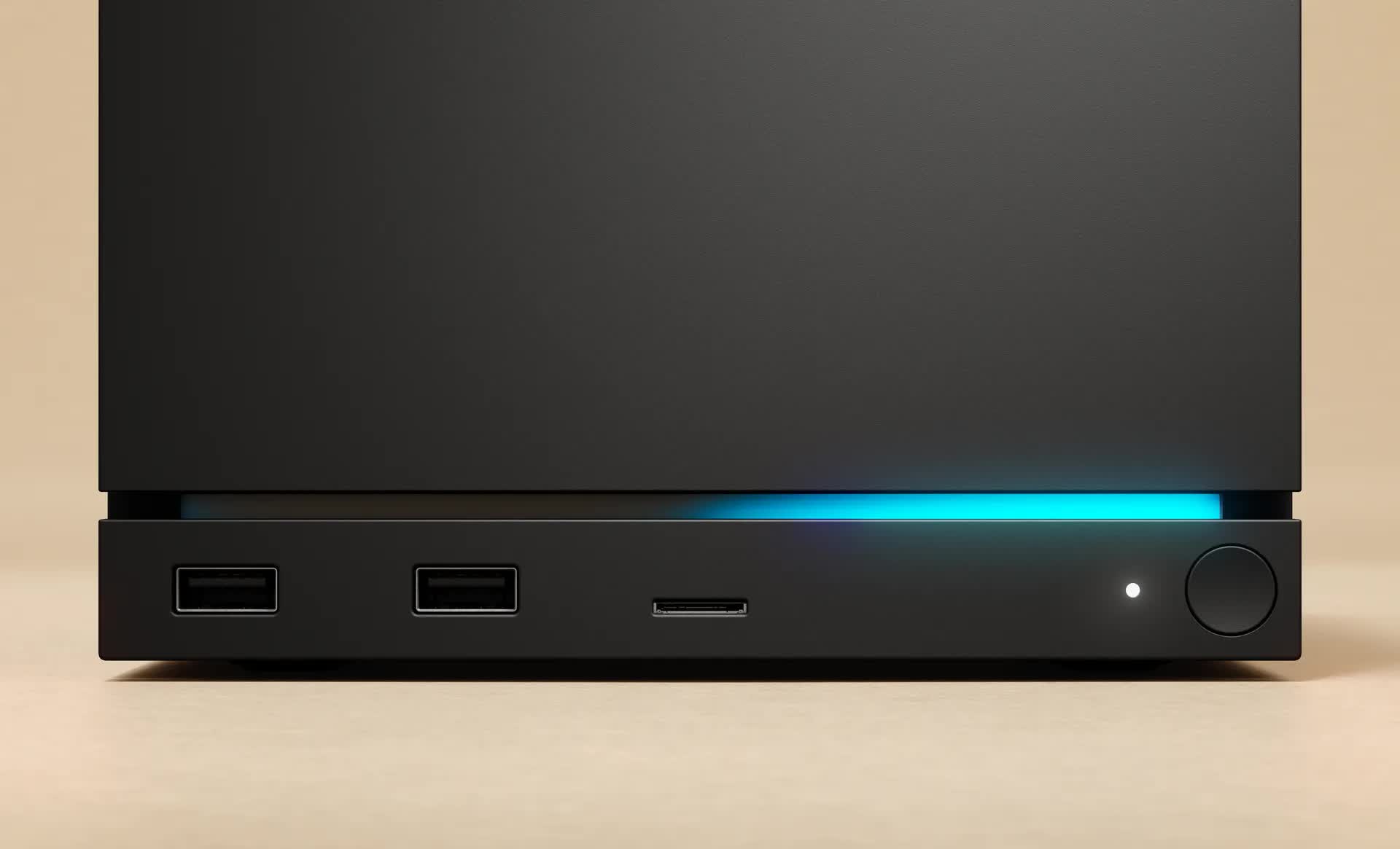
Valve's announcement of the all-new Steam Machine, Steam Controller 2, and Frame VR generated a lot of excitement, but it's fair to say that an 8GB GPU in 2026 (the launch window) raised a few eyebrows.

Speaking on Adam Savage's Tested podcast, Valve engineer Yazan Aldehayyat said the Steam Machine will have enough performance to play all games on the platform – as one would hope.

Aldehayyat stressed that selling the Steam Machine at a competitive price point was a major factor in what hardware was chosen. The device is meant to be more of a console competitor than a high-end gaming PC, so the starting price could be around $500 to $600.

Interestingly, Aldehayyat revealed that Valve looked at the Steam Hardware survey for a benchmark of the average gaming PC's performance. "The Steam Machine is equal or better than 70% of what people have at home," the engineer said.

Looking at the latest Steam survey results, it's hard to argue with Aldehayyat's claims. The most common amount of VRAM in users' GPUs is 8GB, found in 33.4% of participants' machines, while 67% of users have 8GB of VRAM or less – this could be what Aldehayyat is basing his "better than 70%" statistic on.

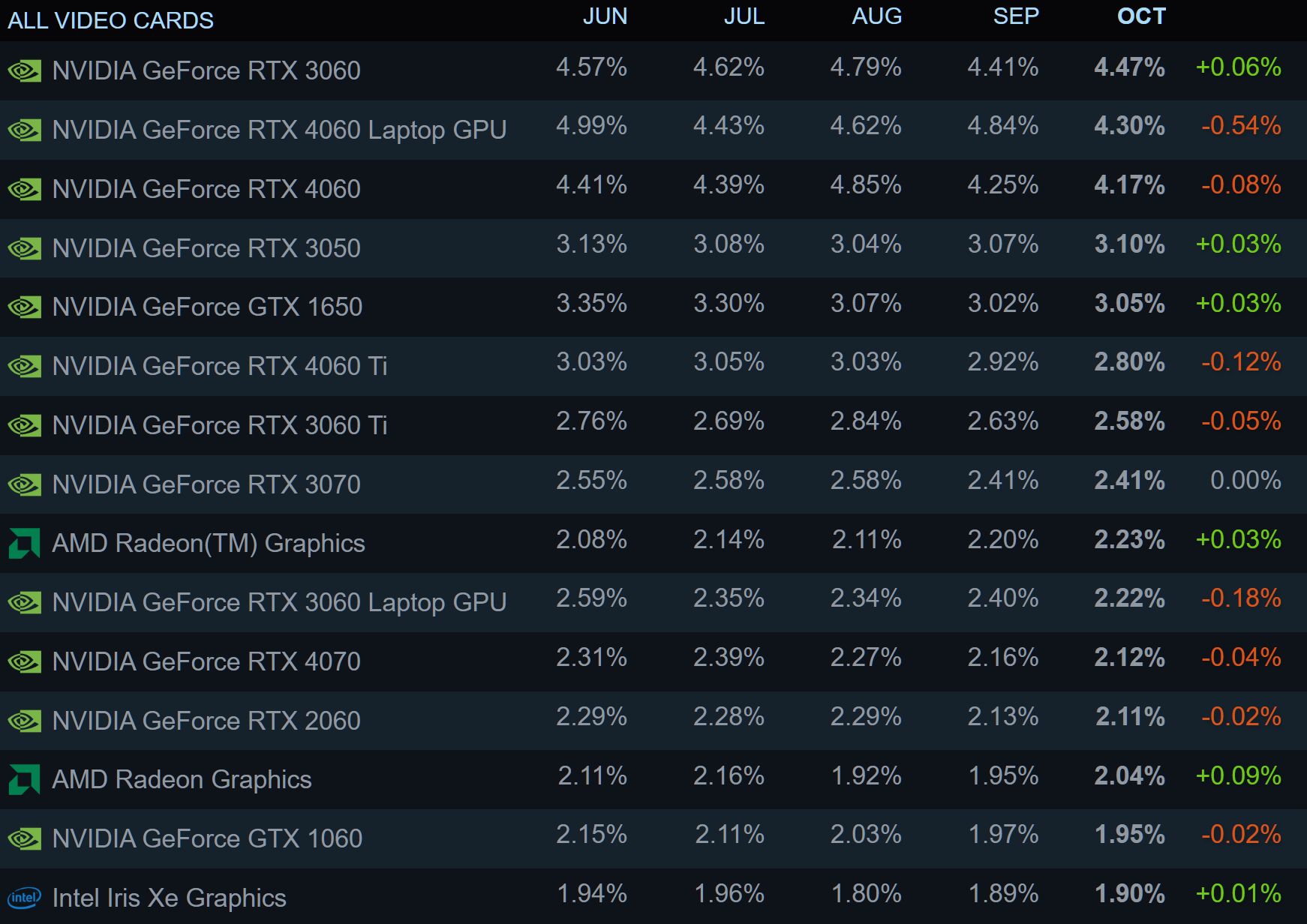
When it comes to the GPU chart, the RTX 3060, which is comparable to the RX 7600 in many games, is the most popular card. The top 20 is made up of many mid-range and almost potato-like cards, including the GTX 1650 in fifth and the GTX 1060 in 14th place.
The semi-custom AMD RDNA 3 GPU in the Steam Machine features 28 CUs, a 2.45GHz sustained clock, and 110W TDP. It's paired with a semi-custom Zen 4 CPU with 6 cores/12 threads, a boost clock of 4.8GHz, and a 30W TDP.

Valve promises that the mini-PC will be able to run games at 4K at 60fps, though the caveat is that this will require the use of AMD's FSR upscaling tech.

Permalink to story:

 
While I agree that 8GB appears too little, there are some reason behind their decision.

First is cost. Memory prices are sky high right now, so they probably had to make with only 8GB to reach their target price. If they include 12 or 16GB, the public will react negatively to a higher price, so they found themselves between a rock and a hard place.

Second is performance in the real world. If you look at the Steam Deck at launch, a lot of people would think it was took weak, but suddenly it started to play games like Cyberpunk 2077 and the initial perception ended being wrong. Competitors with much higher specs (and price) didn't jump too far ahead in benchmarks.

Third, there is a bit of a pushback against the direction AAA gaming is right now. Hardware requirements are not increasing at the same rate as graphical fidelity. We are reaching a plateau were it is increasingly difficult to make games looks nicer, so costs and hardware requirements are getting higher but games are not making significant jumps in graphics as they did in the 90's and 2000's. The result is people are not buying AAA games with the same gusto as before, and people are playing more and more their old game library and/or engaging in multiplayer games with low level of requirements.

At the end of the day, if Valve manages to sell the Steam Machine cheap enough, people will not complain too much about its hardware.
 
While I agree that 8GB appears too little, there are some reason behind their decision.

First is cost. Memory prices are sky high right now, so they probably had to make with only 8GB to reach their target price. If they include 12 or 16GB, the public will react negatively to a higher price, so they found themselves between a rock and a hard place.

Second is performance in the real world. If you look at the Steam Deck at launch, a lot of people would think it was took weak, but suddenly it started to play games like Cyberpunk 2077 and the initial perception ended being wrong. Competitors with much higher specs (and price) didn't jump too far ahead in benchmarks.

Third, there is a bit of a pushback against the direction AAA gaming is right now. Hardware requirements are not increasing at the same rate as graphical fidelity. We are reaching a plateau were it is increasingly difficult to make games looks nicer, so costs and hardware requirements are getting higher but games are not making significant jumps in graphics as they did in the 90's and 2000's. The result is people are not buying AAA games with the same gusto as before, and people are playing more and more their old game library and/or engaging in multiplayer games with low level of requirements.

At the end of the day, if Valve manages to sell the Steam Machine cheap enough, people will not complain too much about its hardware.
Upvote for the content, and for the coherent, eloquent and non-AI post ;)
 
While I agree that 8GB appears too little, there are some reason behind their decision.

First is cost. Memory prices are sky high right now, so they probably had to make with only 8GB to reach their target price. If they include 12 or 16GB, the public will react negatively to a higher price, so they found themselves between a rock and a hard place.

Second is performance in the real world. If you look at the Steam Deck at launch, a lot of people would think it was took weak, but suddenly it started to play games like Cyberpunk 2077 and the initial perception ended being wrong. Competitors with much higher specs (and price) didn't jump too far ahead in benchmarks.

Third, there is a bit of a pushback against the direction AAA gaming is right now. Hardware requirements are not increasing at the same rate as graphical fidelity. We are reaching a plateau were it is increasingly difficult to make games looks nicer, so costs and hardware requirements are getting higher but games are not making significant jumps in graphics as they did in the 90's and 2000's. The result is people are not buying AAA games with the same gusto as before, and people are playing more and more their old game library and/or engaging in multiplayer games with low level of requirements.

At the end of the day, if Valve manages to sell the Steam Machine cheap enough, people will not complain too much about its hardware.

Great post, as a tech enthusiast community it's easy to forget that most people want a simple solution that doesn't break the bank, where many of us here care more to get higher performing products. An abundance powerful graphics cards has made game dev companies lazy, the industry is rife with poor optimisation and like you say increasing hardware requirements without graphical payoff - devs use 'better graphics' as the selling point often neglecting what actually makes games enjoyable. Often it's restrictive hardware that fuels innovation, many games have a 'steam deck' preset for graphics now which is a nice inclusion, and I'm sure that the Steam Machine will get something similar.
 
Personally I would have preferred to see 32 GB RAM and 16 GB graphics memory as a way to future proof the machine so to say.
However, in the current config it probably works fine as is.
Also, maybe Valve doesn't want to future proof it but prefers to sell new editions of the thing in future times - I cannot really fault them for such a business decision.
These are strange times. As I will likely swap Windows for MacOS soon (thanks, Microsoft) the Steam machine might become a valid proposition for me eventually - had someone told me this a year ago I would have laughed in his face.
 
I just hope there is something else we are not seeing, because the spec as is doesnt make any sense. Going semicustom but no soc is very strange and counterintuitive for the bill of materiales and economy of costs, but if they build an interchangeable GPU over something like an MXM module with upgrade options, that would make sense, also if the processor can be upgraded could be a big plus (6 zen4 cores seems a bit small, and could be a stupid hawk point 2, where there are only 2 high performance cores and 4 high density ones). So if its upgradeable, may be cool, but if everything is soldered on a board, is just a peace of uninteresting tech, not better nor faster than a 5 year old PS5, barely better than buying a scrap AMD BC250 all embedded for bargain bin price.
 
Given that most gamers are using Steam, I think Valve should have data to back up their claims. Personally, I do think that most people are gaming on laptops with 8GB VRAM (thanks to Nvidia that’s been artificially limiting their mid and low end GPUs to 8GB) so it is possible that a desktop class GPU is better if not similar in performance.
 
While I agree that 8GB appears too little, there are some reason behind their decision.

First is cost. Memory prices are sky high right now, so they probably had to make with only 8GB to reach their target price. If they include 12 or 16GB, the public will react negatively to a higher price, so they found themselves between a rock and a hard place.

The didn't start engineering the Steam Machine when RAM started to get expensive. They started this project much farther back well before RAM looked like it was going to increase in cost.

According to LTT Valve isn't pricing the Steam Machine at Console prices they are pricing it at PC prices which means more than the price of a PS5 to me. I suspect it will be at or over $700, which is a lot for a computer with such low-level hardware, but of course shrinking a computer down has a significant cost, which is why the price will be so high. Most people who know anything about computers won't realize the cost is mostly for the form factor and not necessarily the hardware.
 
I believe that it's faster than 70% of PCs that play games on Steam, which includes my iGPU laptop, my Mac Mini, as well as my main 9070XT machine. However, I'd only count one of those as a gaming PC, while I bet Valve is counting all three. I find it hard to believe a worse than 7600 GPU is better than 70% of PCs that are built primarily for gaming.
 
FSR-powered 4K/60 is doing a LOT of heavy lifting in that promise. It’s like saying I can run a marathon as long as I’m allowed to take an Uber for the uphill parts.

That said... the specs make sense if Steam Machines are basically trying to be the Honda Civics of gaming PCs. Not flashy, not the fastest thing on the road. But it will take you from point A to point B without much fuss hopefully.
 
Let's be real: 8GB of VRAM is a lot. The reason people are saying it's not enough, is because of games like The Last of Us, Part 1 that unambiguously say so.

Mark my words, when this device is released, these games will be updated to feature a "Steam Machine" preset―similar to what happened with the Steam Deck―and then it suddenly won't be a problem anymore.
 
Last edited:
I believe that the steam cube is about equal or faster than 70% of PCs on steam...

BUT, that's now, not next year when this is launching and the latest gen GPUs are just now reaching MSRP, so that will not be true by Spring.

Anyone getting a 5060 / 9060 or better for themselves or for Christmas will be above the cube. I.e., ANY current gen card is better than this.

Honestly, a 12 GB 9060 based cube launching after the next gen cards are out (for cost savings) would be a significantly better product.

However, I believe the steam cube is targeting steam deck performance for mainstream TVs (smaller 4K). Their 6X performance claims back this up as 4K is 4X 1080p and 8X 800p (common deck setting). So 6X gets you the increasingly established "steam deck settings" scaled up to TV levels. Totally fine for some but pretty disappointing for anyone reading TechSpot.
 
Sensible. If someone wants a top-of-the-line gaming rig, they are free to pay $3000+ for one, but Valve is chasing the price/performance here. RX 7600 is like 1/5th to 1/6th the performance of a 5090 (maybe.. this was likely using Windows drivers so you're not getting your 'free' 30% performance from the better video drivers in Linux), while costing about 1/12th the cost. To be honest, if some game doesn't run nice in 4K, just run it in 1080 and you're pushing 1/4 the pixels (or use resolution scaling I suppose). It'd be nice if it had at least 12GB VRAM instead of 8GB, but again, costs.

As far as I know, Valve is leaving other companies free to make their own Steam Machines, so if someone wants to make one with 32GB, 16GB VRAM, faster CPU, faster GPU, I mean it'll cost over $1000 and be a bit of a space heater but they can do it and see if it sells.
 
Well duh,
It's something that's brand spanking new, that already means it outclasses a lot of what's in the Steam survey which will contain people using 5-10 year old systems. Even high end from 10 years ago is outdone by low-end from now.

Add to that a lot of people having a desktop+laptop using the desktop for gaming but having steam installed on the laptop as well for the odd casual game. The laptop might be running integrated graphics even. Let's not forget that the NVIDIA **60 class graphics cards (and their AMD counterparts) tend to be the bulk of the sales every generation as well and this would be roughly on par or better than those.

Also, this is a whole system for $500-600 apparently. A current generation graphics card with the same 8GB amount starts at ~$300.

imo the SteamBox will be really nice value but they definitely should not price it much higher if they want to sell them because DIY isn't far off in price - especially if you're willing to buy some parts from the used market.


Let's be real: 8GB of VRAM is a lot. The reason people are saying it's not enough, is because of games like The Last of Us, Part 1 that unambiguously say so.

Mark my words, when this device is released, these games will be updated to feature a "Steam Machine" preset―similar to what happened with the Steam Deck―and then it suddenly won't be a problem anymore.
Let's be really real. It's not. 'a lot' would be a great amount, a higher than average amount etc etc. And that it is not. It's the baseline, the lowest amount you'll find on a modern graphics card aimed at gaming.
If you claimed this back in 2013 (12!!!! years ago) I would agree, back then the RX 290X with 8GB had a lot of memory.

That a game can be forced to work with it by making compromises does not mean it's a lot. In fact that means it's less than what the developers expected in the first place, which is the opposite of a lot.
 
It's going to be 100% about the Price - if they price this at 1000 dollars, then everyone will complain about the 8gb, if it's released at 700 USD, people can live with the 8gb vram.

We don't know the price yet - so we're not in the best position to judge
 
I've read a valid argument that Valve's strategy is to entice console gamers into buying a PC for around the same price. They have no need to create systems for your average PC gamer because most of us already have better systems. So there's really no need to future proof the system at the expense of price point.

Some buyers will of course see all the advantages using a PC comes with and quite likely replace it with a higher end system. Others will either go back to consoles or just wait for the next version. But in the end it will mean more PC customers for both Valve and the developers supporting the Steam platform, and that's the real goal...
 
They have no need to create systems for your average PC gamer because most of us already have better systems. So there's really no need to future proof the system at the expense of price point.

To an extent that's what Valve tried 10 years ago with Steam Machines in late 2015. Several SI's made what were basically PCs running SteamOS but basically charged the same price for the hardware as they did if Windows was installed.

The timing is pretty bad with RAM price increases but my guess is that Valve are counting on their OS using less system resources and being able to throw the leftovers as extra horsepower for games. I don't see it working and it's a definite no from me until/unless there's a guarantee of support for other stores but there's half a chance it will work.
 
Personally I would have preferred to see 32 GB RAM and 16 GB graphics memory as a way to future proof the machine so to say.
However, in the current config it probably works fine as is.
Also, maybe Valve doesn't want to future proof it but prefers to sell new editions of the thing in future times - I cannot really fault them for such a business decision.
These are strange times. As I will likely swap Windows for MacOS soon (thanks, Microsoft) the Steam machine might become a valid proposition for me eventually - had someone told me this a year ago I would have laughed in his face.
This is the main problem with the machine: RAM. The hardware isn't a problem, the RAM is too low. I have a 16GB 4800U laptop and while the chip isn't too weak the amount of RAM is a problem when gaming.
 
Back