Drone Potato: Laser-based LiDAR sensors are useful for advanced autonomous vehicles to properly navigate urban areas and streets. These sensors provide precise range measurements with 3D scanning capabilities, but they are not the most cost-effective devices for building robotic fleets at scale.
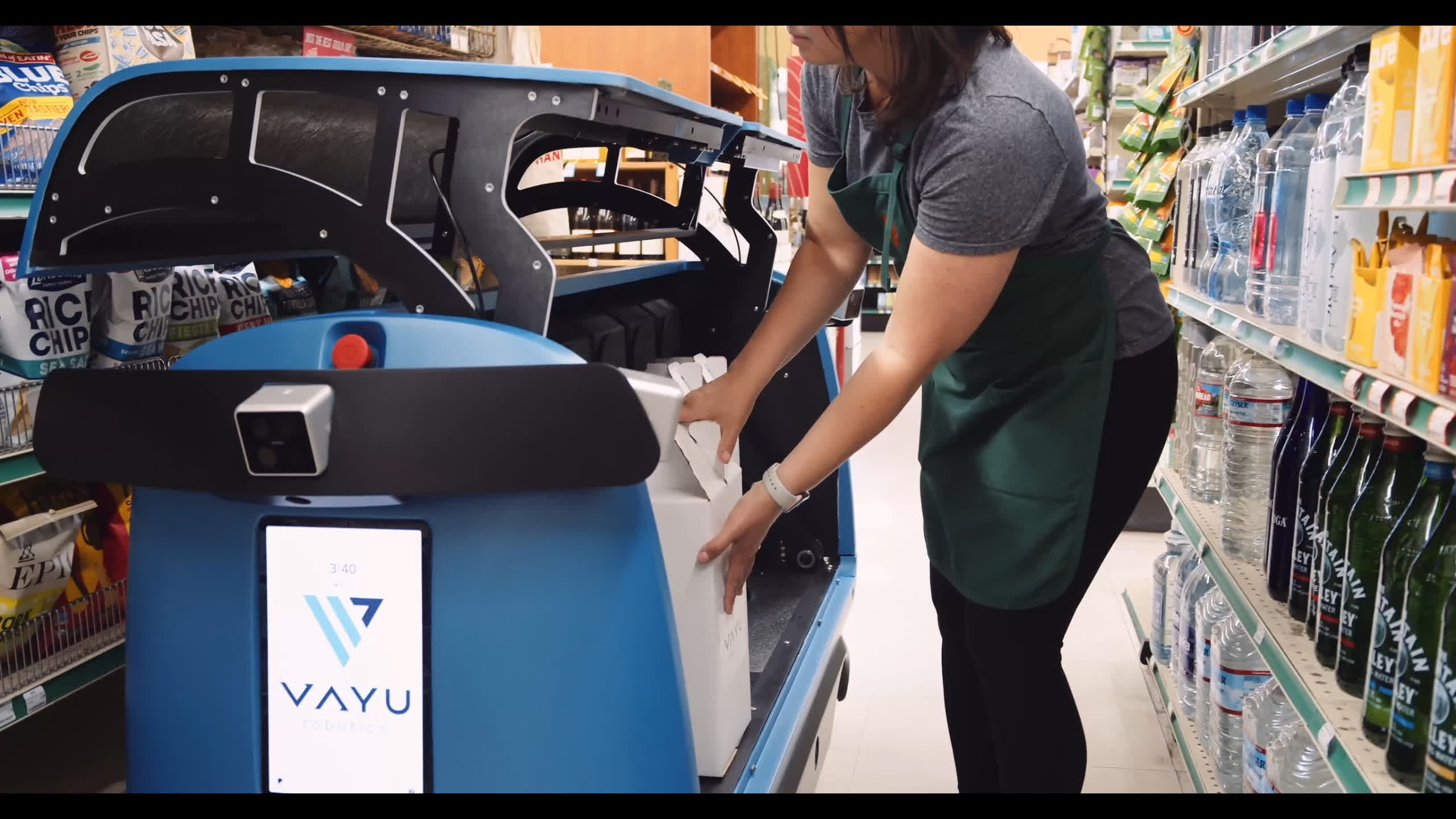
Robotics startup Vayu recently announced that it has solved a couple of key problems that have plagued the delivery robot industry over the past decade. The company is now introducing Vayu One, a self-driving drone based on low-cost technologies and a new AI foundation model trained to excel in urban delivery applications. Vayu claims this potentially revolutionary solution can be applied to other robot drones as well.
Vayu One replaces expensive LiDAR sensors with low-cost, passive yet powerful sensors, combined with a transformer-based mobility foundation model. The AI algorithms work so well that there is no need for LiDAR technology anymore, the startup said. Vayu One can navigate without pre-mapping the roads and can easily operate inside stores, on city streets, or essentially anywhere a delivery drone needs to go.
Vayu One offers one of the most cost-effective, safe, and reliable delivery systems currently on the market, the company asserts, and is already selling it to third-party companies. The LiDAR-less drone will soon debut in real-world scenarios thanks to a major, yet unnamed e-commerce player that ordered 2,500 Vayu One drones for its "ultra-fast" delivery service.
Other large orders are also said to be in the pipeline for additional commercial customers, and Vayu is already planning for what's next. The company aims to sell its AI model to organizations working on quadrupedal and bipedal robots. The software is form factor agnostic, and Vayu has already successfully deployed it across different autonomous devices.
Vayu was founded by robotics and mobility industry veterans Anand Gopalan, Mahesh Krishnamurthi, and Nitish Srivastava. Gopalan is the former CEO of Velodyne Lidar, while Krishnamurthi and Srivastava were previously employed at Apple. The company raised $12.7 million to develop new delivery solutions specifically designed for the e-commerce industry.
Vayu One is intended to become the "robotics nervous system" of the low-cost AI software business the company is focused on. "Autonomous delivery robots are only the tip of the iceberg," Gopalan said.
Vayu Robotics introduces Lidar-free delivery drone powered by an AI foundation model


