Western Digital's HDD production for 2026 is already sold out

Alfonso Maruccia

Posts: 2,509   +934
Staff
In context: Western Digital is one of the few remaining hard disk drive manufacturers in the world. According to its latest earnings call, the company now does most of its business with AI data center providers – and they are purchasing as many HDDs as possible, years ahead of schedule.
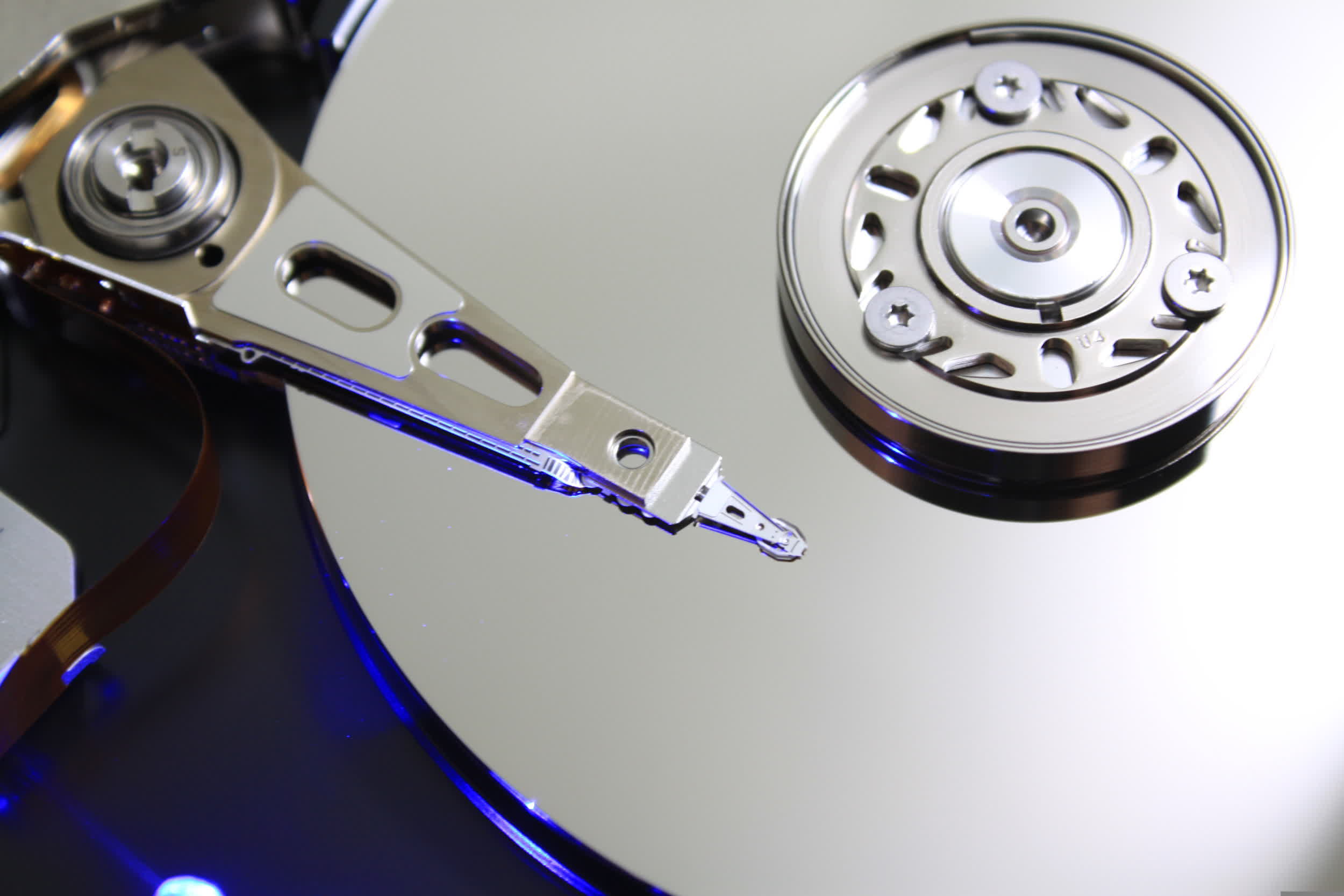
Western Digital has already sold out its entire HDD manufacturing capacity for the year, and it's only February. According to CEO Irving Tan, 2026 is effectively fully booked. AI companies are purchasing storage drives that have yet to be manufactured, and relief for traditional customers is unlikely anytime soon – not within the next couple of years, at least.

Tan disclosed the supply crunch during the company's latest quarterly earnings call. Revenue rose 25 percent year over year to $3.02 billion, and the third quarter is projected to climb even higher, with a 40 percent YoY increase. Western Digital is successfully meeting surging demand from the AI-driven data economy, Tan said, ramping up production of high-capacity HDDs at an unprecedented scale.

The company's production capacity is already sold out through 2026, with most units allocated to its top seven customers. In addition, Western Digital has signed long-term agreements with two of those top customers for 2027 and with one for 2028. These unnamed companies have collectively pre-purchased several exabytes of storage capacity, Tan confirmed.

Together with Seagate and Toshiba, Western Digital is one of just three remaining HDD manufacturers in a market now dominated by solid-state storage and high-bandwidth NVMe performance. Big Tech's growing appetite for AI data centers is having a profound impact on traditional magnetic storage, after previously straining global supplies of SSDs and other memory-based products.

Western Digital recently exited the SSD market to focus exclusively on hard disk drives. The traditional spinning disks are not ready for retirement just yet, as both Western Digital and Seagate continue working to significantly increase data density and transfer speeds.

Western Digital now sells the vast majority of its HDDs to enterprise customers. Cloud clients account for 89 percent of the company's revenue, while traditional consumers make up just five percent.

According to CFO Kris Sennesael, demand for data center solutions is expected to continue rising. Enterprise customers are adopting high-capacity HDDs at scale, strengthening the company's profitability in an increasingly unpredictable AI-driven market.

Permalink to story:

 
During the housing boom in the mid 2000s (before the bubble popped), a place I worked sold flooring installation tools and supplies.

Tack strip was very hard to keep in stock and because of the housing boom our vender sent out a letter about an up and coming price hike (was something crazy like 15 or 20%) and they would honor any sales sent to them before the price hike increase. The company I worked at put in an order for 12 months supply (based on recent sales).

After the price hike took place the vendor was having issues sticking with supply and about a few months later they reneged on the promise of upholding orders under the old price and canceled everyone's orders. We had to reorder everything and about 6 months later the housing boom was cooling and soon followed the bubble pop. We ended up having to cancel a bunch of orders with the vendor because things really cooled down and soon they were sitting on massive amounts of inventory because housing cooled.

I wonder if something similar will happen to these companies once things cool down, which will happen, but you just don't know exactly when.

Good thing I'm set with storage space, too, I don't need to find any new HDDs or SSDs.
 
During the housing boom in the mid 2000s (before the bubble popped), a place I worked sold flooring installation tools and supplies.

Tack strip was very hard to keep in stock and because of the housing boom our vender sent out a letter about an up and coming price hike (was something crazy like 15 or 20%) and they would honor any sales sent to them before the price hike increase. The company I worked at put in an order for 12 months supply (based on recent sales).

After the price hike took place the vendor was having issues sticking with supply and about a few months later they reneged on the promise of upholding orders under the old price and canceled everyone's orders. We had to reorder everything and about 6 months later the housing boom was cooling and soon followed the bubble pop. We ended up having to cancel a bunch of orders with the vendor because things really cooled down and soon they were sitting on massive amounts of inventory because housing cooled.

I wonder if something similar will happen to these companies once things cool down, which will happen, but you just don't know exactly when.

Good thing I'm set with storage space, too, I don't need to find any new HDDs or SSDs.
It's happened multiple times. In 2023 these memory companies took an absolute bath, the memory cartel took like a combined $20 billion loss.

The thing that gets me is that the datacenters have not been built. They're shoving all this stuff in warehouses waiting for capacity to come online. So if the bubble pops, there's going to be a flood of hardware coming in, like the GPU market in 2014 when the first crypto bubble popped in spectacular fasion.
 
During the housing boom in the mid 2000s (before the bubble popped), a place I worked sold flooring installation tools and supplies.

Tack strip was very hard to keep in stock and because of the housing boom our vender sent out a letter about an up and coming price hike (was something crazy like 15 or 20%) and they would honor any sales sent to them before the price hike increase. The company I worked at put in an order for 12 months supply (based on recent sales).

After the price hike took place the vendor was having issues sticking with supply and about a few months later they reneged on the promise of upholding orders under the old price and canceled everyone's orders. We had to reorder everything and about 6 months later the housing boom was cooling and soon followed the bubble pop. We ended up having to cancel a bunch of orders with the vendor because things really cooled down and soon they were sitting on massive amounts of inventory because housing cooled.

I wonder if something similar will happen to these companies once things cool down, which will happen, but you just don't know exactly when.

Good thing I'm set with storage space, too, I don't need to find any new HDDs or SSDs.
Me too for now... but with time we will need more and more. Thats how data works. I got a ton of 24TB drives and even they are half way full atm. Backups are a thing too. If prices dont go back to normal we are all... you know what.
 
Bubble must pop. <<<
If it doesn't then my favorite nightmare scenario is that once our current computers break/break down years from now, plebes (that's us) will not be able to build or obtain replacements. Maybe just maybe we can have freaking TERMINALS for cloud access.
*wakes up screaming* - While I can entertain myself without a computing device these days I just need one lest I can no longer interface with society at large. How would I even pay my bills? And that's just one of the many painful problems.

OTOH should the bubble pop then it will RAIN fancy hardware for PEANUTS.
Also, I'd laugh my butt off because of the situation the people that did this to us will be in.
I'd keep my fingers crossed 24/7 if I believed that would help.
 
It's happened multiple times. In 2023 these memory companies took an absolute bath, the memory cartel took like a combined $20 billion loss.

The thing that gets me is that the datacenters have not been built. They're shoving all this stuff in warehouses waiting for capacity to come online. So if the bubble pops, there's going to be a flood of hardware coming in, like the GPU market in 2014 when the first crypto bubble popped in spectacular fasion.
To paraphrase a well-put comment

To spell this out clearly, the reason HDDs are in short supply is that a huge quantity of HDDs that haven't been produced yet have been bought with money that doesn't exist to go in datacenters that haven't been built powered by infrastructure that may never exist to meet a demand that doesn't exist at all to make profit margins that mathematically can't exist while economists talk about this thing they call the "rational markets hypothesis".
 
During the housing boom in the mid 2000s (before the bubble popped), a place I worked sold flooring installation tools and supplies.

Tack strip was very hard to keep in stock and because of the housing boom our vender sent out a letter about an up and coming price hike (was something crazy like 15 or 20%) and they would honor any sales sent to them before the price hike increase. The company I worked at put in an order for 12 months supply (based on recent sales).

After the price hike took place the vendor was having issues sticking with supply and about a few months later they reneged on the promise of upholding orders under the old price and canceled everyone's orders. We had to reorder everything and about 6 months later the housing boom was cooling and soon followed the bubble pop. We ended up having to cancel a bunch of orders with the vendor because things really cooled down and soon they were sitting on massive amounts of inventory because housing cooled.

I wonder if something similar will happen to these companies once things cool down, which will happen, but you just don't know exactly when.

Good thing I'm set with storage space, too, I don't need to find any new HDDs or SSDs.
Most of the orders will have strong enough contracts that they won’t be able to cancel.

So no flood of returns like another commenter hopes.

But when the bubble pops (or even hype ends as we are seeing increasing signs now) future enterprise orders will crater for a year or two.Then companies will transition back to consumer retail.

Remember they have a year of production to fulfill which gives plenty of cushion to gracefully switch back even if half of it did get cancelled due to openai bankruptcy for instance.
 
To paraphrase a well-put comment

To spell this out clearly, the reason HDDs are in short supply is that a huge quantity of HDDs that haven't been produced yet have been bought with money that doesn't exist to go in datacenters that haven't been built powered by infrastructure that may never exist to meet a demand that doesn't exist at all to make profit margins that mathematically can't exist while economists talk about this thing they call the "rational markets hypothesis".
It will all be brought down by someone in an unrelated field saying "oops!".

Probably supply chain adjacent...
Everything connects to everything else.
 
To paraphrase a well-put comment

To spell this out clearly, the reason HDDs are in short supply is that a huge quantity of HDDs that haven't been produced yet have been bought with money that doesn't exist to go in datacenters that haven't been built powered by infrastructure that may never exist to meet a demand that doesn't exist at all to make profit margins that mathematically can't exist while economists talk about this thing they call the "rational markets hypothesis".
I'd say that the market will get flooded once the bubble finally bursts but the NAND, HD's. chips (CPU's and GPU's), motherboards, etc. haven't even been produced yet, so the only cheap hardware we might get are the older H and MI hardware that are already unwanted.
 
Now we have another shortage. This time hard drives, again related to AI. To me it can only be the result of two pssibilities. First, out right incompetence fueled by nothing but warm bodies who are put there to be manipulated by certain people above them just to make money any way they can, which leads to the second possibility which is conspiracy. I have not heard anyone in so many millenia now who considers any corporate executive, any government bureaucrat in any government in this world, or any government leader of any government in this world to be above reproach. There are no honest injuns. All the world is a stage and there are none innocent, no not one.
 
Enjoy your profits while they last Nvidia, WD, memory manufacturers...etc. while the house of cards you have built on quicksand remains standing. There is insufficient power production for data centers and power plants are at least a decade out for approval, funding and construction. The funding for AI companies is already drying up, the corporate market is already shrinking after finding no cost or productivity benefit in replacing people for AI. Consumers don't want their tech and lives stuffed with AI.

Quit now or lose everything after the AI bubble pops!!
 
Really, I thought all of this could be done on a thumb drive.

I run 'Puppy' Linux. It can! It doesn't even need an HDD or SSD. Straight up!

'Puppy' loads FROM storage into RAM.....where it runs for the session, then saves back to storage at session's end. Even DDR3 or DDR2 is plenty fast enough for your session....

I do use HDDs for longer-term 'cold' storage, but luckily I snagged a couple of 16 TB drives last year.....while prices were still reasonable. And the HP desktop rig was kitted-out with 32 GB DDR4 when I bought it new at the start of the pandemic.

'Our Pup' thinks she's in paradise.....given that Barry Kauler developed her all the way back in 2003 to keep ancient hardware still relevant.

(shrug...)

Miq. :heart_eyes:
 
Back