When Batman rides the subway, we act nicer

Skye Jacobs

Posts: 1,913   +58
Staff
Ripple effect: Apparently all it takes to boost kindness on the subway is… Batman. Commuters were more likely to help a stranger on Milan's subway when a man dressed as Batman was quietly standing a few feet away, according to new field research into how small, strange events can nudge people out of autopilot and toward altruistic choices.
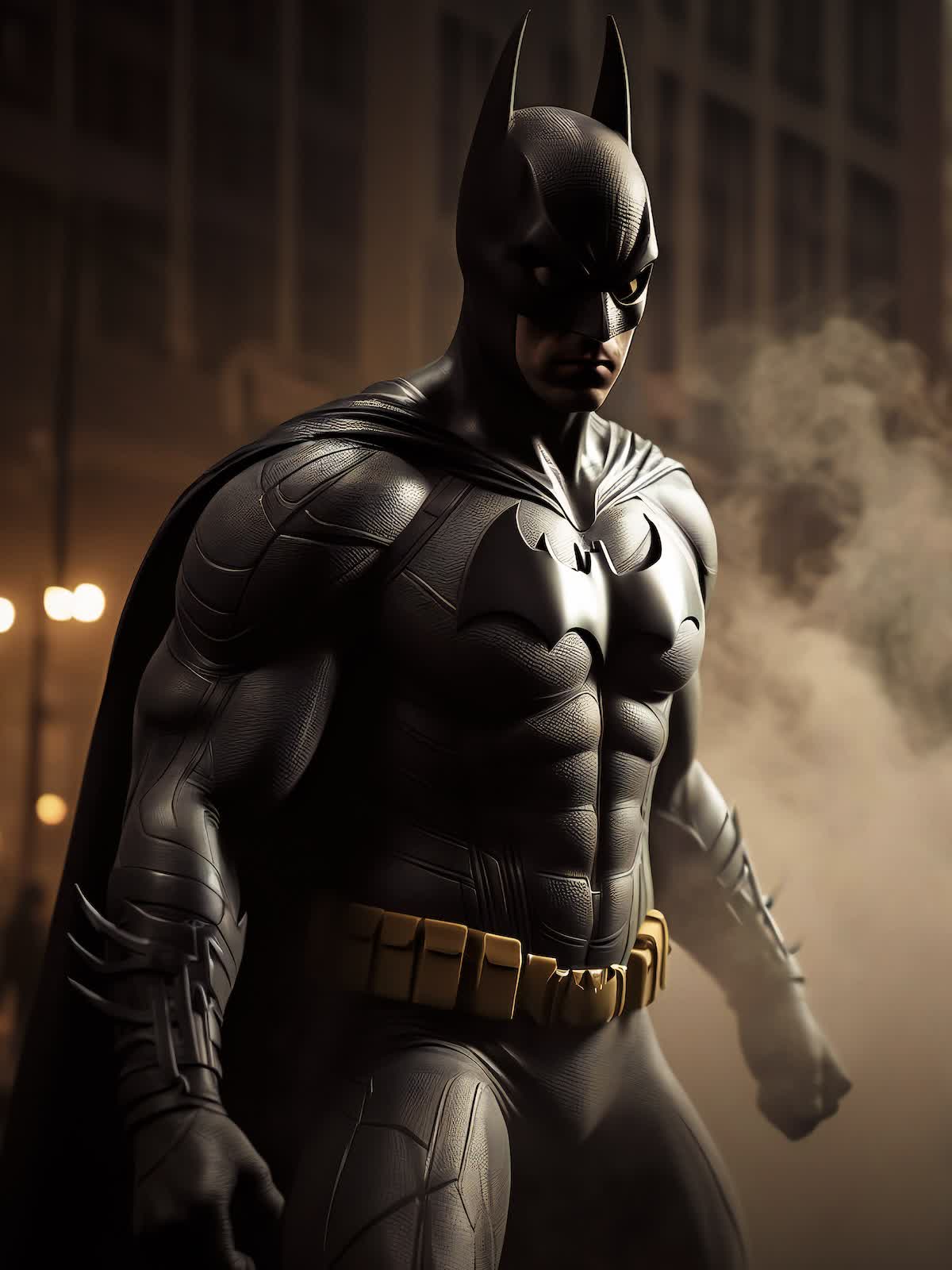
The study, led by Francesco Pagnini, a professor of clinical psychology at Università Cattolica del Sacro Cuore in Milan and published in npj Mental Health Research, was designed as an in situ quasi-experiment on the Milan metro, using real trains, real crowds, and scripted but controlled scenarios.

Researchers observed 138 separate rides and compared two conditions: a control run in which a female experimenter wearing a prosthetic pregnancy belly boarded a busy carriage with a neutral observer, and an experimental run in which a second experimenter, dressed head-to-toe as Batman, entered through another door about ten feet away.

In both situations, the Batman actor remained silent and did not interact with other passengers, and the "pregnant" rider did not explicitly ask for help; the metric was simple: whether seated passengers voluntarily stood to offer their seats. The team logged each boarding as a separate observation, coded who gave up a seat, and later surveyed participants when possible to assess whether they had consciously noticed the costumed figure.

The contrast between the two conditions was significant. In the control rides, the probability that at least one passenger would stand for the pregnant woman was about 37-38 percent, while in the Batman condition it rose to roughly 67 percent, a difference the authors report as statistically significant in a logistic regression model.

The analysis, which treated the presence of Batman as the main predictor, showed that this single environmental factor roughly doubled the odds of prosocial behavior in that setting.
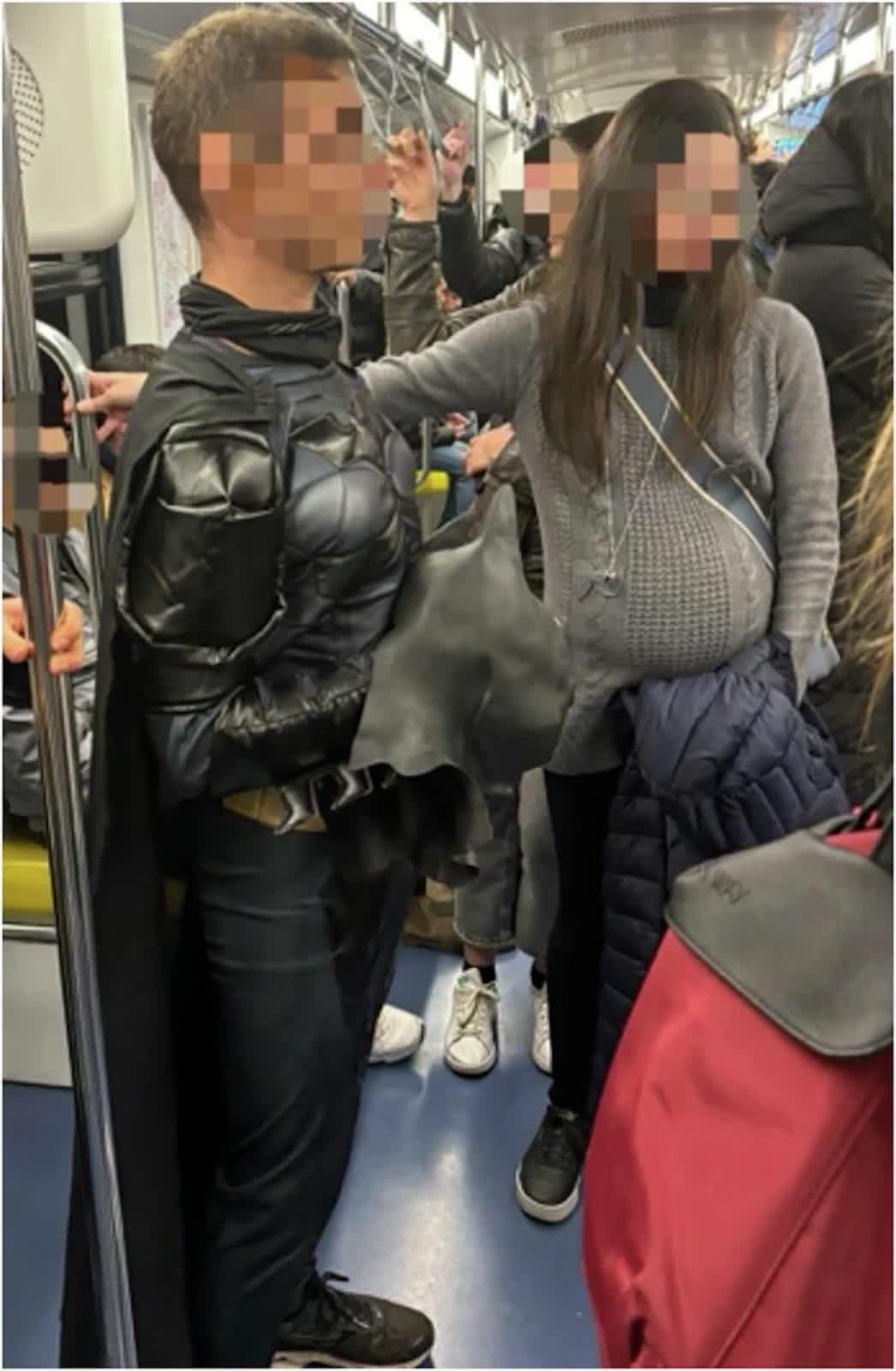
The report says the effect persists even when many riders do not consciously register the costumed figure at all, suggesting a subtle mechanism linking surprise, attention, and prosocial behavior in public spaces.

Gender patterns stayed relatively stable across conditions: in both scenarios, most of the people who surrendered their seats were women, with reported shares in the mid-60 to high-60 percent range. That consistency suggests the intervention amplified a baseline norm – certain riders were already more inclined to help – rather than completely shifting which demographic groups acted.

One of the more counterintuitive findings emerged from the follow-up reports: in the Batman condition, about 44 percent of those who gave up their seats later said they had not noticed the man in costume. For the research team, that result implies the mechanism is not simple conscious imitation or deliberate deference to a superhero figure, but a broader shift in attention triggered by an unexpected element in the environment.

Pagnini links this to research on mindfulness and present-moment awareness, which have repeatedly been associated with higher prosociality. In his interpretation, a break in routine – here, a silent Batman – disrupts automatic processing, pulls people slightly out of mental drift, and makes them more sensitive to social cues such as a visibly pregnant person standing nearby.

The authors also acknowledge that the specific choice of a superhero costume may have layered effects beyond simple novelty. Cultural associations with Batman – heroism, protection, and sometimes chivalrous behavior – could activate implicit norms or values in the background, consistent with prior research on how superhero imagery can prime moral or helping behaviors.

They suggest their results could inform low-friction interventions such as periodic artistic performances, unusual visual installations, or other benign "interruptions" intended to shake riders out of habitual inattention.

They also caution that the Batman experiment captures a narrow slice of behavior – offering a seat in one city's subway – and that further work is needed to see how different kinds of unexpected events, in other cultures and contexts, might influence cooperation, courtesy, or rule-following.

Even so, the data point to a simple idea that resonates beyond one caped commuter: in crowded public environments, changing what people see for a moment may be enough to change what they do.

Permalink to story:

 
Every freak show diverts attention. Batman got nothing to do with that, a Teletubby costume would be as effective (perhaps even more so).
 
Last edited:
The fact that Batman's presence was needed to cause a change in behaviour speaks to how far humanity's manners, or at least the manners of many countries, have fallen from an earlier age. Before, it was an unspoken rule that one gets up for an elder, or if one is male, for a woman, regardless of pregnancy. Indeed, it was shameful if one was sitting and an elder or woman standing. A similar principle used to hold for letting an elder or woman precede one through a door. These were basics; nothing extraordinary. We act so high and haughty today but our manners are laughable.

Rather than adding Batman or Robocop, we need a return to classical manners.
 
The fact that Batman's presence was needed to cause a change in behaviour speaks to how far humanity's manners, or at least the manners of many countries, have fallen from an earlier age. Before, it was an unspoken rule that one gets up for an elder, or if one is male, for a woman, regardless of pregnancy. Indeed, it was shameful if one was sitting and an elder or woman standing. A similar principle used to hold for letting an elder or woman precede one through a door. These were basics; nothing extraordinary. We act so high and haughty today but our manners are laughable.

Rather than adding Batman or Robocop, we need a return to classical manners.
I think you misunderstand the research. It was not that people don't have manners or are not polite. It is that people doing routine things, like riding on the subway, tend to fall into "habitual inattention". What this means is that people just "zone out" and are not consciously observing their environment, thus they don't "notice" the pregnant woman. The presence of Batman, even unnoticed, subconsciously caused the people to notice their surroundings more. Once they "woke up" to the fact that there is a pregnant women, they do in deed get up an offer her a seat.

The out of place man in a costume has the effect of breaking people out of their "inattention zone". It is suggested that anything out of the ordinary may have this ability, and more importantly that it seems to having a significant statistically positive impact on people's behavior. That is the point of the research.

You could argue that most of those people are face down in their smart phones and that is in itself a social problem. However, your rant about lack of manners is misplaced here.
 
I think you misunderstand the research. It was not that people don't have manners or are not polite. It is that people doing routine things, like riding on the subway, tend to fall into "habitual inattention". What this means is that people just "zone out" and are not consciously observing their environment, thus they don't "notice" the pregnant woman. The presence of Batman, even unnoticed, subconsciously caused the people to notice their surroundings more. Once they "woke up" to the fact that there is a pregnant women, they do in deed get up an offer her a seat.

The out of place man in a costume has the effect of breaking people out of their "inattention zone". It is suggested that anything out of the ordinary may have this ability, and more importantly that it seems to having a significant statistically positive impact on people's behavior. That is the point of the research.

You could argue that most of those people are face down in their smart phones and that is in itself a social problem. However, your rant about lack of manners is misplaced here.

Fair enough. It was out of place. However, I do think there has been a decline in manners; it's evident in other environments where people are aware.
 
Last edited:
The fact that Batman's presence was needed to cause a change in behaviour speaks to how far humanity's manners, or at least the manners of many countries, have fallen from an earlier age. Before, it was an unspoken rule that one gets up for an elder, or if one is male, for a woman, regardless of pregnancy. Indeed, it was shameful if one was sitting and an elder or woman standing. A similar principle used to hold for letting an elder or woman precede one through a door. These were basics; nothing extraordinary. We act so high and haughty today but our manners are laughable.

Rather than adding Batman or Robocop, we need a return to classical manners.
Elderly, sure.
Pregnant women, sure.

Just a woman? Seems like society has moved on from that point, we wanted equality and that means not giving either gender preferential treatment.
If you're in a "progressive" (quotes are intentional) city you might even catch flag for doing so or for assuming their gender instead of a polite "no thank you".
As a man and someone who avoids conflict I'd rather potentially be thought of as rude than the alternative of someone trying to start an argument.

If you're in a place where the classic values hold up, then by all means do please uphold them.
 
Sort of underlines the idea that the opposite of good is simply apathy for the average joe.

Banality of evil and all that.
 
I am crippled, & occasionally I am confronted by people who insist on helping me, even though I had not asked for it. For instance, I am pushing a shopping cart, & the guy will grab it and 'help' me by nearly causing me to fall. I am leaning on the cart because my balance is poor. Likewise opening the door. I may appear to be struggling, but leave me alone, unless I ask for help.

Thus, I know all about being 'helped' by people with good intentions, whose help may backfire.

Still, I agree that the sexual liberation thing has gone too far, if able-bodied men fail to offer their seats to pregnant women. Though I also think people are so absorbed in their devices that they are woefully unaware of their surroundings. Could even be dangerous as well as discourteous.


On an entirely different topic, the text uses the term "pregnant person." Unless things have drastically changed while I was not looking, only women can be / become pregnant. It is a fact; it is just the way it has always been, & will always be.
 
Back