YouTuber claims another channel used AI to clone his voice without consent

midian182

Posts: 11,722   +177
Staff member
A hot potato: There's been another instance of AI being used to impersonate someone's voice without their consent. On this occasion, it's YouTuber Jeff Geerling who's the victim. He claims his vocal talents were pilfered and used to promote a tech company's (now removed) tutorial videos.
Raspberry Pi expert Geerling posted a shorter-than-usual video on his YouTube channel yesterday titled 'They stole my voice with AI.' In it, he plays a clip from a tutorial video posted on Elecrow's channel featuring a voice that sounds almost identical to Geerling's.

Geerling notes that as he does talk about some of the topics covered in Elecrow's tutorials, it's natural that people might assume he agreed to voice these videos. He's even covered the company's products – he posted a review of the CrowPi 2 a few years ago. Geerling emphasizes that he didn't have a bad relationship with Elecrow in the past.

It's highly likely that the voice used in Elecrow's videos was created by feeding Geerling's own content into an AI voice creation tool. The end product was then used to narrate the series of tutorial videos. However, none of this can be proven.

Geerling says he's unsure what to do, as there's no legal precedent for unauthorized voice cloning, despite President Biden previously calling for it to be banned. There is, however, precedent for not using someone's voice in commercial work without their consent: Bette Midler vs. Ford Motor Company, which involved an impersonator of the actress/singer being used in Ford commercials during the 1980s.

Geerling also faces the problem of lawyers' fees and whether non-consensual voice cloning is against YouTube's terms of service.

All of Elecrow's videos that Geerling highlighted are now inaccessible, and there doesn't appear to be any others that use a voiceover that sounds like the YouTuber. It seems all the publicity has had an effect.

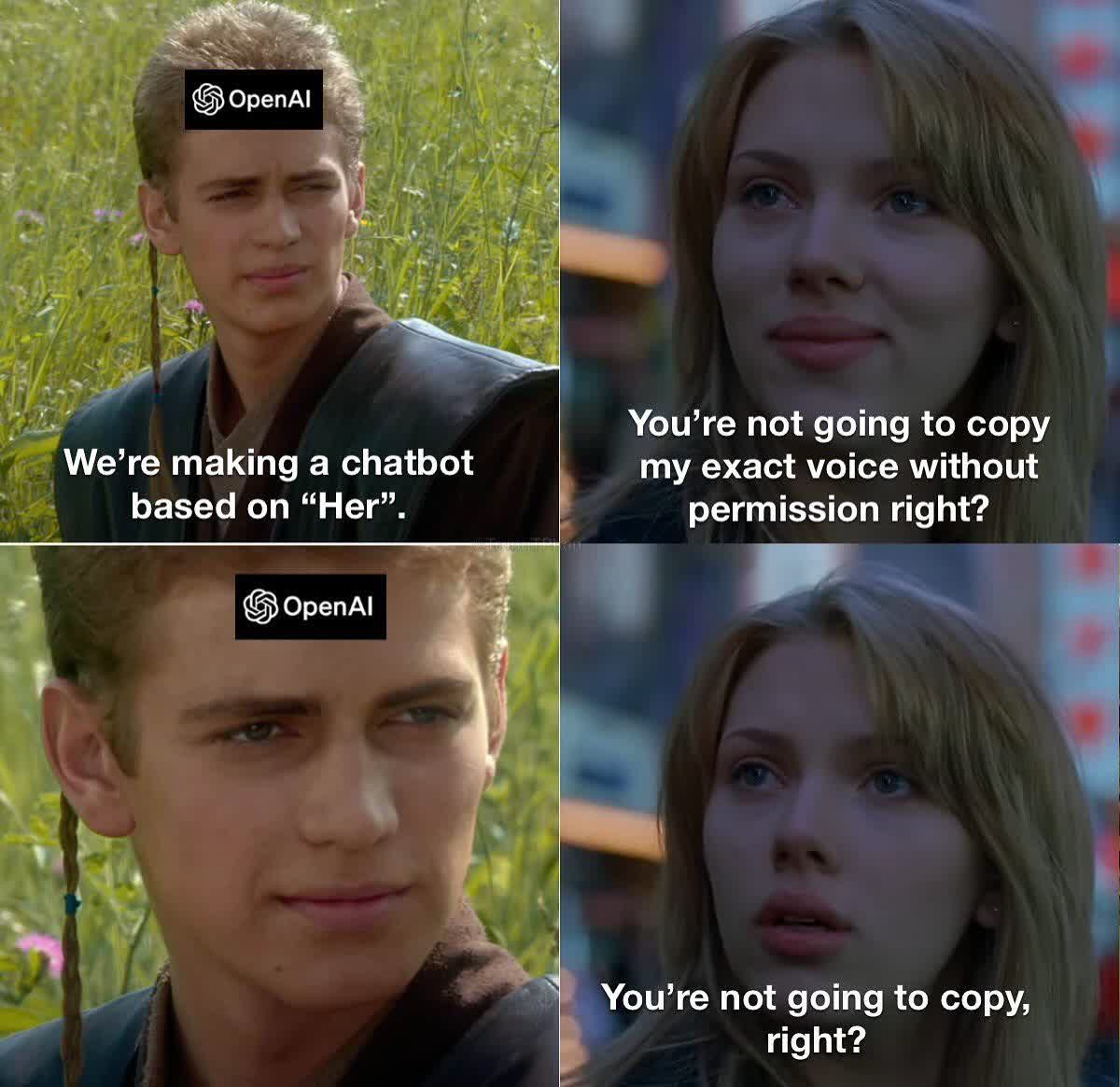
The situation brings to mind that of OpenAI and Scarlett Johansson. When introducing the new GPT-4o model in May, the company showed off a very realistic voice assistant that sounded similar to the Marvel's Avengers star. Making the situation even murkier was that Johansson had been approached by OpenAI to voice the latest ChatGPT update, to which she had refused. The AI firm removed the voice after the actress hired legal counsel.
In January, Ned Luke, the actor who portrays Michael De Santa in GTA V, blasted a company for using his voice without permission to create a Michael AI chatbot.

Permalink to story:

 
If an individual makes a pubcli assertion that another individual has committed a theft without presenting evidence to substantiate the claim, it constitutes defamation.

For example, if an individual states in public, "He stole my soul," this statement is defamatory and may result in a lawsuit for damages.
 
For example, if an individual states in public, "He stole my soul," this statement is defamatory and may result in a lawsuit for damages.
Unless they can prove that the "steal" actually happened. Which in this case is not only provable, but pretty evident, because the video being there with the voice of the guy. Now the burden of proof lies with the company to prove that they actually used someone else's voice and did so with permission.
 
Unless they can prove that the "steal" actually happened. Which in this case is not only provable, but pretty evident, because the video being there with the voice of the guy. Now the burden of proof lies with the company to prove that they actually used someone else's voice and did so with permission.
He still has his voice, no one has stolen it, so his statement about stealing it is defamatory. Similarity is not illegal and cannot be made illegal because there are trillions of similarities between people in the world population. An exact copy of an original work is illegal under copyright law if it is a 1:1 copy, and that is still debatable as to whether it is fair use, but this is about authorship of an original work that is incorporated into a medium and involves specific forms (manner of speech is not one of them, generally recipes fall under patents, a recipe for how you speak does not exist, it happens unconsciously).
As for similarities, an example: if someone is born with brown hair and blue eyes, this is not his exclusive right and cannot be used against others. You have the right to paint a picture of a character with brown hair and blue eyes without having to ask permission from everyone (hundreds of millions) who has these characteristics. That's obvious.
So even in the rare case that this guy reads a sentence of text from "ai tts" and his own sound when is played with inverted phase polarity along with the other from tts and it is found that they cancel each other out (which is hard proof that they are identical, but there is no way that could happen), on his channel he has at most 1 million unique viewers (max) who know his voice, the other 10 billion of the population do not know his voice, nor have they ever heard it. Why should these billions of people be condemned for not having the opportunity to hear what others who use tts have to say?
 
He still has his voice, no one has stolen it
How to tell me you're clueless about the actual meaning of the English word "steal" (which is not as restrictive as you think it is) without telling me you're clueless about the actual meaning of the English word "steal". Here: https://en.wiktionary.org/wiki/steal

The fact that nobody, but you, even just implied that the court case would be brought forward on the grounds of "property theft", but instead on that of copyright and/or personality right laws, is just a plus.

Similarity is not illegal and cannot be made illegal
How to tell me you have clue of copyright / personality rights laws either. Here: https://en.wikipedia.org/wiki/Personality_rights

I hope you learned something today. You obviously have a lot to.
 
Last edited:
How to tell me you're clueless about the actual meaning of the English word "steal" (which is not as restrictive as you think it is) without telling me you're clueless about the actual meaning of the English word "steal". Here: https://en.wiktionary.org/wiki/steal

The fact that nobody, but you, even just implied that the court case would be brought forward on the grounds of "property theft", but instead on that of copyright and/or personality right laws, is just a plus.


How to tell me you have clue of copyright / personality rights laws either. Here: https://en.wikipedia.org/wiki/Personality_rights

I hope you learned something today. You obviously have a lot to.
The law doesn’t have to be compatible with wikipedia it has to be compatible with the constitution.

The 14th Amendment to the United States Constitution addresses equal protection under the law and aims to prevent discrimination. The term "likeness" refers to treating individuals differently based on characteristics such as race, gender, or other protected attributes, so it could be considered a form of discrimination. Such discrimination would generally be incompatible with the 14th Amendment, which seeks to ensure that no state shall deny any person within its jurisdiction the equal protection of the laws.
 
Back