
In a nutshell: Tablets and Chromebooks are proving they're far from obsolete. A new report shows steady growth in both categories, with nearly all major tablet makers growing their shipments. Meanwhile, Chromebooks are staging a surprise rebound, fueled in part by state-funded tech refresh programs in key global markets.
Canalys reports that tablet shipments reached 39 million units in Q2 2025, marking nine percent year-over-year growth and a five percent increase from the previous quarter. Growth was strongest in China and the EMEA region, with the overall market expanding for six consecutive quarters – thanks in part to state-sponsored initiatives.
Research Manager Himani Mukka said the global tablet market's "remarkable" growth is being driven in part by consumer subsidies in China. She also pointed to new product launches and emerging niche categories – such as gaming tablets – as key contributors to the recent surge.
"The market also benefited from a wave of new product launches, particularly in the gaming segment," Mukka said. "Growing consumer interest in this use case has seen gaming tablets emerge as a niche growth category, especially in Asia."
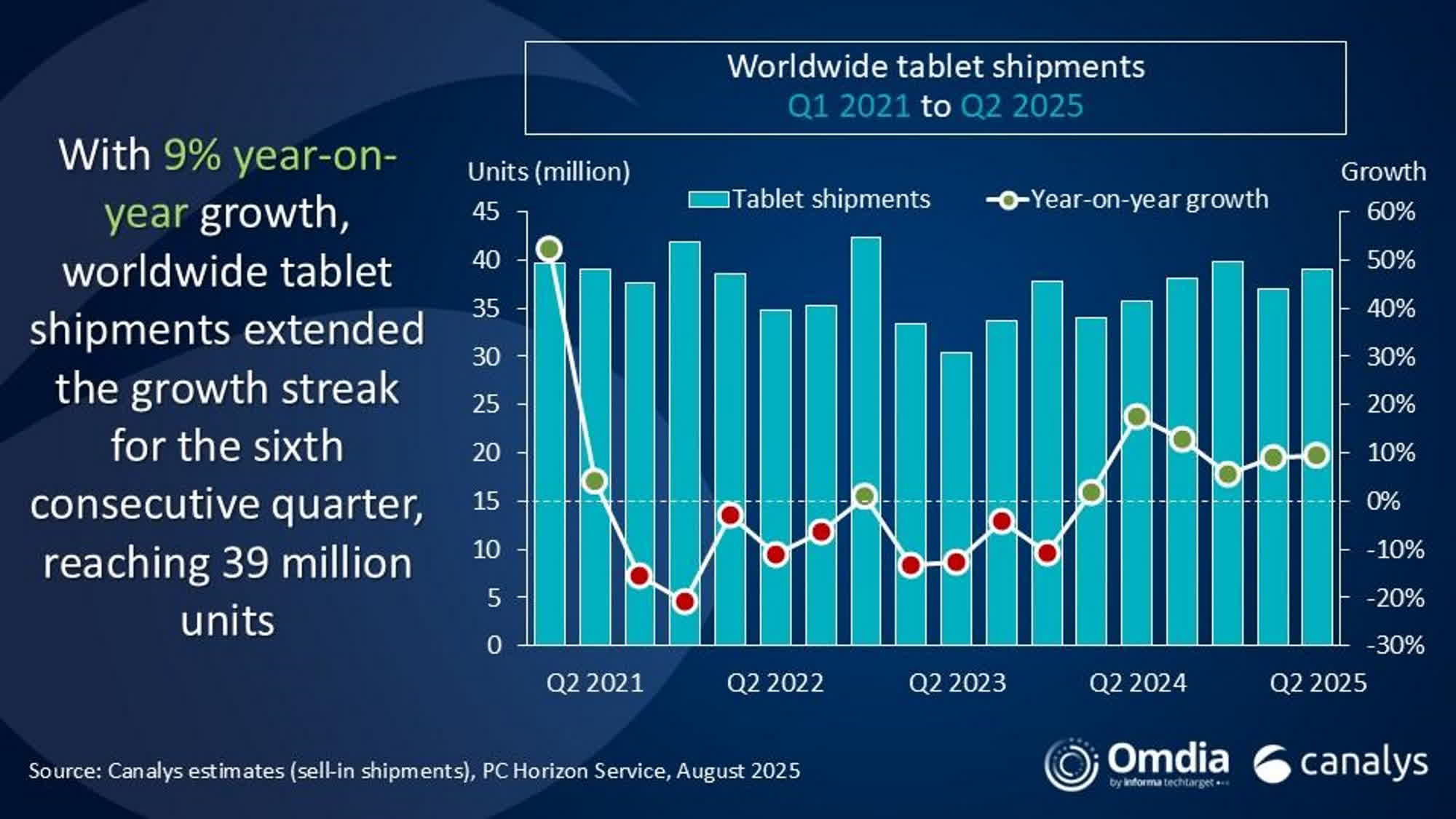
The research company highlighted recent releases like Xiaomi's Redmi K Pad (8.8") and Vivo's Pad5, while Lenovo's Legion Tab shipments more than doubled quarter over quarter. Manufacturers are also advancing interconnected strategies, integrating multiple devices and form factors into unified ecosystems.
Apple retained first place with 14.1 million iPads shipped in the second quarter, gaining 2.4 percent in market share. Samsung held second, shipping around 6.7 million tablets but seeing a slight 1.8 percent decline in share. The next three manufacturers – Huawei, Lenovo, and Xiaomi – posted strong annual growth but maintain smaller shares, focusing primarily on the Chinese market.
Canalys reports the Chromebook sector is experiencing a "revitalization," primarily driven by Japan's state-funded education device refresh program. Subsidies from Tokyo authorities have helped Chromebook shipments grow twentyfold year over year.
The global Chromebook market grew 10.6 percent, with 11 million devices shipped in the first half of 2025, Canalys reports. Lenovo led the market with 3.5 million units shipped – a 27-percent year-over-year increase – and now holds 31 percent market share. Hewlett-Packard (23 percent, down 4.4 percent), Acer (20 percent, up 9.6 percent), and Dell (13 percent, down 4.5 percent) account for most of the remaining shipments. Asus, ranked fifth, posted strong 43 percent annual growth driven by rising demand from Japan.