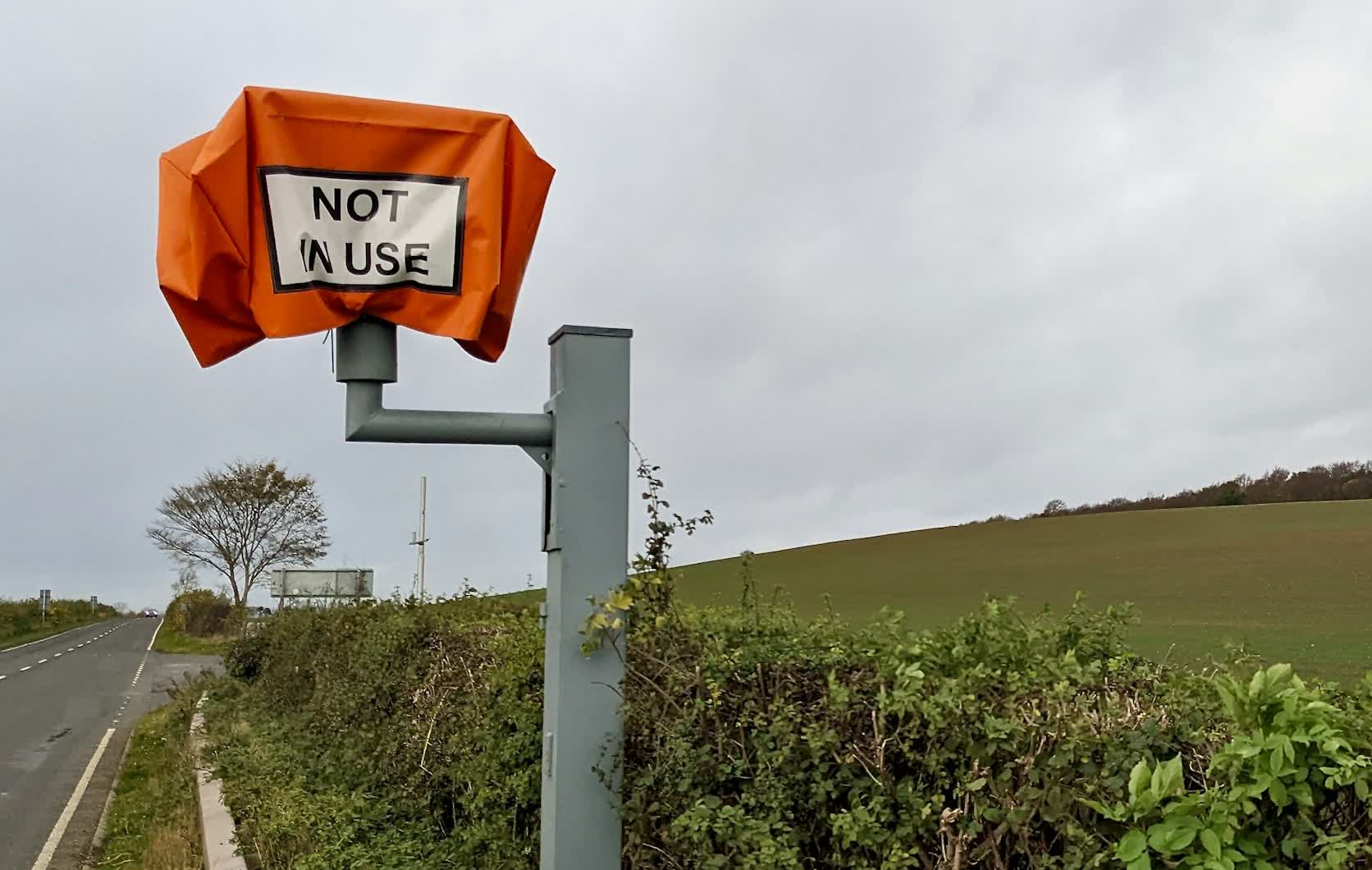
In brief: Cyberattacks can have devastating impacts not just on targeted entities, but also on the public. However, an incident in the Netherlands is having consequences many drivers will likely appreciate: speed cameras that were taken offline cannot be reactivated.
On July 17, a cyberattack against the Public Prosecution Service of the Netherlands took place, believed to be the work of hackers with links to Russia and China.
According to local reports, dozens of speed cameras were purposely temporarily taken offline after attackers breached the system. But the effects of the attack mean they cannot be brought back online.
The impacted cameras include the standard fixed and average speed cameras, as well as mobile flex speed cameras that are deployed in different locations for set periods.
The affected roads include the Netherlands' A roads, which are essentially highways packed with fast-moving traffic. Cameras on N roads that connect cities and towns are also out of action. The exact positions of the non-functioning devices have not been revealed, for obvious reasons.
The Service's Central Processing Office (CVOM) said that the cameras are sometimes taken offline for reasons such as maintenance and inspections, but being unable to reactivate them is unusual. It emphasized that the cameras themselves were not hacked, but the attack is preventing them from coming back online.

The breached systems contain information about ongoing court cases, police investigations, and employees' personal details. The justice department never revealed what data was accessed by the hackers, if any.
In June, the National Cyber Security Centre (NCSC) issued an alert about the Citrix NetScaler zero-day vulnerability. It took seven days for the issue to be addressed, with the Public Prosecution Service taking its systems offline on July 17. According to reports, the delay left hackers with at least three weeks of access to the system, though the NCSC says the vulnerabilities were exploited as far back as early May.
One expert said the hack could be related to the MH17 plane incident in which the passenger flight from Amsterdam to Kuala Lumpur was shot down by Russian-backed forces in 2014. Another motive could be related to Dutch military police investigating possible war crimes committed by Russian forces in Ukraine.
Image credit: jonnie turpie