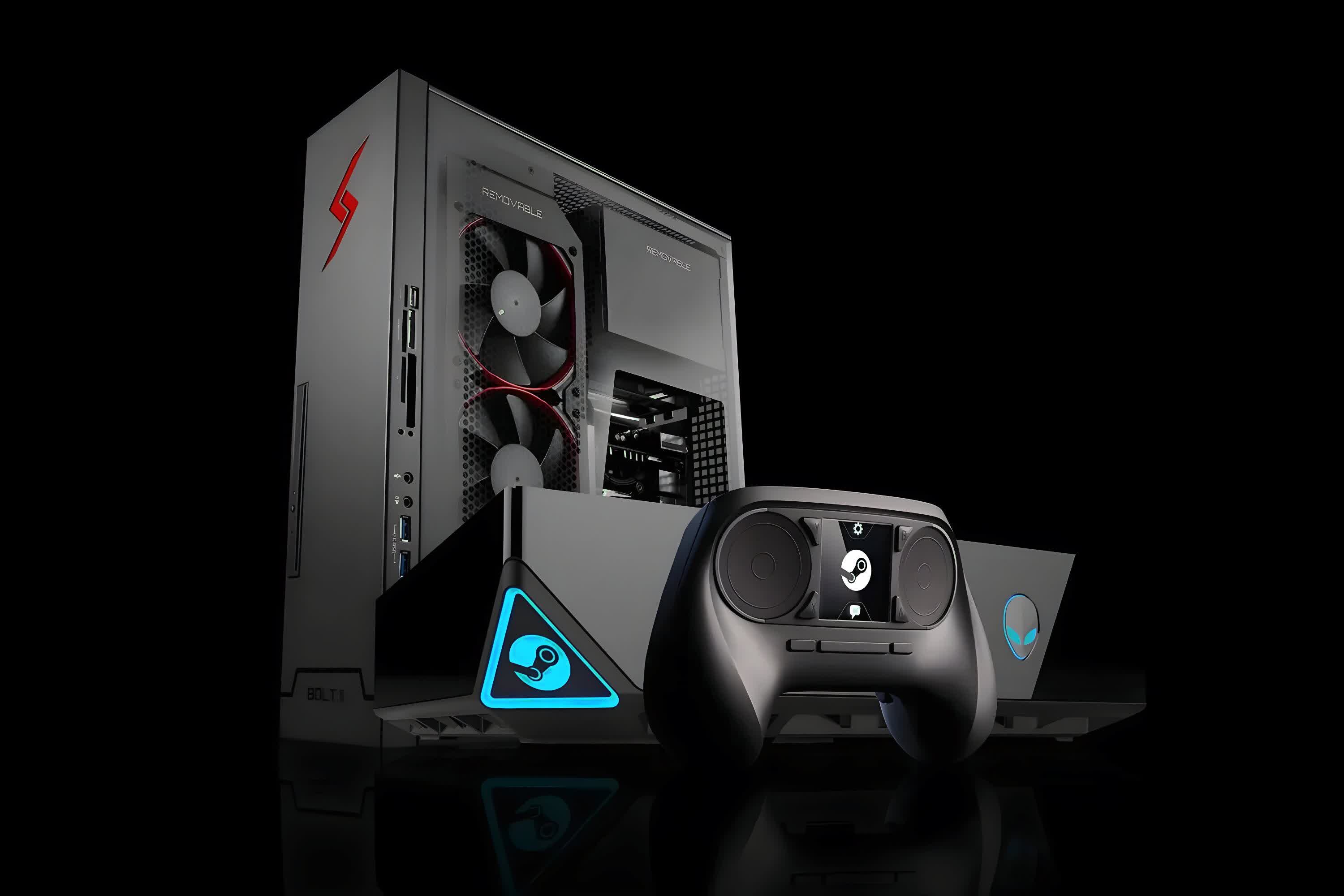
Highly anticipated: Valve's long-rumored return to the living room is starting to look real. A new Steam Machine – like device, codenamed Fremont, has surfaced on Geekbench, hinting at a serious play for the console space. Powered by a custom AMD APU with six Zen 4 cores and a Radeon RX 7600 GPU, it suggests Valve may not just be experimenting this time, but it may be gearing up to compete head-on with traditional consoles.
Following the short-lived and unsuccessful Steam Machine mini-PCs more than a decade ago, few would have expected Valve to return to the home console market. But the Steam Deck and SteamOS Linux distro have proved big hits, with the latter being used by third-party developers such as Lenovo.
In December, a Steam Deck kernel update referenced a device codenamed "Fremont" that features an HDMI port connected directly to a graphics chip, suggesting it is a standalone TV box, not a new Steam Deck dock.
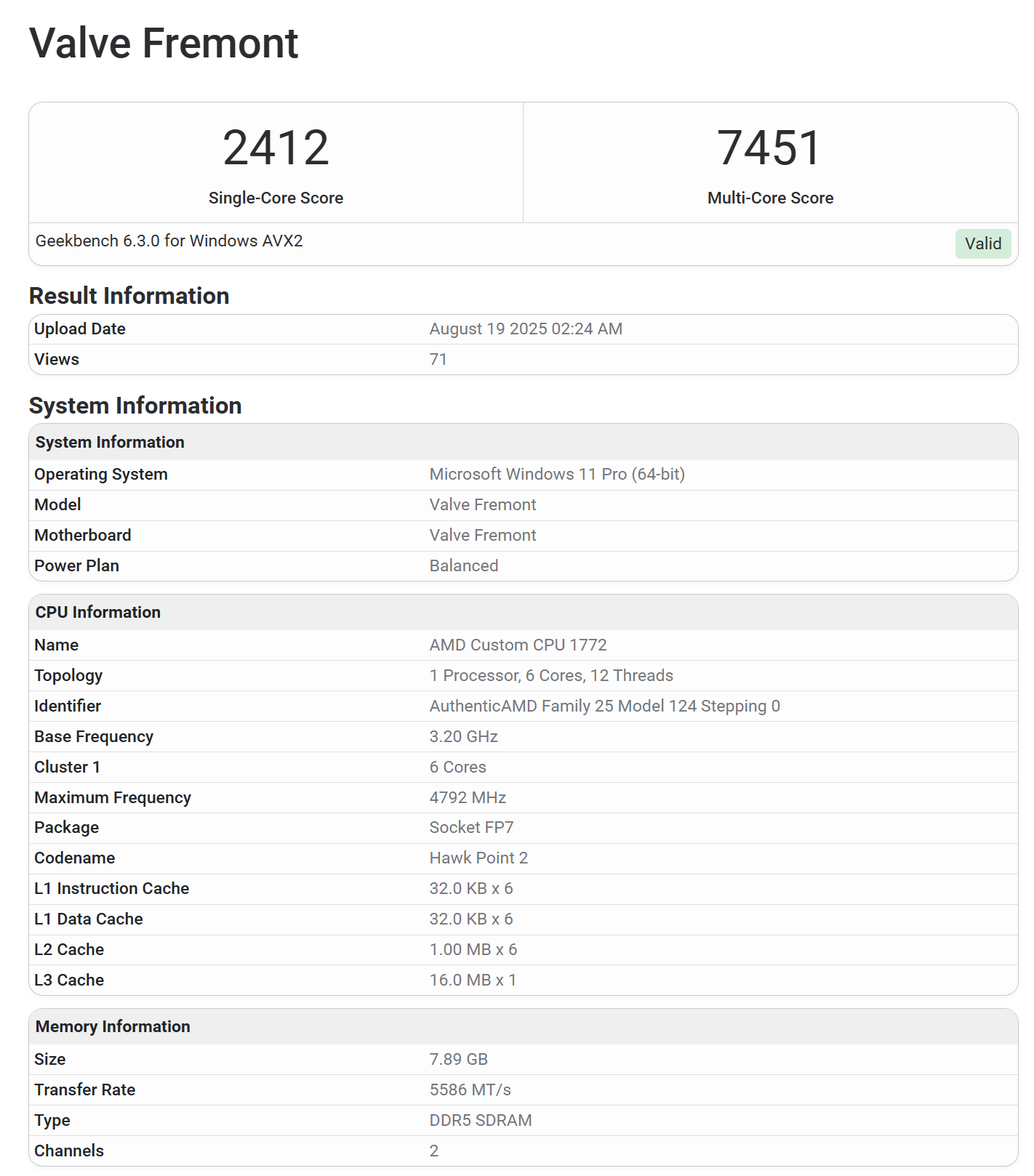
Now, Brad Lynch, the original Fremont leaker, has spotted the machine on Geekbench. It is described as a six-core APU with a maximum boost clock of around 4.8GHz. It's listed as being from the Hawk Point 2 family. That's the Ryzen 8000G desktop APUs, Ryzen 8040 mobile, and Ryzen 200 mobile chips, all of which use Zen 4 cores and RDNA 3 iGPUs.
According to the Geekbench JSON entry, Fremont has what could be a dedicated Radeon RX 7600 series GPU, so we could be looking at a Navi 33-based GPU with 32 Compute Units and 8GB of memory.
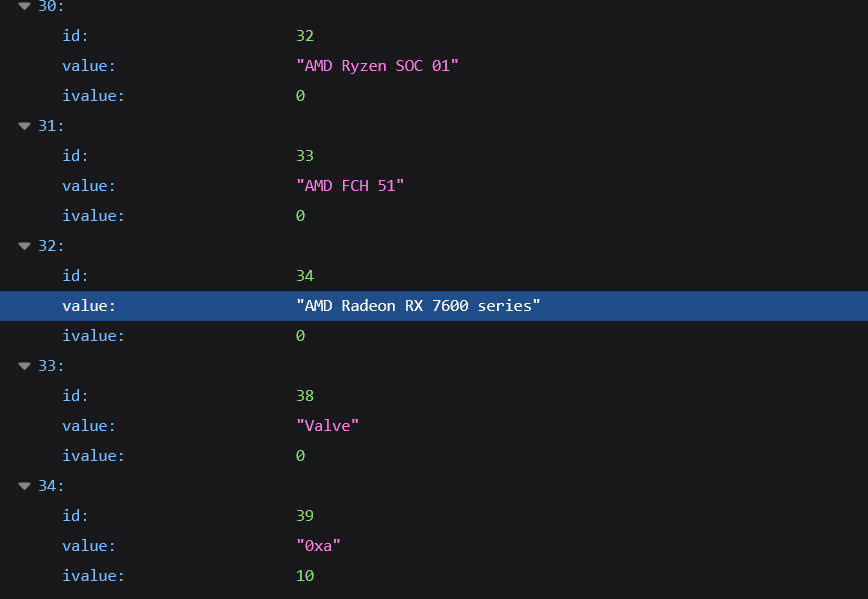
Lynch writes that the processor in Fremont is semi-custom with a removed iGPU, and that the console will have a discrete RX 7600 that won't share RAM with the SoC. The hardware will be packed into a custom case and use a customized Valve motherboard.
He adds that Fremont will come with the Ibex gamepad that was leaked in the SteamVR driver files alongside the Roy controllers for the rumored Valve Deckard XR headset.
Expected to come with the Ibex gamepad leaked in the SteamVR driver files alongside the Roy controllers (for the Valve Deckard XR headset)
– SadlyItsDadley (@SadlyItsBradley) August 20, 2025
Ibex and Roy controllers have a very aligned tooling/development schedule
Likely to see Valve Fremont, Ibex, Deckard, and Roy all at once pic.twitter.com/2Qgyh9BpNg
Fremont gained a 2,412-point single-core score and 7,451-point multi-core score. Exactly when the console will launch or how much it will cost remains to be seen, but an appearance in Geekbench could suggest it's closer than expected. Valve might even be hoping to launch in time for this year's holiday season.