
The takeaway: Microsoft's dual strategy entails integrating multiple advanced AI models while expanding automation within Office. Redmond's efforts position Office as a central hub in the increasingly crowded field of productivity AI, seeking to maintain its differentiation as competitors flood the market with similar offerings.
Microsoft has introduced a significant expansion of artificial intelligence-driven features within its Office suite, enabling users to generate highly complex spreadsheets, documents, and presentations using conversational prompts. The new capabilities, called Agent Mode and Office Agent, extend across Excel, Word, and PowerPoint, signaling a shift toward vibe working – an approach that echoes the surge of interest in AI-powered development tools, often referred to as vibe coding.
These new features are designed to streamline the use of Excel and Word for both experts and non-experts. Microsoft says Agent Mode brings advanced automation to tasks that previously required substantial expertise or manual effort. According to Sumit Chauhan, corporate vice president of Microsoft's Office Product Group, the goal is to unlock "agentic productivity" within Office applications, transforming the way users generate and refine content.
Agent Mode delivers more than basic AI assistance, handling multifaceted assignments such as generating board-ready documents or developing structured reports in minutes. Harnessing OpenAI's GPT-5 model, Agent Mode breaks down complex document tasks into individual steps, solving them sequentially – much like a macro, but with transparent reasoning displayed to the user throughout the process. This breakdown is visible in a sidebar, providing a live, step-by-step overview of the agent's progress.
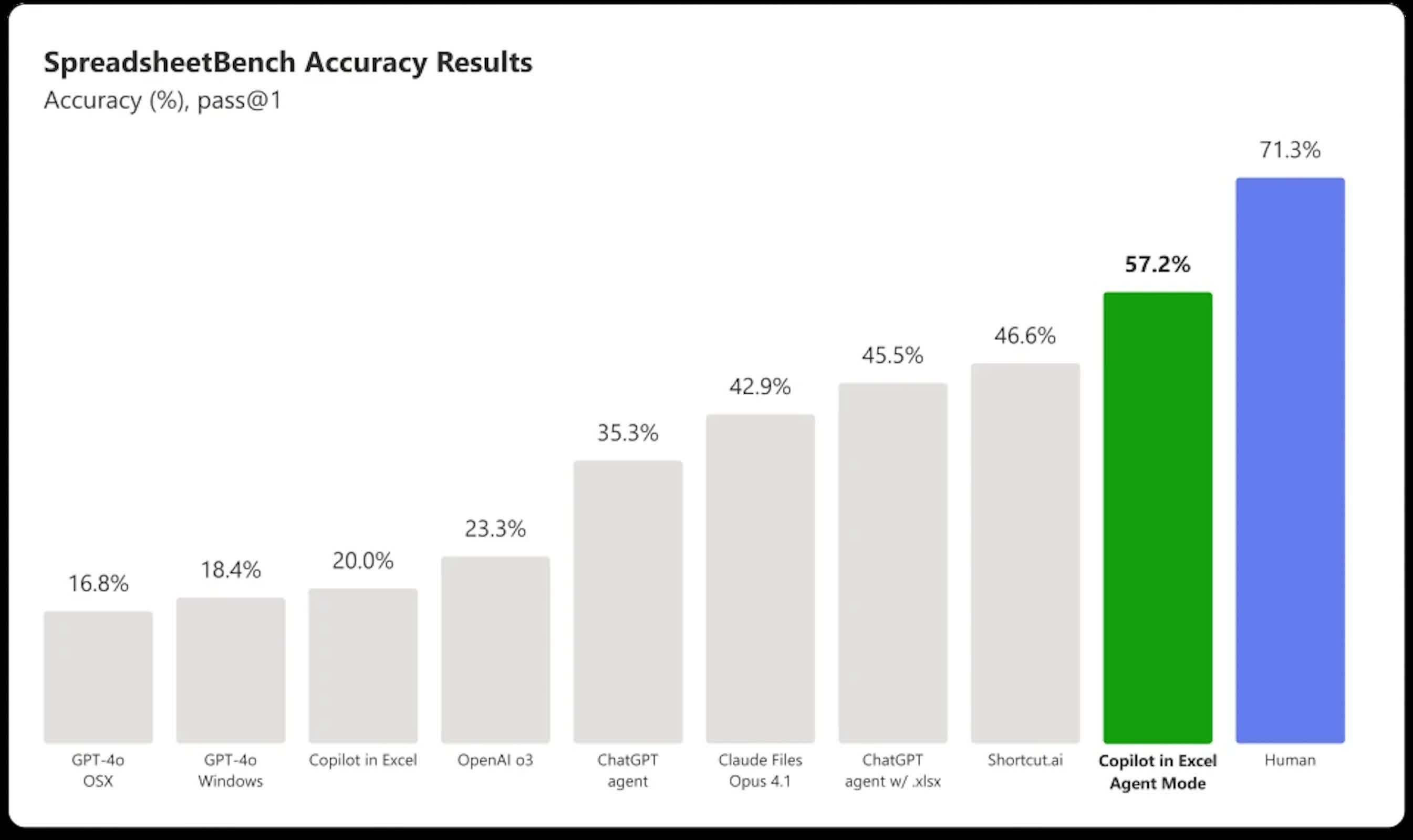
Excel's Agent Mode produces spreadsheets with features that are auditable, refreshable, and verifiable. According to company data, Agent Mode achieved a 57.2 percent accuracy rate on the SpreadsheetBench benchmark, a result surpassing Shortcut.ai, ChatGPT with .xlsx support, and Claude Files Opus 4.1, though it still trails the 71.3 percent accuracy typically achieved by human experts.
In Word, Agent Mode goes beyond simple writing and editing tools by delivering interactive, conversation-driven workflows. Users can request everything from monthly summaries that compare previous reports to refined drafts with suggested improvements – all as part of an active dialogue with Copilot.
Beyond the individual Office apps, Microsoft's new Office Agent extends these generative AI capabilities into Copilot's chat interface. Powered by models from Anthropic – a leading AI lab and competitor to OpenAI – Office Agent can create fully structured Word documents or PowerPoint presentations from a user's prompt.
When generating slides, the system can perform web-based research in real-time and provide a live preview, addressing longstanding limitations of previous AI-generated presentations. While OpenAI's models remain central to Office's built-in AI features, the inclusion of Anthropic models reflects Microsoft's intent to leverage a diverse range of technologies to enhance its productivity suite.
These new features are available starting today through the Frontier program to Microsoft 365 Copilot customers and Microsoft 365 Personal and Family subscribers in the United States. The initial rollout is limited to the web versions of Excel and Word, although desktop support is expected to follow.