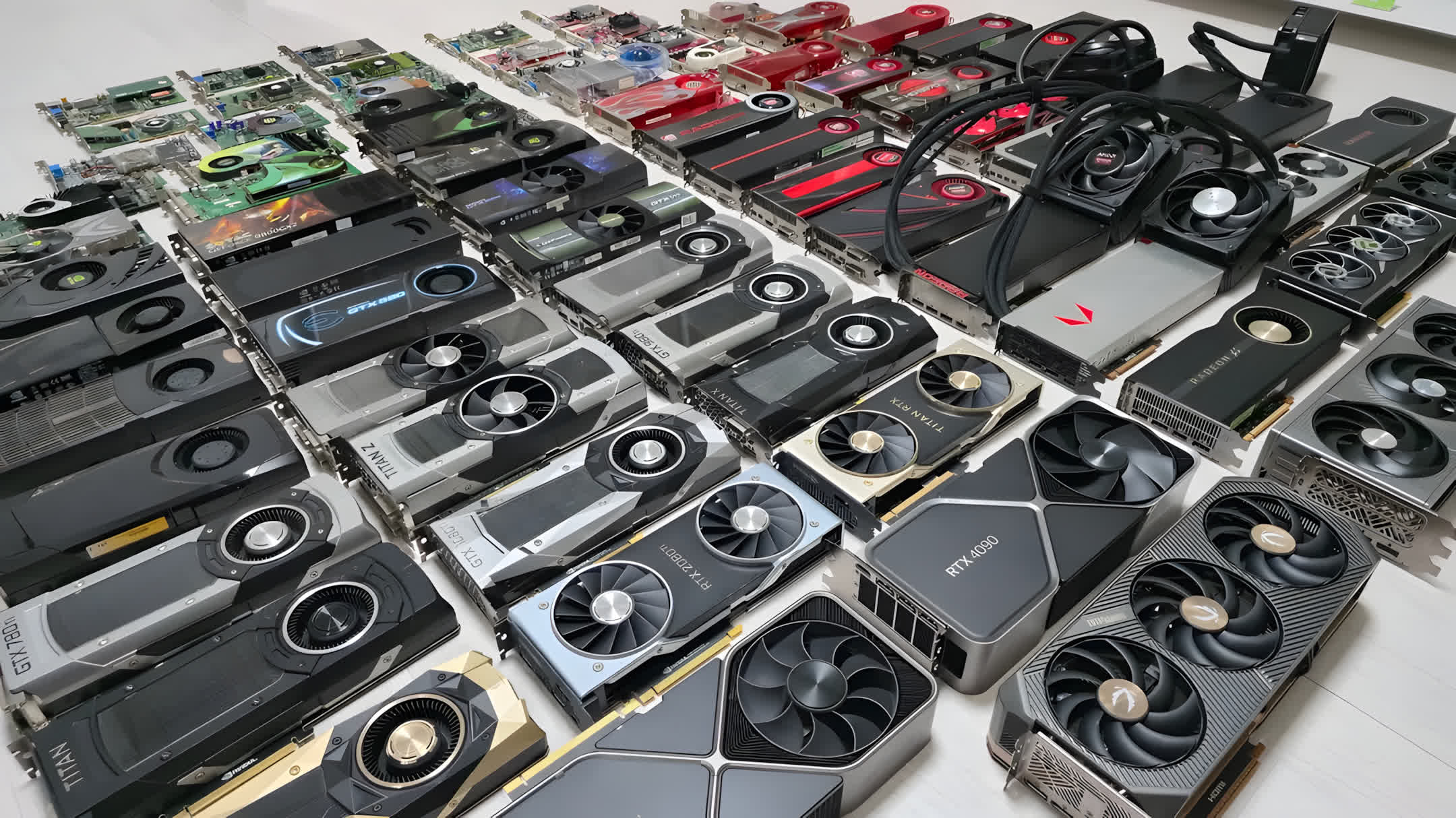
Enthusiast Zone: A new video making the rounds among PC hardware circles showcases something most enthusiasts could only fantasize about: a nearly complete private collection of flagship GPUs spanning nearly 30 years. The collector presents both Nvidia and ATI/AMD hardware, from the mid-1990s all the way to the latest generation. It's a silicon archive of architecture, cooling, power draw, and design evolution.
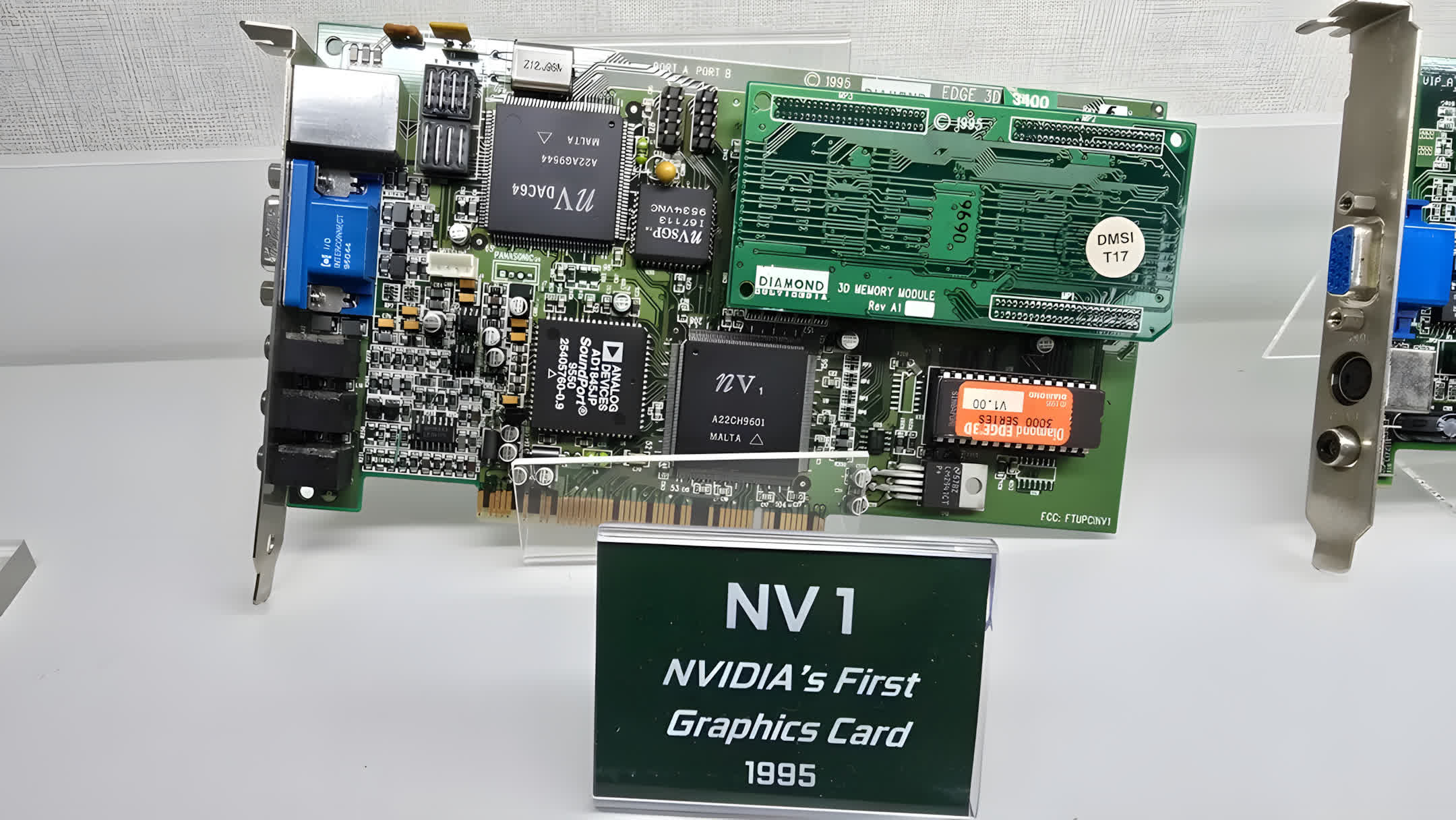
On the Nvidia side, the collection begins with the NV1, released in 1995. The card was a multimedia accelerator rather than a pure GPU, arriving in an era when 3D gaming was still in its infancy. Interestingly, the collector notes that the NV1 was the single most expensive card to acquire, not for its performance but for its rarity and value as a collector's item.
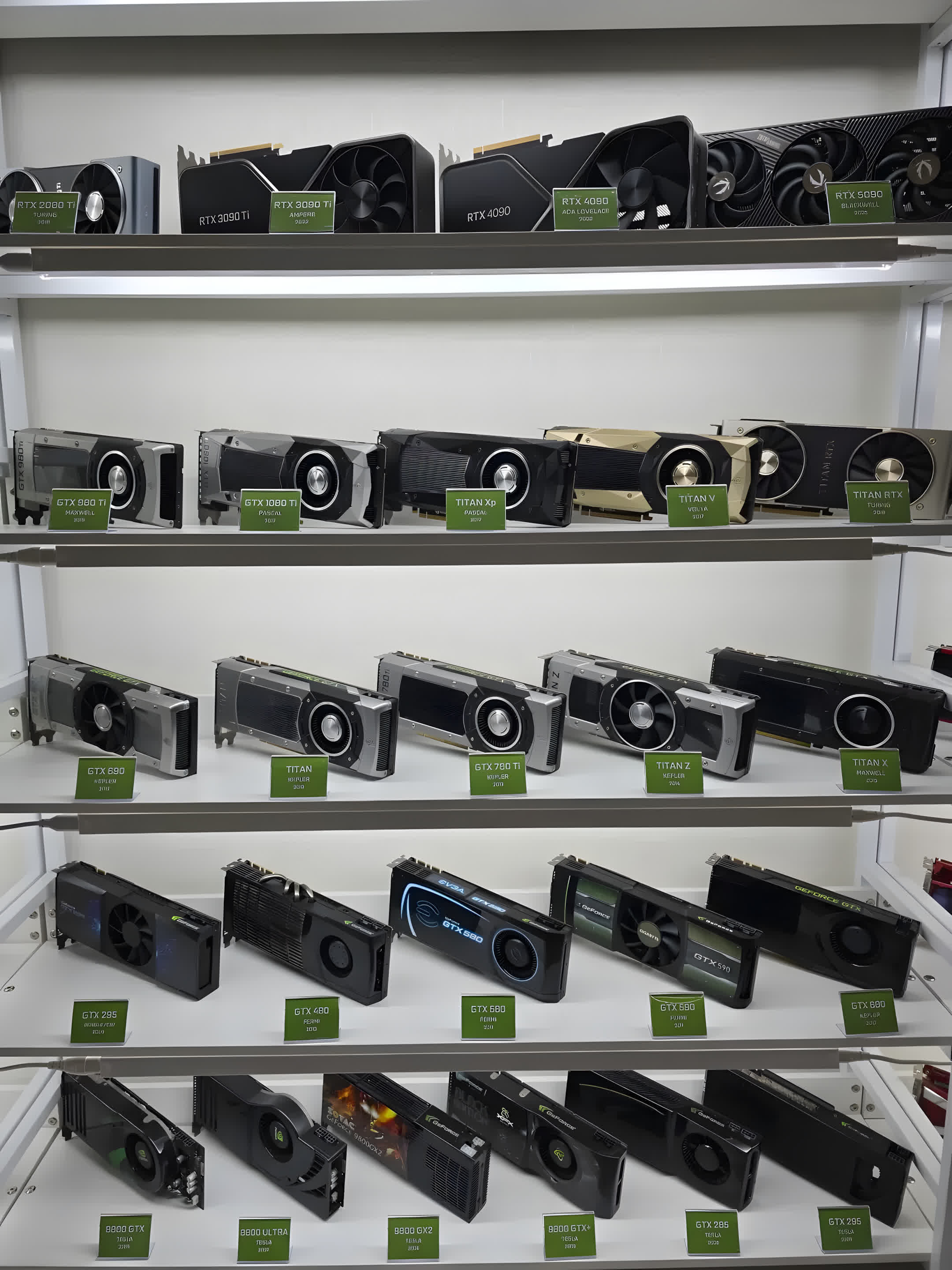
From there, the lineup runs uninterrupted through multiple generations and architectures: the GeForce 6800 GT from 2004, part of the pivotal NV40 family that helped solidify modern shader pipelines; the widely adopted 8800 GT, which brought Nvidia's Tesla architecture to the masses; and milestones like the GeForce GTX 1080 Ti, based on Pascal, still remembered as one of the strongest price-to-performance flagships in history.
The sequence ends with Nvidia's recently released RTX 5090, representing the peak of current-gen design with advanced ray tracing, massive VRAM allocations, and extreme power draw.
AMD's side of the display starts with the Radeon DDR from 2000 and stretches through to the Radeon RX 9070 XT. Along the way are several critical turning points in AMD's GPU history: the Radeon HD 3870 X2, one of the earliest consumer dual-GPU cards and notable at the time for requiring two power connectors – a rarity back then
The Fury X in 2015, which introduced stacked HBM (High Bandwidth Memory) and shipped with a factory-installed closed-loop watercooler, and the Vega 56, a card built on the GCN 5th-gen architecture that became popular among enthusiasts for its strong compute performance and overclocking potential. The modern RX 9070 XT rounds out the collection, showcasing AMD's latest RDNA advancements.
What sets this collection apart is not just range, but selective completeness. The collector writes that for each generation he tried to acquire at least one high-end reference model. Many people keep spare cards for older builds, but almost no one assembles a near-flawless flagship sequence across multiple decades.
However, it's not all pristine, working hardware. In the Reddit thread, the owner (ornstein6990) admits that some of the more recent cards – specifically the GeForce RTX 4090 and 5090 – are non-working units purchased at lower cost, intended for display. He expresses intent to later replace them with working versions when their market prices dip. He also mentions that aside from those, "every single one of those cards works besides the 4090/5090." That caveat adds a layer of honesty about the challenges of sourcing brand-new flagships in working order.

The collector also clarifies that his focus is intentionally limited: he's only collecting Nvidia and ATI/AMD cards, skipping 3dfx, Matrox, S3, and other legacy GPU players, because his nostalgia and interest center on those two brands. Community reaction peaked along the lines of "how much did this cost?" ornstein6990 replied that while he hasn't totaled it, it "definitely doesn't reach $10,000" because many of the expensive recent units were non-functional at purchase.
Other users chimed in with memories of their own hardware milestones – finally running Battlefield 2142 on an 8800 GT, or squeezing extra performance out of a Vega card through overclocking. For many, GPUs aren't just pieces of silicon, rather they're markers of gaming eras, each upgrade mapping directly onto a personal milestone in their history with PC gaming.