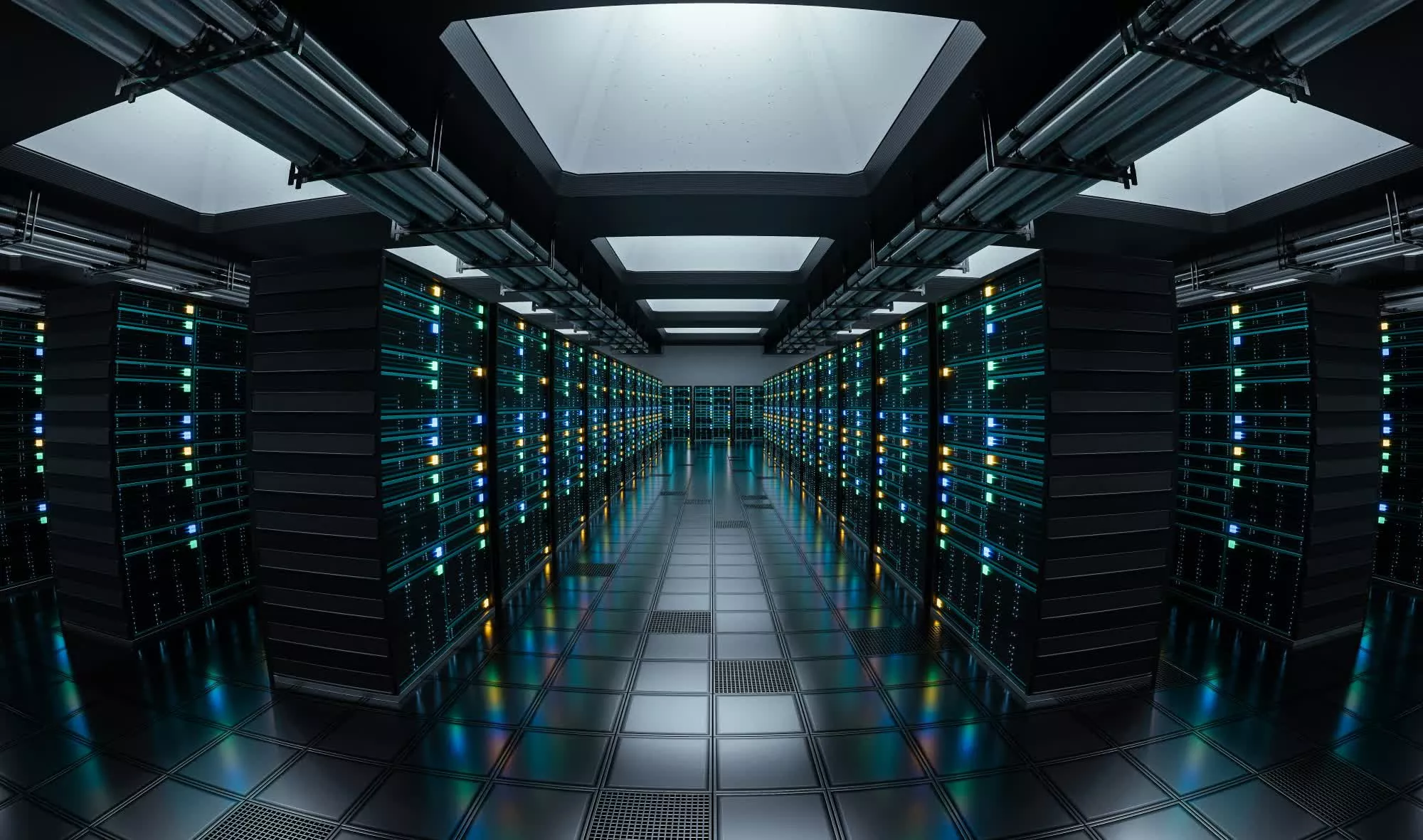
Connecting the dots: US economic growth in 2025 is being driven by an unprecedented surge in AI-related infrastructure spending – an inversion of the forces that have long powered expansion. The boom underscores how deeply artificial intelligence is reshaping the real economy, and it's forcing economists to ask whether America's new growth model is sustainable, or dangerously narrow.
Investment in data centers and information processing technology has taken center stage in the growth of the US economy this year, setting new benchmarks and prompting economists to reconsider long-held assumptions about what drives expansion.
Recent analysis by Harvard economist Jason Furman found that excluding spending on technology-related infrastructure, annualized GDP growth in the first half of 2025 would have been just 0.1 percent – underscoring the extraordinary influence of digital infrastructure investment on overall economic performance.
Related: The AI bubble is the only thing keeping the US economy together, Deutsche Bank warns
The findings make clear that surging demand for advanced computing resources has fueled outsized capital spending among America's largest technology firms. According to multiple analysts, the data center boom has become so pronounced that, for the first time, it has surpassed US consumer spending – traditionally two-thirds of GDP – as the leading contributor to growth.
Renaissance Macro Research estimated in August that the dollar value added by AI-related data center investment outpaced consumer spending growth through the first half of the year.
Investment in information processing equipment & software is 4% of GDP.
– Jason Furman (@jasonfurman) September 27, 2025
But it was responsible for 92% of GDP growth in the first half of this year.
GDP excluding these categories grew at a 0.1% annual rate in H1. pic.twitter.com/7p1eAI1aAa
Furman's research found that while investment in information-processing equipment and software accounted for just four percent of total US GDP during the period, these sectors were responsible for nearly 92 percent of reported GDP growth.
He noted that the impact might be somewhat less pronounced if not for elevated interest rates and rising electricity costs. "Absent the AI boom, we would probably have lower interest rates [and] electricity prices, thus some additional growth in other sectors," he said. "In very rough terms, that could maybe make up about half of what we got from the AI boom." Still, Furman characterized the scale of the contribution as "big" – and difficult to ignore.
The cascade of spending is evident in the capital allocation strategies of industry leaders such as Microsoft, Google, Amazon, Meta, and Nvidia. These firms have collectively funneled tens of billions of dollars into building, expanding, and upgrading their data center footprints. The buildout includes state-of-the-art servers, custom hardware accelerators for machine learning, next-generation networking fabrics, and advanced energy management systems – all required to scale generative AI workloads and cloud services to meet global enterprise demand.
Also see: OpenAI and Nvidia's mega-deals fuel an AI arms race – and fears of a circular bubble
Lisa Shallet, chief investment officer for Morgan Stanley Wealth Management, wrote in a research note that so-called "hyperscaler" companies have increased their data center and related capital expenditures fourfold in recent years, with total spending nearing $400 billion annually.
Shallet observed that the rapid acceleration in outlays among top technology firms accounts for almost one-third of all industry-wide capital spending, distorting the broader economic landscape and adding roughly 100 basis points to US real GDP growth. "The speed of growth and size of the investment are skewing its aggregate economic impact," she said, pointing to the outsized role of a handful of major spenders.

Elsewhere in the economy, growth has been sluggish. Job creation slowed markedly in the first half of the year, while sectors such as manufacturing, real estate, retail, and traditional services contributed little – or even subtracted from – overall GDP.
This dynamic has raised concerns among analysts that, without technology investment, the US might have slipped into a technical recession. Even so, Apollo Global Management Chief Economist Torsten Sløk offered a counterpoint in an early October note to clients, writing, "The consensus has been wrong since January. The average economist's forecast has said the US economy would slow down for nine months consecutively. But the reality is that it has simply not happened. We in the economics profession need to look ourselves in the mirror."
Sløk's comments underscore the uncertainty surrounding the true drivers of recent growth and the difficulty of modeling an economy increasingly defined by digital infrastructure investment.
Meanwhile, questions about the sustainability of this growth persist. Morgan Stanley Chief Economist Michael Gapen pointed to the "mystery" of strong spending data coupled with weak hiring and suggested that corporations have absorbed external cost pressures – such as tariffs and higher labor costs – by compressing profit margins rather than raising prices, a phenomenon not directly tied to the data center boom.