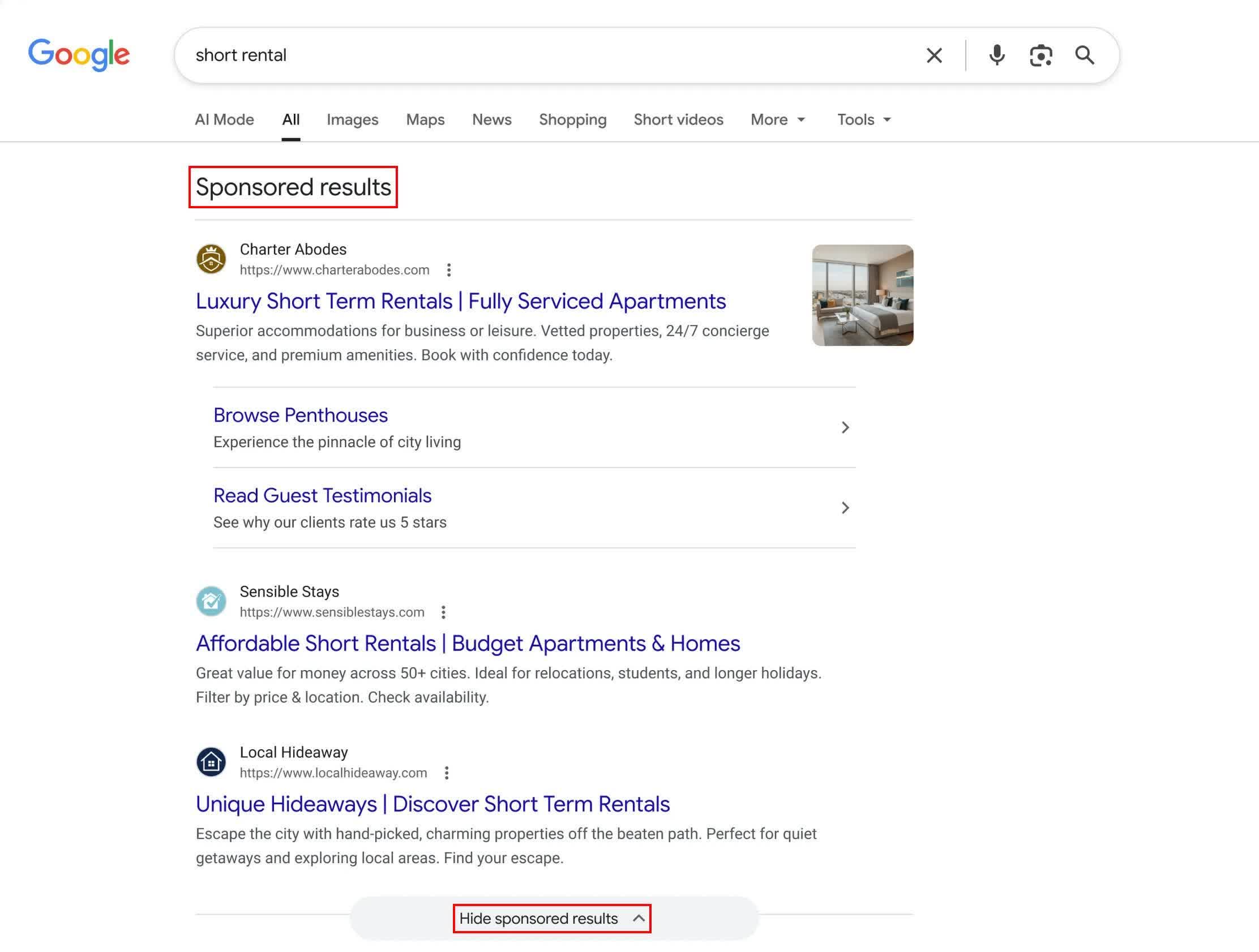
Editor's take: Despite the AI boom and other major shifts on the web, advertising remains Google's – and Alphabet's – primary revenue source. The company recently began a slow rollout of a new ads interface: a collapsible box containing contextual ads that stays pinned above search results.
Google recently updated its sponsored search results – those listings that typically appear above organic results in search engine results pages (SERPs) – with new navigation features. Announced in a brief note on its Ads & Commerce blog, the change groups textual ads under a single "sponsored results" label, giving users a clearer view of paid content and making navigation through search results more intuitive.
The label is designed to be easier to spot – even for the most absent-minded users – and remains visible while scrolling through results, ensuring that paid content is clearly distinguishable from organic listings. Google said the design aligns with its "industry-leading" standards for ad identification, helping billions of people use Search more efficiently and productively. Clear labeling also addresses growing scrutiny from regulators and consumer advocates concerned about transparency in online advertising.

Google is adding a control that lets users quickly hide paid listings, though they must scroll through the ads before accessing the new button. The search giant claims internal tests show users navigate SERPs more efficiently with the redesign, which keeps ad sizes unchanged and limits each group to four text listings.
The new "Sponsored" label also applies to Shopping ads and other paid placements. Google has begun rolling it out globally across desktop and mobile search. The header will appear above AI Overview results as well, maintaining consistent ad visibility across formats.
Sponsored search results have long been a key revenue driver for Google, but they've also sparked controversy over how the company displays them. At one point, Google attempted to blend text ads into organic search listings, a move that drew criticism and ultimately led the company to reverse course.
More recently, US regulators found Google guilty of maintaining an illegal advertising monopoly. The company must now grant competitors unprecedented access to its search index and related data – a ruling that could reshape the online advertising landscape.