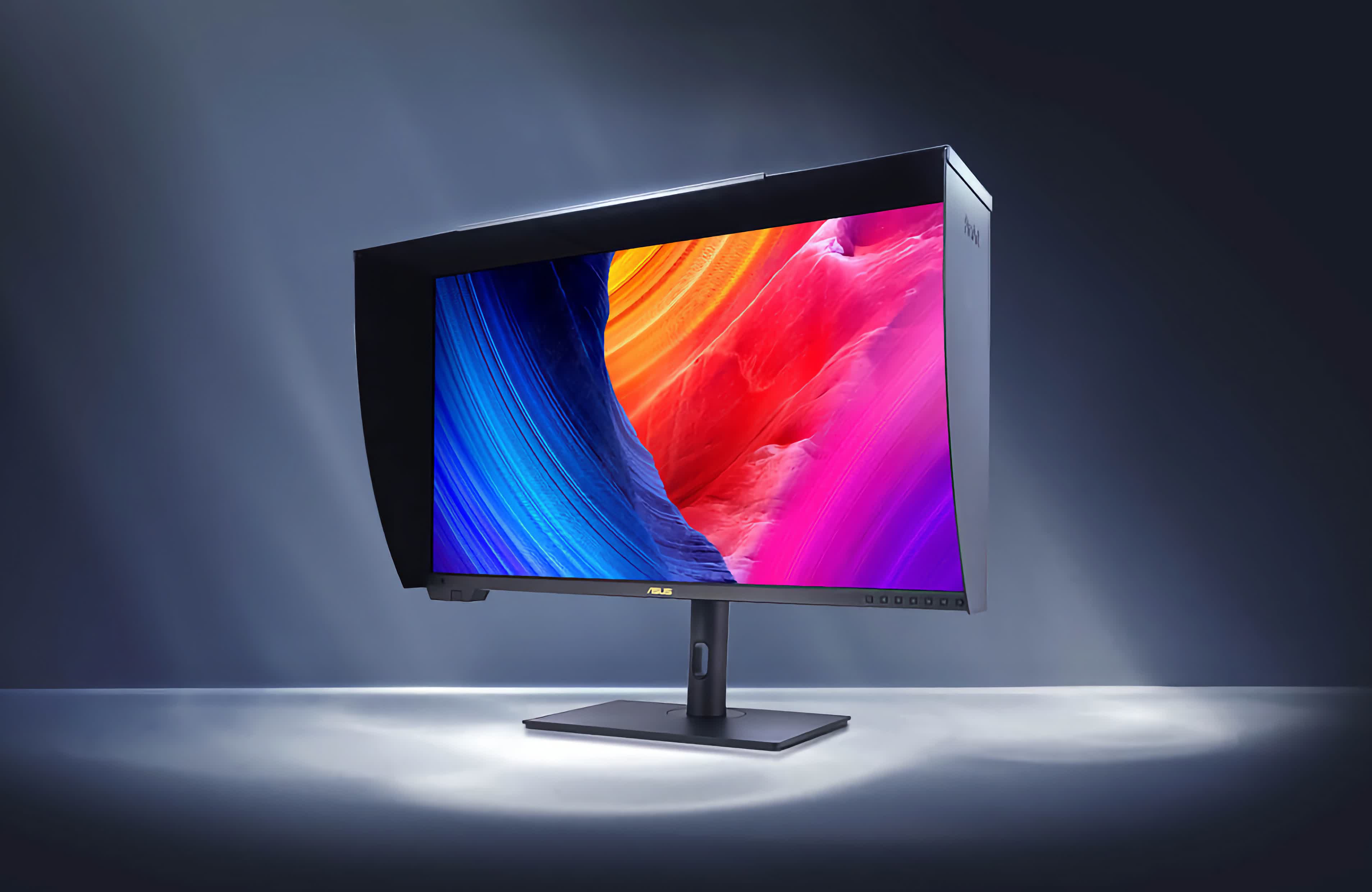
The big picture: Displays that support 8K remain uncommon due to the limited availability of true 8K content. However, the additional pixel density is valuable for certain professional workflows, which is the main selling point behind the Asus ProArt line and its newest entry into the 8K market
Asus' first 8K monitor, which is also the first 8K display to support HDR and Dolby Vision, will become available later this month. Pricing hasn't yet been announced, but the display includes a wide range of features aimed at professional image and video editors.
The ProArt Display 8K PA32KCX is a 32-inch Mini-LED professional monitor that supports resolutions up to 7,680 x 4,320, amounting to 33.2 million pixels at 275 pixels per inch. The display offers double the linear resolution of 4K, triple that of 1440p, and quadruple that of 1080p.
Although 8K screens are not unheard of, manufacturers have stepped back from them due to a lack of 8K content. Sony has not released a new 8K TV since 2022 and has none planned for the foreseeable future. Dell's $4,000 UP3218K, introduced in 2017, remains the only 8K option at some PC storefronts.
Like most displays that exceed 4K resolution, the UP3218K is targeted at professionals who need extremely fine visual detail for tasks like video editing, design, and VFX work. It's therefore unsurprising that Asus's first 8K model arrives as part of its productivity-focused ProArt series.
The PA32KCX combines its high pixel count with robust HDR capabilities, launching with support for HLG and HDR10, and adding Dolby Vision via firmware shortly after release.
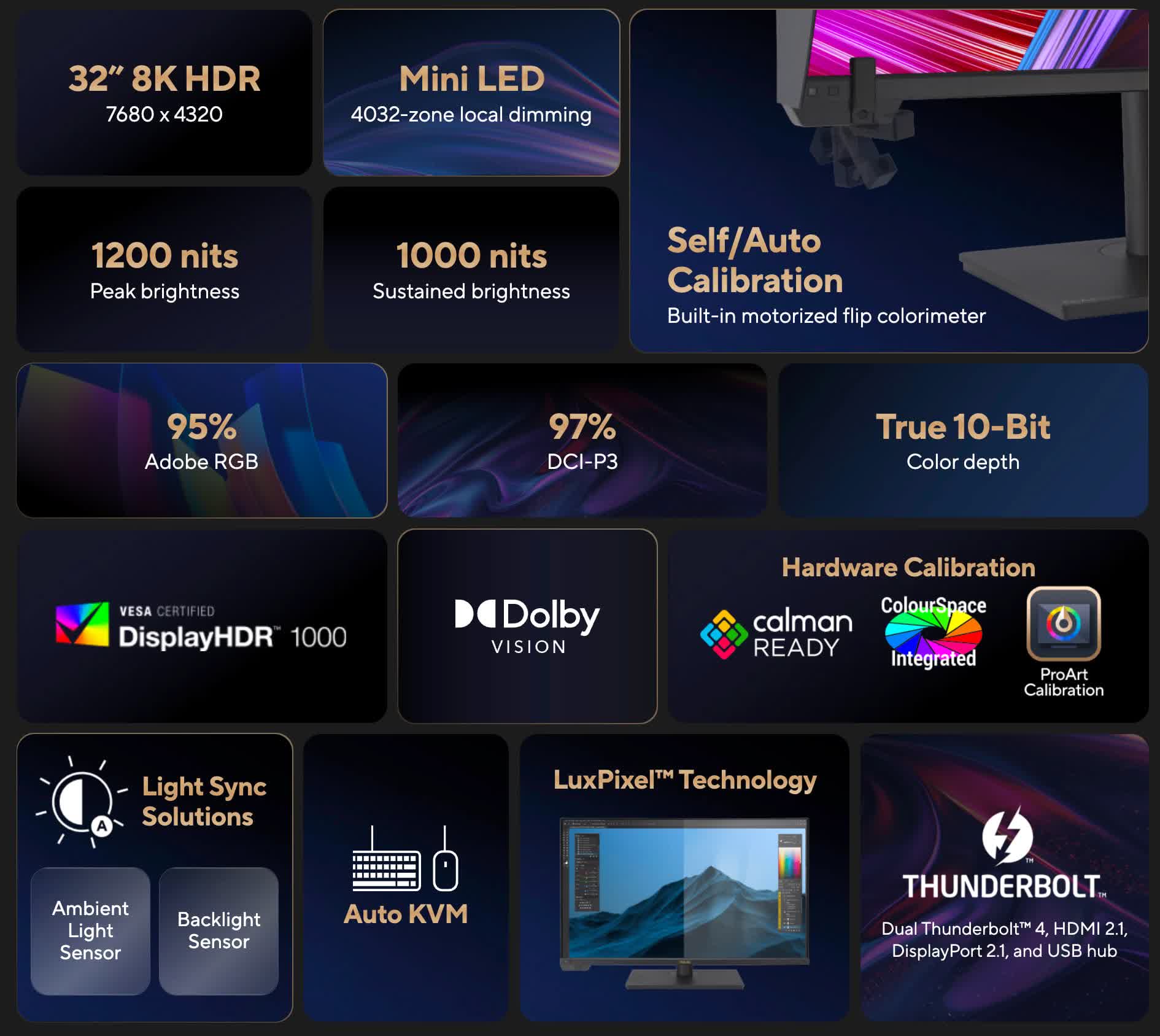
The monitor delivers 1,200 nits of peak brightness and 1,000 nits sustained full-screen brightness, with 10-bit color depth, 100% sRGB, 99% Adobe RGB, 97% DCI-P3, and Rec. 2020 gamut coverage. It also promises Delta E < 1 color accuracy.
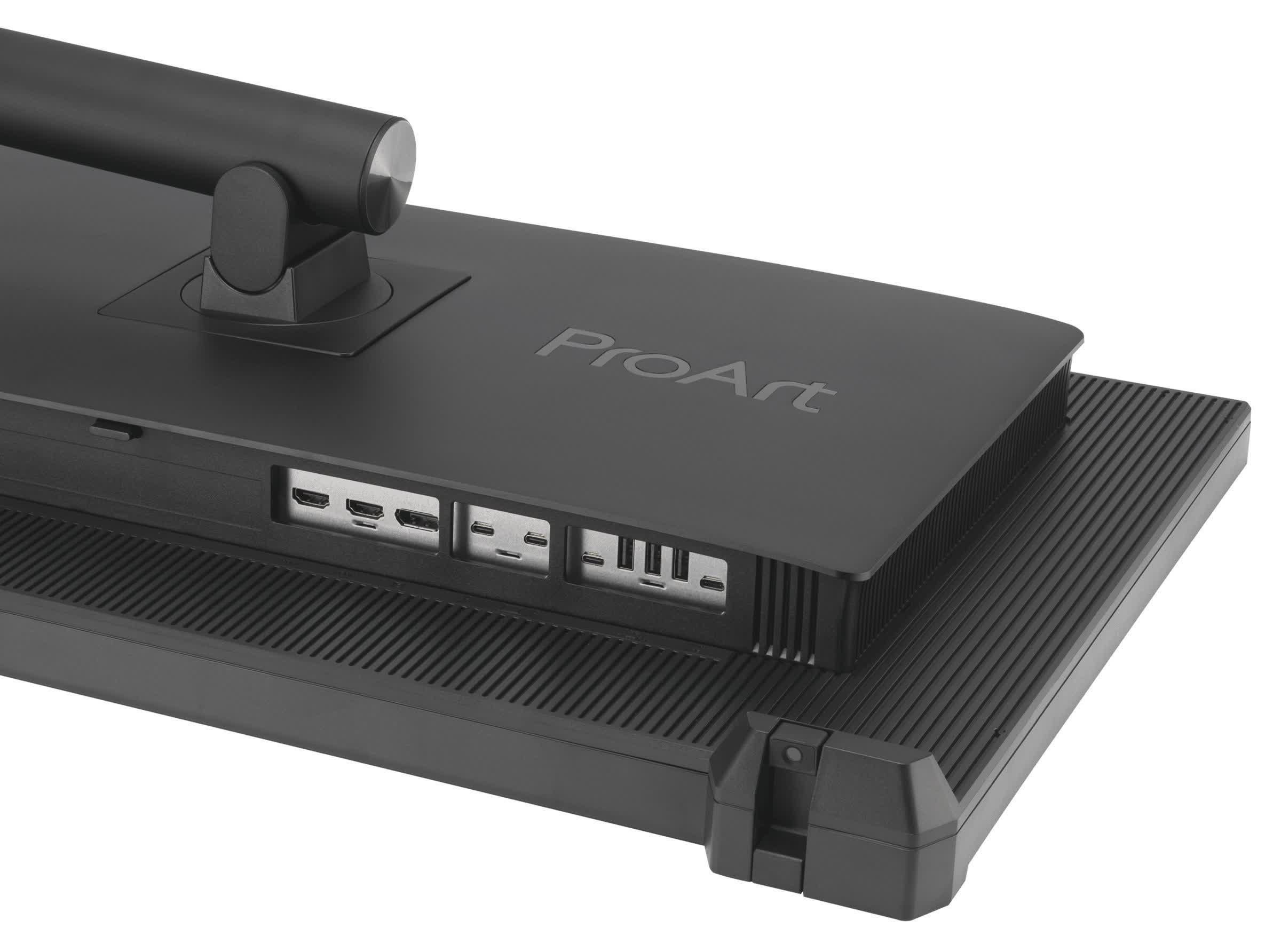
For connectivity, the display includes a built-in USB hub with dual Thunderbolt 4 ports offering up to 96W power delivery and KVM switching, letting users control two systems with one keyboard and mouse. Although the HDMI Forum recently finalized the HDMI 2.2 spec (which supports 8K at higher refresh rates) Asus' new monitor still relies on HDMI 2.1 and DisplayPort 2.1.
HDMI 2.2-capable hardware isn't expected to reach the market for another couple of years. Even if mainstream 8K adoption remains slow, both HDMI 2.2 and DisplayPort 2.1b will also allow higher refresh rates at lower resolutions once devices begin to ship.