
The big picture: Apple's expansion into orbital communications reflects steady pragmatism rather than grand ambition. What began as a bid to replace carriers has evolved into a deliberate, incremental march toward universal coverage. A decade into the experiment, the iPhone is not yet fully connected to space, but with each software update, it moves closer to that horizon.
Nearly a decade after hiring two senior satellite engineers from Alphabet to explore off-world communications, Apple's once-secret project has become a core part of its connectivity roadmap. What began as a radical plan to bypass wireless carriers entirely has evolved into a cautious, technically complex expansion of mobile services via orbiting satellites.
When Apple introduced Emergency SOS via Satellite with the iPhone 14 lineup in 2022, it was less a novelty than a strategic foothold. The system enabled users to reach emergency responders without cellular or Wi-Fi service, routing messages through low-Earth-orbit satellites. Two years later, Apple extended the capability to roadside assistance via AAA, and most recently, to standard text messaging for off-grid users.
The technology is coordinated by Apple's Satellite Connectivity Group, led by senior hardware engineering director Mike Trela. The system currently relies on Globalstar, a Louisiana-based satellite operator whose constellation forms the backbone of Apple's service.
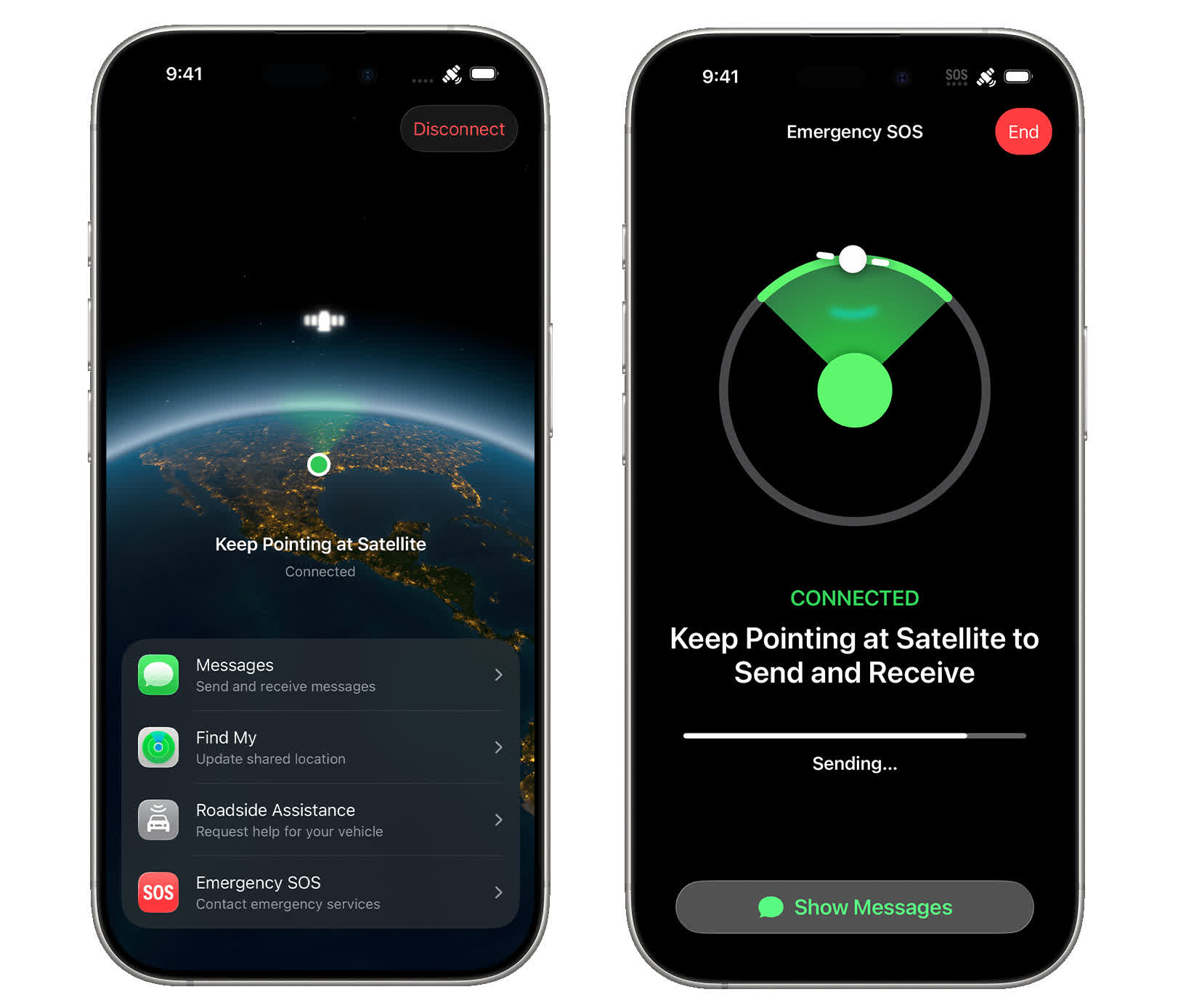
Globalstar's network – while aging and relatively small – has proven stable enough for Apple's initial offerings. The company has co-financed upgrades to the fleet, aiming to enable broader functionality. However, the partnership exists in an uncertain environment as Globalstar has been exploring a sale, and SpaceX is reportedly among the potential buyers.
Internally, Apple's involvement in the satellite business has long been debated. Early in the initiative, executives argued over whether Apple should act as a network operator at all. Some insisted that the company's core strength lies in hardware and software integration, not in competing with carriers.

Still, Apple's leadership views space connectivity as a long-term play. As non-terrestrial networks mature, they could serve as an extension – or even a replacement – of traditional cellular systems. By building internal expertise now, Apple aims to shape that future rather than rely on third-party networks.
Technical constraints add another layer of complexity. Apple's current protocols are optimized for Globalstar's spectrum and channels, making interoperability with other constellations challenging. Transitioning to a new partner would require a full rewrite of software and potentially new modem architectures, creating a strong incentive for Apple to continue refining its in-house satellite systems.
Apple is developing a range of new satellite features that reflect its long-term commitment, according to Bloomberg's Mark Gurman. Engineers are building an API framework to allow third-party developers to integrate satellite messaging and data transfer directly into their apps. The company is also working on satellite-based Apple Maps navigation for use without cellular coverage, along with next-generation messaging capabilities that include image transmission.

One of the most significant technical challenges is what Apple engineers call "natural usage" – maintaining a satellite link while the iPhone is in a pocket, vehicle, or building, rather than requiring users to aim the device at the sky. Overcoming this will require more advanced antennas and adaptive beam-forming to maintain alignment with fast-moving satellites, a capability Apple plans to incorporate into future modem chips, Gurman reports.
The next iPhone generation, expected in 2026, is slated to support 5G NTN, enabling ground-based cellular towers to use satellites for backhaul and continuity of coverage.
Apple's current satellite features have been offered for free, primarily to strengthen the iPhone's value proposition and foster ecosystem loyalty. Future enhancements could create a two-tier model: essential emergency services remaining free, with premium connectivity – potentially through partnerships with carriers or providers like SpaceX – offered via subscription.
If SpaceX acquires Globalstar, collaboration with Starlink could enable richer data transmission, potentially including limited voice or video capabilities, which Apple has so far avoided. Whether Apple remains solely an infrastructure partner or evolves into a full satellite operator will shape the scope of its future satellite ambitions.