Ripple effect: Amid growing talk of an AI bubble, a study by Japanese market analysts has found that five of the largest American technology companies are carrying a collective "hidden" debt of over $1.65 trillion, driven largely by massive spending on AI infrastructure. That undisclosed sum exceeds the $1.35 trillion the same companies have officially reported on their balance sheets, and it has grown eightfold over the past four years.
According to estimates from Nikkei Asia, Alphabet, Microsoft, Amazon, Meta, and Oracle have together amassed roughly $3 trillion in total debt, a large share of it tied to exorbitant AI infrastructure spending – long-term data center lease agreements, along with costly servers, graphics accelerators, and other computing hardware that has yet to be delivered.
The report notes that less than half of the true debt figure appears directly on balance sheets, with the remainder disclosed only in accounting footnotes attached to SEC filings. Nikkei was careful to point out that the financial commitments behind this debt are legal under US law, but that the way they're reported makes it harder for retail investors to accurately gauge these companies' financial health.
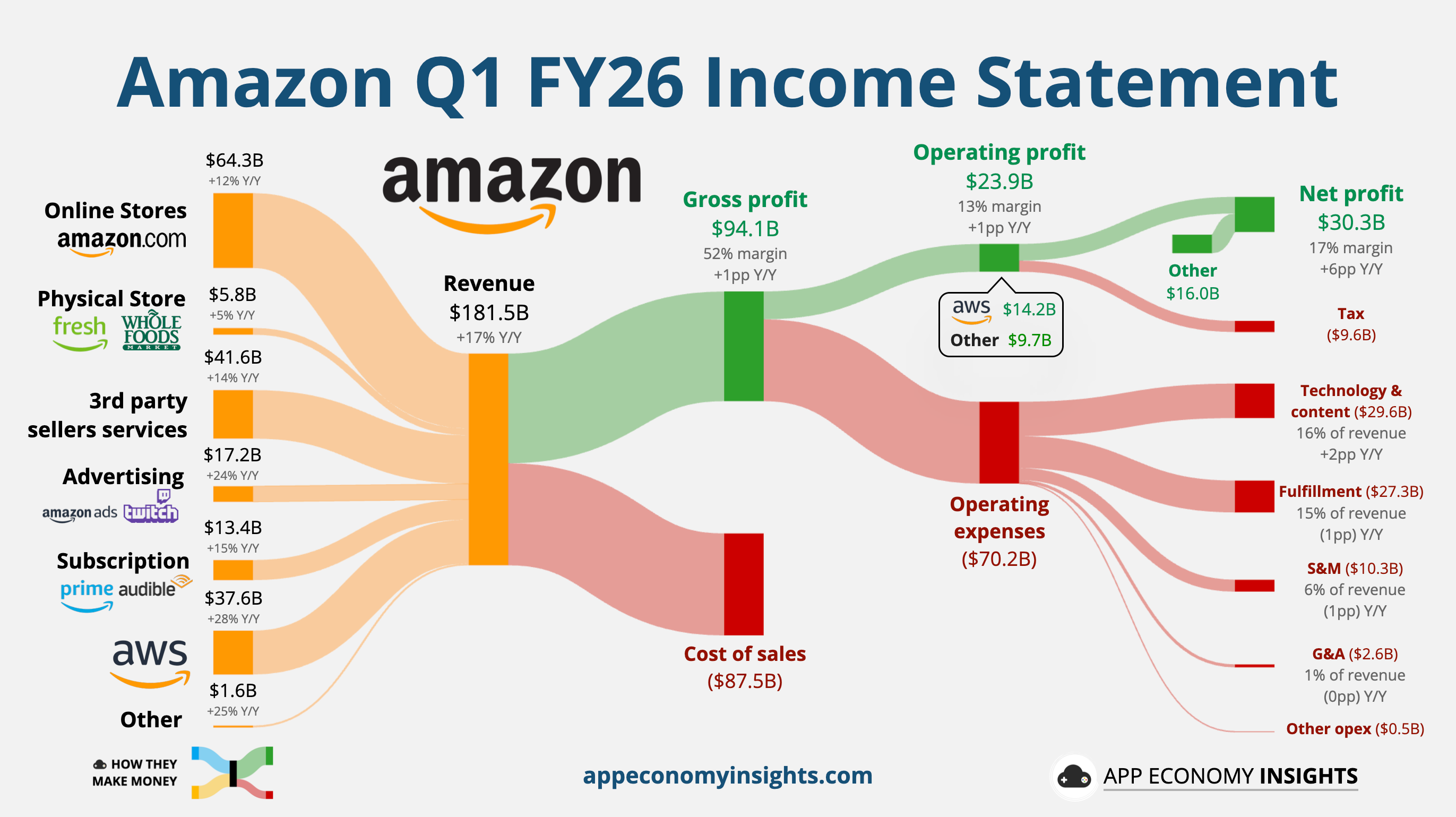
Credit: App Economy Insights
Of the five companies in the study, Meta carries the largest estimated hidden debt, at around $420 billion – nearly three times what it disclosed in its FY 2026 financial statement.
The company's Hyperion data center in Louisiana, for instance, includes a $27 billion investment from Blue Owl Capital that never appeared in its official earnings report. It's a fully legal maneuver under current US accounting rules, but one that illustrates just how much can stay out of view.
Oracle's hidden debt has grown roughly 30-fold over the past four years, reaching $273.3 billion as of the end of May 2026. Most of that stems from long-term leasing agreements with third-party data center operators, part of the company's push to expand its Stargate AI data center project across sites in Texas, New Mexico, Michigan, and Wisconsin.
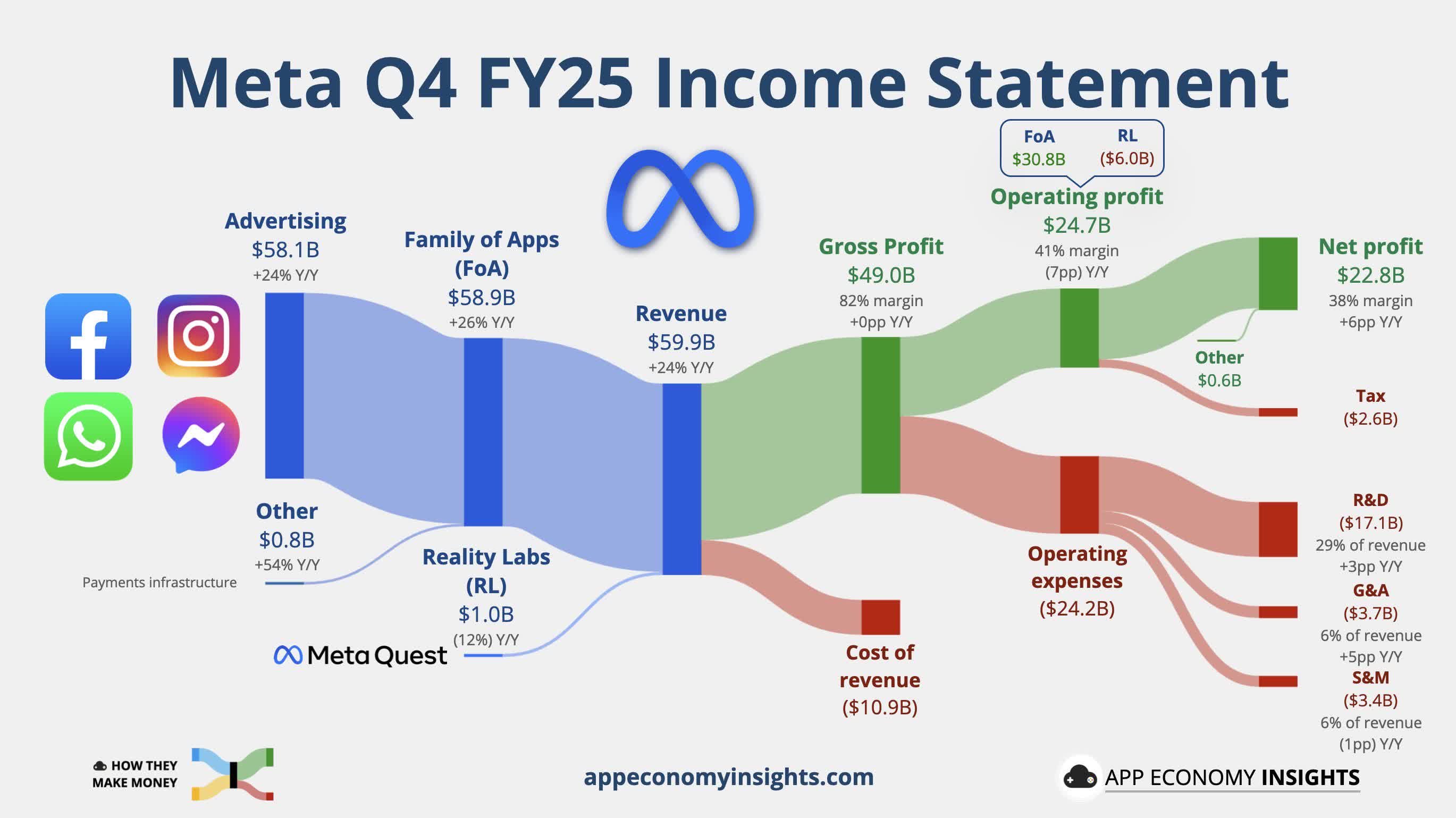
Credit: App Economy Insights
While much of this debt remains invisible to everyday investors, institutional players and credit rating agencies are starting to take notice. Morgan Stanley and Moody's have both raised concerns about the practice, and S&P recently downgraded Oracle's short-term rating from A-2 to A-3, and its long-term rating from BBB to BBB-, placing it just one notch above junk status.
Amazon, Meta, Microsoft, and other US tech giants are hiding $1.65 trillion in AI debt


