
The big picture: The industry now operates less like a series of experiments in digital disruption and more like an established marketplace with clear hierarchies and consistent revenue logic. Profitability has become the new growth story. If the last decade was about building audiences, the next one will be about pricing them correctly. "This is akin to what life was like in the legacy pay-TV days," said Forrester Research's Mike Proulx.
The economics of streaming are shifting from expansion to monetization. Nearly every major platform – from Netflix to HBO Max and Apple TV – has raised its prices over the past year, marking one of the sharpest rounds of increases since the subscription model upended cable television. Paramount+ will follow early next year, continuing a wave of "streamflation" that has reshaped how audiences and advertisers value digital entertainment.
The latest round of pricing changes reflects how mature the streaming business has become. The first decade of fierce competition centered on subscriber growth, fueled by deep losses and constant content expansion. That phase is ending.
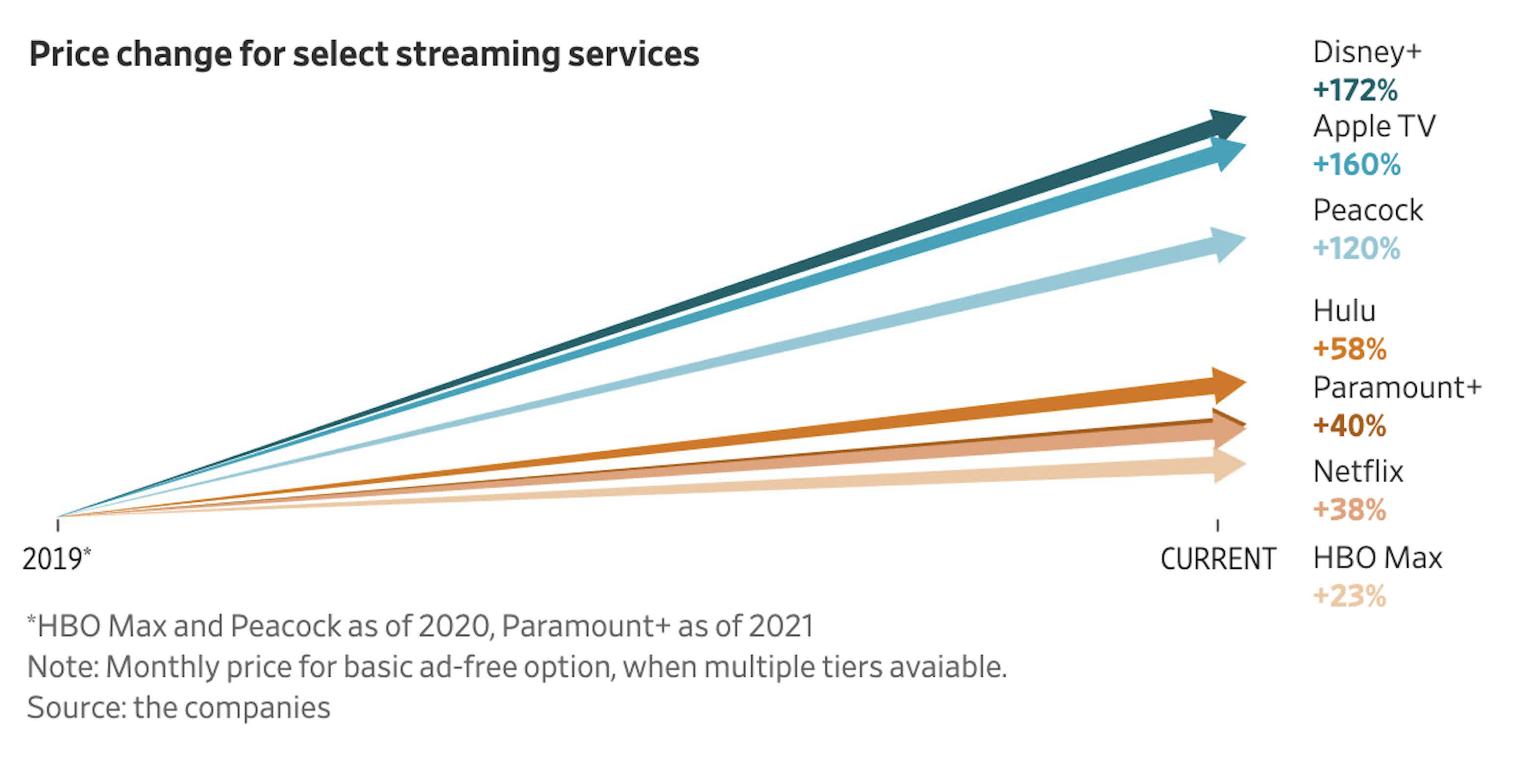
Platforms now emphasize profitability, pushing consumers to costlier ad-free tiers or nudging them toward new, ad-supported plans that promise lower monthly bills – and new revenue streams for the companies behind them.
Streaming leaders have linked much of the price pressure to escalating costs for live programming, particularly sports. Warner Bros. Discovery, which raised the price of its HBO Max basic tier to $10.99 a month, has invested heavily in NASCAR, Big 12 football and basketball, and upcoming playoff coverage. The same platform will drop its NBA games this season and discontinue CNN's live news feed, which will relaunch as a separate service.
The changes illustrate a broader recalibration: rights deals remain expensive, but the content mix keeps shifting as companies refine where live sports, serialized drama, and news content belong.
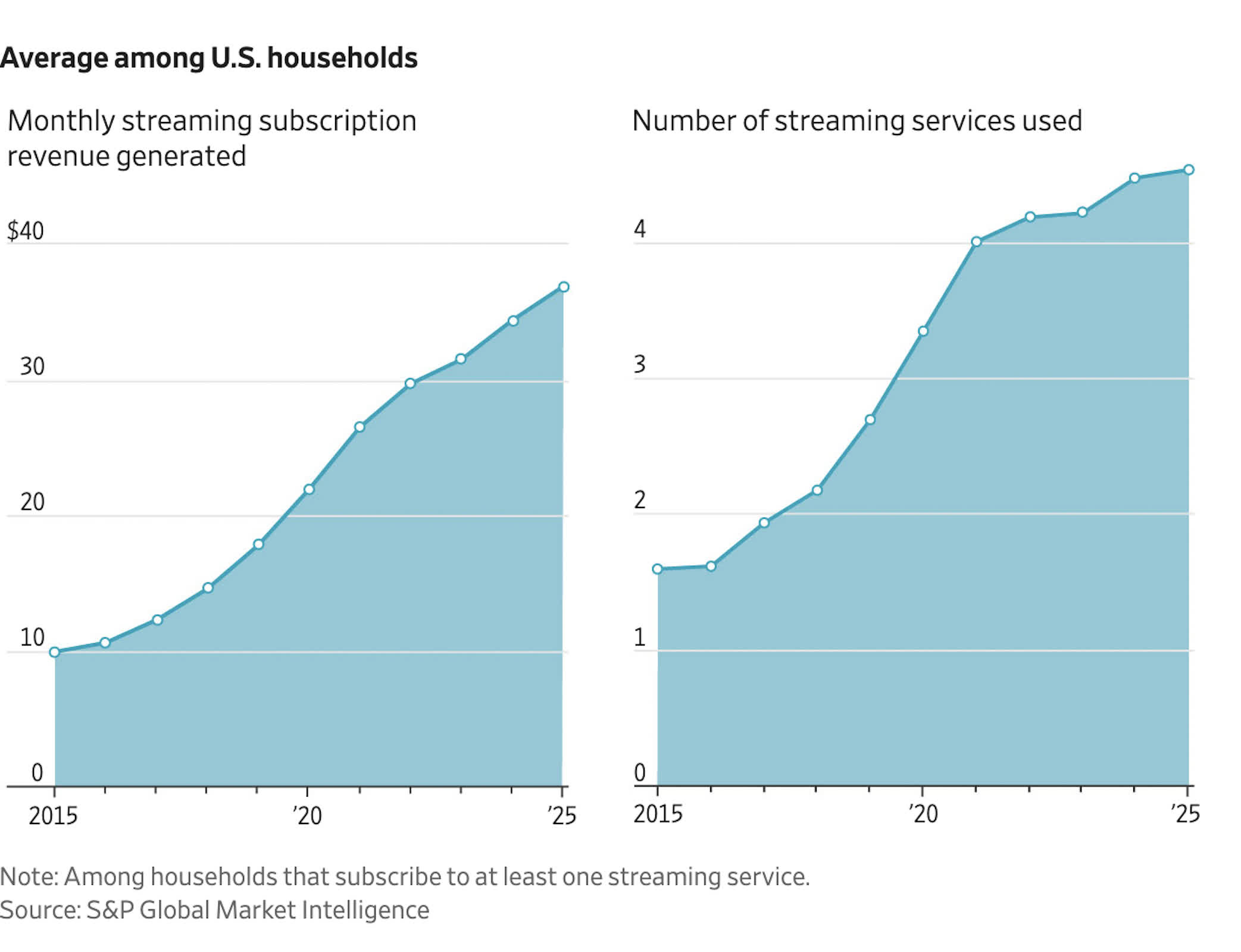
Apple TV and Peacock followed similar pricing moves in mid-2024, and Hulu and Disney+ raised their rates soon after. Netflix, which raised prices in January, maintains one of the most tiered strategies, spanning from a $7.99 ad-supported option to a $24.99 premium plan.
MoffettNathanson analyst Robert Fishman tells The Wall Street Journal that Netflix's pricing framework is helping it maintain one of the lowest cancellation rates in the industry, flat at around 2 percent since mid-2023. "Netflix has really cracked the code in terms of pricing," Fishman said.
Other streamers are finding that customers rarely cancel outright. Instead, they downgrade to cheaper, ad-supported versions. Forrester Research's Mike Proulx says that behavior reflects a maturing market rather than disillusionment. "Rather than ditching a service entirely, consumers now have more options to switch to lower-cost ad-supported tiers," he said. Nearly half of Netflix's US viewing hours now occur on its ad-backed plan, up from roughly one-third a year earlier, according to Comscore's State of Streaming report.
As ad-funded tiers grow, so does the need to prove their reach. The result has been a surge in partnerships and bundles that mimic the old cable packaging logic. Peacock and Apple TV introduced a joint plan in October priced at $14.99 a month with ads, or $19.99 without, far cheaper than subscribing to both separately. Over the summer, ESPN joined forces with Fox to offer a new sports-centric bundle for $39.99 a month.
These platform-to-platform alliances extend into other industries. Disney, Warner Bros. Discovery, and others have built distribution partnerships with companies such as Verizon and American Express, using promotions and rewards to soften the impact of rising fees.
Streaming's transformation comes with contradictions. Some services are smaller after years of contraction – shedding rights, shows, or news coverage to improve margins – while still charging more. Yet users appear reluctant to abandon them. Antenna's data shows subscriber exit rates are stable across most major platforms, even as high-profile controversies at Disney and Hulu in September briefly dented retention rates before quickly rebounding.
Image credit: The Wall Street Journal