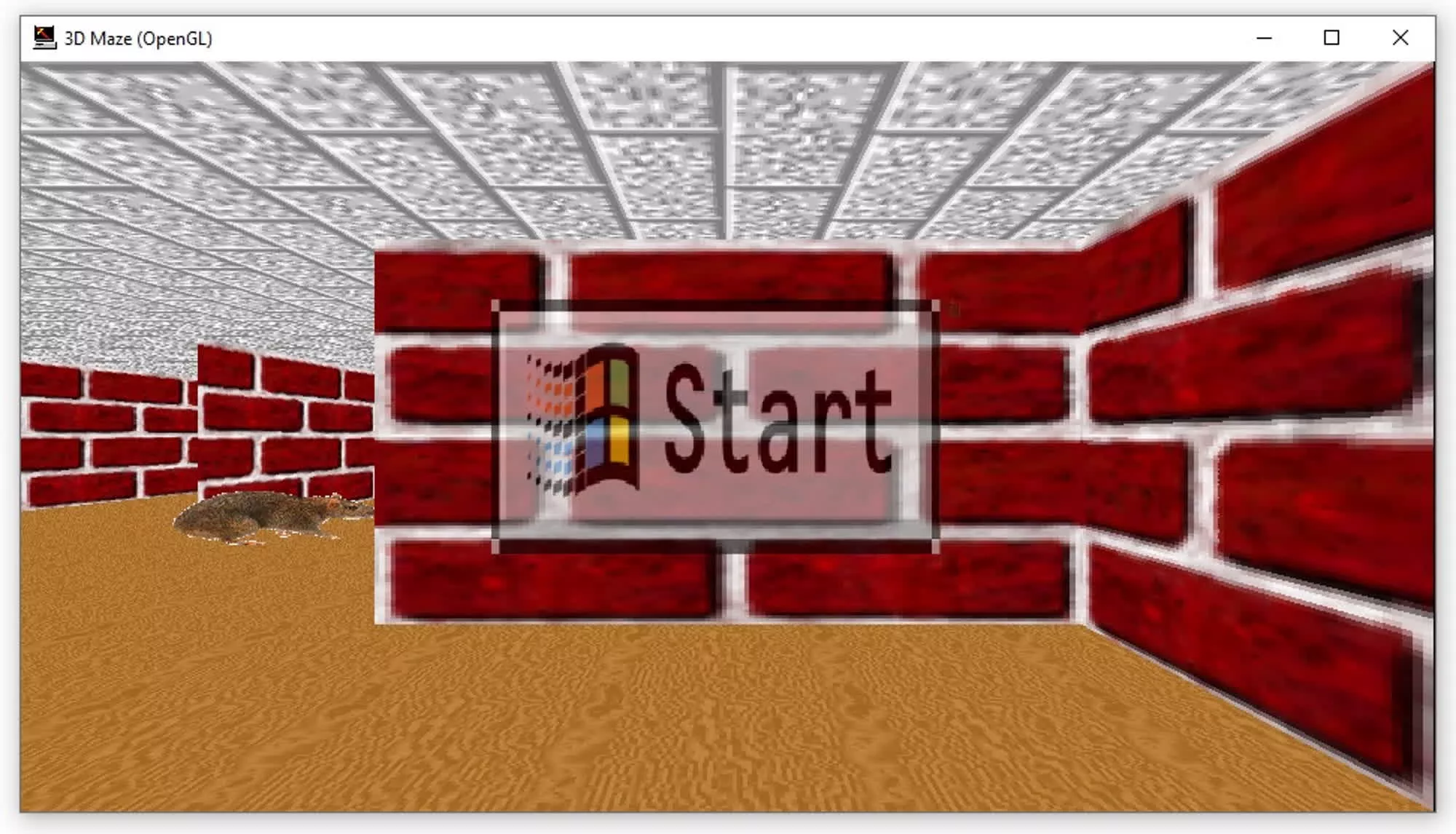
Recap: 3D Maze was one of the screensavers that shipped with Windows 95. The program was designed as a non-interactive demonstration of the graphics libraries supported by the new operating system. Interestingly, Microsoft programmers had the foresight to include the interaction logic within the original executable anyway.
Microsoft has historically used small games and even screensavers to demonstrate notable features in new Windows releases. The 3D Maze screensaver was designed to showcase the OpenGL graphics libraries, alongside other programs Redmond developers created for Windows NT 3.5 and later editions of the OS.
The original 3D Maze allowed a "player" to navigate through a randomly generated maze, which impressed many users experiencing Windows 95 for the first time. Earlier this year, a programmer decided to turn the tool into a fully playable game – a task that proved surprisingly straightforward.
The playable version of 3D Maze, now available on GitHub, is based on the programmer's reverse-engineering of the original binary. Most of the core maze logic was already present, so he simply removed the computer-controlled behavior and replaced it with external keyboard inputs.
The playable release of 3D Maze includes a new launcher, Playable3DMazeLoader.exe, which loads the original 3D Maze executable (ssmaze.scr) into memory and injects a DLL containing the new interactive functionality (Playable3DMaze.dll). The launcher relies on hard-coded offsets, so it only works with the original ssmaze.scr program that Microsoft shipped with various Windows 9x releases up to Windows ME.
The developer also fixed several minor bugs and added an option to display an overhead map of the current maze using the Tab key. While many users had long hoped to play an interactive version of 3D Maze, my own expectations were different, shaped by extensive hours playing Wolfenstein 3D under DOS.
As the developer notes on GitHub, previous projects recreated 3D Maze using modern game engines while retaining the original textures. His version, however, may be the most "authentic," as it relies on the original binary file to transform the screensaver into a fully interactive, open-source experience.
Interestingly, he could have sought assistance from Microsoft. Back in 2013, the company collaborated with developer Dan Church to create a browser-based version of the Windows 95 game Hover! as a showcase of WebGL support in Internet Explorer 11.
If you're into Windows retro games, you may also want to check out the Microsoft Plus!-era 3D Pinball: Space Cadet which is a free download and works on all Windows versions.