What just happened? Android's annual major releases have gone the same way as its dessert-themed names. The current Android 16 QPR2 rollout marks the end of a single big update to the operating system once a year – now, users get two.
Since Google rolled out the first version of Android in 2008, it has mostly released one major update each year. But this often resulted in fairly new Android phones having to wait months to receive the latest version of the OS after it landed on Pixel devices.
However, like when Google stopped naming its Android releases after desserts (in alphabetical order) and switched to numbers instead, things have changed.
Android 16 QPR2 marks the beginning of Google's twice-yearly release schedule. It follows the first Android 16 rollout in June, and as usual, will be landing on Pixel devices first: the Pixel 6 series and newer.
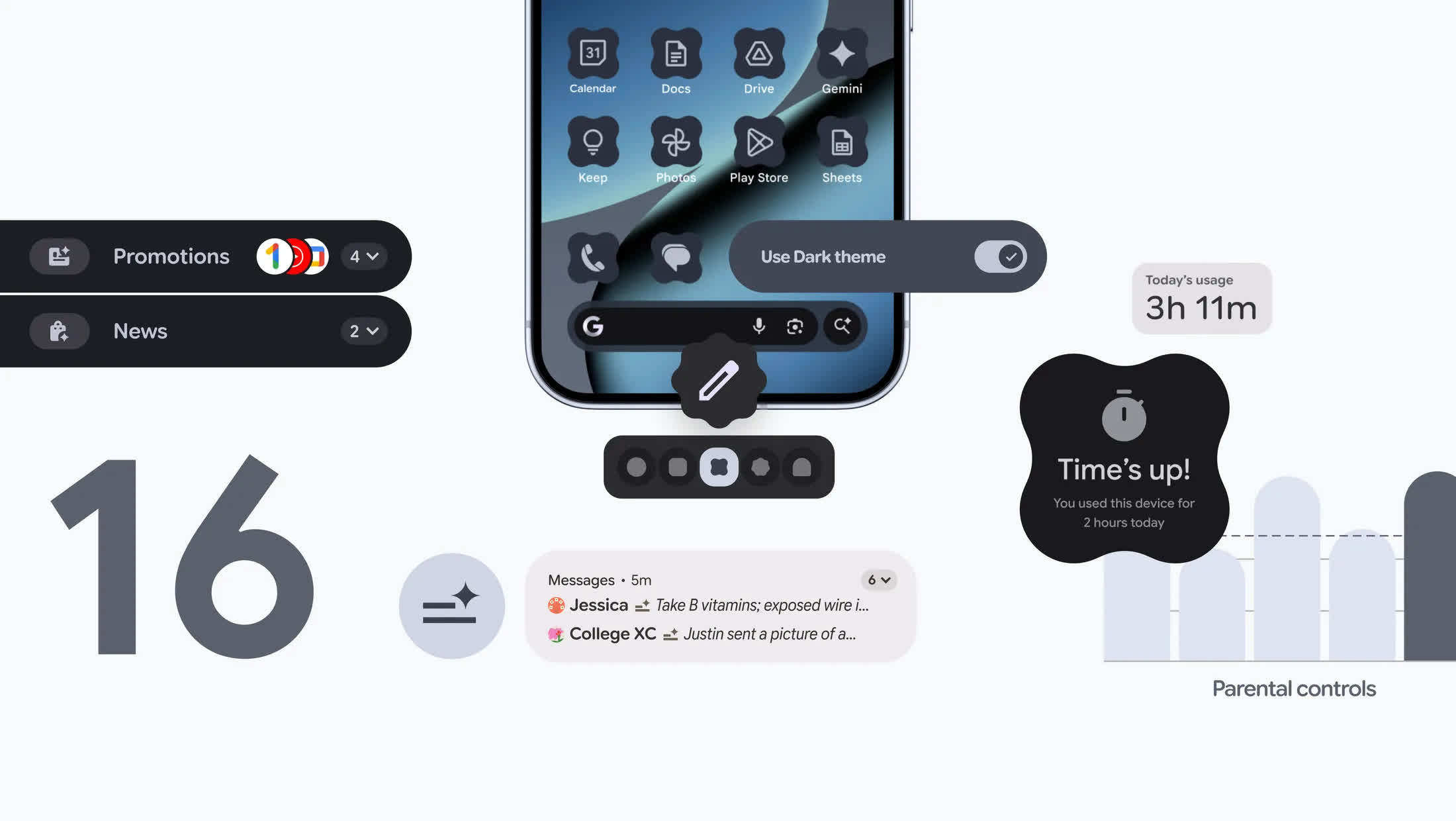
There are fewer changes in this release compared to June's. Among the biggest new additions is a smarter approach to notifications: QPR2 introduces a notification organizer that sorts low-priority alerts into categories like News, Promotions, or Social, plus AI-powered notification summaries designed for condensing long chats or group messages into highlights.
Android 16 QPR2 also gives users more control over the look of their home screens. You can now choose custom icon shapes beyond the default circle, and forced or auto-themed icons ensure a consistent aesthetic even for apps that don't natively support them. The dark theme gets an upgrade with the"Expanded Dark Theme option, which forces dark mode in many apps that otherwise default to a light interface
QPR2 brings back or extends some system-level conveniences: lock-screen widgets return – accessible by swiping left – letting users pin their most-used widgets for quick access. There are also improvements to brightness controls in HDR content via a new Enhanced HDR brightness slider, which helps manage display intensity when viewing HDR media.
Behind the scenes, QPR2 delivers expanded media and developer capabilities, with new APIs for audio, media routing, and multi-display testing – among other lower-level enhancements – giving app developers more tools without forcing compatibility re-writes.