
Forward-looking: The PC business is navigating a truly unprecedented transition period amid the AI bubble. Hardware component costs are soaring, and the DIY movement has essentially stalled while OEM manufacturers struggle to stay afloat. Despite the challenges, analysts remain optimistic about the year's overall outcome.
Omdia recently released its latest quarterly report on PC shipments in the US. The market research firm, formerly known as Canalys, said the PC market fell for a second consecutive quarter, a decline driven primarily by US administration policies on tariffs, education, and government investment.
During the third quarter of 2025, US PC shipments fell one percent compared with the same period in 2024, totaling 17.7 million units. Results varied by market: the consumer segment grew eight percent to 7.6 million units, and the commercial segment declined one percent. The biggest mover was the education and government segment, which dropped 23 percent.
Omdia analyst Greg Davis noted that education and government spending started strong in Q1 but have since entered a mostly declining trend. Key factors include a sharp reduction in federal funding for schools and government agencies, while record layoffs have put technology spending on hold.
Companies spent the past few months building significant hardware inventories to weather the effects of tech tariffs. Davis said companies will now gradually draw down their surplus and anticipates the rate of decline will stabilize. The commercial segment should fare better than other parts of the market, having faced a less severe contraction in Q3.
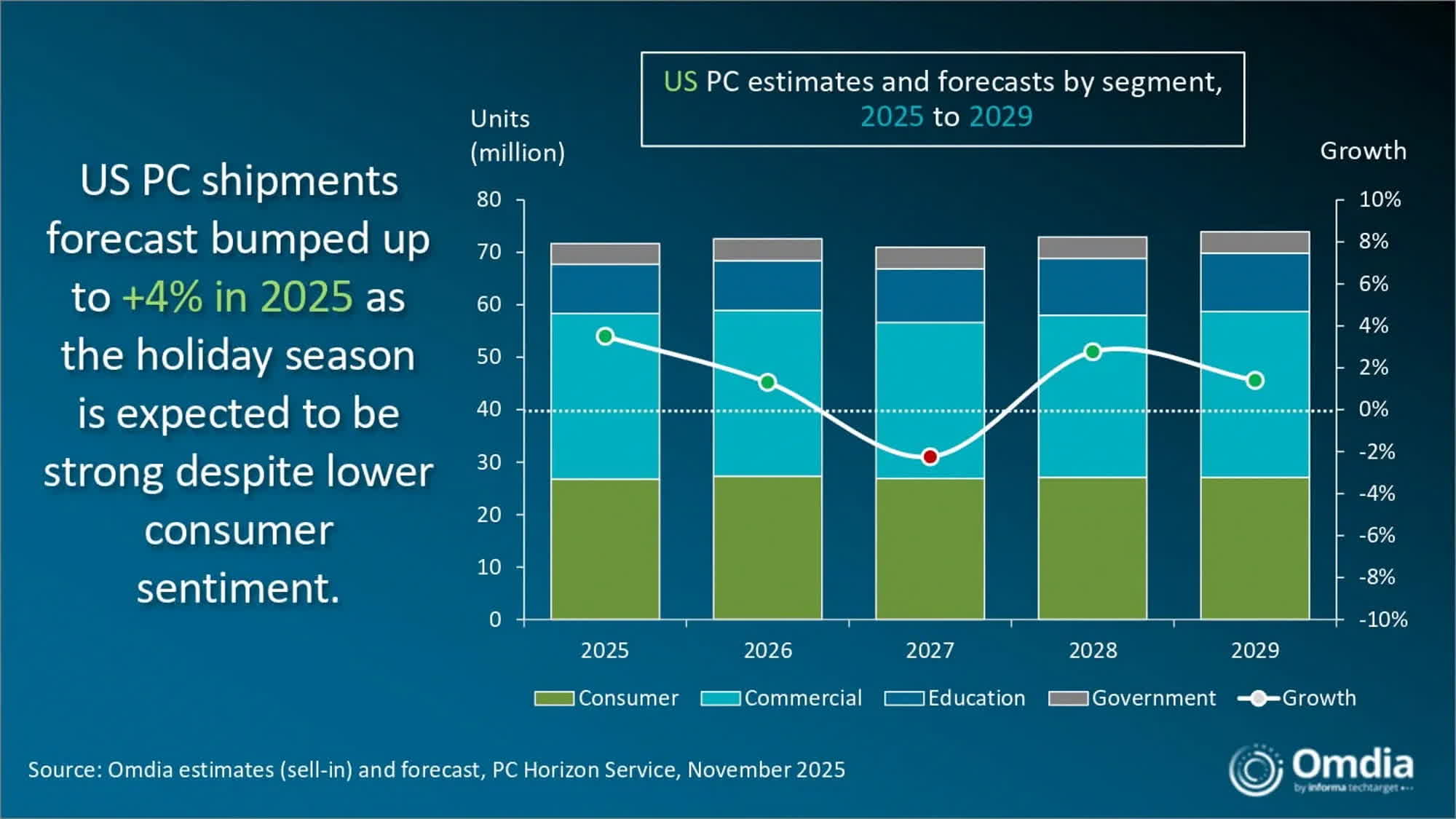
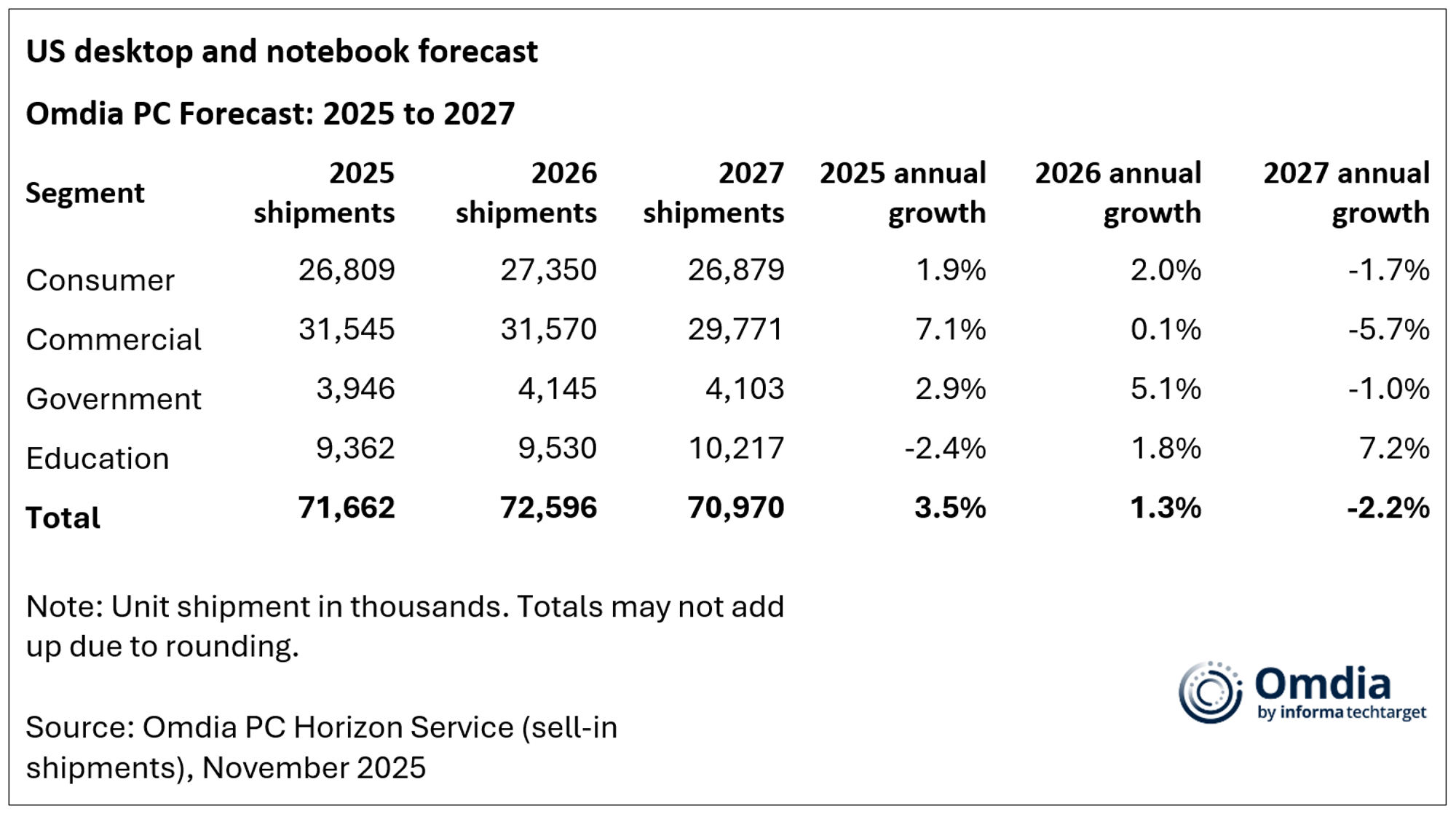
The ongoing transition from Windows 10 to Windows 11 should further support US market conditions. Despite two consecutive quarters of decline, Omdia expects PC shipments to grow four percent by year's end. It also expects the upcoming holiday season to see strong demand, despite lower consumer sentiment.
This segment has delivered the strongest results so far, growing for three consecutive quarters. Despite tariffs, inflation, high unemployment, and the credit card debt crisis, consumers spent the past three months purchasing new PC systems. In the long-term forecast, Omdia predicts a sharp decline in 2027, followed by a rebound the following year.
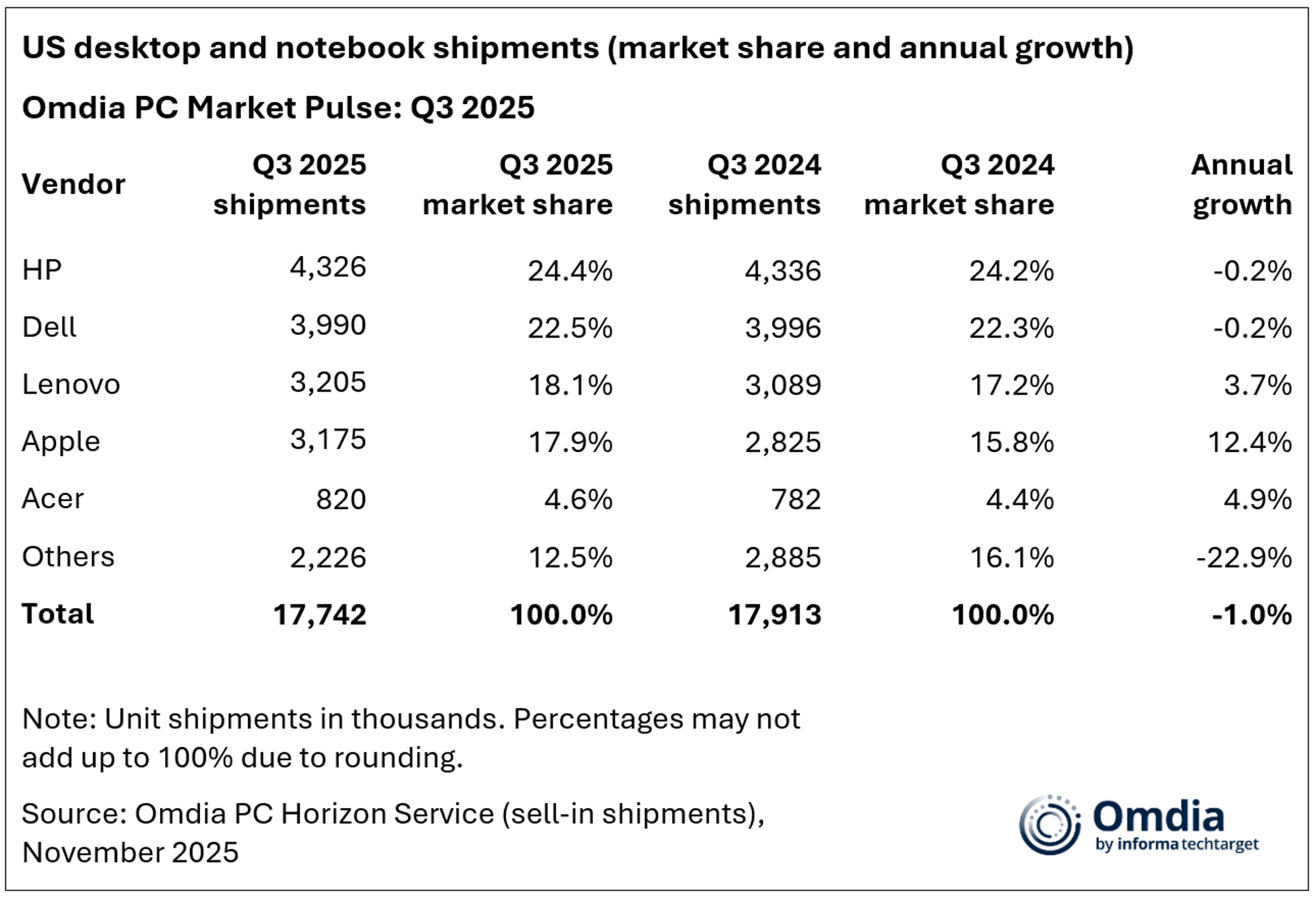
According to Omdia's "market pulse," the three largest US manufacturers in Q3 were HP, Dell, and Lenovo, holding market shares of 24.4 percent, 22.5 percent, and 18.1 percent, respectively. Meanwhile, IDC reported that Lenovo remains the top PC manufacturer globally, followed by HP, Dell, Apple, and Asus.